


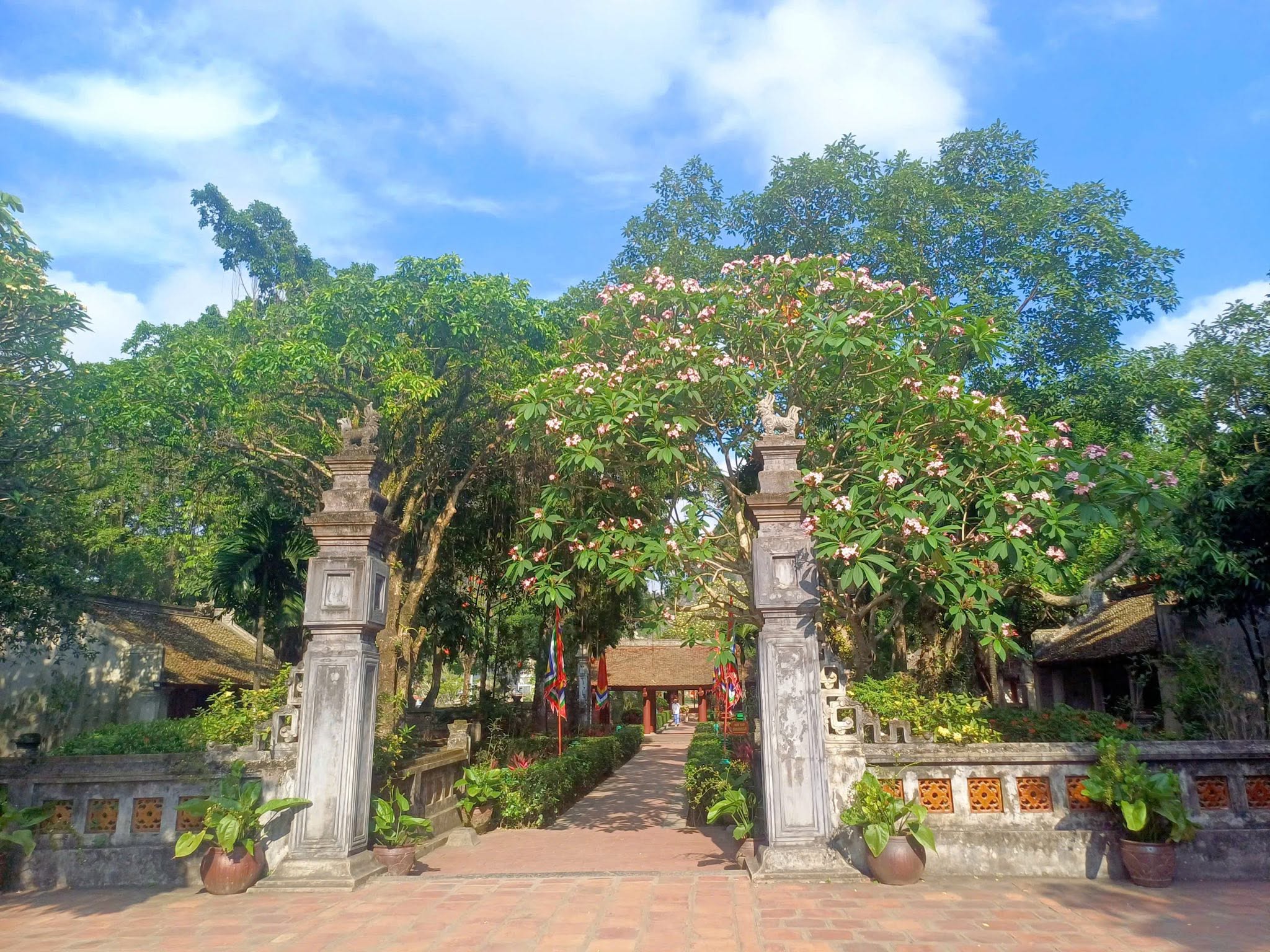
The Hoa Lu Historical and Architectural-Artistic Site is located in Tay Hoa Lu Ward, Ninh Binh Province, within the distinctive limestone landscape of the Trang An region. Hoa Lu served as the capital of Dai Co Viet in the 10th century and played an important role in the formation of Vietnam’s first centralized feudal state.
Historically, Hoa Lu was the capital of the Dinh and Early Le dynasties and the early years of the Ly dynasty. Six rulers were associated with the capital, including Dinh Tien Hoang, Dinh Toan, Le Dai Hanh, Le Trung Tong, Le Long Dinh and Ly Thai To. From Hoa Lu, these dynasties consolidated national independence, established administrative institutions, organized military forces, developed agriculture and expanded diplomatic relations, laying important foundations for the later development of Dai Viet.
Hoa Lu was selected as the capital because of its distinctive geographical setting. The area is surrounded by limestone mountains, valleys, caves, rivers and natural entrances that provided both defensive advantages and access to the northern plains. The ancient capital included inner and outer citadels, palaces, temples, pagodas, residences, tombs and a network of mountains and caves associated with important historical events.
Today, the site preserves religious architecture, remnants of ancient fortifications, palace foundations, inscriptions, royal tombs, caves and numerous artifacts and antiquities. These remains reflect not only the history of Hoa Lu as an ancient capital but also the interaction of folk beliefs, Buddhism, Confucianism and traditions of worshipping historical figures.
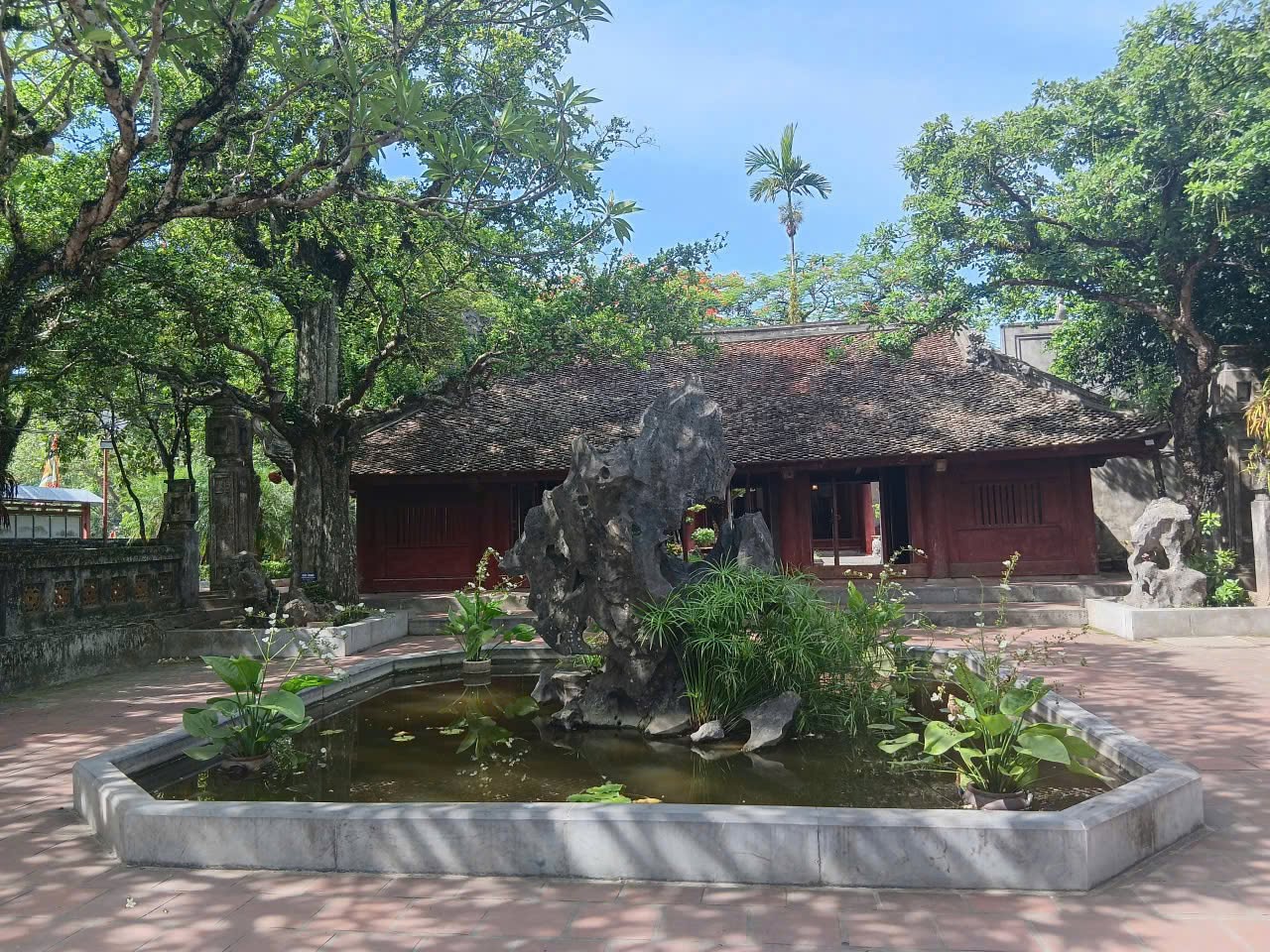
Major Monuments of Hoa Lu Ancient Capital
One of the most important monuments is the Temple of Dinh Tien Hoang, built on the former site of the main palace of Hoa Lu. The temple follows an architectural layout known as “noi cong ngoai quoc”, with buildings arranged around a central axis and enclosed by surrounding structures. It occupies an area of approximately three mau of northern Vietnam’s traditional land measurement. Mount Ma Yen forms the foreground landscape, while the Du Mountain range provides a natural backdrop.
The temple complex includes the Northern Gate, Outer and Inner Ceremonial Gates, Dragon Courtyard, Khai Thanh House, Front Ceremonial Hall, Incense Burning House, Inner Sanctuary, stele house and gardens. The Khai Thanh House is dedicated to the parents of King Dinh Tien Hoang. The Front Ceremonial Hall and Incense Burning House are used for rituals, while the Inner Sanctuary is the principal worship space dedicated to the ruler who defeated the Twelve Warlords, unified the country and established Dai Co Viet in 968.
Not far from the Dinh Temple is the Temple of Le Dai Hanh. The temple has a “cong” shaped layout consisting of a Front Ceremonial Hall, Incense Burning House and Inner Sanctuary. The five-bay Front Ceremonial Hall reflects the architectural style of the Later Le period. The Incense Burning House consists of two longitudinal bays and measures approximately 2.8 metres long and 6.15 metres wide. Its central altar is dedicated to civil and military officials.
The five-bay Inner Sanctuary measures approximately 14 metres long and 6 metres wide. The central space contains a statue of King Le Dai Hanh, while the left side is dedicated to Empress Dowager Duong Van Nga and the right side to Khai Minh Prince Le Long Dinh. The wider complex also includes a three-gate entrance, auxiliary buildings, inner and outer ceremonial gates, a Dragon Courtyard, a pavilion and two stele houses.
A distinctive site within Hoa Lu is Am Tien Pagoda and Cave, approximately 400 metres from the eastern gate of the Dinh Temple. The cave lies within a valley surrounded by limestone cliffs, an area that was largely covered by water in the past. Visitors climb 205 stone steps from the foot of the mountain to reach the cave entrance halfway up the slope. Because the entrance resembles the mouth of a dragon, the cave is also known locally as Dragon Cave.
According to local tradition, Empress Dowager Duong Van Nga became a Buddhist nun and practiced here during the later years of her life. During the Ly dynasty, Zen Master Nguyen Minh Khong is also said to have recited Buddhist scriptures and preached at the site. The cave contains naturally formed stalactites with shapes given traditional names such as rice plant, money tree, Buddha’s hand and lotus bud. Today, the main cave serves as a place of worship dedicated to Buddha, Zen Master Nguyen Minh Khong and several historical figures, including Empress Dowager Duong Van Nga.
Nhat Tru Pagoda, also known as One Pillar Pagoda, is believed to have been established in the 10th century. It is one of the important Buddhist monuments associated with the religious landscape of Hoa Lu. The pagoda preserves numerous artifacts connected with the history of the ancient capital, most notably a stone Buddhist scripture pillar erected in 995. This pillar is an important historical artifact reflecting the development of Buddhism and the production of religious inscriptions during the Dinh and Early Le periods.
The pagoda has a “Dinh” shaped layout facing west and consists of the main sanctuary, ancestral house, guest house, dining area and a tower complex. Its architecture combines traditional Buddhist features with historical connections to the royal and religious life of the ancient capital.
The site also includes Yen Trach Communal House in Yen Trach Village, dedicated to Dinh Tien Hoang as the village tutelary deity. Built on elevated ground and facing northeast, the communal house has a “Cong” shaped layout consisting of a five-bay Great Ceremonial Hall, a one-bay Incense Burning House and a three-bay Inner Sanctuary with two side sections. A large pond lies in front, while mountains surround the other three sides.
Ngan Pagoda, also known as Kim Ngan Pagoda, stands amid the Ngan fields on an area of approximately 2,000 square metres. According to local tradition, the pagoda was built on the former site of a storage facility used by the Dinh and Le rulers. Mountains surround the pagoda, while a system of ponds and lakes lies in front, creating a quiet landscape. The main pagoda has a “Dinh” shaped layout with a Front Hall, Upper Sanctuary and Ancestral House.
Several residences and temples dedicated to members of the royal families are also important components of the Hoa Lu complex. Dong Vuong Residence in Dong Thanh Village is dedicated to Dong Thanh Vuong Le Ngan Tinh, the second son of King Le Dai Hanh. It faces southwest and has a “Dinh” shaped layout with a three-bay Front Hall, two side sections and a one-bay Inner Sanctuary. A small shrine dedicated to Mother Goddess Lieu Hanh stands in front.
Kinh Thien Residence is located southeast of Dong Hamlet in Yen Thuong Village and is dedicated to Le Thau, the eldest son of King Le Dai Hanh. The modest complex stands on elevated ground and faces west, consisting of a three-bay Front Hall with two side sections and a one-bay Inner Sanctuary with two side sections.
The Temple of Princess Thuc Tiet, also known as Phat Kim Temple or Ba Chua Temple, is located in Phat Dong Hamlet, Yen Thuong Village. It is dedicated to the daughter of King Dinh Tien Hoang. The temple occupies approximately 500 square metres and has a “Dinh” shaped layout consisting of a three-bay Front Hall and a one-bay Inner Sanctuary with two side sections.
Ancient Citadel Remains, Royal Tombs and Heritage Values
The Eastern Gate Stele is an important surviving feature for understanding the spatial organization and transportation system of 10th-century Hoa Lu. The inscription was carved directly into a limestone cliff, with the stele facing northeast. It is approximately 95 centimetres high and 40 centimetres wide and is surrounded by decorative patterns. The inscription provides valuable material for research into the history, geography and defensive structure of the ancient capital.
The tomb of King Dinh Tien Hoang is located on the summit of Mount Ma Yen, positioned near the centre of the mountain along a northwest-southeast axis. The tomb was constructed of stone, with a screen-like structure at the head. A small stele house stands in front of the tomb and contains a stone stele erected in the 21st year of the Minh Menh reign, corresponding to 1840.
The tomb of King Le Dai Hanh lies at the foot of Mount Ma Yen within a spacious enclosure surrounded by decorative brick walls. The head of the tomb is shaped like a scroll, while a stone stele dating from the 21st year of Minh Menh also stands behind it. The two royal tombs in the same mountain landscape create a distinctive historical connection between the Dinh and Early Le dynasties.
Other sites include Muoi Cave, traditionally believed to have been used to store salt and provisions during the Dinh period, and Quan Cave, which according to local tradition was where the body of King Dinh Tien Hoang was temporarily kept. These places demonstrate how the caves and limestone landscape of Hoa Lu were integrated into military, storage and shelter functions when the area served as the political and military centre of the country.
The Hoa Lu site currently preserves 678 artifacts and antiquities of historical, cultural and scientific value. The collection includes stone steles, worship objects, statues, architectural materials, inscriptions and other remains associated with the Dinh, Early Le and Ly dynasties and subsequent historical periods. Together, these artifacts provide important evidence for studying court life, religious practices, artistic traditions and construction techniques during the early period of Vietnam’s independent feudal state.
Every year, on the 10th day of the third lunar month, local communities hold a traditional festival to commemorate King Dinh Tien Hoang, King Le Dai Hanh and other rulers associated with Hoa Lu. The festival includes incense offerings, ceremonial rites and palanquin processions, together with traditional cultural activities, folk performances, sporting events and programs recreating aspects of the history of the ancient capital.
Hoa Lu Ancient Capital holds an important position in Vietnamese history because it marks a major transition from a period of political fragmentation toward a unified state, from competing regional powers toward centralized monarchy. Its mountains, fortifications, palace remains, temples, pagodas, royal tombs and caves form a heritage complex with historical, architectural, archaeological, cultural and landscape values.
Hoa Lu is also an important component of the Trang An heritage landscape, where limestone formations, waterways and traces of human settlement, religion and political history have developed together over many centuries. The site helps explain the role of Ninh Binh in Vietnam’s history of state formation, national defense and cultural development, while continuing to serve as a place for historical education, traditional festivals and the preservation of local cultural identity.
For its outstanding historical, cultural, architectural-artistic, archaeological and landscape values, the Hoa Lu Historical and Architectural-Artistic Site has been recognized by the Prime Minister as a Special National Monument.


