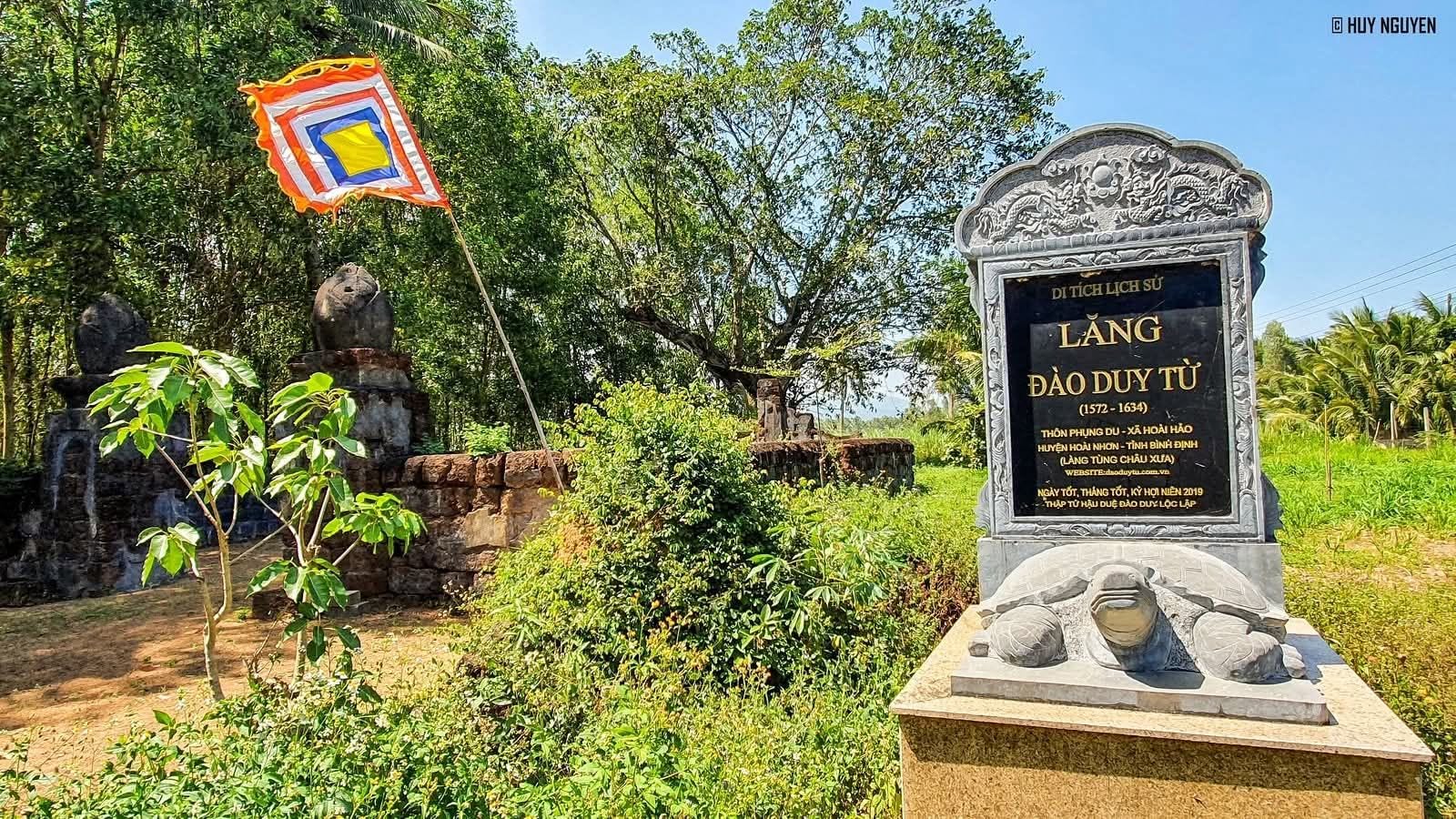
Đào Duy Từ Temple is an important historical and cultural relic commemorating the life and achievements of one of Vietnam’s outstanding political, military and cultural figures of the 17th century. Although Đào Duy Từ was born in Thanh Hóa, it was in the Tùng Châu area, now part of Hoài Nhơn Ward in Gia Lai Province, that he found the opportunity to demonstrate his talents and establish his lasting legacy.
The temple is not only a place to pay tribute to a distinguished national official and strategist, but also a destination where visitors can explore local history, traditional architecture and community-based cultural practices. Surrounded by the peaceful scenery of the countryside, green coconut trees and traditional village life, the site offers a meaningful experience for visitors interested in Vietnam’s historical heritage.
Đào Duy Từ: A Talented Scholar Who Found His Patron
Đào Duy Từ was born in 1572 and died in 1634. His ancestral hometown was Hoa Trai Village, Ngọc Sơn District, Tĩnh Gia Prefecture, now located in Nguyên Bình Ward, Nghi Sơn Town, Thanh Hóa Province. He was a talented scholar, strategist, political adviser and cultural figure who made major contributions during the reign of Lord Nguyễn Phúc Nguyên.
Although highly educated and gifted, Đào Duy Từ was prevented from taking part in the imperial examinations because of his family background in traditional performing arts, which was viewed unfavorably under the social regulations of the time. Refusing to abandon his ambitions, he continued studying and eventually left his homeland in search of an opportunity to serve the country.
During his journey southward, Đào Duy Từ settled in the Tùng Châu area of Hoài Nhơn. To support himself, he worked as a buffalo herder for a wealthy local family. Despite his humble circumstances, he continued to express his aspirations through poetry. He was known for reciting the poem “Ngọa Long Cương Vãn”, using the image of the hidden dragon waiting for the right moment to serve the country as a metaphor for his own unrecognized talent.
The story eventually came to the attention of Trần Đức Hòa, the administrative official of Hoài Nhơn Prefecture. Recognizing Đào Duy Từ’s exceptional ability, Trần Đức Hòa recommended him to Lord Nguyễn Phúc Nguyên. This recommendation marked a turning point in his life. The talent that had been overlooked in his native land was finally recognized and fully utilized in Đàng Trong, the southern Vietnamese realm ruled by the Nguyễn Lords.
For this reason, Hoài Nhơn was not merely a place where Đào Duy Từ lived temporarily. It was the land where he met a ruler who appreciated his abilities and where he began his remarkable political and military career. A traditional verse celebrating the connection between his birthplace and his adopted homeland says:
“The bells of Ngọc Sơn echo across the northern land,
While the fame of Bồng Sơn shines brightly in the South.”
Major Contributions to Đàng Trong
After entering the service of Lord Nguyễn Phúc Nguyên, Đào Duy Từ became one of the most influential advisers in the development and consolidation of the Nguyễn Lords’ government in Đàng Trong. His contributions extended beyond military affairs to include administration, economic management and political organization.
In military strategy, Đào Duy Từ played a major role in strengthening the defensive system of Đàng Trong against military pressure from the Trịnh Lords in Đàng Ngoài. He advised on the construction and reinforcement of Trường Dục Rampart and the famous Lũy Thầy defensive system in Quảng Bình.
These fortifications combined natural terrain with man-made earthworks, walls, trenches and strategically positioned defensive structures. Located south of the Gianh River, the system formed a formidable line of defense and helped the Nguyễn forces withstand repeated attacks from the north.
Lũy Thầy became one of the most remarkable military defense systems in Vietnam’s pre-modern history. Its strength contributed to maintaining a balance of power between Đàng Trong and Đàng Ngoài for many decades. Its reputation was preserved in a popular Vietnamese verse:
“Even the clever may pass through Thanh Hà,
But even those with wings cannot cross Lũy Thầy.”
The verse expresses the people’s admiration for the strategic importance and formidable strength of the defensive ramparts.
Đào Duy Từ also contributed to the administrative and economic foundations of Đàng Trong. He proposed policies concerning population control, movement management, taxation, administrative organization and the prevention of espionage. These measures helped the Nguyễn government mobilize resources, strengthen state authority and maintain stability during a prolonged period of political and military tension.
Đào Duy Từ’s Cultural Legacy in Hoài Nhơn
In addition to his political and military achievements, Đào Duy Từ left a lasting imprint on Vietnamese traditional culture and performing arts. In Bình Định, he has long been honored as one of the important founding figures associated with the development of hát bội, the classical Vietnamese theatrical tradition also known as tuồng.
Local cultural traditions often associate Đào Duy Từ with the formation and development of Bình Định’s hát bội heritage. The famous traditional play “Sơn Hậu” is also commonly linked to his name in local historical and artistic accounts. Although some details concerning authorship and the development of the work are interpreted differently in various sources, Đào Duy Từ’s place in the cultural memory of Bình Định remains particularly significant.
He is also traditionally regarded as having contributed to the development of court dances, including performances such as the Lantern Dance and the Female General Going to Battle Dance, which have continued to be preserved and performed in different forms.
These cultural associations demonstrate that Đào Duy Từ was not only a statesman and military strategist, but also a figure whose influence extended into the artistic and ceremonial traditions of Vietnam.
History of Đào Duy Từ Temple
One of the most important monuments commemorating Đào Duy Từ in the Hoài Nhơn area is the Đào Duy Từ Temple, formerly located in Ngọc Sơn Bắc Quarter, Hoài Thanh Tây Ward, and now situated in Hoài Nhơn Ward, Gia Lai Province.
The temple was built in 1859, the 12th year of the reign of Emperor Tự Đức of the Nguyễn Dynasty. Its construction reflects the respect of local communities for a historical figure who made significant contributions to the development and defense of Đàng Trong.
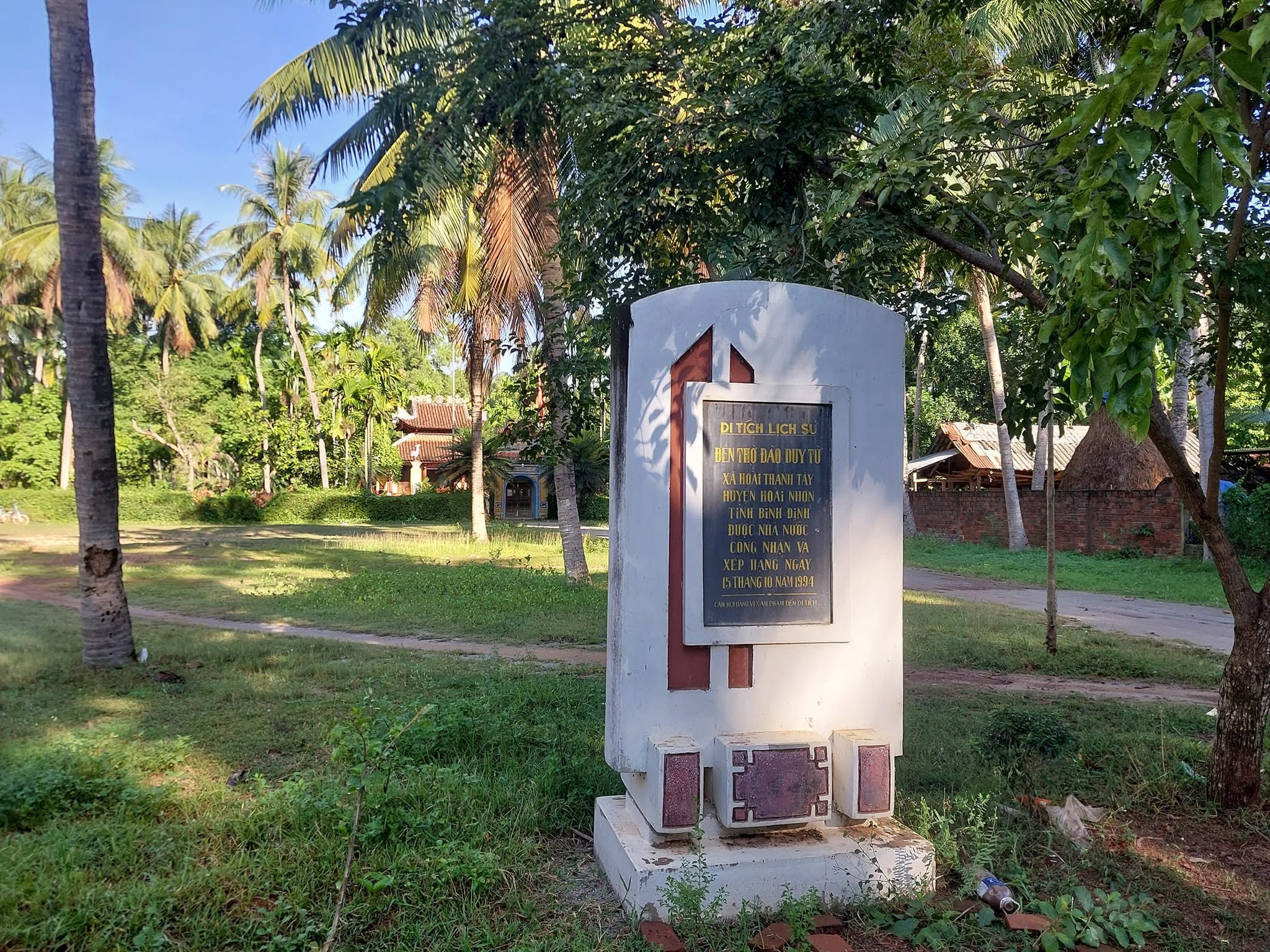
The temple occupies a site of more than 1,600 square meters. On October 15, 1994, it was officially recognized by the Vietnamese State as a National Historical and Cultural Relic, affirming its historical, cultural and architectural importance.
The temple also preserves historical materials, religious objects and local traditions associated with Đào Duy Từ’s life and legacy in Hoài Nhơn. Over generations, it has served as a place of worship, remembrance, historical education and community cultural activities.
Traditional Architecture of the Temple
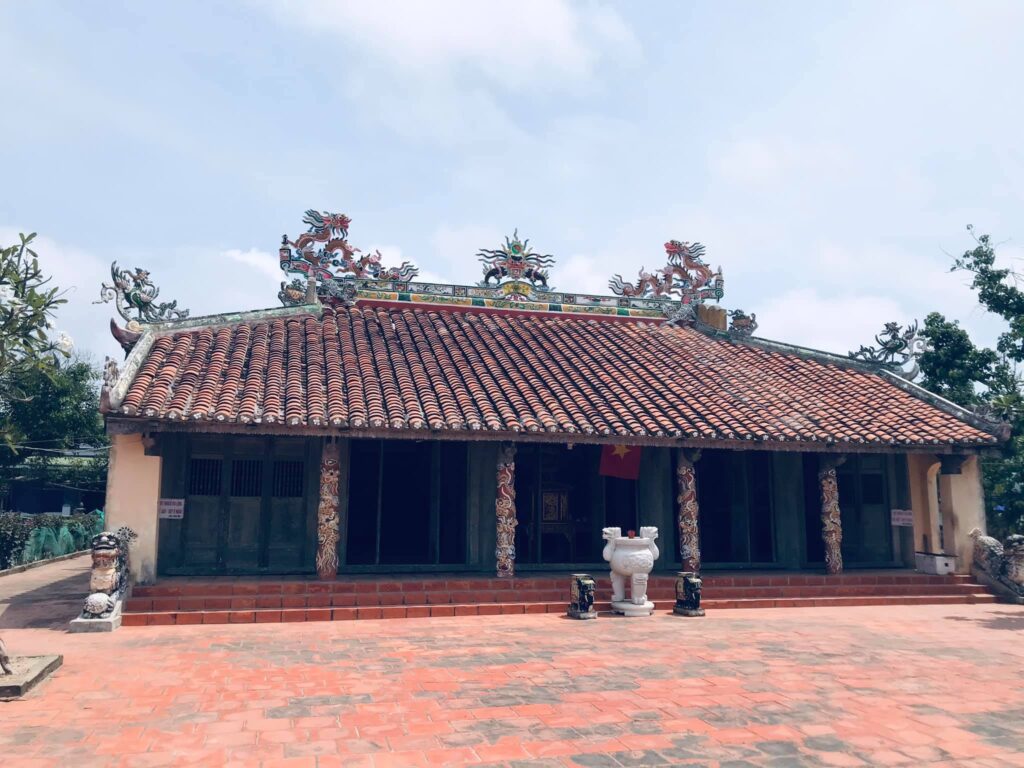
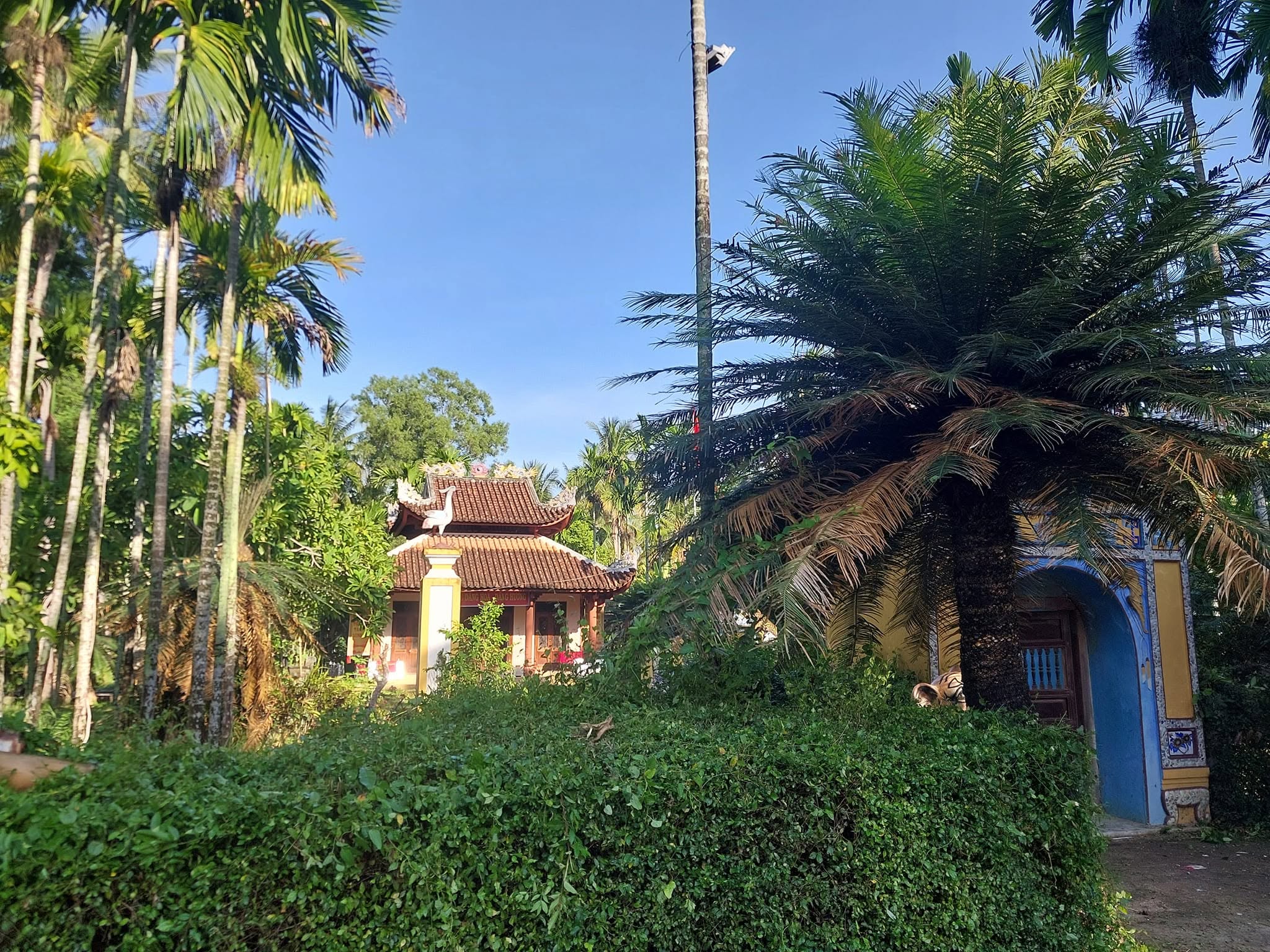
The temple complex consists of four principal components: the three-entrance gate, decorative screen, two laterite pillars and the main worship hall. The structures follow traditional architectural principles and create a solemn yet harmonious setting within the surrounding countryside.
The Three-Entrance Gate
The main gate is approximately 5 meters high and was built in the traditional cổ lầu style, featuring two levels of roofs covered with yin-yang tiles. The roof corners curve upward, creating an elegant silhouette.
The gate is decorated with glazed ceramic reliefs depicting dragons and clouds. At the top is the traditional motif of two dragons facing the moon, a familiar symbol in Vietnamese temple and communal-house architecture.
The upper level features four large Chinese characters, “Quốc Công Từ Môn”, meaning the gate to the temple of a national duke or distinguished state official. On either side are images of cranes standing on tortoises, symbols traditionally associated with longevity, dignity and permanence.
The four corners of the gate are supported by pillars decorated with coiling dragons. The two side sections feature decorative mosaic designs forming the character “Thọ”, meaning longevity. The lower level bears the phrase “Hữu khai tất tiên”, honoring the person who was among the first to open up, establish or lay the foundations for future development.
Decorative Screen and Laterite Pillars
Behind the three-entrance gate stands a decorative screen accompanied by two laterite pillars. Laterite is a traditional construction material widely used in central Vietnam, valued for its durability and earthy appearance.
The decorative screen creates a ceremonial transition between the entrance and the sacred worship area. It also contributes to the solemnity and spatial organization of the temple complex.
The Main Worship Hall
The main worship hall follows the traditional Bình Định lá mái house style, an architectural form characteristic of the region. This style combines structural durability with local aesthetic features and is well adapted to the climate of central Vietnam.
Inside the temple is a wooden ancestral tablet covered with red lacquer and gilding. It records the name, posthumous title, official rank and noble titles of Đào Duy Từ, as well as those of his wife, Cao Thị Nguyên. The tablet is an important religious and historical object reflecting the long-standing tradition of honoring the scholar and his family.
Honorary Titles Granted to Đào Duy Từ
The Nguyễn Lords and later Nguyễn emperors recognized Đào Duy Từ’s contributions through a number of distinguished honorary titles, including:
- Supreme Founding National Meritorious Official.
- First-Rank Founding National Meritorious Official.
- Grand Academician of the Eastern Palace.
- Hoằng Quốc Công.
These titles reflect his exceptional position in the history of the Nguyễn Lords’ government. He was remembered not only as a brilliant adviser and strategist, but also as one of the figures who helped establish the political and military foundations of Đàng Trong.
The Temple in Local Cultural Life
Đào Duy Từ Temple is more than a place of worship. It is also a cultural space connecting local communities with their historical heritage. For generations, the people of Hoài Nhơn have regarded Đào Duy Từ as a symbol of perseverance, self-education, intellectual ambition and dedication to the country.
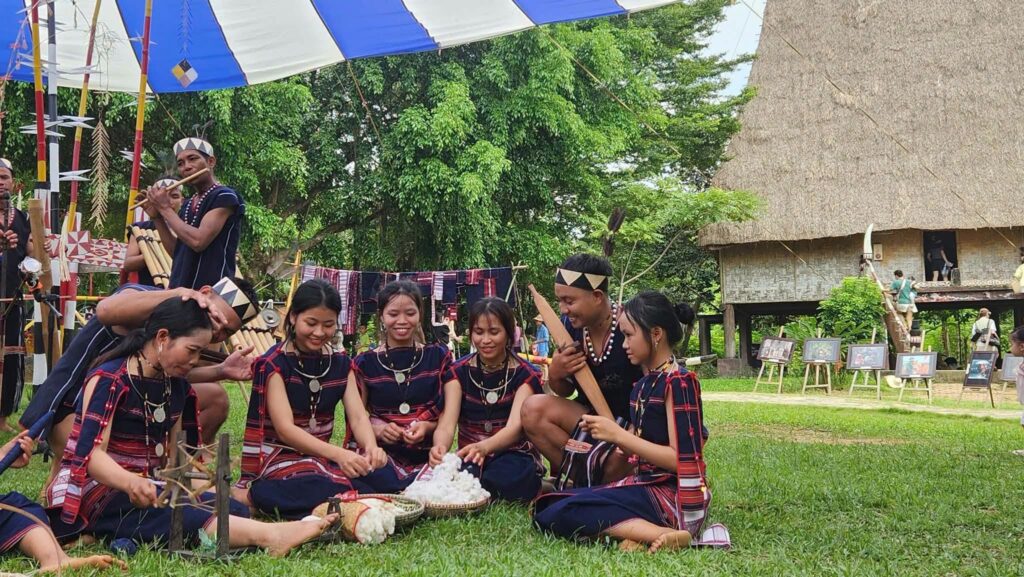
During traditional festivals and community events, visitors may encounter local folk activities, including bài chòi, a popular central Vietnamese performance tradition combining singing, improvisation, games and social interaction. The activity creates a warm and lively atmosphere while reflecting the communal spirit of the region.
The temple’s peaceful surroundings, shaded coconut trees and rural landscape allow visitors to combine historical sightseeing with a gentle cultural experience. It is a suitable destination for heritage tours, educational excursions, cultural exploration and visits focused on traditional Vietnamese history.
Historical and Educational Significance
Đào Duy Từ Temple reflects the deep connection between the scholar and the land where his talents were finally recognized and developed. Thanh Hóa was his birthplace, but Hoài Nhơn was the place where he found a patron who understood his abilities and where he began a career that would leave a major mark on the history of Đàng Trong.
The monument provides an opportunity to learn about the complex historical period of the Trịnh–Nguyễn division, traditional Vietnamese military strategy, the construction of defensive ramparts and the organization of government in early modern Vietnam.
The story of Đào Duy Từ also carries a broader message about perseverance, self-study and the determination to overcome social barriers. His life demonstrates how talent, ambition and opportunity can combine to shape an enduring historical legacy.
For the people of Hoài Nhơn, the temple remains a symbol of pride in their homeland’s connection with Đào Duy Từ. Preserving the monument and promoting its historical and cultural values contributes to the continuation of local traditions, patriotism, respect for learning and appreciation of national heritage.
Quick Information
| Item | Information |
|---|---|
| Name | Đào Duy Từ Temple |
| Full name | Temple of Cultural Figure Đào Duy Từ |
| Type | National Historical and Cultural Relic |
| Location | Hoài Nhơn Ward, Gia Lai Province, Vietnam |
| Former location | Ngọc Sơn Bắc Quarter, Hoài Thanh Tây Ward, Hoài Nhơn Town, Bình Định Province |
| Figures worshipped | Đào Duy Từ and his wife Cao Thị Nguyên |
| Year of construction | 1859, the 12th year of Emperor Tự Đức’s reign |
| Recognition date | October 15, 1994 |
| Site area | More than 1,600 m² |
| Main architectural elements | Three-entrance gate, decorative screen, laterite pillars and main worship hall |
| Architectural style | Traditional Bình Định lá mái house style |
| Historical significance | Commemorates Đào Duy Từ’s contributions to politics, military strategy, administration and culture |
| Cultural activities | Worship, historical study, traditional architecture and bài chòi folk performances |
Location: Đào Duy Từ Temple, Hoài Nhơn Ward, Gia Lai Province, Vietnam.
Visiting hours: The site is generally accessible throughout the day. The most comfortable visiting times are from 7:00 AM to 11:00 AM or from 2:00 PM to 5:00 PM.
Worship etiquette: Visitors may bring incense, flowers, water or fruit as simple offerings. Respectful, modest clothing is recommended when entering the main worship hall.