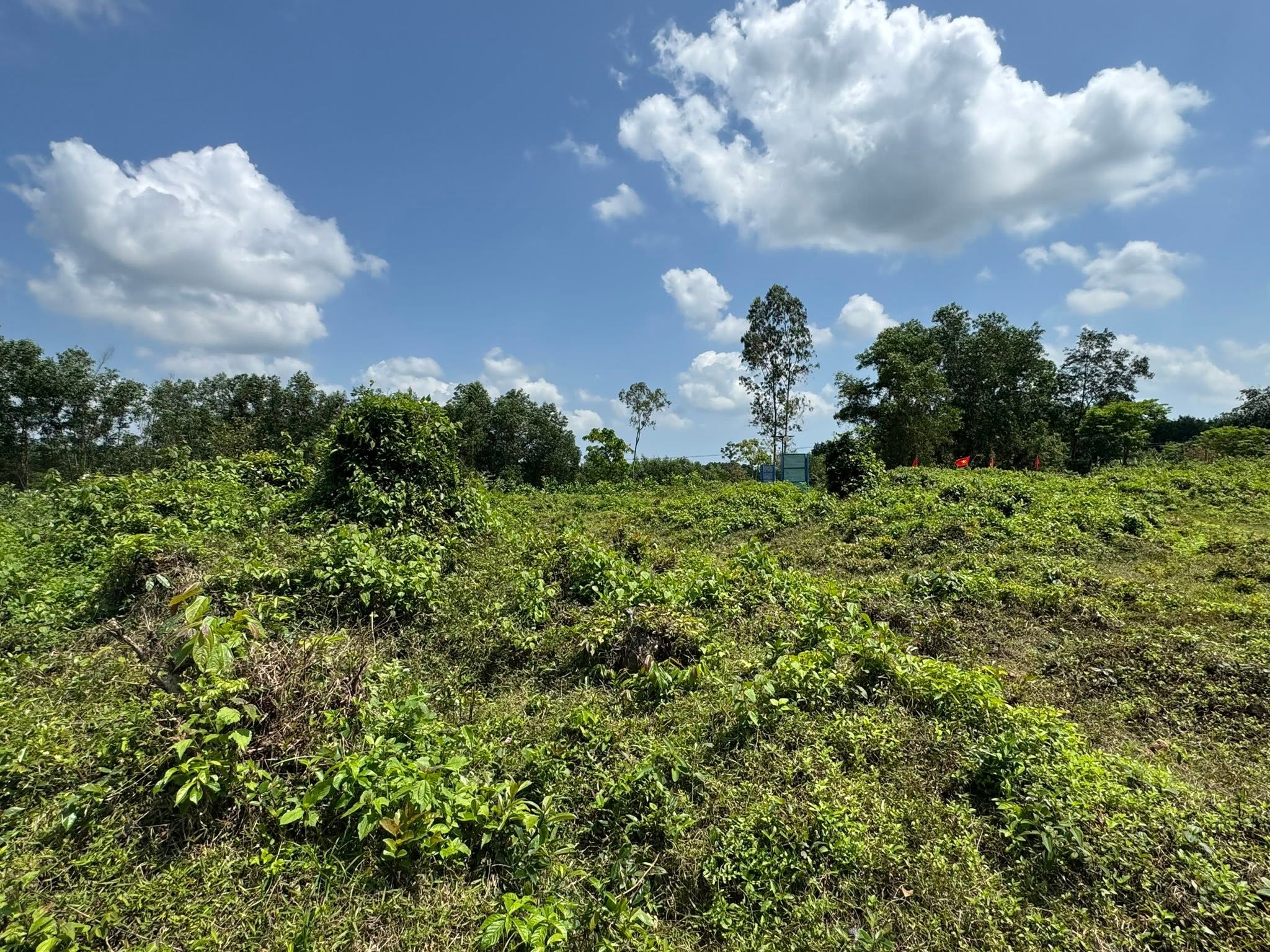
The Dong Duong Buddhist Institute, also known as the Dong Duong Archaeological Ruins, is an important archaeological, architectural and artistic heritage site associated with the ancient Kingdom of Champa. It is located in Dong Duong Village, Dong Duong Commune, Da Nang City. From approximately the ninth to the tenth century, the site was a large Buddhist complex and one of the most important religious centers of Champa.
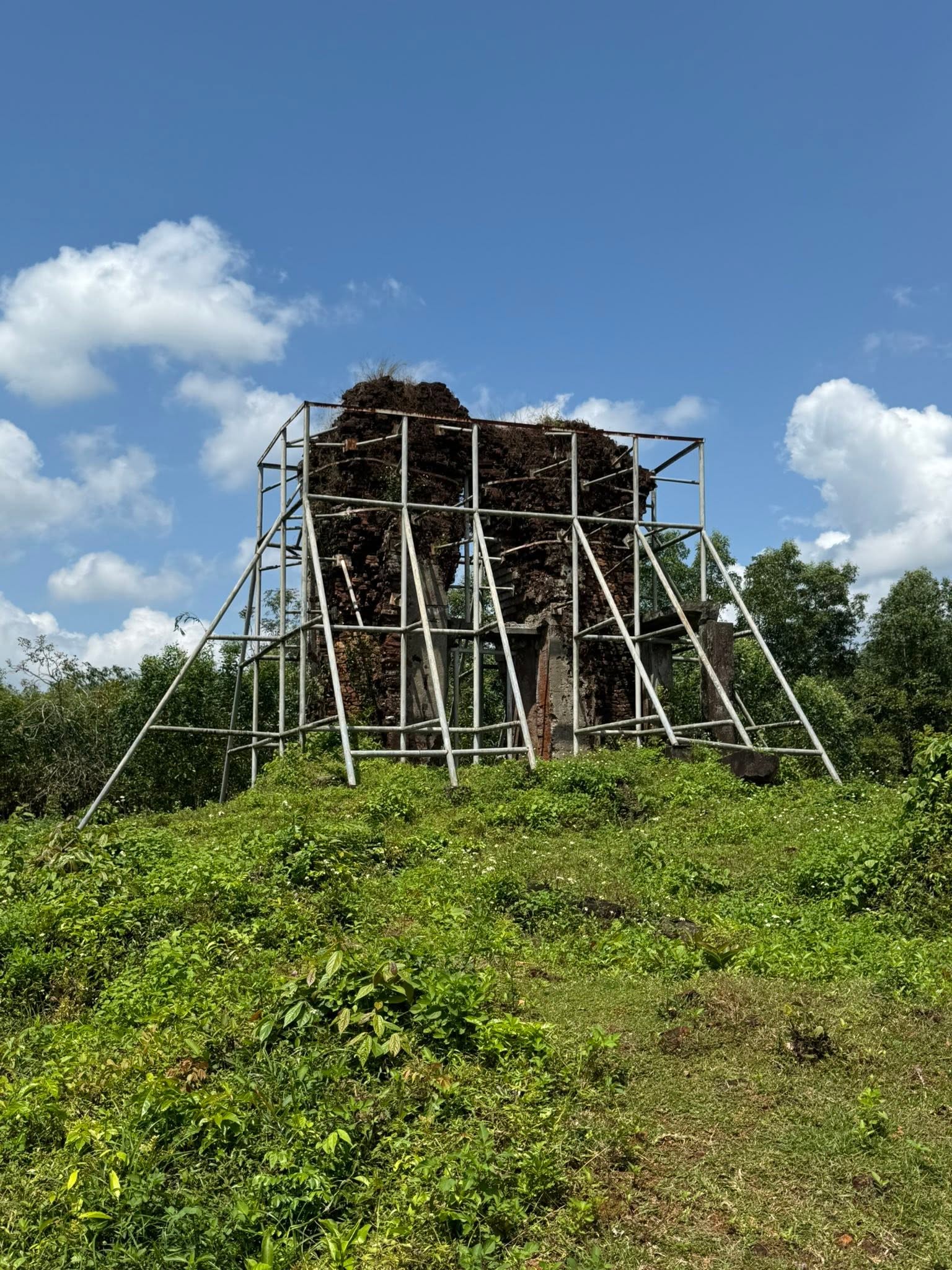
The surviving remains indicate that Dong Duong once consisted of an extensive Buddhist architectural complex, including temples, towers, monasteries, lecture halls and supporting structures. Although much of the original architecture has been destroyed by time, natural conditions and warfare, the foundations, wall sections, altars and sculptural remains discovered here continue to provide valuable evidence of Champa history and the development of Mahayana Buddhism in Southeast Asia.
History and Archaeological Research
Dong Duong was mentioned in historical records long before its archaeological significance was fully understood. The Nguyen Dynasty work Dai Nam Nhat Thong Chi recorded the existence of two towers and ancient architectural foundations in Dong Duong Village. However, the true scale and importance of the site became clearer following surveys and excavations conducted by French scholars in the early twentieth century.
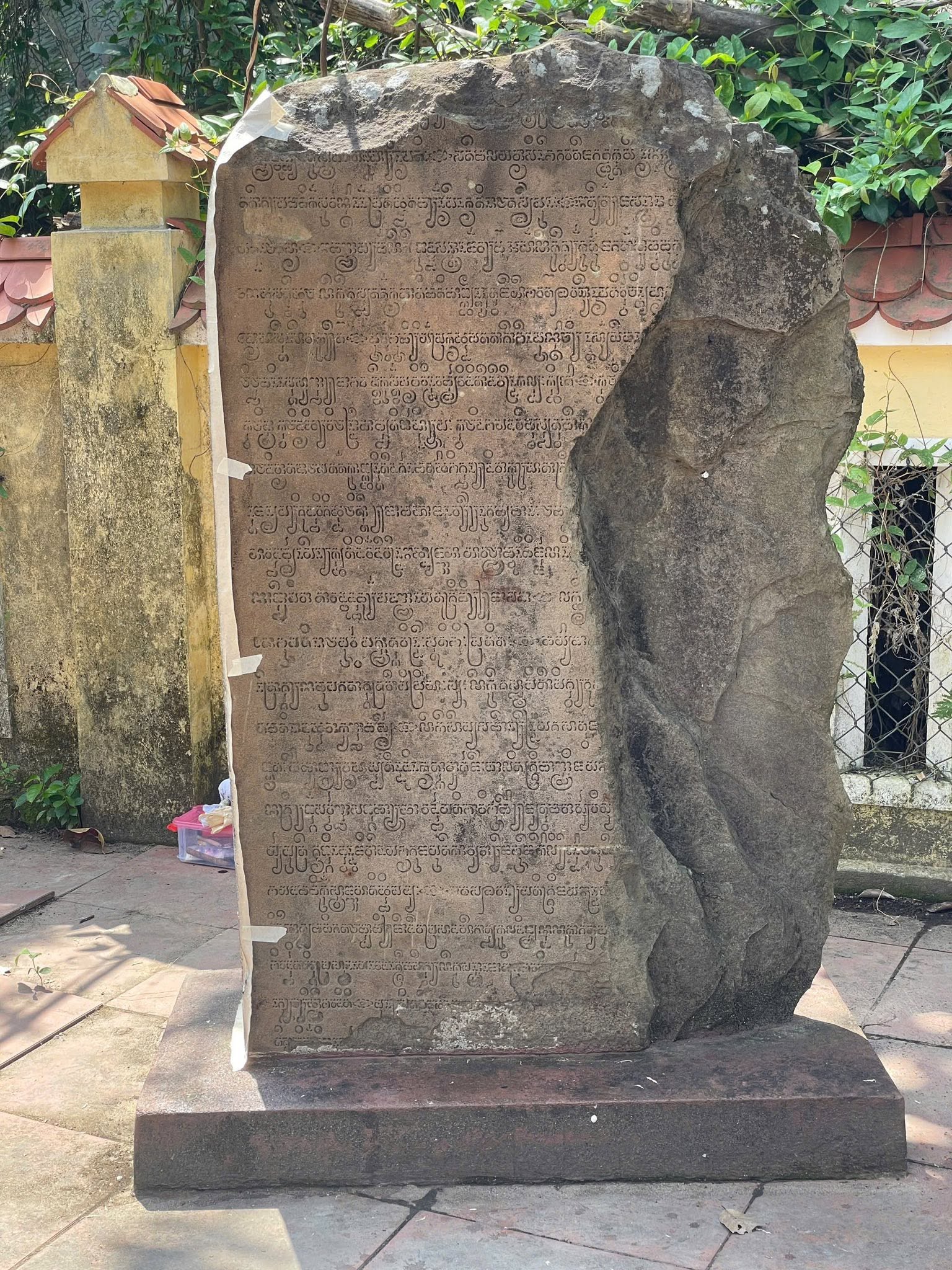
According to an inscription discovered at Dong Duong, in 875, King Indravarman II commissioned the construction of a Buddhist monastery and a temple dedicated to the royal protective bodhisattva, Laksmindra Lokesvara Svabhayada. The inscription reflects the king’s strong devotion to Buddhism and records his donations of land, money, slaves and other valuable possessions to the religious institution.
The inscription also reveals that Buddhism at Dong Duong was strongly influenced by Mahayana thought, including concepts associated with the Pure Land, spiritual liberation and the abode of the Buddha. The founder of the Buddhist institute is portrayed as a major royal patron of Buddhism and of the bodhisattva Lokesvara.
The reign of Indravarman II was also associated with the movement of Champa’s political center from Panduranga northward to the Amaravati region. This area was known as Indrapura, a name frequently mentioned in studies of Champa history during the ninth and tenth centuries. Some earlier scholars proposed that Dong Duong itself was the location of the capital of Indrapura. However, later archaeological research has emphasized the need to distinguish between the Dong Duong Buddhist Institute and the wider political center of Indrapura, since the settlement and urban remains at Dong Duong are insufficient to identify the site as the entire royal capital.
In 1901, French researcher L. Finot conducted excavations at Dong Duong and published findings relating to 229 objects. Among the most remarkable discoveries was a bronze Buddha statue more than one metre high, considered an outstanding example of Champa Buddhist art.
In 1902, H. Parmentier carried out a larger and more systematic excavation. His research helped scholars gain a clearer understanding of the scale and organization of the complex. Architectural remains indicated that the main temple area and subsidiary towers were arranged along an east-west axis extending approximately 1,300 metres. In addition to the worshipping structures, traces of monks’ residences and lecture halls were identified, suggesting that Dong Duong was a relatively complete Buddhist institution that supported religious ceremonies, residential life and Buddhist learning.
In September 1996, the Institute of Archaeology of Vietnam, Vietnam National University in Hanoi and the Quang Nam–Da Nang Museum conducted a joint survey of the Dong Duong area. The results showed that evidence of permanent settlement was relatively limited. The natural environment was difficult for agriculture, with shallow soil and laterite layers found beneath the ground in many places. These findings reinforced the view that Dong Duong was primarily a Buddhist sacred center, while the urban and royal center of Indrapura may have occupied a much larger area beyond the Buddhist complex.
Architectural Scale and Outstanding Heritage Values
Dong Duong was a large religious complex comprising several groups of temples, towers and buildings associated with Buddhist activities. The complex was enclosed by an outer enclosure with a rectangular plan measuring approximately 155 metres by 326 metres, with its longer axis running from east to west.
Inside the outer enclosure were three architectural groups arranged along the same axis, together with three artificial ponds. The enclosure had entrances on both the eastern and western sides. In the southeastern area, traces of a long building were also discovered. Within the outer enclosure stood an inner enclosure, which surrounded the central temple area and the principal tower. At the southwestern corner of the inner enclosure was a special structure referred to by researchers as the Well Tower, whose remains have since been buried.
The main temple complex was arranged along an east-west axis and consisted of three principal groups.
The eastern group preserves the remains of a long building that researchers believe may have been a Buddhist monastery, or Vihara. The rectangular structure had two parallel rows of brick columns running east-west, with eight columns in each row. It probably had a wooden roof frame covered with tiles. A large sandstone pedestal decorated with human figures and intricate motifs was also discovered in this area.
The central group consists mainly of wall foundations and steps belonging to a long east-west building. Its brick walls were relatively thin, with entrances at both gable ends and several windows. Four large stone Dvarapala guardian statues, each approximately two metres high, were found in this area. They are among the most representative works of Champa sculpture from the Dong Duong period.
The western group contained the principal temple and subsidiary towers. The main temple followed the traditional form of Champa tower architecture, with a quadrangular plan, an entrance facing east and an elongated vestibule in front. The wall pilasters were decorated with dense bands of stylized foliage and curling vegetal motifs, which are highly characteristic of the Dong Duong artistic style.
The lower section of the tower was decorated with elephant heads alternating with miniature tower motifs. Inside the temple was a large sandstone altar carved with elaborate decorative bands, courtly scenes and imagery associated with the life of Shakyamuni Buddha.
Excavations at Dong Duong have uncovered numerous valuable objects, including stone guardian figures, stone Buddha statues, a stone image of Shiva, a bronze Buddha, a bronze female deity and many architectural ornaments. Several important artifacts are now preserved and displayed in museums. A number of Dong Duong sculptures are exhibited at the Da Nang Museum of Cham Sculpture. The bronze Buddha discovered at Dong Duong is currently preserved at the Ho Chi Minh City Museum of History and has been recognized as a National Treasure of Vietnam.
The Dong Duong Artistic Style
The importance of Dong Duong lies not only in the scale of its architecture but also in the distinctive character of its sculpture. The works discovered at the site have helped define a unique artistic tradition known as the Dong Duong style, which flourished particularly during the middle and late ninth century.
This style can be recognized in both architecture and sculpture. Buildings often display powerful forms and dense decorative details, creating a strong sense of movement, energy and symbolism. In human figures, the physical characteristics of the Cham population are expressed through facial features, full lips, moustaches, prominent noses and strongly shaped eyebrows. Decorative patterns include curling leaves, caterpillar-like foliage, large leaf-shaped flowers, elaborate jewelry, circular earrings and serpent motifs.
Another defining feature of the Dong Duong style is the combination of religious imagery with distinctly local decorative elements. Guardian figures, Buddhas, deities and architectural reliefs form a coherent artistic system with a strong individual identity. Together, they reflect the cultural and religious character of Champa during the period associated with Indrapura.
The influence of the Dong Duong style was not limited to the Buddhist institute itself. Similar characteristics have been identified in monuments, inscriptions and sculptures across central Vietnam, extending from Quang Binh and Quang Tri through Thua Thien–Hue, Quang Nam, Quang Ngai and Khanh Hoa. These materials indicate that Champa art and culture during the Indrapura period developed across a broad geographical area.
Dong Duong therefore holds a special position in the study of Champa history and the history of Buddhism in Vietnam. The site reflects a period when Mahayana Buddhism flourished under the reign of Indravarman II, while also providing important evidence of religious architecture, sculptural art and the cultural life of the Cham people.
Although most of the original complex has now become ruins, the surviving foundations, wall fragments, altars, statues and archaeological objects still allow researchers to reconstruct part of the scale and character of a major Buddhist center that existed at Dong Duong more than a thousand years ago. In particular, the Dong Duong artistic style has become an important milestone in the development of Champa architecture and sculpture.
Because of its exceptional archaeological, historical, architectural, religious and artistic significance, the Dong Duong Buddhist Institute Archaeological and Architectural-Artistic Site was recognized by the Prime Minister as a Special National Monument under Decision No. 2499/QD-TTg dated December 22, 2016.