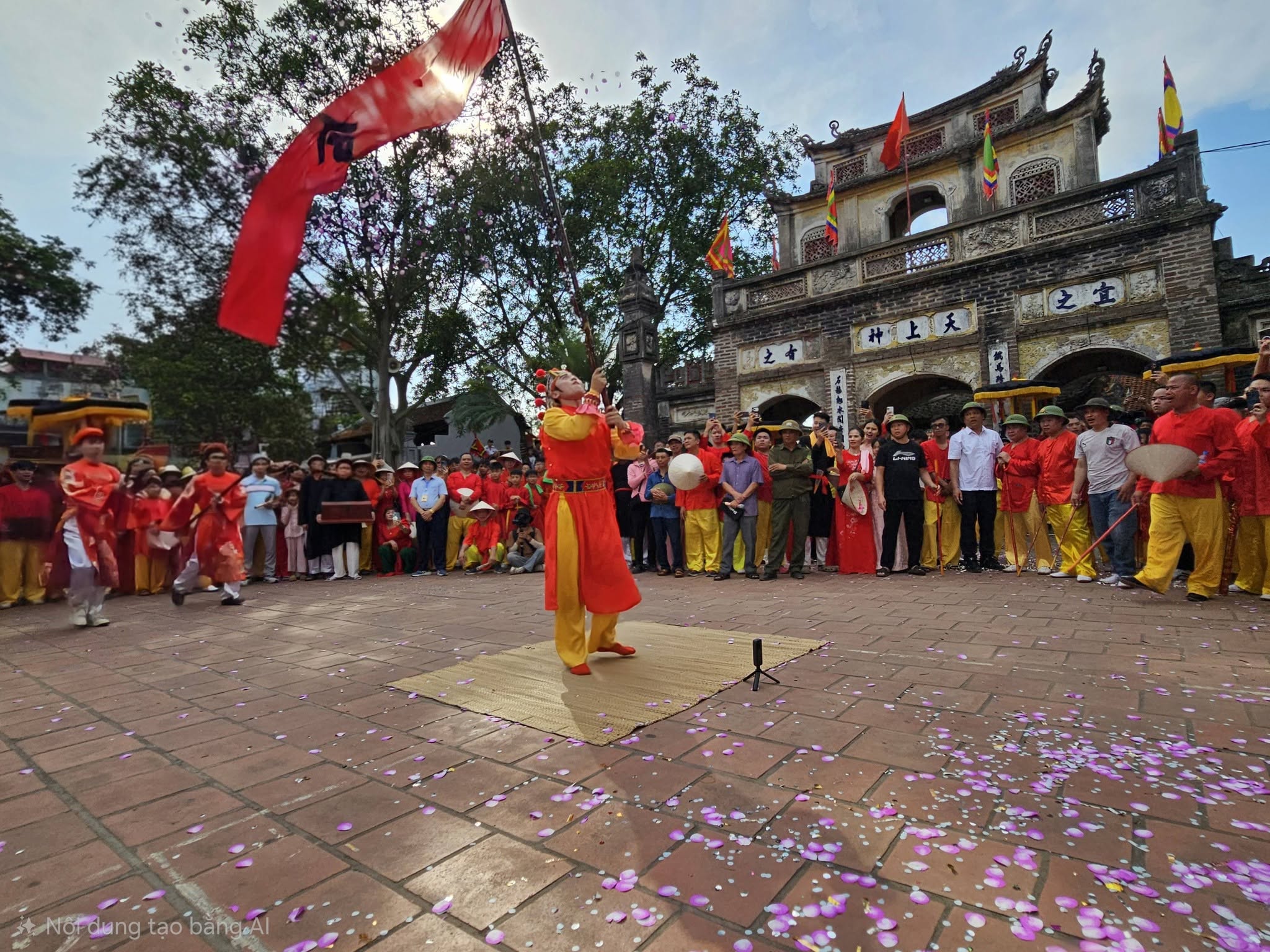
The Gióng Festival at Phù Đổng Temple and Sóc Temple is one of the most distinctive traditional festivals of the northern Vietnamese Delta, associated with the worship of Phù Đổng Thiên Vương, also known as Saint Gióng, the legendary hero who defeated the Ân invaders and defended the country. The festival is not only an occasion to commemorate the merits of a revered national hero, but also a large-scale folk performance space where rituals, processions, dances, songs, theatrical enactments, and symbolic battle scenes are directly practiced and preserved by the community across generations.
The Gióng Festival is held in several localities in Hà Nội and neighboring areas, with rituals sharing many similarities. Among them, the Gióng Festival at Phù Đổng Temple, Phù Đổng Commune, Hà Nội, commemorates Saint Gióng in the land traditionally believed to be his birthplace, while the Gióng Festival at Sóc Temple, Phù Linh Commune, Hà Nội, is associated with the place where Saint Gióng made his final stop before ascending to heaven after defeating the Ân invaders. These two festivals form the central focus of the nomination dossier submitted to UNESCO.
The Gióng Festival honors Phù Đổng Thiên Vương, a figure regarded by the Vietnamese people as one of the Four Immortals of Vietnamese folk belief, together with Tản Viên Sơn Thánh, Chử Đồng Tử, and Liễu Hạnh. The image of Saint Gióng embodies the qualities and actions of a hero who fought foreign invaders, while also reflecting the community’s aspirations for the protection of crops, peaceful living, and prosperity.
According to historical and cultural materials, the original core of the Gióng Festival contained elements of an agricultural festival. During the Lý and Trần dynasties, the festival gradually developed into a symbolic military festival, reenacting the war against foreign invaders, from the preparation of weapons, troops, and provisions to the progress of battles and the celebration of victory. This process of development created a festival with a strong communal character, continuously enriched and practiced by local people over many generations.
Gióng Festival at Phù Đổng Temple
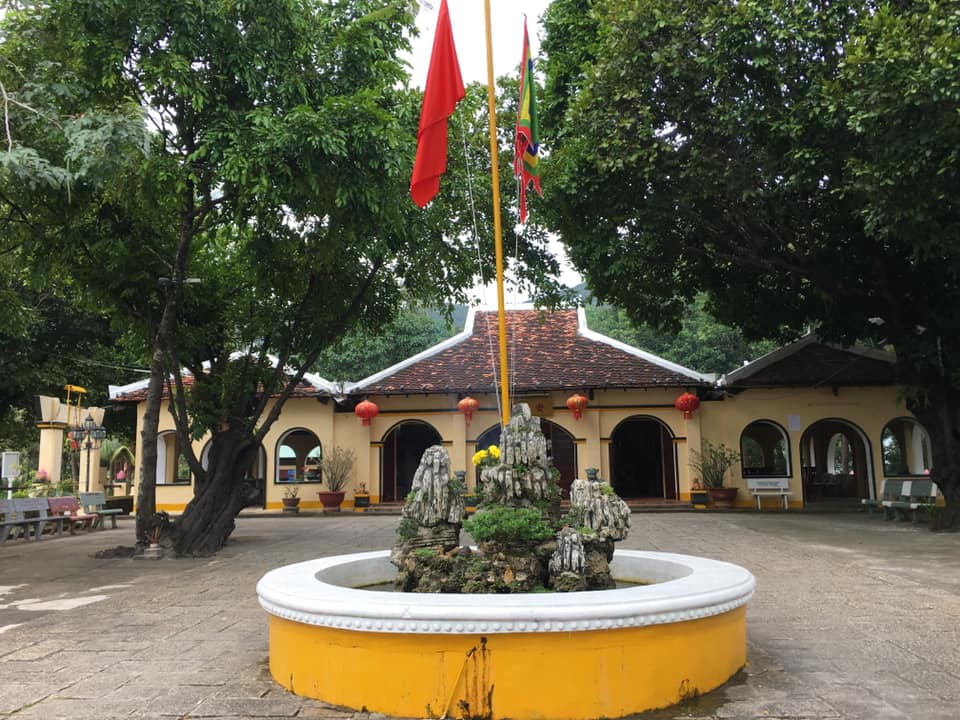
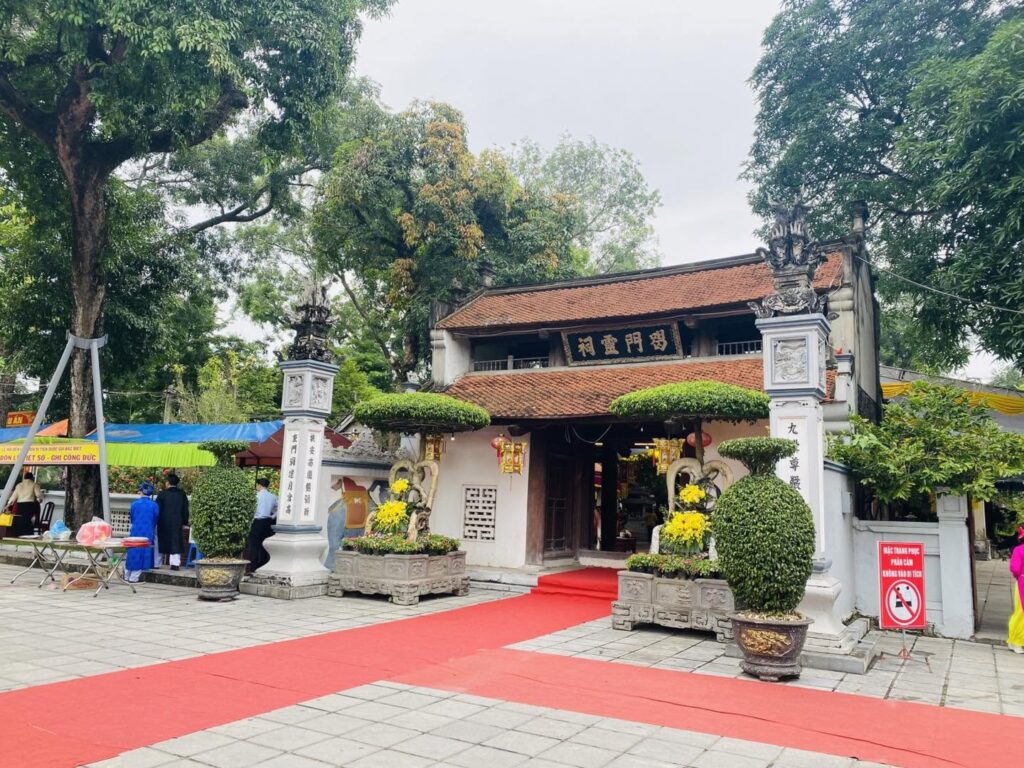
The Gióng Festival at Phù Đổng Temple is held in Phù Đổng Commune, Hà Nội, a place traditionally regarded as the homeland of Saint Gióng. The festival space stretches for approximately 3 kilometers and includes important locations such as Upper Temple, Mother Goddess Temple, dedicated to Gióng’s mother, and Kiến Sơ Pagoda. The festival is also known as the Battle Festival, because its most important component consists of ritual performances reenacting Saint Gióng’s fight against the Ân invaders. The processions alone involve more than 1,000 local residents and young people.
Traditionally, the festival takes place from the 6th to the 12th day of the fourth lunar month every year, with the 9th day of the fourth lunar month serving as the main festival day. Each day in the festival sequence has its own ritual content, forming a relatively complete ceremonial progression from preparation, mobilization, and combat to victory celebrations, military feasts, battlefield inspections, and the closing ceremony.
The 6th day of the fourth lunar month begins with the Water Procession. Participants carry two jars of “sacred” water from Upper Temple to Mother Goddess Temple, where they are placed on a platform beside the well. Approximately 80 ceremonial attendants stand on both sides of the steps leading down to the well. The person drawing the water respectfully fills a ladle, which is passed through several people before being poured into the jar through a filtering cloth. The Water Procession is both a sacred ritual and a reflection of the agricultural cultural tradition, in which water plays a particularly important role in community life.
On the 7th day of the fourth lunar month, the morning features a vegetarian offering procession, consisting of rice and eggplant, from Mother Goddess Temple to Upper Temple, accompanied by the Ải Lao dance. At noon, the Road Inspection Procession takes place, symbolically representing the scouting and checking of routes before the army advances toward the battlefield. This is one of the details that distinguishes the Gióng Festival from many other traditional festivals, as preparations for battle are reenacted through an interconnected system of rituals.
The 8th day of the fourth lunar month is devoted to reviewing preparations for the main festival day. Leaders of the village guilds, together with respected members of the community, conduct a final inspection. One notable ritual is the selection and review of 28 female generals, with the first and second-ranking generals chosen from each guild.
The 9th day of the fourth lunar month, the main festival day, features the most important rituals. It is the day when Saint Gióng’s victory over the Ân invaders is reenacted. The festival begins with a flag procession from Mother Goddess Temple to Upper Temple. When the procession reaches Upper Temple, Gióng’s army performs military movements to the rhythm of drums and gongs. The Ải Lao dance troupe then performs a tiger-hunting and tiger-capturing scene through a traditional tiger dance.
Afterward, when scouts report that the Ân army is stationed at Đống Đàm, Gióng’s army advances toward the battlefield amid the sound of drums, gongs, and commands. Upon reaching the battlefield, three rounds of drums are sounded, followed by a brief moment of silence as a ritual act of remembrance for Saint Gióng. The order to attack is then given, and the vanguard general responds with three rounds of drums. The command flag is unfurled, while drums, gongs, and cheering voices fill the air, marking the beginning of the battle performance.
The battle is represented primarily through the command-flag dance. When the dance ends, the enemy army is symbolically portrayed as scattering and fleeing. After the victory at Đống Đàm, Gióng’s army returns to Upper Temple and holds a military victory feast. However, while the feast is underway, news arrives that the enemy is surrounding Sòi Bia, prompting Gióng’s army to march onward once again.
At Sòi Bia, the battle is reenacted through another command-flag dance. After the enemy is decisively defeated, the enemy general is captured and escorted back to Upper Temple. There, the ritual of the general’s beheading is performed, followed by an offering of the enemy’s severed head to Saint Gióng. Another military feast is then held in celebration of the victory.
On the 10th day of the fourth lunar month, the festival features a literary procession, a military review, and an inspection of weapons, together with rituals giving thanks to Saint Gióng and celebrations of victory through a communal military feast. The 11th day of the fourth lunar month is the Cleansing Ceremony, during which water is carried to the temple to wash ritual objects and weapons. On the 12th day of the fourth lunar month, the procession revisits the two battlefields, symbolizing an inspection to determine whether any enemy soldiers remain alive, before flags are planted to announce victory. In the afternoon, a Victory Report to Heaven and Earth and the closing ceremony are held. Four outstanding performers from the Ải Lao troupe sing and dance Lạc Thành, praising the victories of the army and people during the era of the Hùng Kings, bringing the festival to an end.
Thus, the Gióng Festival at Phù Đổng Temple does not merely reenact a single battle. Instead, it simulates almost the entire course of a military campaign: preparing forces, carrying sacred water, inspecting roads, reviewing generals, marching to war, fighting, capturing enemy commanders, presenting the enemy’s severed head, holding victory feasts, inspecting battlefields, and announcing triumph. This structure gives the festival its distinctive character as a “Battle Festival.”
Gióng Festival at Sóc Temple
If Phù Đổng is regarded as the birthplace of Saint Gióng, then Sóc Mountain is associated with the final moment of his earthly journey. According to legend, after defeating the Ân invaders, Saint Gióng returned to Sóc Mountain, rested, and gazed upon the land and sky for the last time. He removed his battle armor and hung it on a fragrant ironwood tree on Vệ Linh Mountain before ascending to heaven with his horse. In remembrance of the hero, the people living around Sóc Mountain established a temple and organized an annual festival.
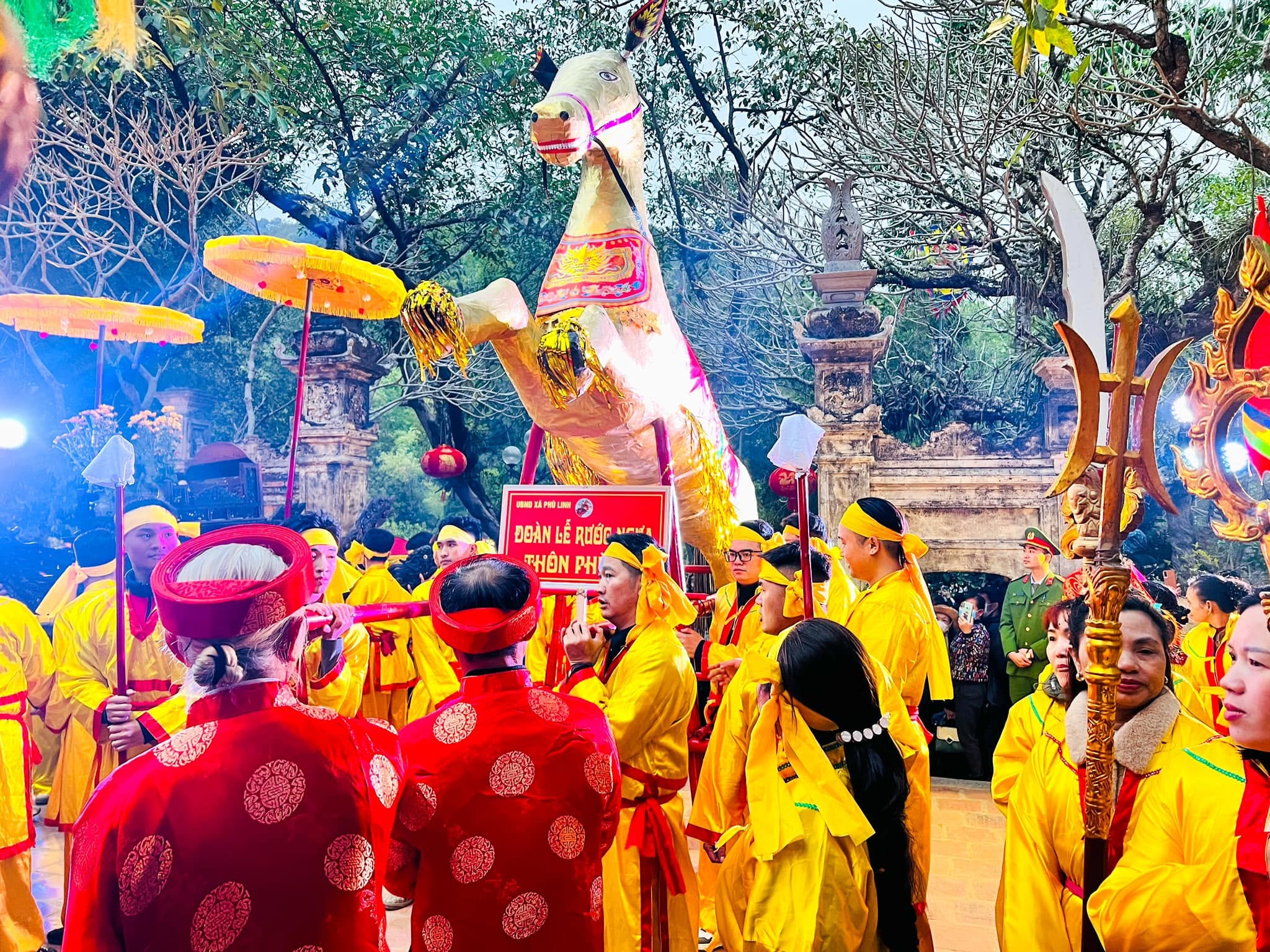
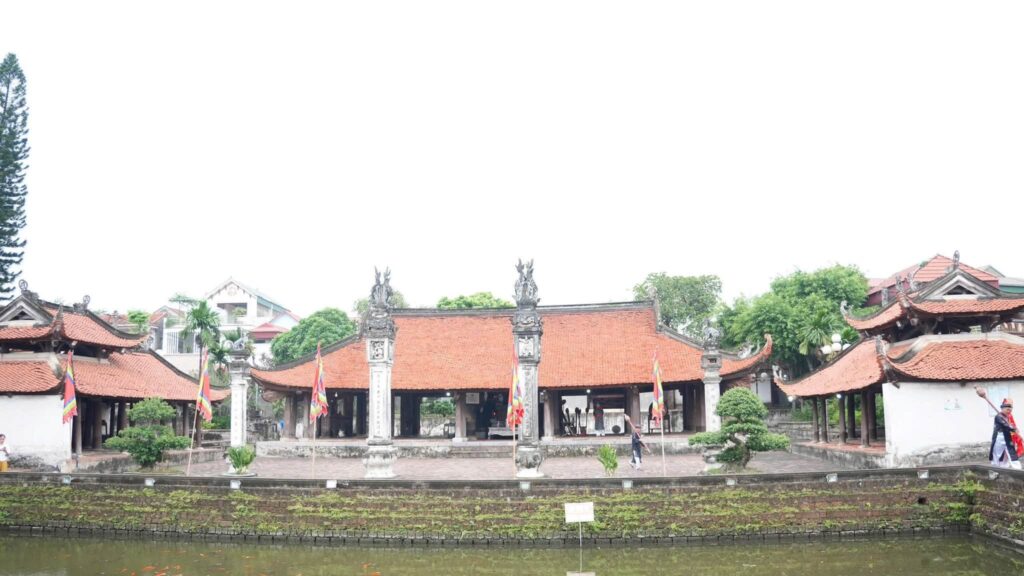
The Gióng Festival at Sóc Temple takes place at the Sóc Temple Complex, located in Vệ Linh Village, Phù Linh Commune, Hà Nội. The complex includes Lower Temple, also known as Trình Temple, Đại Bi Pagoda, Mother Goddess Temple, Upper Temple or Sóc Temple, the Saint Gióng Monument, and the Stele House. Among these, Upper Temple is dedicated to Saint Gióng and serves as the center of the festival’s rituals.
The festival usually takes place from the 6th to the 8th day of the first lunar month. Preparations begin approximately two to three weeks before the opening day. Villages in the surrounding area are assigned different offerings and symbolic objects, creating a distinctive system of communal contributions.
Traditionally, Vệ Linh Village carries the flower-shaped bamboo offerings; Dược Thượng Village carries an elephant; Đan Tảo Village carries betel leaves and areca nuts; Đức Hậu Village carries ivory tusks; Yên Sào Village carries elephant grass; and Yên Tàng Village carries the general. In addition, Phù Mã Village is responsible for the procession of Saint Gióng’s horse, while Xuân Dục Village carries the ceremonial horn. The villages begin preparing their offerings from the middle of the twelfth lunar month and conduct ceremonies at their communal houses on the 5th day of the Lunar New Year.
On the night of the 5th day of the first lunar month, the Mộc Dục Ceremony, or statue bathing ritual, is held at Upper Temple. This is an important rite conducted before the festival officially begins.
At dawn on the 6th day of the first lunar month, following three rounds of drums from Upper Temple, the procession carrying the flower-shaped bamboo offerings from Vệ Linh Village enters Upper Temple to perform the offering ritual. The bamboo flowers are made from bamboo strips approximately 50 centimeters long and 1 centimeter in diameter. Their ends are split and shaped like flowers before being dyed, symbolizing Saint Gióng’s riding whip. After being offered at Upper Temple, the bamboo flowers are carried down to Trình Temple, where the custom of sacred fortune grabbing takes place. People believe that whoever receives one of the bamboo flowers will enjoy good luck during the coming year.
Another distinctive ritual of the Gióng Festival at Sóc Temple is the general-beheading ritual performed by Yên Tàng Village. The ritual includes both a procession and a reenactment of the beheading of an enemy general as a small-scale battle scene, creating a vivid theatrical representation of Saint Gióng’s military victory.
During the festival days, in addition to worship rituals, numerous folk games and community activities are held. On the afternoon of the 8th day of the first lunar month, the elephant-burning ceremony takes place beside Sóc Lake and is regarded as the closing ritual of the festival. Elephants and horses are closely associated with the legend of Saint Gióng, making the symbolic burning of the elephant and horse particularly meaningful within the overall festival sequence.
The Gióng Festival and Its Cultural Heritage Values
One of the most remarkable features of the Gióng Festival is that it is not a stage performance created by professional directors and actors. Local residents are the bearers and practitioners of the heritage, directly preparing offerings, organizing processions, selecting characters, performing rituals, and participating in the theatrical enactments. According to a local resident quoted in the documentary materials, the Gióng Festival is a celebration for the entire population, involving villages throughout the area and maintained through the people’s own efforts.
The rituals of the Gióng Festival can be regarded as a “living museum” of folk beliefs and performing arts, as the festival combines hero worship, agricultural elements, rituals for good fortune, processions, dances, songs, and battle reenactments. These cultural layers are preserved not only in religious buildings and worship spaces, but more importantly through the living practices of the community itself.
On 31 August 2009, the nomination dossier for the Gióng Festival as a Representative Intangible Cultural Heritage of Humanity was completed and submitted to UNESCO headquarters in Paris, France. In 2010, the Gióng Festival at Phù Đổng Temple and Sóc Temple was inscribed by UNESCO as a Representative Intangible Cultural Heritage of Humanity. Festival documentation describes it as a “cultural museum of Vietnam,” preserving multiple layers of culture and belief.
This inscription confirms that the value of the Gióng Festival lies not only in the legendary story of Saint Gióng, but also in the way the community preserves historical and cultural memory through its own rituals. Through processions, drums, flags, dances, elephant and horse figures, military characters, and battle performances, the story of the hero who fought foreign invaders is transformed from legend into a vibrant form of living communal memory.
The Gióng Festival is also a clear expression of the spirit of community in Vietnamese culture. Each village undertakes a particular responsibility, and each participant contributes a role, from preparing offerings to performing rituals. In this way, the festival not only recounts Saint Gióng’s victory but also recreates the collective strength of the community as it comes together to prepare for and defend its homeland.
Today, the Gióng Festival at Phù Đổng Temple and Sóc Temple remains an important highlight of Hà Nội’s cultural life. It also provides visitors with an opportunity to gain a deeper understanding of folk beliefs, traditional performing arts, and the layers of historical memory preserved within Vietnamese culture.
Heritage Information
Heritage name: Gióng Festival at Phù Đổng Temple and Sóc Temple
Type: Traditional festival
Location: Hà Nội City
Gióng Festival at Phù Đổng Temple: From the 6th to the 12th day of the fourth lunar month; the main festival takes place on the 9th day of the fourth lunar month
Gióng Festival at Sóc Temple: From the 6th to the 8th day of the first lunar month
Representative locations: Phù Đổng Temple and Sóc Temple Complex
Outstanding values: Saint Gióng worship, folk performances, symbolic battle reenactments, communal rituals, and folk games
UNESCO: Representative Intangible Cultural Heritage of Humanity, inscribed in 2010
Related decision: Decision No. 5079/QĐ-BVHTTDL dated 27 December 2012