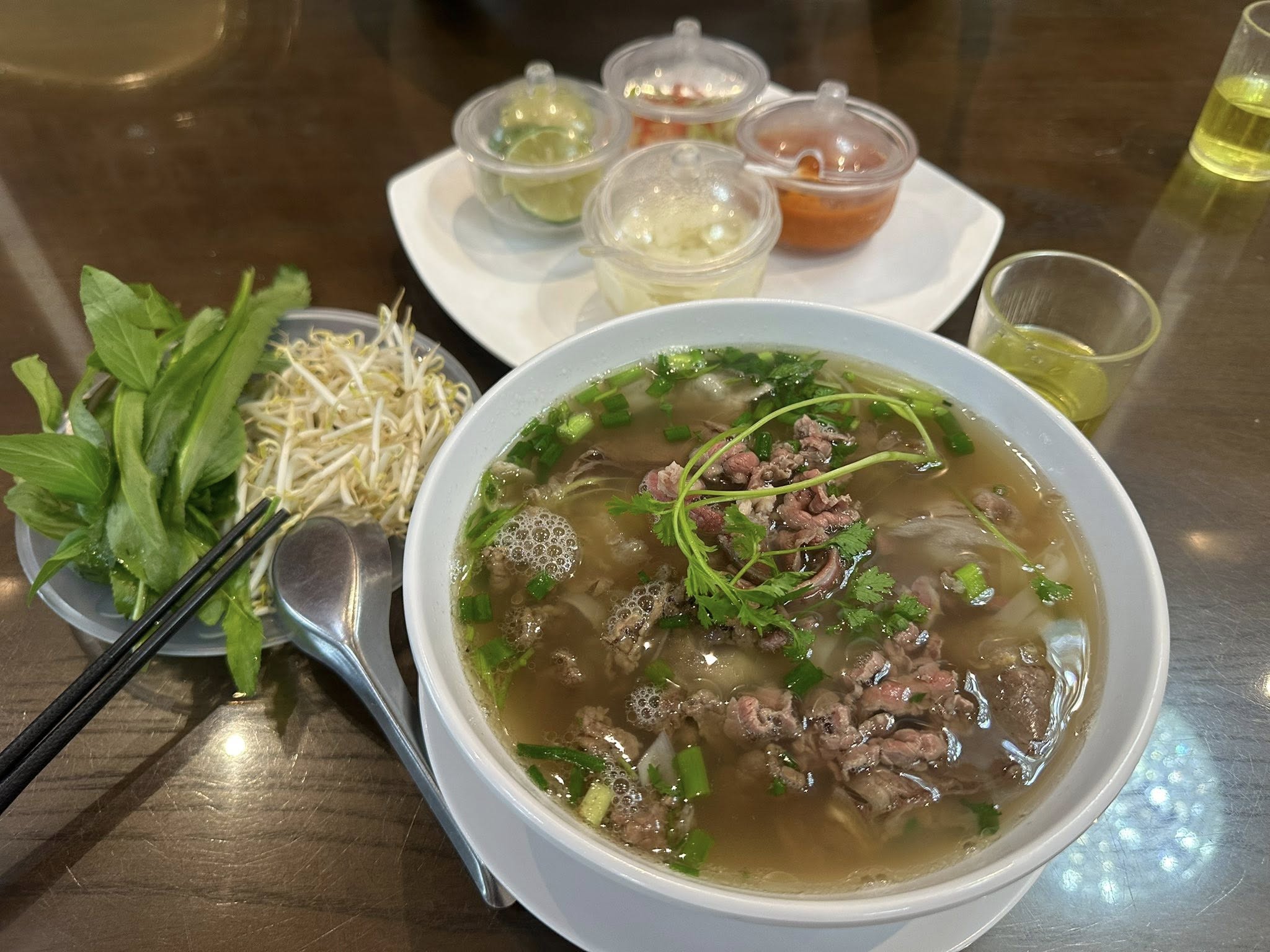
Hanoi Pho is one of the most distinctive symbols of Vietnamese culinary culture, closely associated with the formation and development of Hanoi as an urban center since the early 20th century. From the street vendors who once carried steaming pots through the city, Pho gradually became an integral part of everyday life in Hanoi, shaped, adapted, and passed down through generations.
More than simply a dish, Pho embodies a body of knowledge and skills related to the selection of ingredients, the making of rice noodles, the preparation of broth, the handling of meat, the combination of seasonings, presentation, and the ways in which the dish is enjoyed. Over time, these practices, together with the spaces in which Pho is served and the customs surrounding its consumption, have formed a distinctive part of Hanoi’s urban culture.
- Name: Hanoi Pho
- Cultural space: Hanoi
- Period of formation: Early 20th century
- Main ingredients: Rice noodles, beef or chicken, broth, herbs, and seasonings
- Characteristics: Rice noodles made from plain rice, clear broth with a naturally sweet flavor from bones, combined with aromatic spices and fresh herbs
- Traditional forms: Broth-based Pho, mainly Pho Bo (beef Pho) and Pho Ga (chicken Pho)
- Values: Historical, cultural, culinary, traditional knowledge, social customs, and community livelihood
From Street Vendors in the Early 20th Century
According to various historical and cultural studies, Pho emerged in Hanoi around the beginning of the 20th century. In its early days, it was mainly sold as a form of street food, with vendors carrying pots of broth, rice noodles, and ingredients from one street to another while calling out to attract customers. The period around 1907–1910 is often mentioned when discussing the early development of Pho in Hanoi.
From these mobile food stalls, Pho gradually found its way into permanent shops and became part of urban life. The development of Hanoi, the concentration of population, expanding commercial activity, and the growing demand for meals outside the home created favorable conditions for the Pho trade to flourish.
In this environment, Pho became more than a dish sold for a living. It gradually developed into a profession. Pho makers accumulated knowledge through practice, adjusting ingredients, broth-making techniques, and noodle preparation to suit the tastes of their customers.
Over time, a simple street food became an everyday dish for the people of Hanoi.
Origins and Formation
The origins of Pho remain the subject of different interpretations. Three commonly discussed theories suggest that Pho may have been associated with the French pot-au-feu, influenced by the Chinese beef noodle soup known as ngưu nhục phấn, or developed from traditional Vietnamese dishes such as bún xáo trâu, a buffalo meat and rice noodle dish.
These interpretations point to an important historical context: Pho emerged during a period when Hanoi was experiencing intense cultural and culinary interaction among different communities.
At the beginning of the 20th century, Hanoi was an important urban center of French Indochina. Vietnamese, French, and Chinese communities lived, traded, and interacted in the city, creating a distinctive environment of cultural exchange. Beef became increasingly present in urban food culture, while Vietnamese culinary traditions already had a strong foundation in rice, rice-based foods, noodles, and local herbs and spices.
Within this context, different ingredients and cooking techniques may have come together, been adapted, and gradually refined through the practical experience of food vendors and cooks.
One interpretation suggests that traditional noodle vendors began using beef bones to prepare broth and used thinly sliced rice cakes in place of other noodles. Cooking techniques and the use of seasonings were then gradually adjusted to create a new dish.
Other accounts suggest that Chinese communities may have participated in the preparation and sale of similar dishes in Hanoi. Workers employed in food establishments could have learned these techniques and later opened their own businesses, passing their knowledge on to subsequent generations.
At the same time, people from rural areas with traditions of making rice products, noodles, and prepared foods also contributed to the development of the Pho trade. People from Nam Dinh, particularly villages with a long history of Pho-making such as Van Cu, Tay Lac, and Giao Cu, played an important role in the development of the Pho profession in Hanoi.
The formation of Pho can therefore be understood as a process of cultural interaction, adaptation, and community creativity, taking place within the particular social and cultural environment of early 20th-century Hanoi.
A Bowl of Pho and the Knowledge Behind It
A traditional bowl of Pho consists of rice noodles made from plain rice, beef or chicken, broth simmered from bones, together with scallions, Vietnamese coriander, and accompanying seasonings. Diners may add lime, black pepper, chili sauce, pickled garlic, or fried dough sticks according to their preference.
At first glance, Pho appears to be a relatively simple dish. Yet preparing a complete bowl requires a series of carefully coordinated steps.
Pho noodles are made from rice. The rice is processed and ground into flour, which is then steamed into thin sheets and cut into strands. The noodles need to be soft and thin while retaining enough elasticity to maintain their texture after being blanched in hot water.
The broth is where the cook’s experience becomes most apparent. Bones are prepared and simmered for an extended period. The cook must control the heat and cooking time while regularly removing impurities to keep the broth clear.
Ingredients such as ginger, star anise, cinnamon, black cardamom, and charred onions are used to create the characteristic aroma. However, their proportions and preparation methods vary from one establishment to another.
Some families emphasize the natural sweetness of the bones, while others place greater emphasis on the aroma of spices or the light and delicate character of the broth. These differences contribute to the individual identity of each Pho shop.
Once an order is placed, the rice noodles are briefly blanched, placed in a bowl, topped with the requested meat, followed by scallions and herbs, and finally covered with hot broth.
These actions may appear simple, but they require experience. If the noodles are blanched for too long, the meat is sliced too thickly, or the broth is not sufficiently hot, the character of the finished bowl can change significantly.
In the traditional Pho trade, such skills are not always transmitted through written recipes. Much of the knowledge is learned through observation and practice. The learner watches an experienced cook, repeats the process, and gradually develops the ability to adjust each step through experience.
Broth and Family Recipes
Within Hanoi’s Pho culture, broth is often regarded as the element that determines the distinctive flavor of each establishment.
Every family may have its own method of simmering bones, selecting spices, and balancing flavors. These recipes are often preserved across generations and become part of a family’s professional knowledge.
A good broth depends not only on the ingredients but also on how they are prepared, the length of simmering, the intensity of the heat, and the timing of seasoning.
This explains why different Pho shops can use similar ingredients such as beef bones, ginger, star anise, cinnamon, or black cardamom and still produce distinctly different flavors.
The knowledge of making Pho therefore lies not simply in a list of ingredients, but in the way the cook understands and handles each ingredient.
This is a defining characteristic of traditional knowledge: there are shared principles, but the most refined aspects are accumulated through experience and passed from one person to another.
Hanoi Pho Through Historical Change
The Pho trade did not develop along a single, uninterrupted path. During periods when ingredients were scarce or social conditions changed, Pho makers had to adapt.
When beef became difficult to obtain, chicken Pho became an important alternative. Over time, Hanoi’s traditional Pho culture came to be represented particularly by two major forms: Pho Bo, or beef Pho, and Pho Ga, or chicken Pho.
Beef Pho itself developed numerous ways of ordering the meat, based on the cut and method of preparation, including rare beef, well-done beef, brisket, flank, tendon, shank, marrow, and combinations of different cuts.
Chicken Pho likewise developed different forms, including thigh, wing, back, skin, and combinations of chicken meat and offal.
This diversity demonstrates that Pho is not a fixed recipe. Pho makers have continually adapted the dish to available ingredients, economic circumstances, and the preferences of diners.
The Pho Profession and Its Communities
Pho has created a livelihood system involving many different groups of workers. Behind a single Pho shop are noodle makers, meat suppliers, vegetable and spice vendors, cooks, kitchen assistants, servers, and many related service providers.
In Hanoi, alongside families with long-standing local traditions of making Pho, many people from other parts of Vietnam have established themselves through the Pho trade. Among them, the community from Nam Dinh has played a notable role.
According to accounts from some long-established Pho shop owners, people from villages such as Van Cu, Tay Lac, and Giao Cu came to Hanoi to work, learn the trade, and eventually open their own shops.
While working in Hanoi, they continued to adapt their cooking methods and seasoning to suit local tastes.
The movement of these workers helped Pho transcend its original local boundaries. The profession traveled with the people who practiced it, spreading to cities and regions across Vietnam and creating a broad network of communities connected by the trade.
Space and the Culture of Eating Pho
An important part of Hanoi Pho lies in the very spaces where it is eaten.
Long-established Pho shops are often modest in size. The cooking counter may stand directly at the front of the shop, while dining tables occupy the interior, sidewalk, or other compact spaces.
Diners can often watch the cook blanch the noodles, slice the meat, add herbs, and ladle the hot broth into the bowl.
The names of many Pho shops also reflect everyday popular culture. Some are named after their owners, while others take their names from nicknames or distinctive characteristics of the people who run them, such as Pho Chieu, Pho Tinh, Pho Tu Lun, Pho Suong, Pho Vui, and Pho Nho.
Long-established names such as Pho Thin Bo Ho and Pho Thin Lo Duc have likewise become familiar references when discussing Hanoi Pho.
The way Pho is eaten has also developed into a social custom. People in Hanoi may eat Pho in the morning, at midday, in the evening, or late at night. A steaming bowl of Pho can be part of everyday life for different generations, from children to older people.
Pho therefore exists not only in kitchens and restaurants but also as part of the rhythm of urban life.
The Cultural Values of Hanoi Pho
The value of Hanoi Pho lies not only in its taste but also in the body of knowledge, skills, and customs maintained by the community.
These include knowledge of ingredient selection, rice noodle production, bone-simmering techniques, seasoning, meat preparation, presentation, and service.
They also include the stories of families who preserve the profession, people who learn from previous generations, and those who carry the trade from their hometowns into urban centers.
Historically, Pho reflects the transformation of Hanoi through urbanization and social change.
Culturally, it demonstrates processes of interaction and adaptation among different communities.
Socially, Pho is closely connected with the everyday eating habits of urban residents.
Economically, the Pho profession provides livelihoods for many families while connecting them to a wider supply chain of ingredients and services.
Hanoi Pho in the Flow of Vietnamese Culture
From the street vendors of the early 20th century, Pho has undergone a long journey to become one of Vietnam’s most widely recognized dishes.
Hanoi has been one of the important cultural spaces in which the character of Pho and its traditions of consumption were shaped. Here, the dish was embraced by the community, adapted to changing circumstances, and refined across generations.
From Hanoi, Pho continued to spread throughout Vietnam. Each locality may adapt ingredients, cooking methods, and flavors, creating its own variations while retaining the essential elements of the dish.
Today, Pho has moved beyond Vietnam and can be found in many countries around the world. The word “Pho” itself has become familiar in international culinary culture.
This journey demonstrates that the vitality of Pho does not lie in preserving a single unchanging recipe, but in its ability to adapt, transmit knowledge, and remain actively practiced by communities.
A bowl of Pho today therefore contains many layers of stories: the story of rice, rice noodles, broth, spices, street vendors, family businesses, and the life of a city that has transformed over more than a century.
Hanoi Pho is more than a dish. It is part of the city’s collective memory, a body of culinary knowledge, and a distinctive expression of Vietnamese culinary culture.