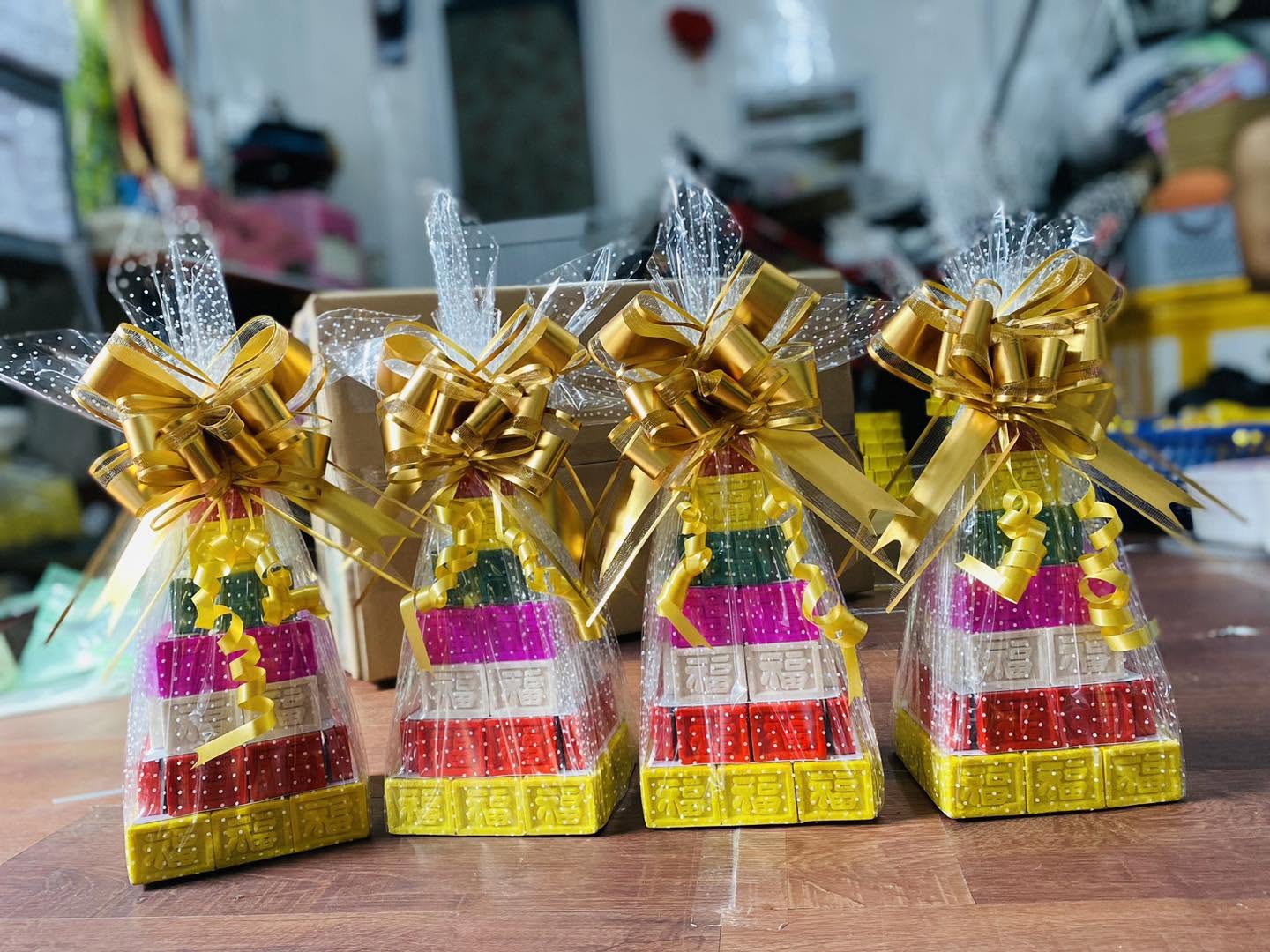
Bánh in, also known as bánh cộ or bánh ngũ sắc, is a traditional cake closely associated with the culinary and cultural life of Huế. For generations, Huế people have used bánh in for ancestral worship, religious offerings and serving guests, particularly during Tết Nguyên Đán, the Vietnamese Lunar New Year. Small, colorful and carefully molded, the cakes carry a simple yet distinctive character of Huế cuisine.
From Mung Beans and Sugar to Bánh In
The name bánh in comes from the traditional method of pressing the cake into wooden molds. Its main ingredients are simple, primarily mung beans and sugar, but producing cakes with a smooth texture and balanced flavor requires several careful steps.
The mung beans are washed, cooked until tender and then thoroughly mashed. This is an important stage because the beans must be clean and finely processed so that the finished cake does not develop an unpleasant smell or become lumpy. The mashed beans are then cooked with sugar, traditionally at a ratio of approximately 1 kilogram of mung beans to 1.5 kilograms of sugar.
The mixture is stirred and beaten continuously over low heat for several hours until the beans and sugar become evenly blended, smooth and slightly expanded. Once this process is complete, the mixture is left to dry for about a day before being pressed into molds.
The molds come in many shapes, with the longevity character “Thọ” being one of the most common. Beyond its connection with traditional stories and symbolism, the character also expresses wishes for longevity and good fortune in the New Year. Lotus-shaped cakes are also commonly made for Buddhist ceremonies, as the lotus is an important symbol in Buddhist culture.
Small Cakes with the Character of Huế
After being molded, the cakes are dried carefully. Controlling the heat is an important part of the process. If the temperature is too low, the cakes take too long to dry and may not develop the desired texture. If the heat is too high, the outside can burn while the inside remains insufficiently dry.
Once finished, the cakes are neatly wrapped in colorful paper. Their shapes vary widely, including round, square, rectangular, hexagonal and octagonal forms, creating small packages that are both attractive and deeply connected with traditional festive culture.
Bánh in has a smooth texture with a sweet, fragrant flavor derived mainly from mung beans and sugar. The simplicity of its ingredients, combined with the meticulous preparation process, has made it a distinctive traditional specialty of Huế.
Bánh In in the Daily Life of Huế
Bánh in has long been associated with Huế’s traditional culinary culture and was once known as a delicacy offered to the imperial court. Over time, it became a familiar part of local life. During festivals and Tết, bánh in may be found on ancestral altars and in spaces dedicated to Buddhist worship or Ông Địa, the Earth God.
One of the most characteristic ways to enjoy bánh in is with a cup of hot tea. The sweet, fragrant flavor of the cake contrasts with the gentle bitterness and astringency of tea, creating a pleasant balance.
In the quiet of an early morning, a small piece of bánh in accompanied by a cup of hot tea evokes a distinctly Huế atmosphere: simple, unhurried and deeply rooted in tradition.
Quick Information
| Item | Information |
|---|---|
| Name | Hue Bánh In |
| Other names | Bánh cộ, Bánh ngũ sắc |
| Location | Huế, Viet Nam |
| Main ingredients | Mung beans and sugar |
| Traditional method | Pressed and molded using wooden molds |
| Common shapes | Longevity character “Thọ”, lotus, round, square, rectangular, hexagonal and octagonal |
| Occasions | Tết, ancestral worship, religious ceremonies and serving guests |
| Traditional pairing | Hot tea |