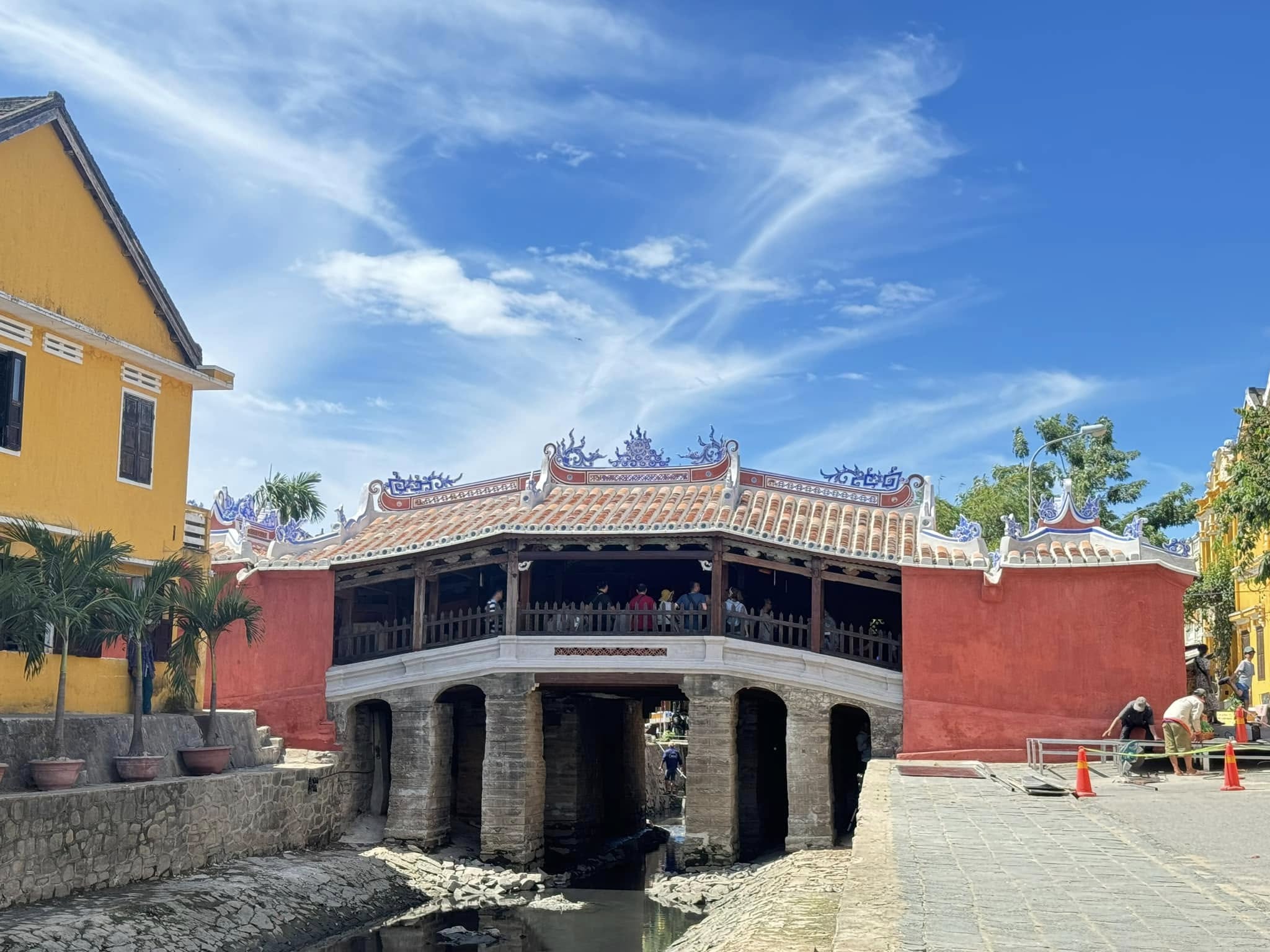
The Japanese Covered Bridge in Hoi An, also known as the Japanese Bridge or Lai Vien Kieu, is one of the most iconic architectural landmarks of Hoi An Ancient Town. Located near the junction of Nguyen Thi Minh Khai and Tran Phu streets, the bridge crosses a small waterway within the historic urban area and is closely associated with Hoi An’s development as a bustling international trading port.
After more than 400 years of history, the Japanese Covered Bridge has become not only a historic crossing but also a distinctive symbol of Hoi An’s architecture, culture, and spiritual life.
Built by Japanese Merchants
The Japanese Covered Bridge was constructed in the early 17th century by Japanese merchants who had settled and traded in Hoi An. During the period when Hoi An flourished as an international trading port, the Japanese community played an important role in the town’s commercial and cultural development.
The structure was originally known as the Japanese Bridge, reflecting its connection with the Japanese merchant community. In 1653, a worship space was added to the northern side of the bridge, extending outward toward the middle of the structure. From that time, local residents came to call it Chua Cau, meaning the “Bridge Pagoda.”
The bridge is regarded as a particularly distinctive surviving architectural work with Japanese origins in Hoi An, while also demonstrating the cultural interaction among the different communities that once lived and traded in the port town.
Lai Vien Kieu and the Meaning of “Visitors from Afar”
One of the most recognizable features of the Japanese Covered Bridge is the large plaque bearing the three Chinese characters “Lai Vien Kieu” above the entrance.
According to the source tradition, in 1719, Lord Nguyen Phuc Chu visited Hoi An and gave the bridge the name Lai Vien, meaning “visitors from afar” or “friends from distant places.” The name reflects Hoi An’s historic role as an international trading center that welcomed merchants and residents from many different lands.
Lai Vien Kieu therefore represents more than the bridge itself. Its name evokes the history of trade, cultural exchange, and international connections that shaped Hoi An over the centuries.
A Unique Blend of Vietnamese, Japanese and Chinese Architecture
The Japanese Covered Bridge is distinguished by an architectural style that brings together elements associated with Vietnamese, Japanese, and Chinese cultures. These influences can be seen in its structure, roof, decorative details, and religious space.
The wooden bridge is approximately 18 meters long and covered by a roof of traditional yin-yang tiles. A central passageway runs across the bridge, while narrow covered corridors on both sides provide places for people to pause and rest. The structure consists of seven wooden bays, decorated with elaborate carved motifs and traditionally finished in red lacquer.
The main facade faces the Hoai River. The combination of timber construction, tiled roofing, carved details, and sheltered walkways creates an architectural composition that blends Japanese characteristics with Vietnamese and Chinese artistic influences.
At the two ends of the bridge stand wooden animal statues. One end features a dog, while the other features a monkey. According to tradition, these animals were revered by the Japanese in ancient times. Another interpretation associates the two animals with the period of the bridge’s construction.
A Spiritual Space and the Legend of the Water Monster
One of the most distinctive features of the Japanese Covered Bridge is that the temple does not enshrine the Buddha. Instead, it is dedicated to the North Emperor Tran Vo, a protective deity believed to safeguard the land and bring peace, happiness, and good fortune to people.
The spiritual tradition surrounding the bridge is connected with the legend of Mamazu, a giant water monster in Japanese folklore. According to the legend, the creature lay beneath the earth and could cause earthquakes and disasters whenever it moved its tail.
The Japanese Covered Bridge was therefore regarded as a symbolic sword driven into the creature’s back, preventing it from thrashing its tail.
Through this legend, the bridge became associated with beliefs surrounding the protection of the community from water-related disasters and destructive forces, expressing people’s hopes for safety, peace, and favorable conditions.
More Than 400 Years of History
Throughout its long history, the Japanese Covered Bridge has undergone numerous restoration campaigns to protect it from time and environmental conditions. Historical accounts record at least six restoration projects, while some sources mention seven.
Because the structure is primarily made of wood and stands in an area frequently affected by heavy rain and flooding, deterioration has been a recurring challenge. Since 2020, following several storms and floods, wooden supports were installed in some areas to help stabilize the structure.
At the end of December 2022, the People’s Committee of Hoi An City began a major restoration project for the Japanese Covered Bridge, with an investment of more than VND 20 billion. The project aimed to preserve the bridge’s architectural, historical, and cultural values while ensuring that this important landmark could continue to form part of the ancient town’s historic landscape.
In 1990, the Japanese Covered Bridge was recognized as a National Historical and Cultural Monument. It remains one of the most recognizable features of Hoi An Ancient Town and contributes to the character of the historic urban area recognized by UNESCO as a World Cultural Heritage Site.
A Symbol of Hoi An Ancient Town
The Japanese Covered Bridge is simultaneously a historic crossing, a spiritual site, and an important reminder of Hoi An’s history as a place of international cultural exchange.
More than four centuries of history have made the structure an inseparable part of Hoi An’s urban memory. Its weathered tiled roof, wooden structure, animal statues, Lai Vien Kieu plaque, and surrounding ancient streets create an image strongly associated with the town itself.
The image of the Japanese Covered Bridge is also featured on Vietnam’s polymer VND 20,000 banknote, making this historic landmark familiar to people throughout the country.
Today, walking across the Japanese Covered Bridge means more than simply crossing a historic structure. It offers a glimpse into the history of Hoi An, where Vietnamese, Japanese, and Chinese cultural influences came together within a small but remarkably significant architectural landmark.
Quick Facts
| Item | Information |
|---|---|
| Name | Japanese Covered Bridge |
| Other names | Japanese Bridge, Lai Vien Kieu |
| Location | Hoi An Ancient Town, Da Nang |
| Position | Near the junction of Nguyen Thi Minh Khai and Tran Phu streets |
| Construction period | Early 17th century |
| Origins | Associated with the Japanese merchant community in Hoi An |
| Length | Approximately 18 meters |
| Architecture | Wooden structure, yin-yang tiled roof, combining Vietnamese, Japanese, and Chinese elements |
| Worship space | Dedicated to the North Emperor Tran Vo |
| Heritage status | National Historical and Cultural Monument, recognized in 1990 |
| Distinctive features | Covered bridge, wooden dog and monkey statues at the two ends |
| Symbolic value | One of the most recognizable landmarks of Hoi An Ancient Town |