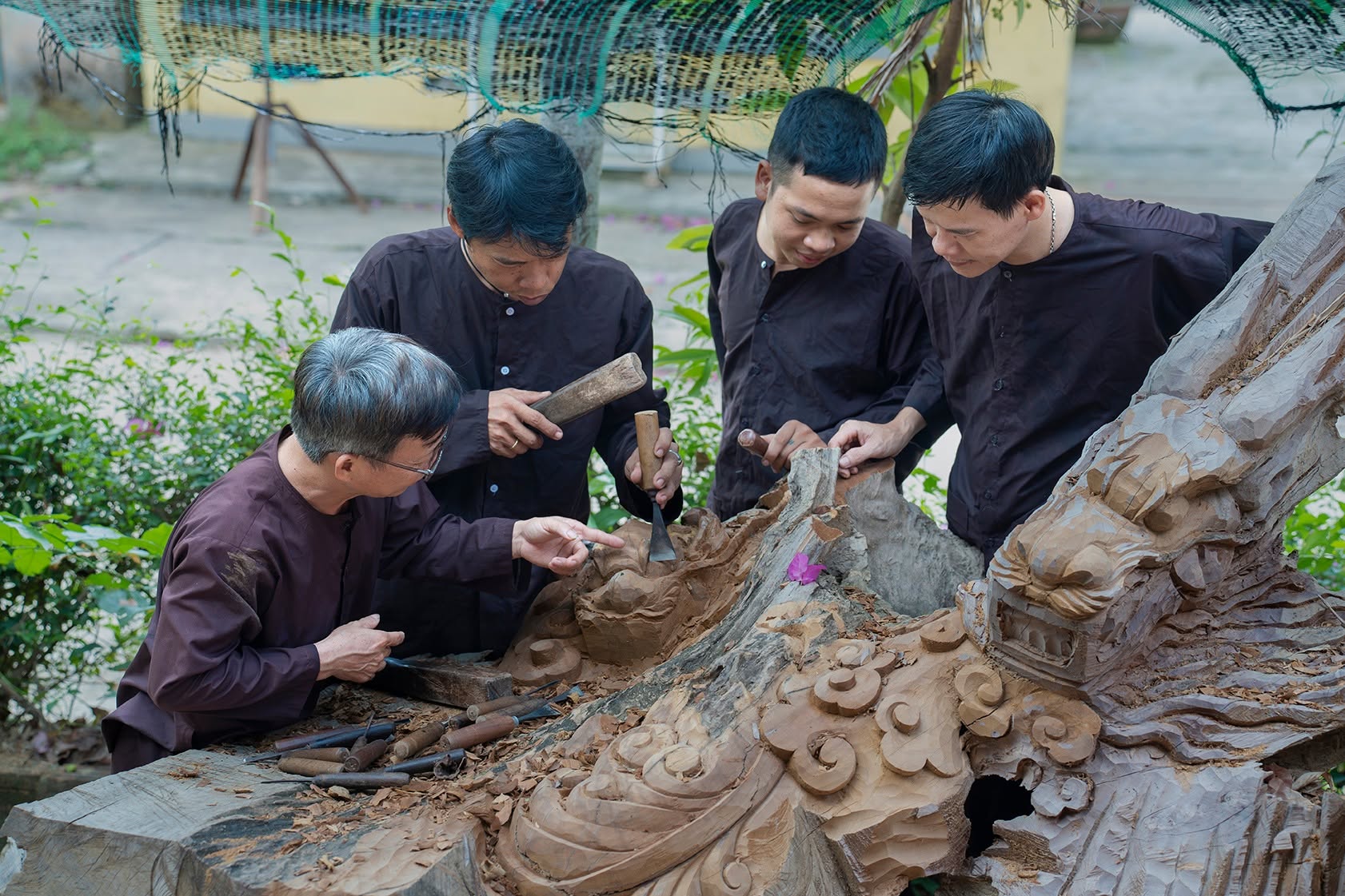
Located along the Thu Bon River, opposite Hoi An Ancient Town, Kim Bong Woodworking Village is one of Central Vietnam’s long-established traditional craft communities. With a history spanning more than four centuries, generations of skilled carpenters have helped shape the architectural character of Hoi An, from traditional wooden houses, communal halls, temples, and ancestral worship buildings to household furniture and the large wooden trading boats that once traveled along Vietnam’s coastal trade routes.
Renowned for its intricate woodcarving techniques, Kim Bong woodworking also preserves an extensive body of traditional knowledge relating to timber selection, wooden structures, furniture making, and boatbuilding. These skills have been passed down through generations, creating a distinctive artistic tradition closely associated with the development of Hoi An as an international trading port.
On November 21, 2016, Kim Bong Woodworking was inscribed on Vietnam’s National List of Intangible Cultural Heritage under Decision No. 4036/QĐ-BVHTTDL issued by the Ministry of Culture, Sports and Tourism.
This recognition acknowledges the craft’s historical, cultural, and technical significance, as well as the contributions of the local artisan community to Vietnam’s architectural heritage.
Kim Bong Village and Its Cultural Landscape Along the Thu Bon River
Historically known as Kim Bong Chau, the village belonged to My Khe Canton in Duy Xuyen District. In later periods, most of the traditional craft area became part of Cam Kim Commune, Hoi An City, Quang Nam Province. Following administrative reorganization, it is now located in Hoi An Ward, Da Nang City.
Situated along the Thu Bon River and surrounded by waterways on three sides, Kim Bong occupies a favorable location close to the historic trading port of Hoi An.
For centuries, the Thu Bon River served as an important transportation and commercial route connecting inland settlements, riverside craft villages, and the international port.
This strategic location allowed Kim Bong carpenters to transport wooden products to other areas while gaining exposure to different construction techniques and architectural traditions.
According to oral accounts preserved by descendants of the Nguyen, Phan, Huynh, and Truong lineages in Cam Kim, the founders of the village’s woodworking tradition originally came from Thanh Hoa Province and settled in the area during the 16th century.
Recognizing the advantages of the riverside landscape and its proximity to Hoi An, these early settlers established a permanent community and gradually developed woodworking as an important occupation.
Their earliest work included simple bamboo-and-thatch houses, followed by traditional timber-framed dwellings, particularly the three-bay, two-side-wing house design.
As their skills developed, local craftsmen also began producing household furniture, storage containers, and wooden boats for river transportation.
The combination of geographic advantages, growing local demand, and inherited craftsmanship laid the foundation for Kim Bong’s emergence as a renowned woodworking village.
Origins and Development of Kim Bong Woodworking
From the late 16th century through the 17th century, Hoi An experienced rapid commercial growth and became one of the most important international trading ports in Dang Trong, the southern region of Vietnam during the period of political division.
Trade with Vietnamese and foreign merchants stimulated urban development, creating increasing demand for houses, shops, warehouses, religious buildings, and trading vessels.
Kim Bong woodworking flourished within this environment.
Local carpenters were commissioned to construct residential houses, ancestral halls, communal houses, temples, shrines, and other buildings throughout Hoi An.
They also produced furniture, religious objects, and wooden vessels used for fishing and transporting merchandise.
One particularly important activity was the construction of ghe bau, traditional wooden cargo boats designed to carry goods along long-distance coastal trading routes.
As the craft expanded, woodworking activities became increasingly specialized, eventually developing into four main branches: architectural carpentry, household furniture making, artistic woodcarving, and wooden boatbuilding.
Different hamlets developed their own areas of expertise. Trung Chau and Phuoc Thang became associated with architectural carpentry and decorative woodworking, while Dong Ha and Ngoc Thanh specialized in boatbuilding. Trung Ha and Vinh Thanh were known for producing household wooden goods.
This division of labor reflected the growing technical sophistication and professional organization of the craft community.
Kim Bong carpenters also traveled beyond their village to work on important construction projects.
According to the recollections of village elders, some craftsmen were recruited by the Nguyen imperial court to work on palaces and royal tombs in Hue.
Highly skilled carpenters could receive official recognition, including the title tuong muc and honorary ranks corresponding to the eighth or ninth grades of the imperial administrative system.
Local historical accounts also record that Huynh Kim Hon, a carpenter from Kim Bong, participated in the construction of the Ho Chi Minh Mausoleum in Hanoi.
These examples illustrate how the influence of Kim Bong woodworking extended far beyond Hoi An, contributing to architectural projects in different parts of Vietnam.
The Four Traditional Branches of Kim Bong Woodworking
Over generations, Kim Bong woodworking developed into a diverse system of specialized occupations serving architectural, domestic, religious, and transportation needs.
Architectural carpentry is one of the village’s most significant traditions. It involves constructing timber-framed houses, ancestral halls, communal houses, temples, shrines, and other traditional buildings.
Craftsmen must understand structural design, timber selection, joinery, column-and-beam assembly, and decorative detailing.
Traditional wooden buildings in Hoi An are particularly notable for their combination of practical structural techniques and artistic woodcarving.
Household furniture making focuses on producing everyday wooden objects, including cabinets, tables, chairs, beds, shelves, chests, boxes, trays, and serving utensils.
These products combine practical functions with careful craftsmanship, balanced proportions, and decorative elements.
Artistic woodcarving is the branch most closely associated with the creative abilities of Kim Bong artisans.
From carefully selected pieces of timber, craftsmen produce statues, reliefs, decorative objects, religious furnishings, and other works inspired by traditional cultural imagery.
According to village records, the range of products once included more than 50 types of decorative and household wooden objects, along with over 47 types of religious and ceremonial woodwork.
Wooden boatbuilding reflects the village’s close relationship with the Thu Bon River and Hoi An’s maritime trading history.
Local craftsmen built various types of wooden vessels, including small boats, riverboats, cargo boats, and larger trading vessels.
Boatbuilding required specialized knowledge of hull design, buoyancy, structural strength, and the operating conditions of rivers and coastal waters.
Although each branch developed its own techniques, all four shared a foundation of woodworking knowledge, traditional tools, material preparation, and apprenticeship-based training.
Traditional Woodcarving Techniques and the Kim Bong Artistic Style
One of the most distinctive characteristics of Kim Bong woodworking is its sophisticated tradition of decorative carving.
Over centuries, local artisans developed expertise in several techniques, including incised carving, relief carving, openwork carving, and intricate multi-layered carving.
Each method requires precision, artistic judgment, and a detailed understanding of the properties of wood.
Incised carving creates patterns and lines below the surface of the timber, often producing delicate decorative details.
Relief carving raises figures and ornamental motifs above the background, creating depth and three-dimensional effects.
Openwork and multi-layered carving involve removing selected sections of wood to create openings, overlapping patterns, and elaborate decorative compositions.
By combining these techniques, Kim Bong craftsmen produce flowing curves, balanced forms, and lively ornamental designs on architectural components, religious objects, and decorative products.
The village’s artistic identity developed within the multicultural environment of Hoi An.
As an international trading port, Hoi An was a meeting place for Vietnamese, Chinese, Japanese, and other Asian and international cultural traditions.
Through contact with different artistic styles, local craftsmen selectively incorporated external influences while maintaining established Vietnamese woodworking techniques.
Over time, this process contributed to the development of Hoi An’s distinctive architectural character, in which traditional timber structures and decorative details reflect both local craftsmanship and historical cultural exchange.
Many surviving wooden buildings in Hoi An continue to demonstrate the skill and artistic sensitivity of generations of Kim Bong carpenters.
Craft Ancestor Worship and the Cultural Life of Kim Bong Village
Alongside the establishment of their settlement and woodworking activities, Kim Bong residents developed religious and communal spaces dedicated to honoring village founders and the traditional ancestors of their craft.
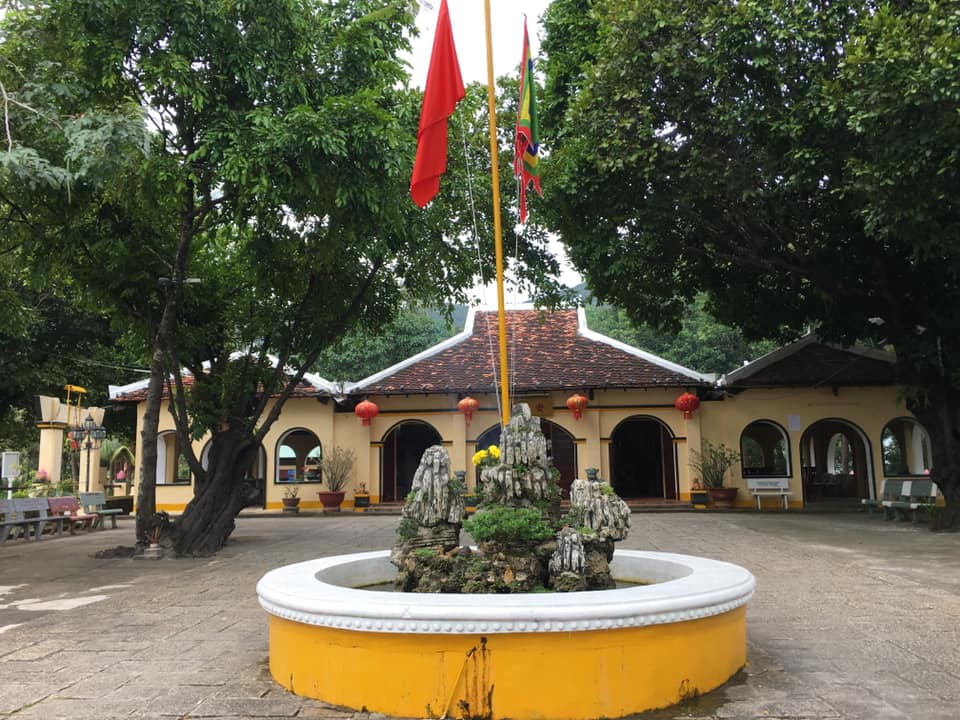
The Kim Bong Founders’ Communal House, known locally as Dinh Tien Hien Kim Bong, occupies an important place in the community’s spiritual life.
It reflects the Vietnamese tradition of expressing gratitude toward ancestors, early settlers, and those who contributed to the development of the village.
Ancestral halls belonging to local lineages and household worship spaces also help maintain connections between family traditions, professional identity, and community life.
According to traditional customs, Kim Bong carpenters do not identify a single founder unique to their village.
Instead, they honor figures widely associated with woodworking traditions, particularly Lo Ban and Lo Boc.
Some families also worship Cuu Thien Huyen Nu or Tien Su, figures revered within Vietnamese traditional occupational beliefs.
Many woodworking households maintain an altar dedicated to the craft ancestors in a prominent position within the home.
This practice expresses respect for previous generations and reflects the belief that professional skill should be accompanied by gratitude, responsibility, and ethical conduct.
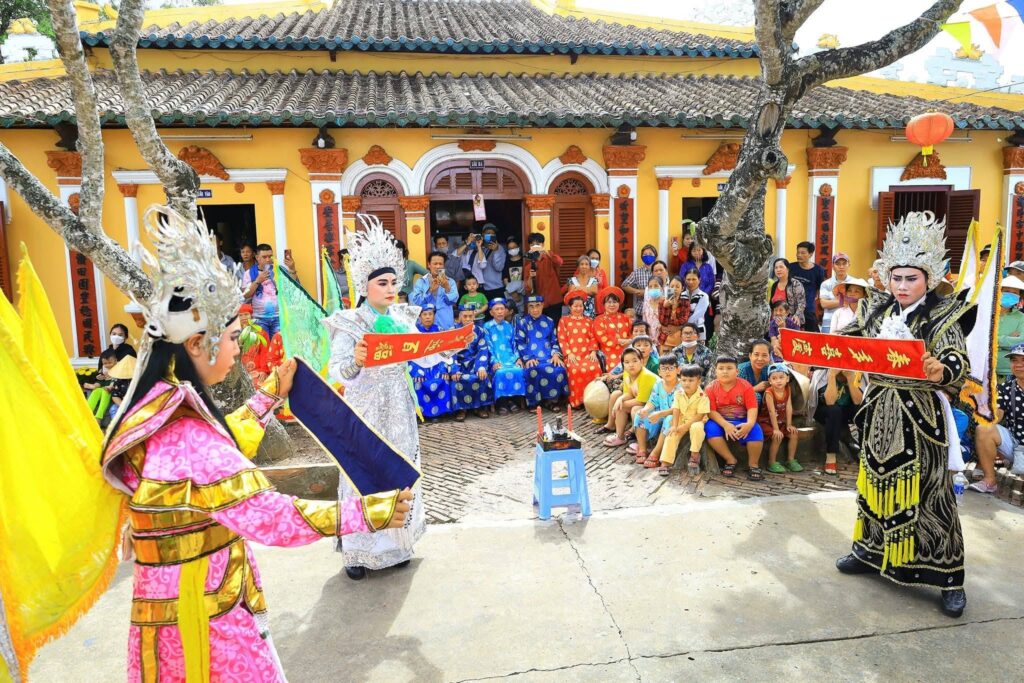
Every year, on the sixth day of the first lunar month, Kim Bong carpenters gather at the village’s founders’ communal house to observe the traditional craft ancestor commemoration ceremony.
The occasion provides an opportunity to honor earlier generations, strengthen relationships among craftsmen, and pray for a peaceful and prosperous working year.
Traditionally, the ceremony also marks the symbolic reopening of woodworking activities after the Lunar New Year.
These customs remain an important part of the village’s intangible cultural heritage, helping transmit community values alongside technical knowledge.
Historical, Cultural, and Scientific Significance
Kim Bong woodworking played an important role in the formation and development of Hoi An as a historic trading port.
From a historical perspective, the craft emerged early in the development of the region and helped meet the architectural and practical needs of a growing commercial center.
Buildings constructed or decorated by Kim Bong craftsmen provide valuable evidence of traditional architectural practices, settlement history, and urban life in Central Vietnam.
The participation of local carpenters in construction projects in Hue and other regions further demonstrates the craft’s wider historical influence.
From a cultural perspective, Kim Bong woodworking preserves an extensive body of knowledge accumulated through generations of practice.
Timber selection, material preparation, traditional joinery, structural assembly, decorative carving, and boatbuilding all reflect the relationship between practical experience and artistic creativity.
Many skilled craftsmen have been recognized for their contributions throughout different historical periods.
Today, experienced artisans continue to play an essential role in teaching younger generations, maintaining traditional techniques, and supporting the restoration of historic wooden structures.
From a scientific and academic perspective, Kim Bong woodworking provides valuable material for research into architecture, fine arts, history, ethnology, and heritage conservation.
Traditional timber structures, carving methods, labor organization, and occupational customs offer insights into the technological and cultural development of craft communities.
Research into Kim Bong woodworking also contributes to understanding the artistic exchanges that shaped Hoi An, where indigenous Vietnamese traditions interacted with influences from other regions and countries.
Preserving Kim Bong Woodworking Through Cultural Tourism
Like many traditional craft communities, Kim Bong has experienced periods of difficulty as economic conditions, consumer preferences, and manufacturing methods have changed.
However, the growth of heritage conservation and tourism in Hoi An has created new opportunities for the craft’s revival.
Local artisans and workshops continue to produce household furniture, decorative woodwork, religious objects, and architectural components.
Some craftsmen also participate in the restoration and conservation of traditional wooden buildings.
According to village records, Kim Bong products have been distributed to domestic markets including Da Nang, Hanoi, Ho Chi Minh City, and other Vietnamese localities.
Certain artistic wood products have also reached international markets in Europe, North America, and Australia.
Tourism provides opportunities for artisans to introduce their products, demonstrate traditional techniques, and share the village’s cultural history with visitors.
Travelers visiting Kim Bong may observe woodworking activities, discover traditional hand tools, learn about carving techniques, and explore locally made wooden products.
These experiences help communicate the cultural significance of craftsmanship while supporting local livelihoods.
Nevertheless, the long-term preservation of Kim Bong woodworking depends on more than tourism alone.
Maintaining apprenticeship traditions, protecting the village’s cultural environment, supporting experienced artisans, and encouraging younger generations to acquire traditional skills are essential to the craft’s future.
By combining heritage conservation with appropriate contemporary development, Kim Bong can continue to preserve its distinctive identity while responding to changing social and economic needs.
Recognition as National Intangible Cultural Heritage
On November 21, 2016, the Ministry of Culture, Sports and Tourism issued Decision No. 4036/QĐ-BVHTTDL, officially including Kim Bong Woodworking on Vietnam’s National List of Intangible Cultural Heritage.
This recognition acknowledges the importance of a traditional craft closely associated with the history and development of Hoi An.
The heritage encompasses far more than wooden products or historic buildings.
It includes knowledge of timber, architectural structures, joinery, decorative carving, boatbuilding, occupational customs, and the methods through which skills are transmitted within the community.
From traditional timber-framed houses along the Thu Bon River to historic buildings in Hoi An and other parts of Vietnam, the legacy of Kim Bong carpenters remains visible in the country’s architectural and cultural landscape.
Today, Kim Bong woodworking continues to represent an important part of Hoi An’s living heritage.
Its preservation ensures that traditional craftsmanship remains not only a means of production but also a way of safeguarding collective memory, cultural identity, and the creative achievements of generations of Vietnamese artisans.
Basic Information
| Item | Details |
|---|---|
| Heritage name | Kim Bong Woodworking |
| Location | Hoi An Ward, Da Nang City, Vietnam |
| Former administrative location | Cam Kim Commune, Hoi An City, Quang Nam Province |
| Cultural landscape | Kim Bong Village, Thu Bon River, Hoi An |
| Traditional origins | Around the 16th century, according to local oral traditions |
| Main craft branches | Architectural carpentry, household furniture making, artistic woodcarving, and wooden boatbuilding |
| Traditional products | Timber-framed houses, architectural components, furniture, religious objects, woodcarvings, and wooden boats |
| Distinctive techniques | Traditional joinery, timber-frame assembly, incised carving, relief carving, openwork, and multi-layered carving |
| Craft ancestor worship | Lo Ban, Lo Boc, Cuu Thien Huyen Nu, and Tien Su |
| Annual craft ceremony | Sixth day of the first lunar month |
| Cultural significance | Architectural history, woodcarving traditions, indigenous craftsmanship, and village culture |
| Recognition | National Intangible Cultural Heritage |
| Decision number | 4036/QĐ-BVHTTDL |
| Recognition date | November 21, 2016 |