Located in Quang Van Hamlet, Tuy Phuoc Commune, Gia Lai Province, Lang Song Minor Seminary is one of the oldest and most distinctive religious buildings in central Vietnam. With a history spanning more than 170 years, the site has served not only as an important center for the training of priests of the Diocese of Quy Nhon, but also as a remarkable historical and cultural heritage site associated with the development and spread of the Vietnamese national script, or Quoc Ngu.
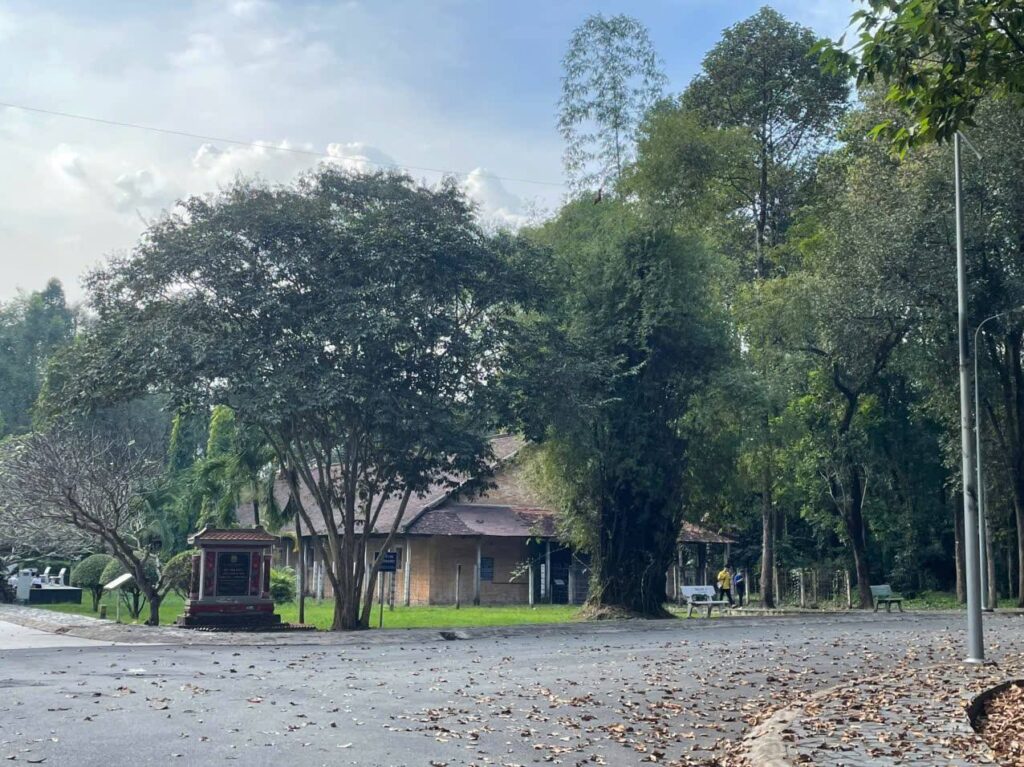
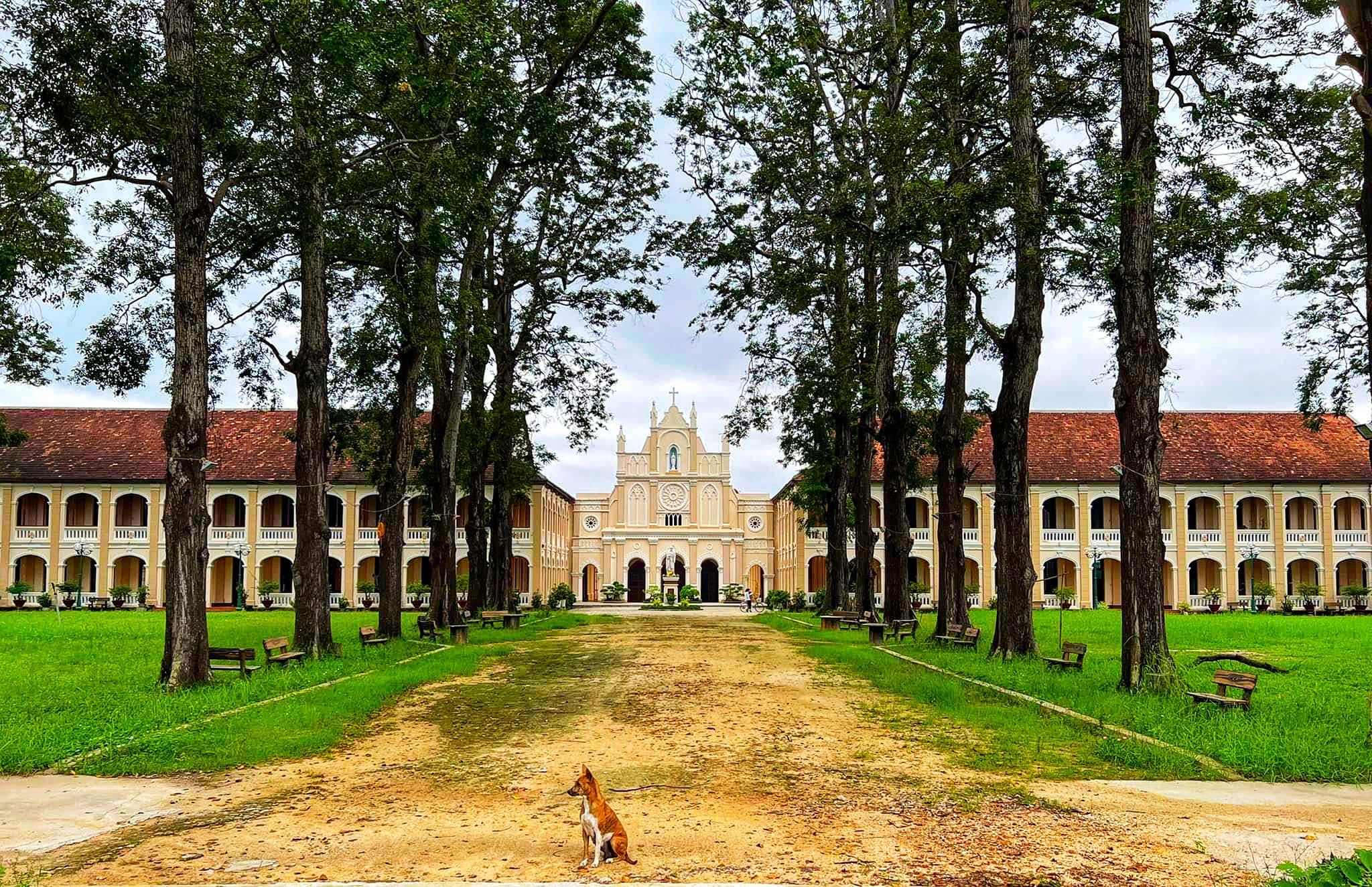
Set beside the Ha Thanh River amid the lush countryside of Tuy Phuoc, Lang Song Minor Seminary has a quiet and timeless character. Its European Gothic architecture stands amid mature trees, green lawns and surrounding rice fields, creating a distinctive landscape where Western religious architecture meets the traditional rural scenery of Vietnam.
Basic Information
| Information | Details |
|---|---|
| Name | Lang Song Minor Seminary |
| Location | Quang Van Hamlet, Tuy Phuoc Commune, Gia Lai Province |
| Type | Religious, historical and cultural heritage site |
| Established | Around 1841–1850 |
| Architectural style | European Gothic |
| Designer | Father Charles Dorgeville |
| Completed | 1927 |
| Notable historical feature | Lang Song Printing House, established in 1868 |
| Main values | Religious, architectural, historical, educational and cultural significance |
More Than 170 Years Beside the Ha Thanh River
According to records of the Diocese of Quy Nhon, Lang Song Minor Seminary was established sometime after 1841 and before 1850. Its history is closely connected with the development of priestly education in the Diocese of Quy Nhon and the growth of Catholic life in central Vietnam.
The seminary experienced a number of historical upheavals. In particular, the complex was destroyed in 1885. It was subsequently rebuilt and continued to develop, eventually taking on the architectural form that can still be seen today.
In 1927, the main complex was completed according to a design by Father Charles Dorgeville. Much of its architectural character from this period has remained remarkably well preserved, making Lang Song one of the distinctive historic religious structures in central Vietnam.
Its setting contributes greatly to its character. Beside the Ha Thanh River, mature trees, lawns, fields and open rural landscapes surround the old buildings. The result is a peaceful environment in which the architecture appears naturally integrated into the countryside.
Gothic Architecture in the Vietnamese Countryside
The most striking feature of Lang Song Minor Seminary is its European Gothic architecture. High vaulted forms, pointed arches, long corridors and refined decorative details give the complex a solemn and monumental appearance while retaining an understated elegance.
What makes Lang Song particularly distinctive is the way these Western architectural elements exist within a distinctly Vietnamese rural landscape. Trees, rice fields and the Ha Thanh River form a natural setting around the buildings, creating a memorable contrast between European ecclesiastical architecture and the countryside of central Vietnam.
The combination has also made the seminary an attractive destination for visitors interested in architecture, history and photography. Its long corridors, pointed arches, old trees and open surroundings create a variety of visual perspectives while preserving the tranquil atmosphere of the site.
Lang Song Printing House and the Story of Quoc Ngu
Beyond its architecture, Lang Song Minor Seminary is particularly significant for its connection with the history of Quoc Ngu, the Vietnamese writing system based on the Latin alphabet.
The Lang Song Printing House was established in 1868 and is regarded in the source material as one of the three earliest printing houses for Quoc Ngu in Vietnam. It became an important publishing center in central Vietnam, producing religious books, educational materials, stories, periodicals and other publications written in Quoc Ngu.
Among the publications associated with the printing house were works such as Phép đánh vần, Con nít học nói, Ấu học and Địa dư sơ lược. Along with catechisms, textbooks and other materials, these publications contributed to the wider use of Quoc Ngu in education and cultural life.
At a time when Quoc Ngu was gradually becoming more widely used in the late nineteenth and early twentieth centuries, the activities of Lang Song Printing House formed an important part of the history of publishing and education in central Vietnam.
The printing house is no longer in operation, but old publications, books and historical documents have been preserved. These materials provide valuable sources for researchers and anyone interested in the history of Vietnamese writing, publishing and education.
A Heritage Site in Contemporary Life
After more than 170 years, Lang Song Minor Seminary remains associated with the religious life of the Diocese of Quy Nhon while also attracting visitors interested in history, architecture and culture.
In recent years, the site has become more widely known after serving as one of the filming locations for the feature film Hen Em Ngay Nhat Thuc. Its appearance on screen has helped introduce the historic complex to a wider audience, particularly younger visitors and travelers interested in distinctive cultural and architectural destinations.
Yet the appeal of Lang Song goes beyond its visual beauty. Its significance comes from the many layers of history preserved within the same landscape: the history of the Diocese of Quy Nhon, priestly education, religious architecture in central Vietnam, and the development and dissemination of Quoc Ngu.
Visitors to Lang Song can experience a distinctive setting where Gothic architecture stands among trees, fields and the Ha Thanh River. At the same time, the site offers an opportunity to explore the story of Lang Song Printing House and its place in the broader history of Vietnamese education and written culture.
Preserving a Multifaceted Heritage
Lang Song Minor Seminary is particularly valuable because its heritage significance cannot be reduced to a single historical layer. Architecture, religious life, education, publishing and the history of Quoc Ngu have all become part of the story of this place over more than a century and a half.
For Tuy Phuoc, Lang Song adds an important dimension to the cultural heritage of the locality. For central Vietnam, it represents a distinctive encounter between Western architectural traditions and the Vietnamese rural landscape. For the history of Vietnamese culture, the Lang Song Printing House provides an important chapter in the development and dissemination of Quoc Ngu and printed literature.
Today, Lang Song Minor Seminary continues to serve as a religious space while also offering opportunities for cultural visits, historical exploration and architectural appreciation. For travelers exploring Tuy Phuoc, it reveals another side of the region, one shaped not only by village traditions and local historical sites but also by historic religious architecture and the long journey of Vietnamese written culture.
Standing quietly beside the Ha Thanh River, Lang Song Minor Seminary retains the atmosphere of a historic complex that has witnessed profound changes over more than 170 years. Its Gothic arches, long corridors, mature trees and the surviving legacy of Lang Song Printing House come together to create a heritage landscape where architecture and history remain closely intertwined.