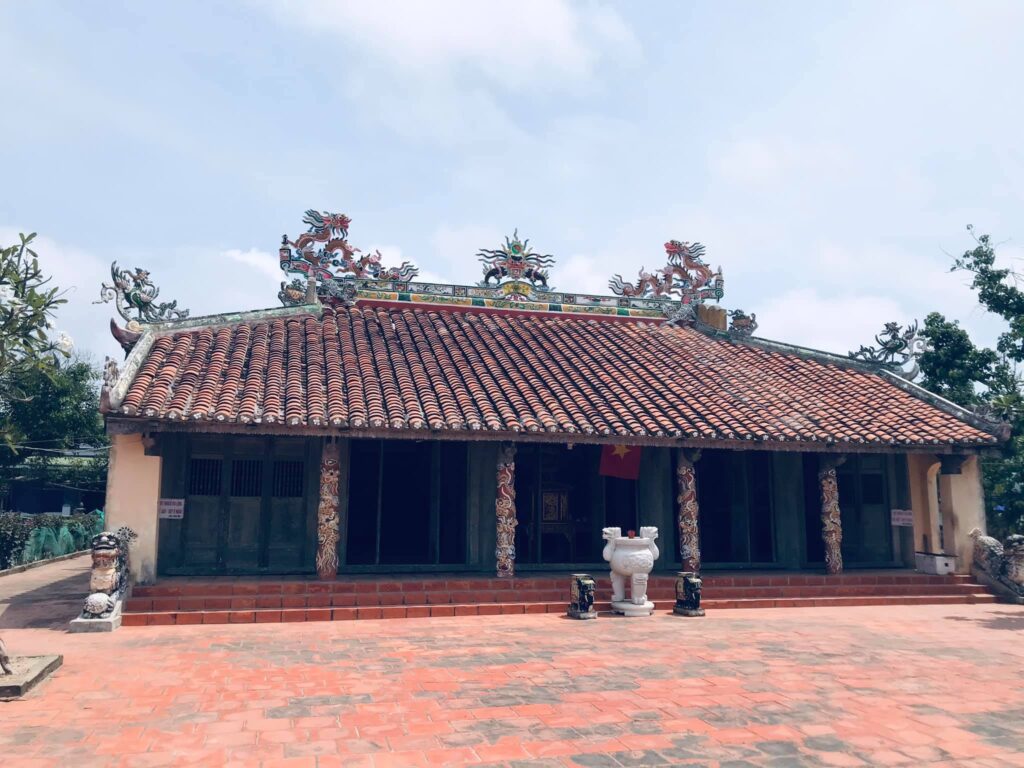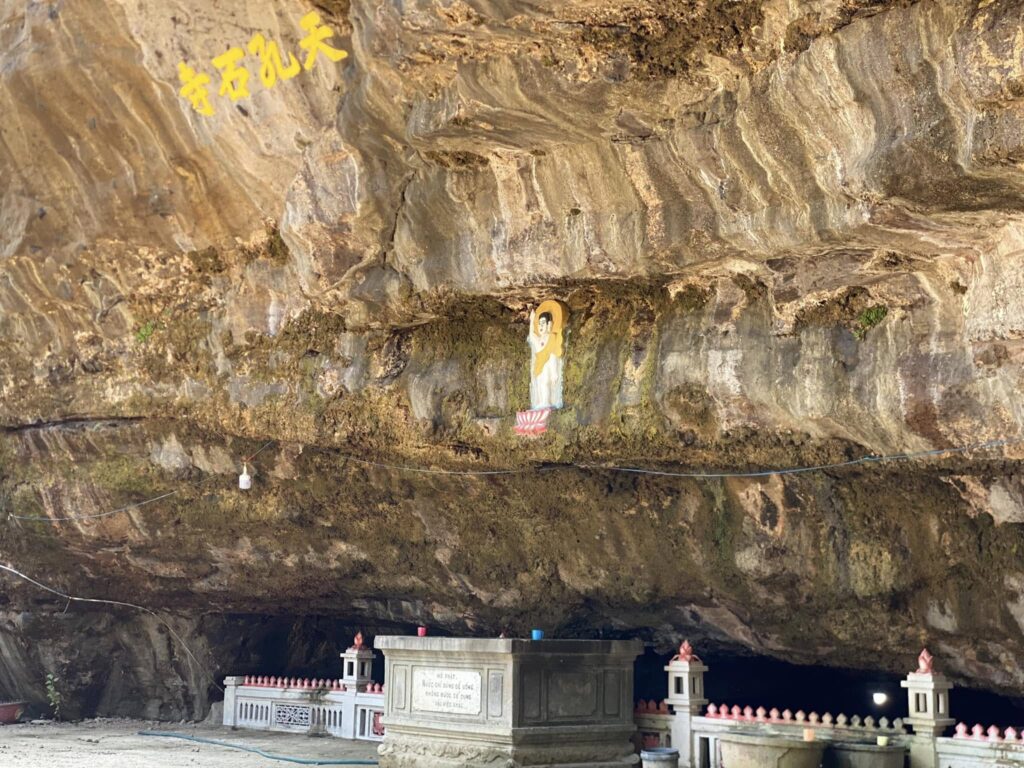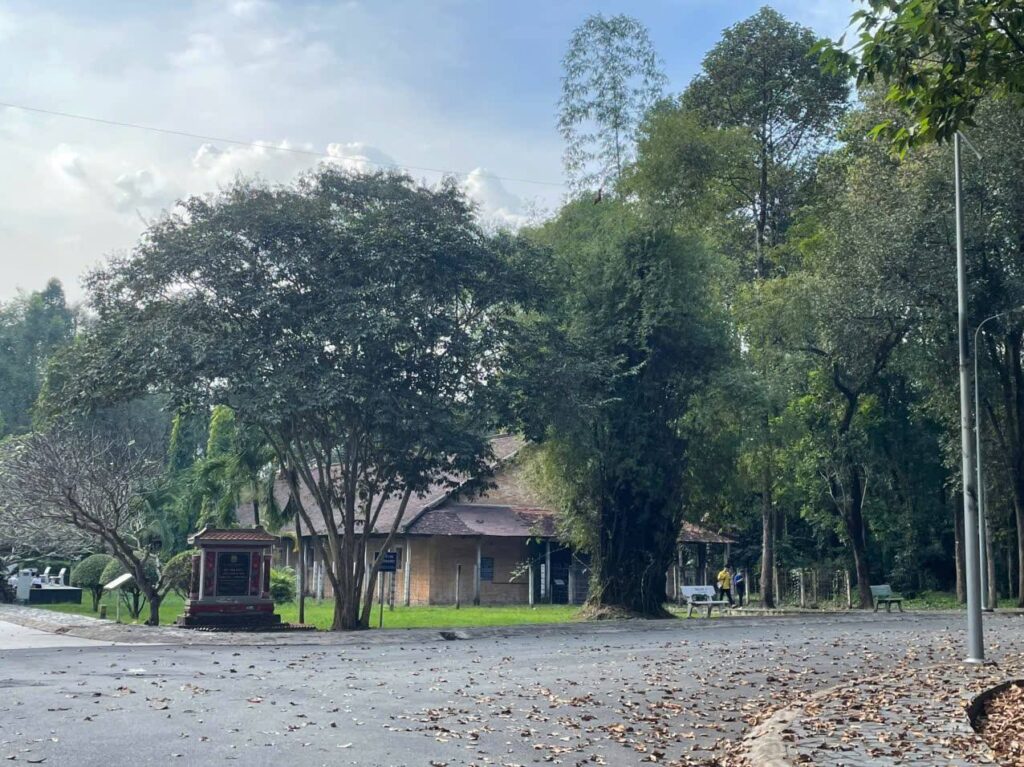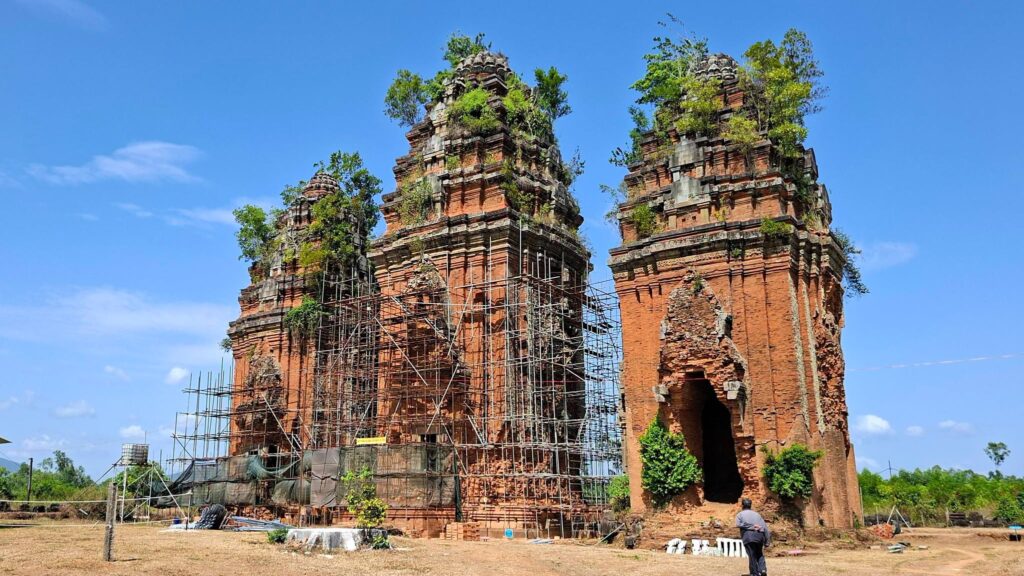
The former Binh Dinh region is widely remembered for the Tay Son movement, the three Tay Son brothers, the sound of battle drums, and a long tradition of martial arts and scholarship. Yet beyond the famous generals and battlefield victories, the history of the Tay Son Dynasty was also shaped by scholars and high-ranking officials who contributed to the organization of government and the establishment of political order.
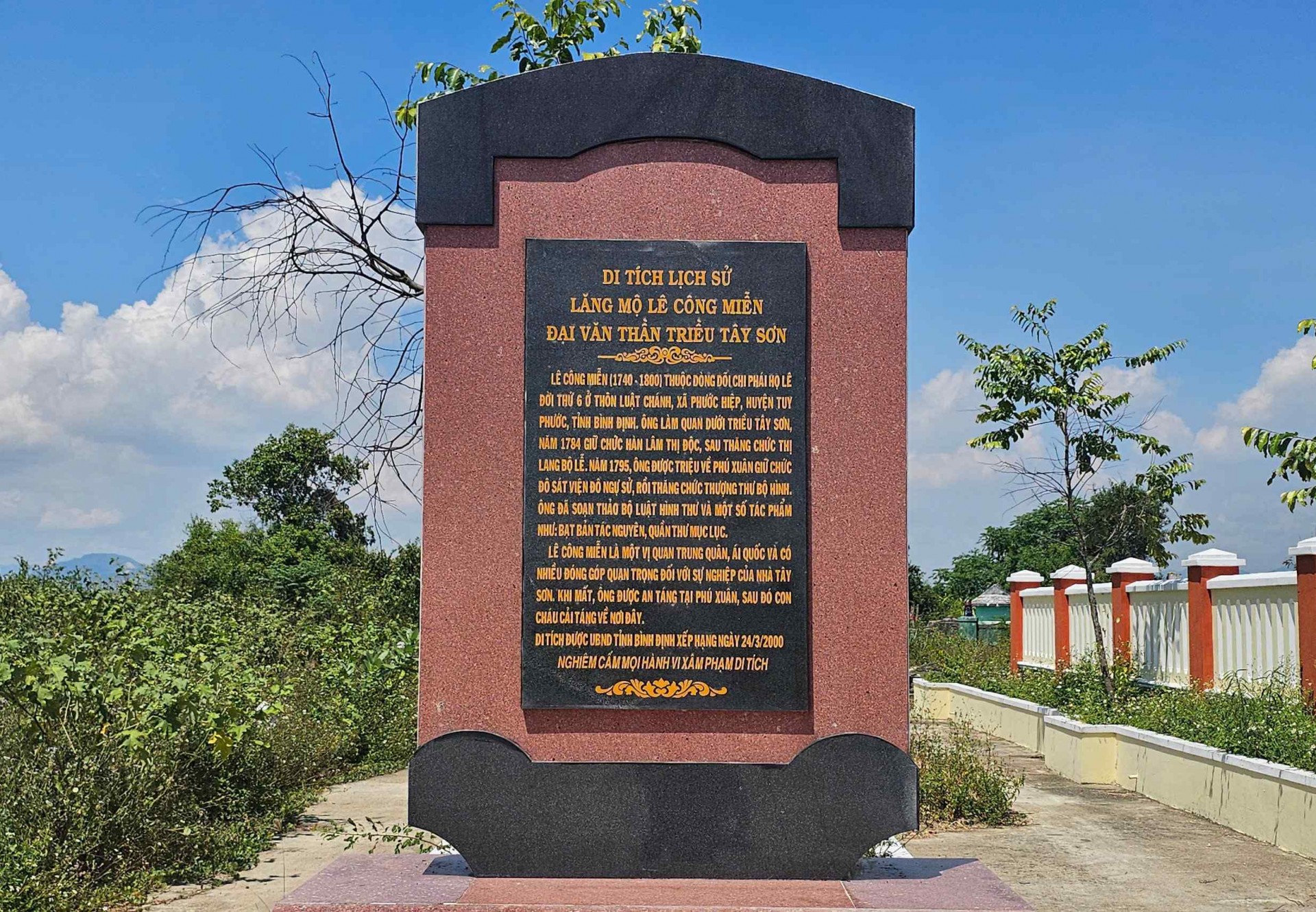
In Luat Chanh Hamlet, Tuy Phuoc Bac Commune, Gia Lai Province, a quiet historical site preserves the memory of one such figure: Le Cong Mien, a prominent scholar-official of the Tay Son Dynasty.
His tomb is not particularly large or imposing. It rests quietly amid the peaceful rural landscape of Tuy Phuoc. Yet behind this modest monument lies the story of a native son who rose to important positions in the Tay Son court and contributed to the development of law, administration, and political institutions during one of the most turbulent periods of Vietnamese history in the late 18th century.
Le Cong Mien, a Native of Tuy Phuoc
Le Cong Mien was born in 1740 and was a native of Tuy Phuoc. From an early age, he was known for his intelligence, academic ability, knowledge of etiquette, and profound learning.
Vietnam in the 18th century was marked by major political and social upheavals. As the Tay Son movement expanded and established its political authority, Le Cong Mien was recruited into government service and gradually assumed a number of important positions at the court.
According to historical materials, he held such positions as Han Lam Thi Doc, Do Sat Vien Do Ngu Su, and later Thuong Thu of the Ministry of Justice.
These positions indicate that Le Cong Mien’s role extended beyond scholarship and literature. He was involved in government administration, supervision, and legal affairs. At a time when the Tay Son government was being consolidated amid major political changes, establishing order and organizing state institutions were particularly important tasks.
A Great Scholar-Official of the Tay Son Court
The history of Tay Son is often associated with military campaigns, battlefield victories, and famous generals. Yet behind those military achievements stood the need for an organized administrative system capable of governing the country.
In this context, learned officials such as Le Cong Mien played an important role.
As Thuong Thu of the Ministry of Justice, he was associated with legal and judicial affairs. Historical accounts state that he participated in work related to the compilation of laws and the development of the administrative system under the Tay Son Dynasty.
While Tay Son generals helped establish the dynasty’s position on the battlefield, scholar-officials and administrators contributed to the institutions through which the state was governed. Le Cong Mien therefore represents an important group of intellectuals and officials who participated in the construction of the Tay Son government.
From Tuy Phuoc to the Tay Son Court
Le Cong Mien came from Tuy Phuoc, a region with a long tradition of learning and scholarship. His rise to high office in the Tay Son court reflects, in part, the scholarly traditions associated with his homeland.
His career unfolded during one of the most turbulent periods in Vietnamese history. The late 18th century witnessed shifting centers of political power, prolonged military conflicts, and the reorganization of state institutions.
Under such circumstances, maintaining political order required not only military ability but also officials with knowledge of law, administration, and governance.
Historical accounts describe Le Cong Mien as a man who valued loyalty and placed public responsibilities above personal interests. These qualities contributed to his later image in the historical memory of his homeland.
From Phu Xuan Back to His Homeland
After his death, Le Cong Mien was initially buried in Phu Xuan. Later, his descendants exhumed and reburied his remains in his native homeland in the former Binh Dinh region.
The return of his remains to his homeland carried significance not only for his family but also for the local community. It created a place where later generations could commemorate a native son who had played a role in an important chapter of national history.
His tomb is now located in Luat Chanh Hamlet, Tuy Phuoc Bac Commune, Gia Lai Province, within the area associated with his native homeland.
In 2000, the tomb was recognized as a provincial historical relic.
Since then, the site has served as a place of remembrance for Le Cong Mien and has added another layer to the heritage associated with the history of Tay Son in the Tuy Phuoc region.
A Modest Historical Site Amid the Countryside
Unlike large monuments that attract crowds of visitors, Le Cong Mien’s tomb has the quiet character of a historical site closely connected with the rural landscape.
The surrounding area retains the atmosphere of Tuy Phuoc countryside, with trees, agricultural fields, and the rhythms of local community life. This simplicity gives the site a distinctive character.
Here, history is not presented through monumental architecture. Instead, it is conveyed through the name of the historical figure, the tomb itself, and the memory of a scholar-official who once held important responsibilities in the Tay Son court.
The site also provides a connection between local history and the wider transformations of the country. From a village in Tuy Phuoc, Le Cong Mien entered the political life of the Tay Son Dynasty, and generations later, his tomb returned to his native homeland.
Le Cong Mien in the History of Tay Son
The significance of Le Cong Mien’s tomb extends beyond the commemoration of a historical figure. It also offers a broader perspective on the Tay Son Dynasty.
The history of Tay Son was not shaped solely by military campaigns and celebrated generals. Behind the process of establishing and governing the dynasty was a network of scholar-officials and intellectuals who worked in areas including law, administration, education, and culture.
Le Cong Mien was one of the figures associated with this aspect of Tay Son history.
From a tomb standing quietly in the countryside of Tuy Phuoc, his story offers another way to understand a period when military achievements and civil administration developed alongside each other in the formation of a new dynasty.
Preserving a Historical Legacy in the Homeland of Tay Son
Today, the tomb of Le Cong Mien remains quietly situated in his native homeland. The site is not only a place of remembrance but also a cultural link between Tuy Phuoc, its scholarly traditions, and the history of the Tay Son Dynasty.
Within the network of Tay Son-related heritage sites in the former Binh Dinh region, places such as Le Cong Mien’s tomb broaden the historical narrative beyond battlefields and military leaders, highlighting the scholar-officials who contributed to the development of government and institutions.
Amid the peaceful landscape of Luat Chanh, the tomb remains a reminder of a native son of Tuy Phuoc who entered the Tay Son court through scholarship and assumed important responsibilities during one of the most turbulent periods of Vietnamese history.
Basic Information
| Information | Details |
|---|---|
| Site name | Tomb of Great Scholar-Official Le Cong Mien of the Tay Son Dynasty |
| Historical figure | Le Cong Mien |
| Year of birth | 1740 |
| Hometown | Tuy Phuoc |
| Location | Luat Chanh Hamlet, Tuy Phuoc Bac Commune, Gia Lai Province |
| Dynasty associated with the figure | Tay Son Dynasty |
| Notable positions | Han Lam Thi Doc, Do Sat Vien Do Ngu Su, Thuong Thu of the Ministry of Justice |
| Key values | Historical, cultural, and commemorative values |
| Site type | Historical tomb |
| Heritage status | Provincial historical relic |
| Recognition | 2000 |