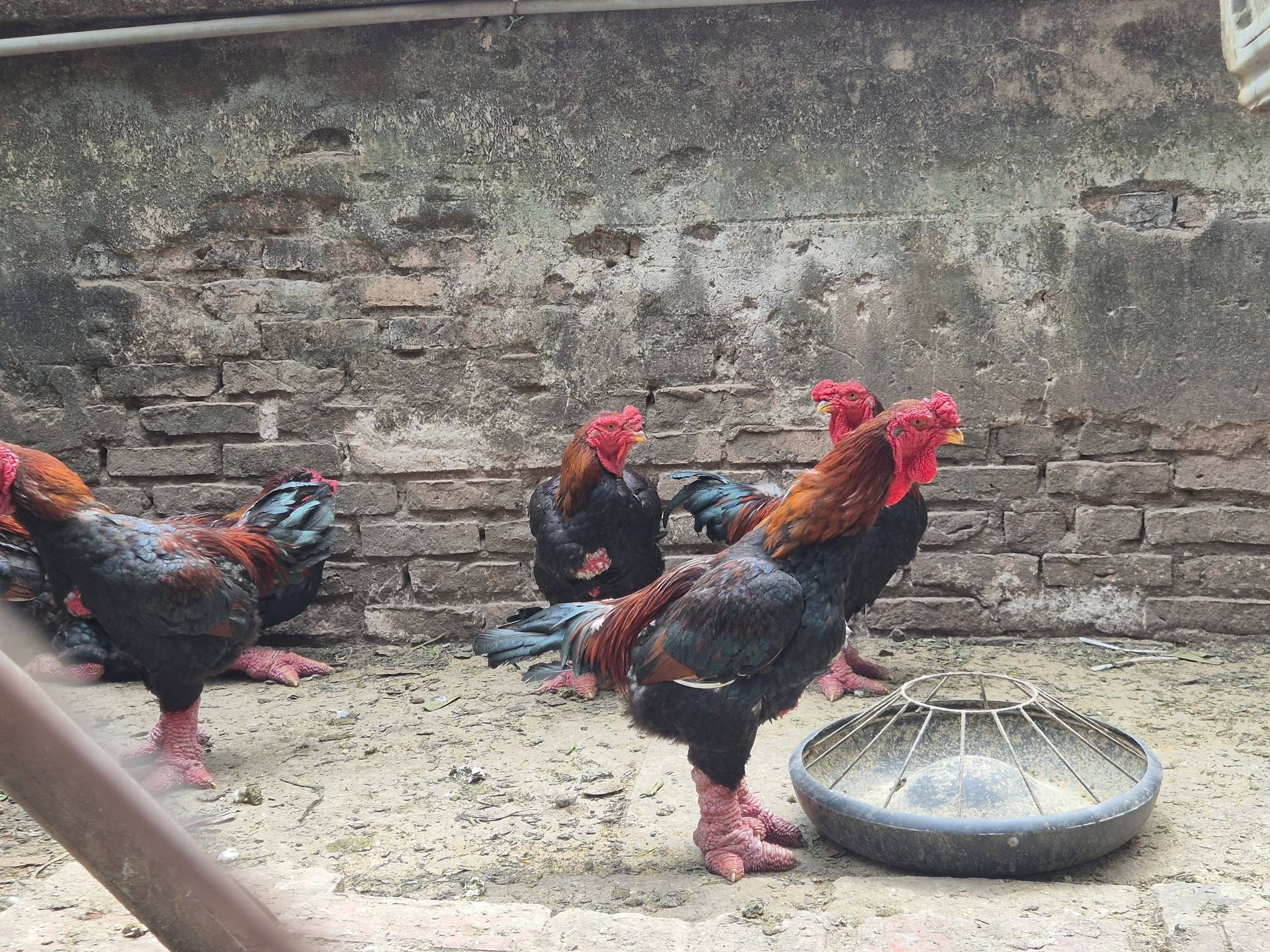
Dong Tao chicken, also known as Dong Cao chicken, is a rare chicken breed closely associated with the community of Đông Tảo, now in Hoàn Long Commune, Hưng Yên Province. Beyond its distinctive appearance, particularly its large, scaly legs, the breed is closely connected with local cultural traditions and a body of folk knowledge passed down through generations.
Dong Tao chickens have traditionally been regarded as a special offering for royal ceremonies. They are characterized by their large and powerful bodies, distinctive gait, firm and aromatic meat, relatively low fat content, and distinctive flavor. These characteristics have contributed to the breed’s special place in the culinary culture of the region.
Traditional knowledge surrounding Dong Tao chicken encompasses the entire production process, from selecting breeding stock, mating and hatching eggs to raising chicks, developing feeding regimes, preventing disease, and preparing the chicken as a specialty food. Through generations of practical experience, local people have developed and preserved techniques for maintaining the distinctive qualities of the breed.
Traditional Raising Methods and the Chicken Coop
Traditionally, Dong Tao chickens are raised in a semi-free-range system. Chicken coops are generally built in elevated, dry locations and oriented toward the southeast to receive sunlight while avoiding cold winds.
Traditional materials such as bamboo, straw, and rice husks are used to create a suitable environment for the chickens, helping maintain warmth during winter and ventilation during summer. Today, some households have incorporated additional techniques such as water spraying for cooling and windbreak nets.
Traditional beliefs also influence the placement of chicken coops. They are generally kept away from areas considered unclean, such as pigsties and toilets. According to local folk beliefs, chickens are particularly sensitive to polluted surroundings and may grow poorly in such environments.
Selecting Breeding Stock
Selecting breeding chickens is one of the most important stages in maintaining the distinctive characteristics of Dong Tao chicken. Local people rely on physical characteristics and knowledge passed down within the community.
For roosters, particular attention is given to their large legs, smooth dragon-scale-like scales, bamboo-root-shaped heads, bright red skin, strong double combs, and crescent-shaped tail feathers. According to local beliefs, these characteristics indicate a high-quality rooster with good reproductive potential and the ability to bring good fortune.
Hens are selected for balanced bodies, smooth feathers in light yellow or dark brown shades, broad abdomens, and other characteristics traditionally associated with good egg production.
Body weight is also used as one indicator when distinguishing purebred birds from crossbreeds. Traditionally, selected roosters are expected to weigh at least around 4.5 kilograms, while hens weigh at least around 3.5 kilograms.
By continuously selecting and retaining desirable breeding stock, local families have maintained the distinctive characteristics of Dong Tao chicken across generations.
Breeding and Traditional Egg Incubation
Roosters and hens are traditionally paired when they reach around six to eight months of age, with approximately one rooster for every four to five hens. This ratio reflects local experience in managing reproduction and maintaining the flock.
Spring, when the weather is relatively cool, is traditionally considered a favorable period for breeding. It also allows farmers to prepare chickens for the Tết market, when their economic value is particularly high. Some farmers have also adopted artificial insemination to improve fertilization rates and reduce costs.
Egg selection for incubation is also based on traditional knowledge. Eggs with suitable size and shape are selected, while double-yolk eggs and eggs with unusually thin shells are generally rejected.
Certain folk beliefs are also associated with egg selection. For example, eggs laid on the 30th day of the lunar month may traditionally be avoided because of the belief that chicks hatched from them would be weak.
Traditional incubation nests are prepared with rice husks or straw, sometimes combined with neem-like leaves and Vietnamese basil leaves to improve ventilation and discourage insects and mites. Dong Tao hens or Vietnamese Ri hens with strong brooding instincts may be selected for natural incubation.
After approximately six to seven days, the eggs are candled to identify and remove those without embryos. Traditional knowledge also records an older incubation method using wooden boxes lined with warm ash. The eggs are turned three times a day, the ash is replaced when it cools, and a red light may be used to maintain warmth.
Raising Chicks and Developing the Diet
Once the chicks hatch, farmers select the strongest individuals for breeding. Selection is based on characteristics such as body size, bright eyes, soft feathers, a small abdomen, plump legs, and a dry navel.
The chicks are then moved to a brooding area enclosed with woven bamboo panels. Rice husks are used as bedding, while red lamps provide warmth.
According to traditional experience, drinking water may be supplemented with garlic and ginger as a folk method of supporting the chicks’ health and digestion. Their initial diet consists mainly of cooked cornmeal and rice bran, which are considered easy for young chicks to digest.
As the chickens grow, their diet is adjusted according to age. Corn and non-glutinous rice are important energy sources and are traditionally associated with firm, flavorful meat.
Young chickens are given finely ground corn and rice, while older birds may receive whole corn, sprouted rice, seasonal greens such as cassava leaves and banana stems, as well as fresh fish and earthworms as sources of protein, vitamins, and minerals.
Some households also use naturally fermented feed made from vegetables, grains, soybean residue, fish, and meat scraps. Other traditional observations relate feeding practices to the sex and reproductive stage of the birds. For example, bean sprouts may be given to roosters, while the amount of rice fed to hens may be controlled to prevent excessive weight gain that could affect reproduction.
During summer, folk practices include giving chickens water prepared from pennywort or kudzu leaves to help cool them. In winter, honey and ginger water may be used as a traditional method of helping maintain warmth.
Folk Knowledge of Disease Prevention and Treatment
Traditional Dong Tao chicken raising also relies heavily on observing the birds’ behavior and physical appearance. Weakness, ruffled feathers, dull eyes, or pale or purplish combs are regarded as signs that a chicken may be unwell.
Slow movement or swollen legs may be associated with damp conditions in the coop, while wheezing and difficulty breathing are traditionally recognized as signs of colds or respiratory problems.
A number of folk remedies have been used by local farmers. Garlic and ginger may be used when chickens show signs of colds, while guava or lime leaves are traditionally used for diarrhea. Diluted salt water may be used to clean the eyes and nostrils, while turmeric-infused alcohol or betel leaves may be applied to swollen legs.
Coop hygiene is also considered essential. Lime powder is traditionally used to clean the housing area, reduce odors, and limit bacteria.
Alongside practical animal-care knowledge, certain spiritual beliefs have also been associated with chicken raising. Pineapple plants or cactus may be hung near the coop as folk protective symbols, while people in mourning or unfamiliar visitors may traditionally be discouraged from entering the chicken-raising area.
From Rare Breed to Culinary Specialty
Dong Tao chicken has long been regarded as a distinctive product of Vietnamese culinary culture. When preparing the chicken, local people traditionally select birds more than seven months old and carefully process the carcass, with particular attention given to the characteristic legs.
After scalding, the chicken is cleaned and the feathers are removed. The legs require additional preparation. They may first be scalded at around 80 to 90°C, followed by gentle tapping with a piece of wood to help clean the distinctive scales.
Common seasonings include ginger, lemongrass, lime leaves, shallots, and black pepper. Some dishes also combine the chicken with mugwort and traditional medicinal ingredients such as codonopsis, astragalus, and goji berries.
Dong Tao chicken can be prepared in a variety of ways, including boiled chicken, braised or stewed chicken legs, chicken stewed with traditional medicinal ingredients, and chicken sausage. Each dish reflects a combination of local ingredients, preparation techniques, and culinary knowledge transmitted through generations.
Cultural and Economic Values
Dong Tao chicken is more than a valuable livestock breed. It also has a distinctive cultural role in the community. Its large body, unusual legs, and characteristic appearance have made it a familiar symbol of local identity.
Traditionally, Dong Tao chickens have been used in ceremonial offerings and beauty contests. These practices reflect a cultural relationship between people, domestic animals, and community life.
The traditional knowledge of raising and processing Dong Tao chicken combines practical experience with folk beliefs accumulated over generations. From selecting breeding stock and incubating eggs to feeding, disease prevention, and culinary preparation, each stage contains knowledge specific to the community.
Economically, Dong Tao chicken provides valuable income for farmers and contributes to local livelihoods. Preserving the associated knowledge therefore helps maintain not only the distinctive characteristics of the breed but also the culinary and cultural values connected with Dong Tao communities.
National Intangible Cultural Heritage
Recognizing its cultural, culinary, economic, and community values, the traditional knowledge of raising and processing Dong Tao chicken was included in the National Intangible Cultural Heritage List by the Minister of Culture, Sports and Tourism under Decision No. 1743/QĐ-BVHTTDL dated June 10, 2025.
The recognition highlights a body of knowledge that has been practiced and transmitted by the community across generations. It is not simply the story of a rare chicken breed, but also the story of how local people preserve breeding stock, organize animal husbandry, prepare food, and maintain cultural practices connected with their traditional way of life.
Basic Information
| Information | Details |
|---|---|
| Heritage | Traditional Knowledge of Raising and Processing Dong Tao Chicken |
| Other name | Dong Cao Chicken |
| Location | Hoàn Long Commune, Hưng Yên Province |
| Knowledge involved | Breeding selection, mating, egg incubation, chick raising, feeding, disease prevention, and culinary processing |
| Transmission | Folk knowledge, direct practice, and intergenerational transmission |
| Distinctive characteristics | Large body, exceptionally large scaly legs, firm and aromatic meat |
| Representative dishes | Boiled chicken, stewed chicken legs, medicinal-herb chicken, chicken sausage |
| Values | Cultural, culinary, economic, and traditional knowledge |
| Heritage status | National Intangible Cultural Heritage |
| Recognition | Decision No. 1743/QĐ-BVHTTDL, June 10, 2025 |