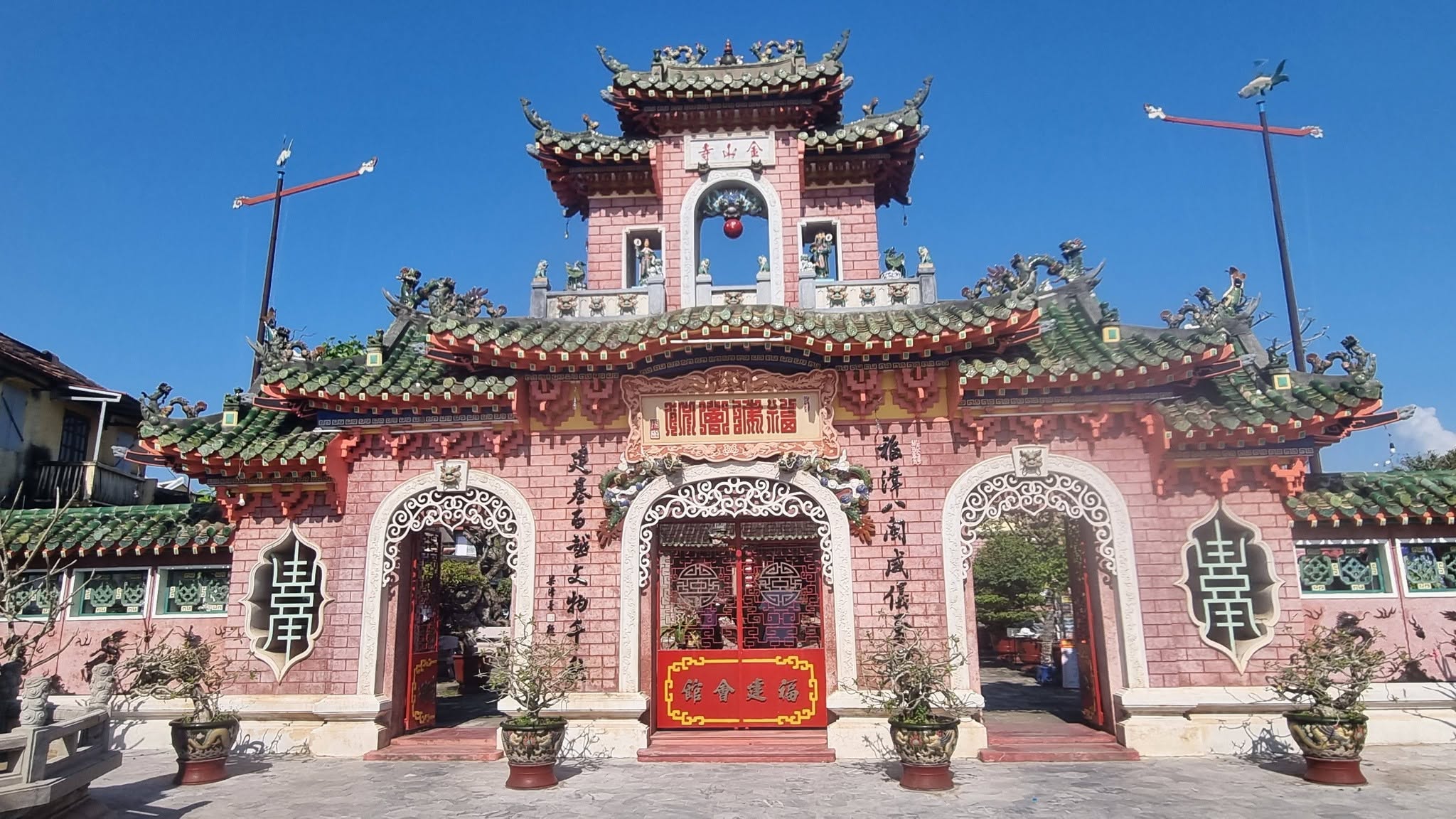
Phuc Kien Assembly Hall, also known as the Fujian Assembly Hall, is one of the most prominent architectural landmarks in Hoi An Ancient Town. Characterized by distinctive East Asian architecture, the assembly hall preserves important historical, artistic, religious, and community values associated with the Chinese community in Hoi An. It is also a vivid symbol of the cultural exchange between Vietnamese and Chinese communities in the historic trading port.
History and Development
The history of Phuc Kien Assembly Hall is closely connected with the early development of Hoi An Ancient Town. According to local tradition, the site was once occupied by a small temple called Kim Son Tu, built to enshrine a Buddha statue that had washed ashore.
Over time, the simple thatched temple deteriorated. In 1697, during a period when Hoi An was flourishing as a trading port, Fujian merchants acquired the former temple site and established an assembly hall there. The building served both as a gathering place for the Fujian community and as a center for religious worship.
The complex was initially known by the former name of the temple, Kim Son Tu. In 1757, it underwent major restoration and expansion and officially became known as Phuc Kien Assembly Hall.
The original structure was primarily made of wood. Through successive restorations, it gradually became larger and more substantial, with brick walls and traditional yin-yang tiled roofs. The major restoration in 1757 rebuilt the complex in brick and tile, reflecting both the contributions of the Chinese community and the craftsmanship of local artisans.
In 1990, Phuc Kien Assembly Hall was recognized as a National Historical and Cultural Monument. Since the 1980s, the assembly hall has been open to visitors and has become a familiar stop on journeys through Hoi An Ancient Town.
Distinctive Architecture in the Heart of Hoi An
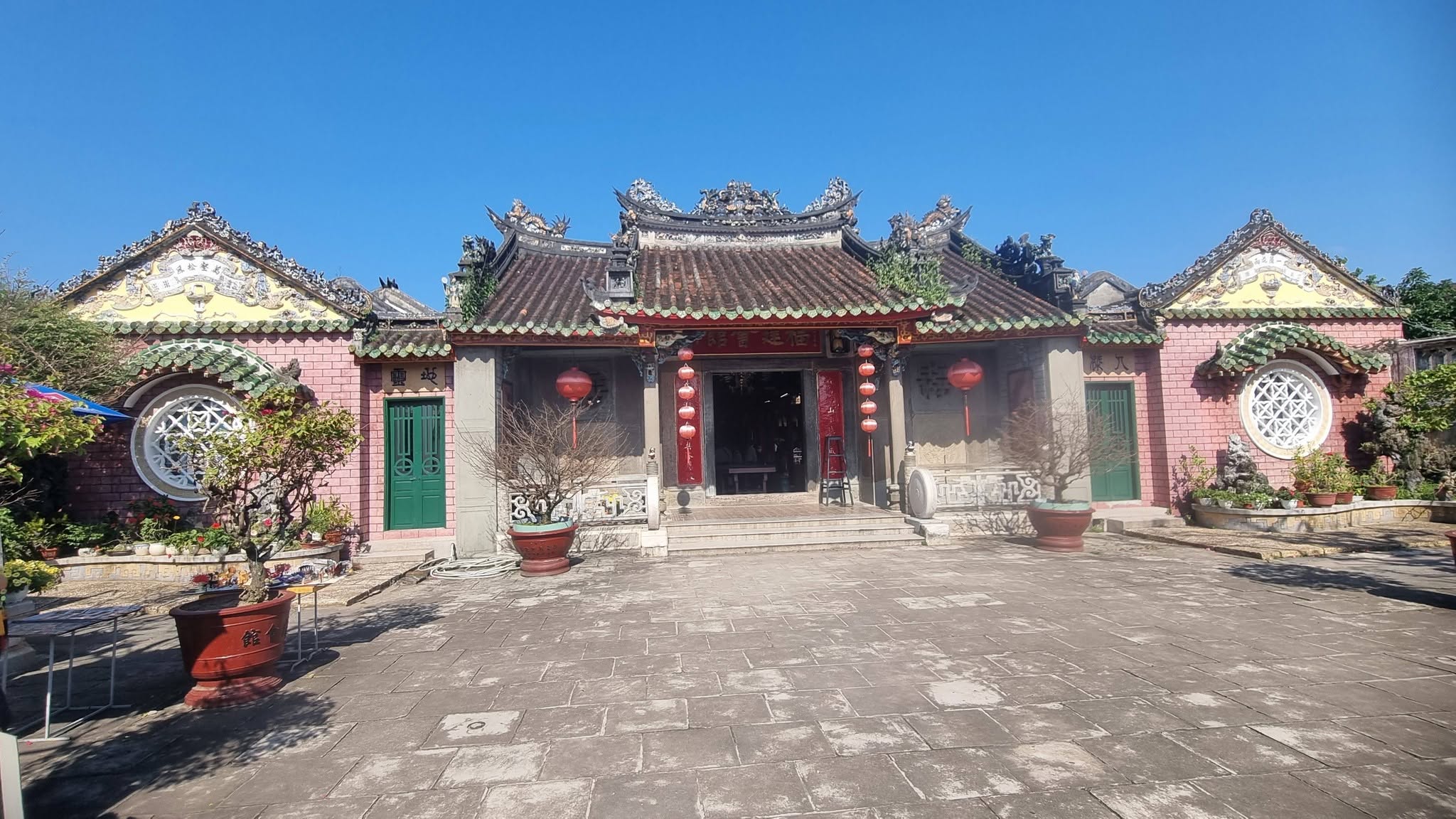
Phuc Kien Assembly Hall follows a Tam-shaped layout, a traditional spatial arrangement found in Chinese assembly hall architecture. From the main entrance on Tran Phu Street, visitors pass through the front courtyard, two symmetrical eastern and western buildings, the main sanctuary, rear courtyard, and finally the rear worship hall. This sequence creates considerable depth and gives the complex its imposing character.
Red is the dominant color throughout the assembly hall, appearing on the three-entrance gate, structural elements, lanterns, and parallel couplets. In East Asian culture, red is commonly associated with good fortune, prosperity, and auspiciousness.
The Three-Entrance Gate
The three-entrance gate is one of the most striking architectural features of the complex. It has three passageways, topped by a curved yin-yang tiled roof and decorated with an image of two dragons facing a moon.
The facade is elaborately decorated with ceramic and porcelain mosaics. At the center is the Chinese inscription “Kim Son Tu”, recalling the original name of the site.
On either side of the gate are statues known as Mr. Sun and Mrs. Moon, symbolizing heaven and earth, as well as yin and yang. The three entrances are also associated with the symbolic concepts of Heaven, Earth, and Humanity, expressing harmony among these three realms.
Once visitors pass through the gate, the atmosphere changes noticeably. The noise of the surrounding streets gives way to a quieter courtyard with greenery, bonsai trees, and small water features, creating a peaceful space within the busy ancient town.
The Main Sanctuary and Religious Traditions
The main sanctuary is the most solemn and elaborate part of the assembly hall. At its center is a statue of Thien Hau Thanh Mau, or Mazu, the sea goddess revered by fishermen and maritime merchants who sought her protection during their journeys.
Flanking her are statues of Thien Ly Nhan and Thuan Phong Nhi, two divine attendants traditionally believed to possess extraordinary powers of sight and hearing and to assist Thien Hau in protecting people.
The sanctuary also contains a model of an ancient sailing vessel used by merchants in the 19th century, recalling the maritime journeys of the past and the faith that sailors placed in the protection of heaven and the sea.
The arrangement of the assembly hall reflects principles of harmonious feng shui and embodies hopes for good fortune, prosperity, and peace. The subdued lighting, incense, and solemn atmosphere give the sanctuary a distinctive spiritual character.
Behind the main sanctuary is the rear worship hall, where various deities and ancestors are honored, reflecting the diverse religious traditions of the Chinese community.
Among the figures worshipped here is Luc Tanh Vuong Gia, six Fujian forebears who were revered as community protectors. There are also altars dedicated to the Twelve Midwives and the Three Goddesses of Childbirth, associated with childbirth and wishes for healthy and peaceful children.
The presence of numerous deities under the same roof reflects the varied hopes of the Chinese community in earlier generations, including safe journeys by sea, prosperous business, family harmony, and the well-being of future generations.
Incense Coils and Historic Artifacts
One of the most distinctive sights inside Phuc Kien Assembly Hall is the collection of large incense coils suspended from the ceiling. Visitors and worshippers can purchase an incense coil, write a prayer on a small piece of paper, and hang it above the sanctuary.
Some coils burn continuously for several weeks, with certain varieties lasting for approximately 30 days. As they slowly burn, fragrant smoke fills the space beneath the old tiled roof, creating an atmosphere that is both mysterious and tranquil. When the incense has completely burned, the written prayers are traditionally burned as offerings.
The assembly hall also preserves numerous valuable artifacts, including a large bronze bell cast in 1790, a pair of ancient bronze drums, incense burners, gilded wooden statues, and 14 elaborately carved Chinese-character horizontal plaques finished with red lacquer and gold.
Together, these objects reflect the religious life of the Chinese community and provide a glimpse into the prosperity of Hoi An during its period as an important international trading port.
Visiting Phuc Kien Assembly Hall
Phuc Kien Assembly Hall is located along the main sightseeing route through Hoi An Ancient Town, making it easy to combine with other important heritage sites such as the Japanese Covered Bridge, Cantonese Assembly Hall, Chaozhou Assembly Hall, and Tan Ky Old House.
The transition is noticeable as soon as visitors pass through the three-entrance gate. The lively streets outside give way to a quieter courtyard surrounded by old tiled roofs, red lanterns, dragon and phoenix motifs, and intricate decorative details.
The assembly hall is particularly appealing to visitors interested in historic architecture and photography. The entrance gate, courtyard, lanterns, tiled roofs, and traditional interiors provide many distinctive settings that capture the atmosphere of old Hoi An.
Visitors can also spend time at the Thien Hau altar, learn about the deities worshipped within the complex, and observe the religious traditions practiced by the local community.
On the first and fifteenth days of the lunar month and during major festivals, the assembly hall can become considerably livelier. Particularly important occasions include the Lantern Festival on the fifteenth day of the first lunar month and the Thien Hau Festival on the 23rd day of the third lunar month.
During these occasions, visitors may encounter incense offerings, traditional ceremonies, lion dances, and community activities. These experiences provide a deeper understanding of the spiritual traditions and cultural identity of the Fujian community in Hoi An.
After visiting the assembly hall, travelers can continue walking along Tran Phu Street, explore Hoi An Market, or sample local specialties such as Cao Lau, Mi Quang, and other street foods.
Visiting Information
The best time to visit Phuc Kien Assembly Hall is generally early in the morning or late in the afternoon, when temperatures are more comfortable and visitor numbers are usually lower. Morning visits may also offer an opportunity to see local residents coming to offer incense and pray for peace at the beginning of the day.
During the summer, it is advisable to avoid the hottest period around midday.
Address: 46 Tran Phu Street, Hoi An Ward, Da Nang, in the heart of the ancient town near Hoi An Market.
Opening hours: Generally from 7:00 AM to 5:00 PM daily.
Admission: Phuc Kien Assembly Hall is part of the heritage site complex of Hoi An Ancient Town. Visitors need to purchase an Ancient Town sightseeing ticket at the designated ticket counters to enter the assembly hall and other participating heritage sites.
Visitors should dress respectfully, maintain a quiet atmosphere, and respect the religious character of the site. Avoid touching historic artifacts and follow photography regulations around the main altar.
The area surrounding the assembly hall has numerous shops selling handicrafts, Hoi An lanterns, paintings, and souvenirs. Nearby cafés and small food stalls also offer local snacks and traditional refreshments.
For those interested in the culinary heritage of the Chinese community in Hoi An, Fujian-style stir-fried rice noodles are worth trying. The dish combines chewy rice noodles with dried shrimp, dried squid, diced pork, and leafy vegetables.
Phuc Kien Assembly Hall in the Hoi An Heritage Journey
Phuc Kien Assembly Hall is more than an old architectural complex. It preserves the memory of the Fujian community and its contribution to the history of Hoi An as an international trading port.
From the vivid red entrance gate and traditional tiled roofs to intricate carvings and slowly burning incense coils inside the sanctuary, each element contributes to a larger story of religion, craftsmanship, community life, and cultural exchange.
Amid the historic streets of Hoi An today, Phuc Kien Assembly Hall continues to retain its solemn, timeless, and atmospheric character. It is an important destination for travelers seeking to understand the cultural depth of Hoi An and discover the heritage values preserved across generations.