Rô-băm is a distinctive traditional theatrical art form of the Khmer people in Southern Vietnam, combining dance, music, dialogue, makeup, masks, and legendary stories with religious and mythological themes. Beyond its artistic value, Rô-băm reflects the worldview, moral principles, beliefs, and spiritual life of the Khmer community, passed down through generations.
In the cultural life of the Southern Khmer people, Rô-băm once played an important role in festivals, temple celebrations, merit-making ceremonies, and community gatherings. Through graceful movements, traditional drums and wind instruments, masked characters, and ancient stories, this art form helps preserve the cultural identity, religious beliefs, and moral values of the Khmer people.
Rô-băm Theatre Art of the Khmer People is primarily preserved in the provinces and cities of the Mekong Delta, with Sóc Trăng being a locality known for its long-standing Rô-băm tradition. Following administrative changes, the heritage area is associated with Sóc Trăng Province in the past, now part of Cần Thơ City.
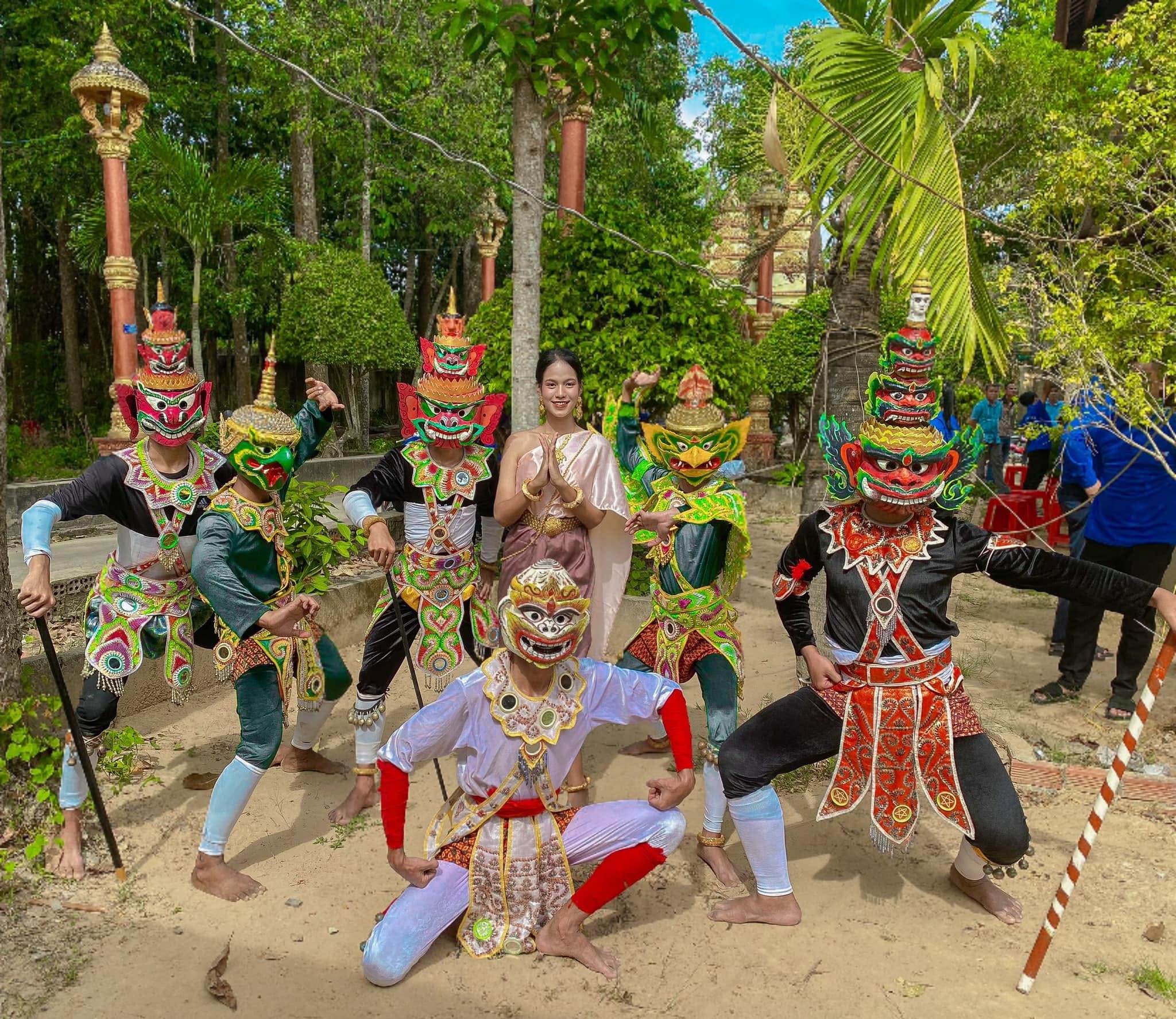
Origins and Characteristics of Rô-băm
Rô-băm, also known as Rô-băm dance drama, is a classical theatrical form rooted in the Khmer court performance tradition. It was deeply influenced by Indian culture, particularly the Ramayana, as well as Buddhist and Brahmanical religious ideas.
During its development in Southern Vietnam, Khmer artists adapted and localized these cultural influences, creating a theatrical form that became more closely connected to community life. Ancient stories are retold through dance, music, singing, dialogue, and distinctive Khmer characters.
Unlike spoken drama, Rô-băm uses dance as its principal means of expression. Performers employ the entire body to convey the personality, emotions, and actions of their characters. Movements of the hips, back, arms, hands, and feet, together with carefully controlled body postures, follow traditional techniques that require rigorous training.
In addition to dance, performers combine dialogue, singing, and music to clarify the storyline. Becoming a Rô-băm artist therefore requires years of practice, patience, strong memory, and a refined sense of rhythm and artistic expression.
Ancient Stories and Moral Values
Rô-băm performances often draw upon ancient tales of kings, gods, princes, princesses, and conflicts between good and evil. Among the most important sources is Reamker, the Khmer version of the Indian epic Ramayana.
The characters in Rô-băm are generally divided into two opposing groups. The protagonists represent goodness, including kings, princes, and heroic figures. The antagonists are often Chằn, or Yak, symbolizing darkness, ambition, and evil.
The battles between these two forces form a familiar motif in Khmer theatre, expressing the belief that good will ultimately triumph over evil. Through its stories, Rô-băm conveys lessons about loyalty, integrity, courage, karma, and the pursuit of Truth, Goodness, and Beauty.
In addition to the main characters, Rô-băm includes symbolic figures such as the sacred bird Krut, the monkey Hanuman, deer, crocodiles, celestial maidens, hermits, soldiers, and other supporting characters. The clown character is particularly important, providing comic relief, explaining parts of the story, and making ancient narratives more accessible to audiences.
Masks and Distinctive Visual Art
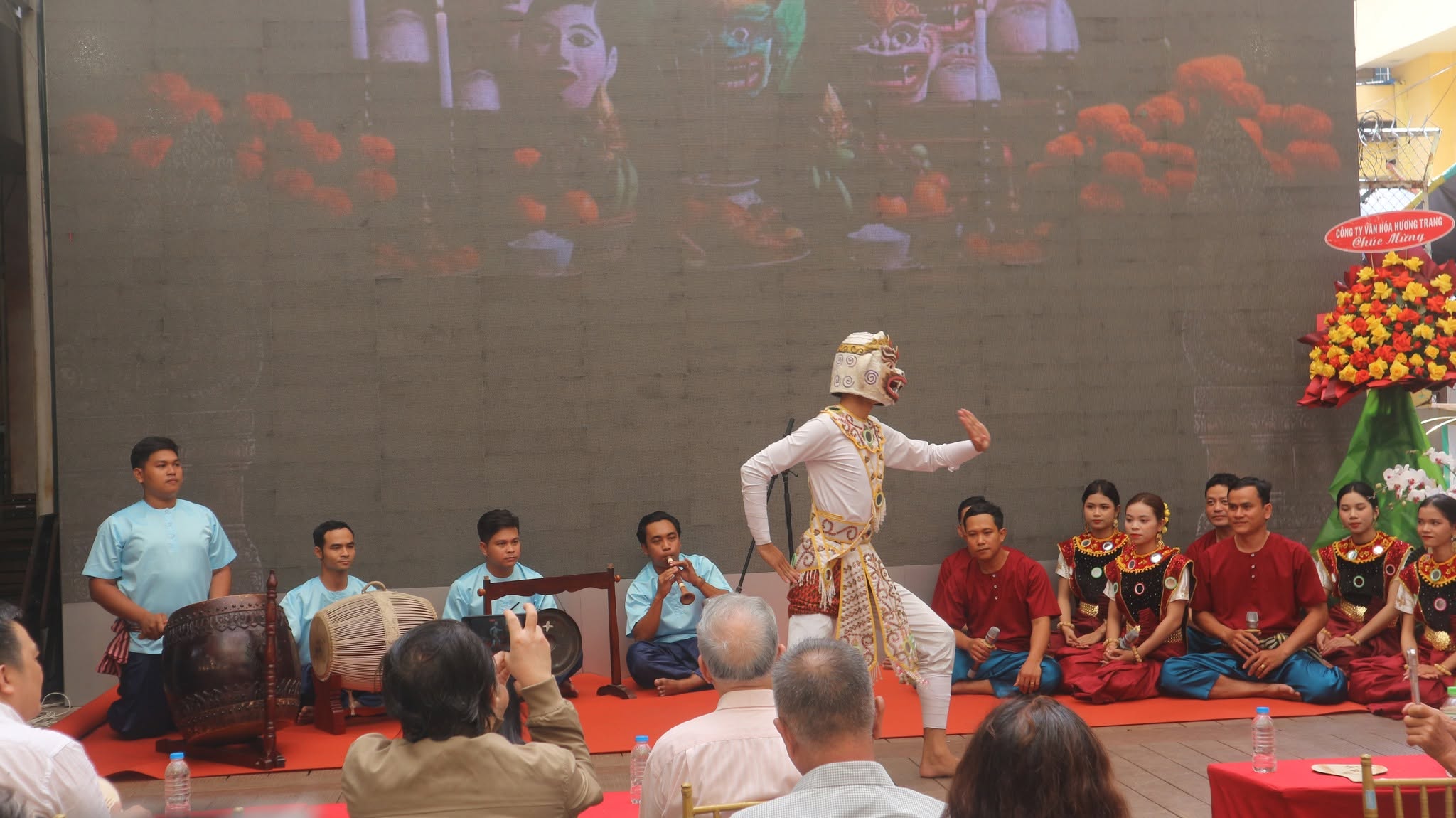
One of the most remarkable features of Rô-băm is its use of masks. These masks generally cover the performer’s entire head, with only two openings for vision. Each mask represents a particular character and is designed with distinctive lines, colors, and expressions.
The Chằn mask typically conveys a fierce and frightening appearance, symbolizing the forces of evil. The monkey mask, by contrast, expresses agility, intelligence, cleverness, and loyalty. Masks representing sacred birds, animals, and mythical figures are also created according to traditional conventions, allowing audiences to recognize a character as soon as they appear on stage.
Rô-băm masks are more than performance props. They are also valuable artistic and cultural objects. Mask-making requires craftsmanship, an understanding of traditional character imagery, and mastery of established design principles. Preserving the craft of mask-making is therefore an essential part of safeguarding Rô-băm theatre itself.
Each mask enables the performer to embody a character while also expressing the aesthetic conventions, symbolic beliefs, and cultural worldview of the Khmer community concerning gods, humans, and the forces of good and evil.
Music and Performance Spaces
Music plays an indispensable role in every Rô-băm performance. Traditional ensembles commonly feature drums and the Slayrom wind instrument. The drums may sound forceful and urgent like the rhythm of battle, while the wind instrument can produce either lively or deeply plaintive melodies, guiding the audience’s emotions throughout the performance.
Before the curtain rises, Rô-băm troupes traditionally perform rituals to honor the founder or ancestors of the art. The opening drumbeats and ceremonial invitation song express respect for the artistic ancestors and affirm the close relationship between performance and the spiritual life of the Khmer community.
Historically, Rô-băm stages were often set up in temple courtyards, family compounds, or open spaces in Khmer villages. Modern theatrical facilities were unnecessary. A community gathering space, traditional instruments, costumes, and masks were enough to create performances that attracted large audiences.
Rô-băm flourished particularly during the 1960s in many parts of the Mekong Delta. Troupes traveled to festivals, temples, merit-making ceremonies, and other traditional events, where they were warmly welcomed by Khmer communities. Performances often lasted late into the night and became an important part of the cultural memories of generations of Southern Khmer people.
Rô-băm in Khmer Community Life
Rô-băm is not merely a theatrical art form but also a form of community cultural practice. During traditional celebrations, Rô-băm groups may perform short excerpts featuring familiar characters such as Chằn, the monkey, the mother figure Ping Pouy, or a general riding a horse.
These performances often combine dance, humor, and symbolic battles to create a lively atmosphere during festivals. In this way, Rô-băm maintains its connection with everyday community life rather than existing solely within professional theatre settings.
For the Khmer people, Rô-băm also carries ritual and spiritual significance. Its stories express faith in the triumph of righteousness, the workings of karma, and the desire to drive away evil and bring peace to the community.
Artistically, Rô-băm is a harmonious combination of dance, masked theatre, music, visual design, and storytelling. Culturally, it preserves the symbols, myths, moral principles, and collective memories of the Southern Khmer people.
Preservation Challenges and the Risk of Decline
Despite its significant value, Rô-băm currently faces many challenges. The rise of modern entertainment, changes in community life, the reduced frequency of performances at Khmer temples, and the shortage of younger successors have gradually narrowed the spaces in which Rô-băm is performed.
Many troupes now operate only occasionally, mainly during traditional festivals. Costumes, masks, and musical instruments deteriorate while funding for repairs and replacements remains limited. Meanwhile, Rô-băm training still relies largely on apprenticeship within families or folk theatre groups, rather than specialized educational institutions.
Another factor is the complexity of its performance techniques. Learners must begin at an early age and practice consistently over many years. Without younger generations to carry on the tradition, many dance techniques, musical patterns, mask-making skills, and staging methods could be lost.
Preserving Rô-băm therefore requires more than keeping costumes, masks, or scripts. It also means maintaining performance environments, supporting artists and artisans, and protecting the community spaces in which this art form originated and evolved.
Preserving and Promoting Rô-băm in Modern Life
The preservation and promotion of Rô-băm require a combination of measures. First, traditional dance techniques, music, dialogue, performance rituals, and mask-making skills should continue to be taught to younger generations. Community clubs, training classes, and practical performance spaces can provide important environments for passing on the heritage.
It is also necessary to create more opportunities for Rô-băm troupes to perform at festivals, cultural centers, schools, and tourist destinations. Integrating Rô-băm into cultural tourism programs can expand its audience while generating income to support artists and performance groups.
Souvenirs inspired by Rô-băm characters, such as miniature masks, paintings, postcards, keychains, costumes, and decorative objects, can also help introduce this traditional art to visitors. However, modernization must not compromise the core elements of Rô-băm, particularly its dance techniques, music, character system, masks, and foundational cultural values.
The development of Rô-băm in contemporary life should follow a balanced approach: preserving traditional elements while creating new ways for modern audiences to engage with the art. Cultural introduction programs, selected performance excerpts, mask-making workshops, character interpretation activities, and cultural tourism experiences can help make Rô-băm more accessible to younger generations.
National Intangible Cultural Heritage
Heritage: Rô-băm Theatre Art of the Khmer People
Decision No.: 446/QĐ-BVHTTDL
Date: 29 January 2019
Category: Folk Performing Arts
Location: Sóc Trăng Province, now Cần Thơ City
The inclusion of Rô-băm in the National Intangible Cultural Heritage List recognizes the outstanding values of this traditional theatrical art form. It also provides an important foundation for cultural authorities and local communities to continue preservation, transmission, and promotion efforts in contemporary life.
The Enduring Value of Rô-băm
Within the cultural life of the Southern Khmer people, Rô-băm represents a synthesis of art, religion, history, and collective memory. Its masks, drums, dances, and ancient stories do more than recreate a mythical world. They convey moral values, spiritual beliefs, and the cultural identity of an entire community.
Rô-băm demonstrates the creativity of the Khmer people in adapting and localizing external cultural influences to create an art form with a distinctive identity. Over time, it has become an important part of the spiritual and cultural life of the Southern Khmer community.
Preserving Rô-băm is therefore not merely about safeguarding an ancient theatrical tradition. It is about protecting a valuable part of the cultural heritage of the Khmer people. As its dances, music, masks, and stories continue to be taught, performed, and appreciated, Rô-băm will remain a living presence in Vietnam’s cultural landscape, connecting the memories of the past with the life and aspirations of future generations.