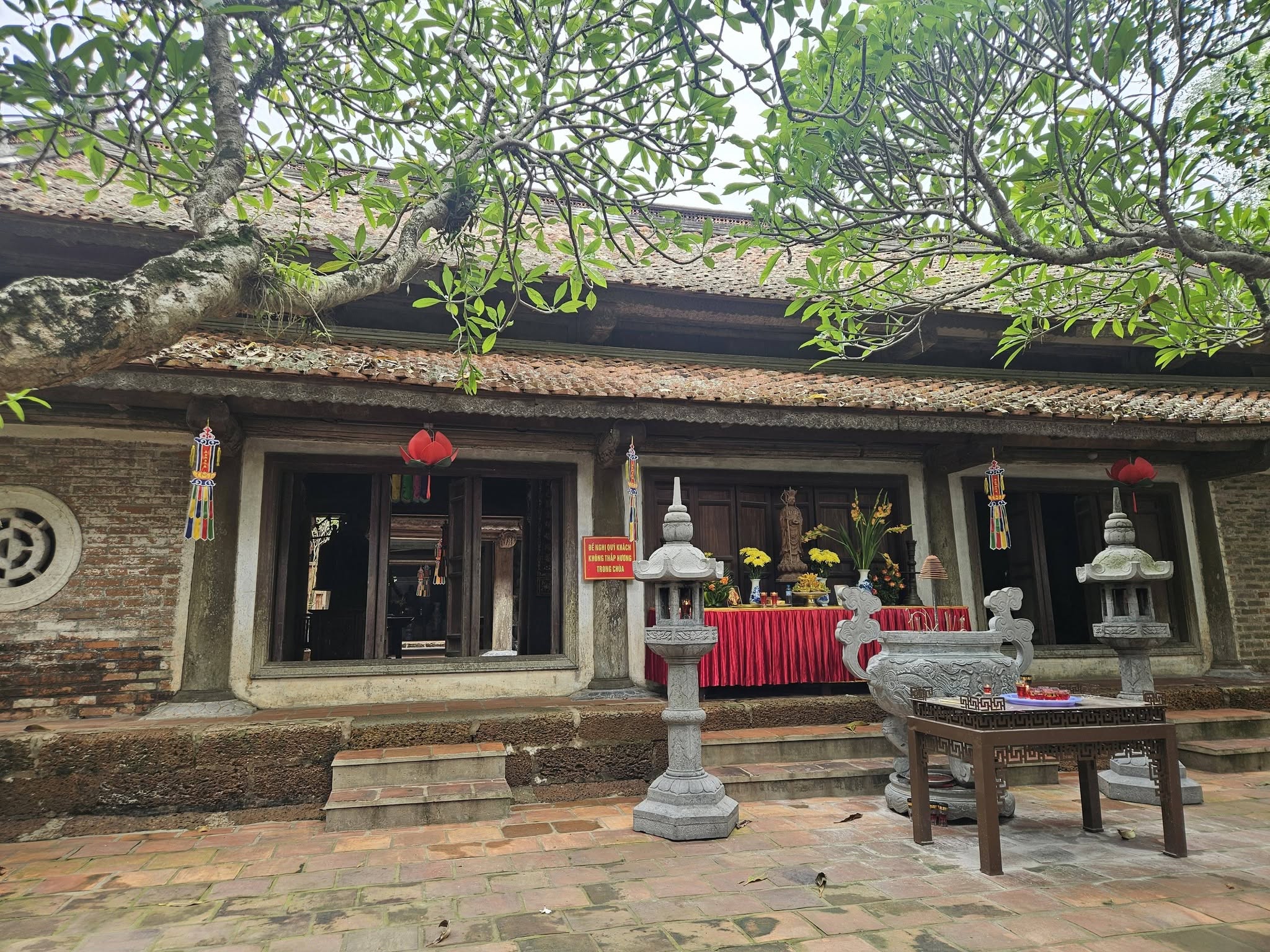
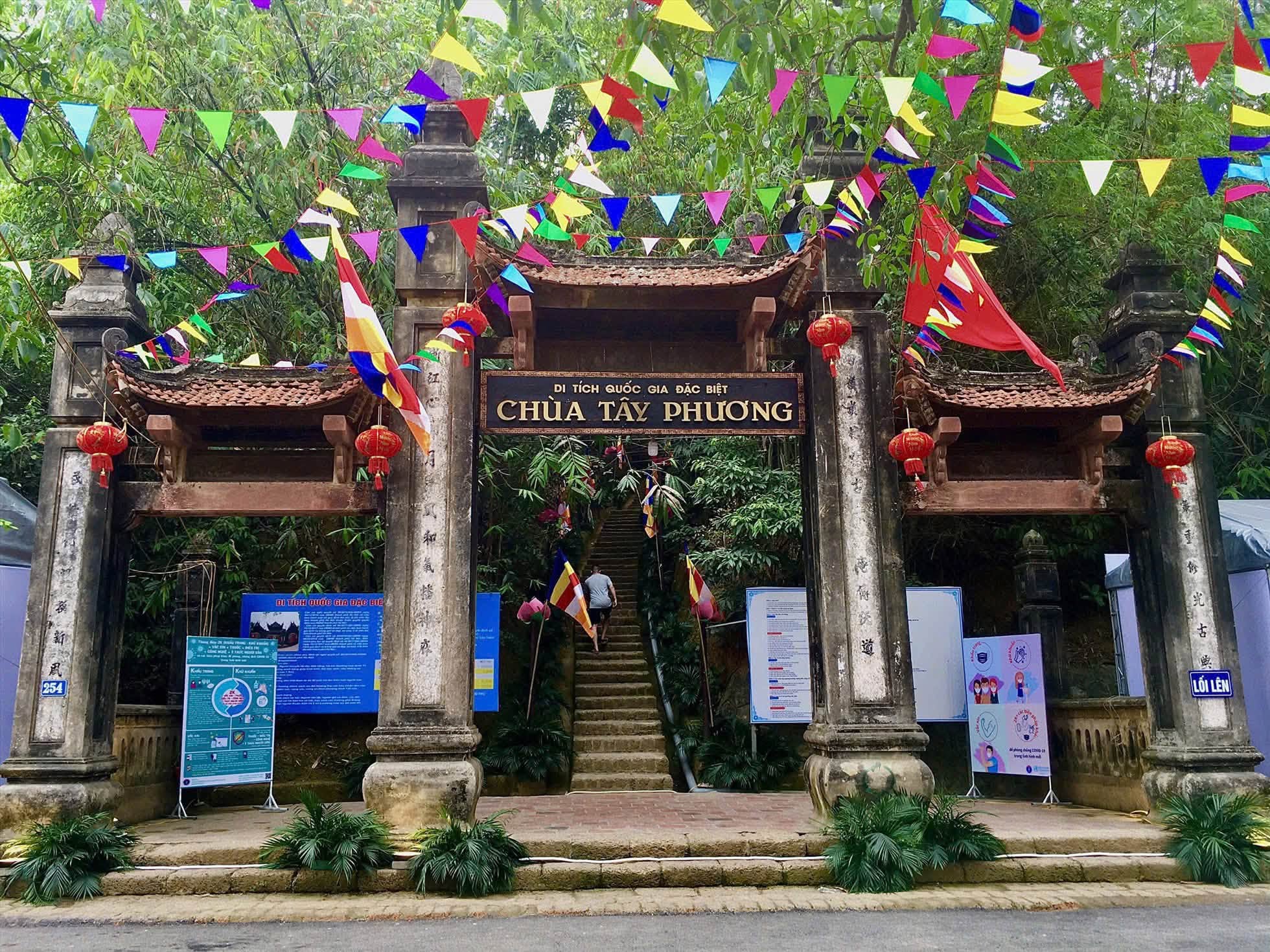
Tay Phuong Pagoda, also known as Sung Phuc Pagoda or Tay Pagoda, is located on Cau Lau Mountain in Thach Xa Commune, Hanoi. Situated amid a landscape of hills, fields and traditional villages, the pagoda is one of the important Buddhist architectural and artistic monuments in northern Vietnam, particularly known for its distinctive wooden architecture and its remarkable collection of Buddhist statues.
According to some researchers, the pagoda was constructed on a large scale in 1554, during the reign of King Mac Phuc Nguyen, in the first year of the Quang Bao era. In 1660, Lord Trinh Tac ordered the pagoda to be repaired and a three-gate entrance to be built. Later, during the reign of King Le Hy Tong, Uy Vuong Trinh Giang carried out further repairs and commissioned additional Buddhist statues.
The pagoda faces east. From the elevated position of Cau Lau Mountain, visitors can see the surrounding landscape, including Dong Song Mound, Kim Quy Mound, Tich Giang, Con Voi Mountain, Ly Ngu Mountain and the Ba Vi mountain range. The natural setting contributes to the distinctive character of Tay Phuong Pagoda, where Buddhist architecture is closely connected with the surrounding landscape.
History and architectural complex
The architectural complex of Tay Phuong Pagoda includes the lower three-gate entrance, the upper three-gate entrance, the shrine dedicated to the Mountain Deity and Duc Ong, the main Buddhist temple, the Ancestral House and Mother Goddess worship house, and the guest house.
The buildings are arranged on different levels of the mountain, following the natural terrain. This arrangement creates a distinctive architectural composition while allowing each building to maintain a close relationship with the surrounding landscape.
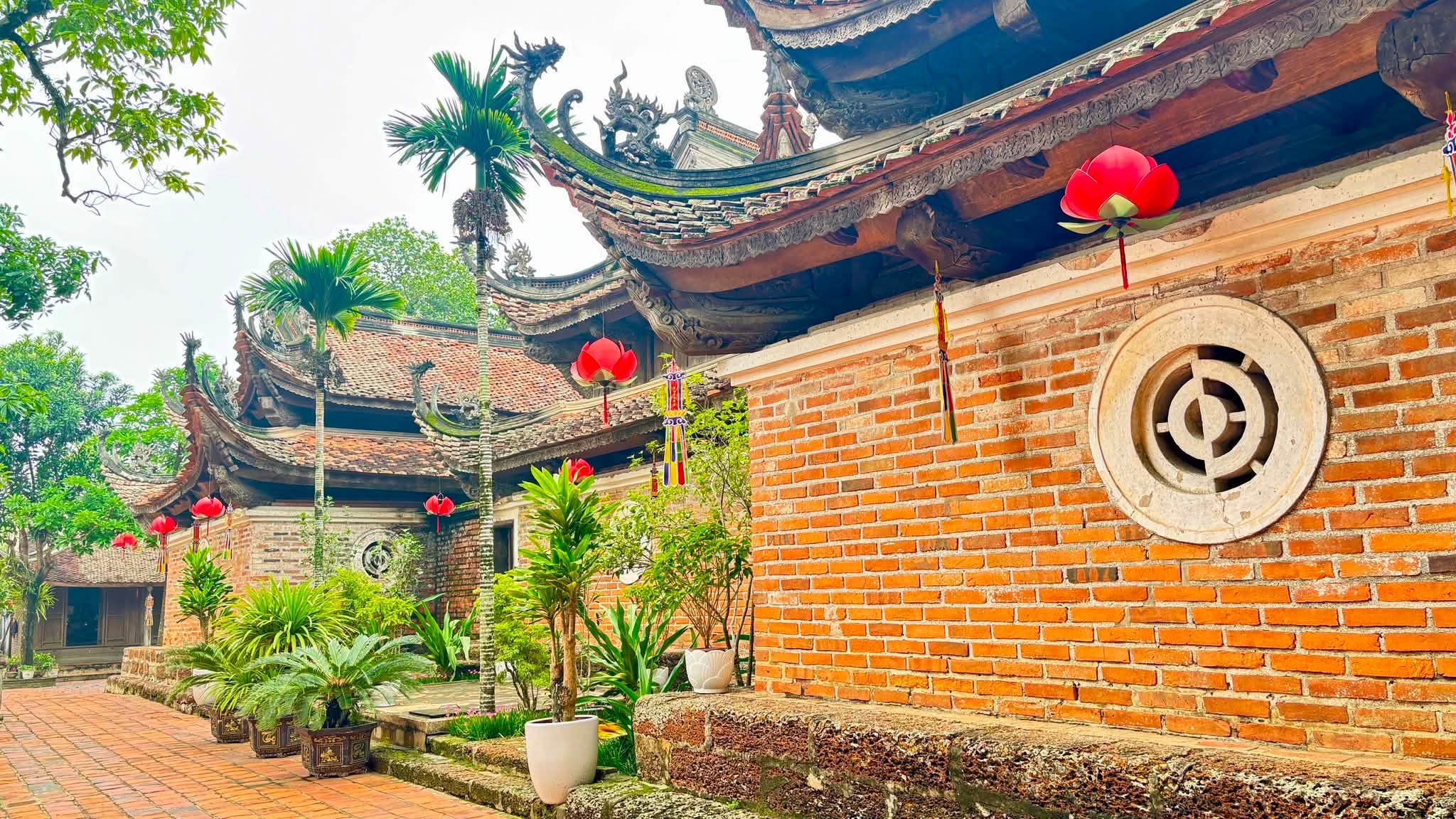
The main temple follows the traditional chu Cong layout, consisting of the Front Hall, Middle Hall and Upper Sanctuary. The wooden structure features stacked roofs and an elaborate system of traditional timber connections. The roofs are built in two tiers with eight roof slopes, decorated with curved roof edges and large traditional tiles.
The wooden frame incorporates traditional Vietnamese architectural elements such as chong ruong beams and projecting brackets. Stone lotus-shaped bases support the wooden columns, while the roof and architectural details feature decorative motifs including dragons, lions, clouds, the Four Sacred Animals and the Four Seasons.
The inner three-gate entrance also incorporates a bell tower. A number of its architectural elements retain characteristics associated with the 17th century, providing important evidence of the development of Vietnamese Buddhist architecture during this period.
Buddhist sculpture and artistic value
The most remarkable feature of Tay Phuong Pagoda is its system of Buddhist, Arhat and Vajra guardian statues. Most of the statues were carved from jackfruit wood and date mainly from the late 18th century, with some works belonging to the 19th century.
Among the most notable sculptures are the statue of Tuyet Son, the Eighteen Arhats and the Eight Vajra Guardians. These works demonstrate the sophisticated carving techniques of Vietnamese artisans and convey a wide range of human expressions, gestures and physical characteristics.
The sculptures at Tay Phuong are particularly significant because they combine religious symbolism with highly expressive artistic treatment. Rather than presenting idealized figures in a uniform manner, the artisans created individual personalities through facial expressions, body proportions, gestures and carefully carved details.
The collection therefore provides an important insight into Vietnamese Buddhist sculpture during the period. Together with the architecture, decorative elements and religious objects preserved at the site, the sculptures form an integrated artistic ensemble reflecting the development of Vietnamese Buddhist culture.
Tay Phuong Pagoda also reflects the historical interaction between Buddhism, Taoism and Confucianism in Vietnamese society. Its architectural layout, religious practices, sculpture and associated cultural traditions illustrate how different spiritual and intellectual traditions became intertwined within Vietnamese religious life.
Cultural heritage and recognition
In addition to its architectural and artistic values, Tay Phuong Pagoda remains an active religious and cultural space. Its annual festival combines Buddhist rituals with traditional community activities and folk performances, preserving cultural practices associated with the local community.
The pagoda is particularly valuable as a place where architecture, sculpture, religious traditions and the surrounding landscape have been preserved as a relatively coherent cultural heritage complex.
Recognizing its outstanding historical, architectural and artistic significance, the Vietnamese Government officially classified Tay Phuong Pagoda as a Special National Monument under Decision No. 2408/QD-TTg dated December 31, 2014.
Today, Tay Phuong Pagoda remains an important destination for those interested in Vietnamese Buddhist architecture, traditional sculpture and the cultural heritage of the Hanoi region. Its distinctive wooden buildings, historic statues and mountain setting make the site an important part of Vietnam’s religious and artistic heritage.