Among the rocky islands and sea caves of the Cham Islands, where swiftlets build their nests on sheltered cave walls, generations of residents from Thanh Chau Village have preserved a distinctive traditional occupation: harvesting edible bird’s nests, commonly known in Vietnam as yen sao.
Unlike crafts practiced in workshops or family homes, Thanh Chau swiftlet nest harvesting takes place in a challenging marine environment. Harvesters must travel across the sea, navigate rugged island terrain, and enter difficult-to-access caves using skills developed through generations of practical experience.
The tradition combines seafaring knowledge, an understanding of swiftlet behavior, specialized harvesting techniques, and cultural customs associated with coastal communities.
Over time, edible bird’s nests became a valuable natural product closely connected to the commercial history of Hoi An and the livelihoods of Thanh Chau residents.
On November 21, 2016, Thanh Chau Swiftlet Nest Harvesting was inscribed on Vietnam’s National List of Intangible Cultural Heritage under Decision No. 4036/QĐ-BVHTTDL issued by the Ministry of Culture, Sports and Tourism.
This recognition acknowledges the historical, cultural, and traditional knowledge preserved by generations of swiftlet nest harvesters.
Thanh Chau Village and the Maritime Cultural Landscape of Hoi An
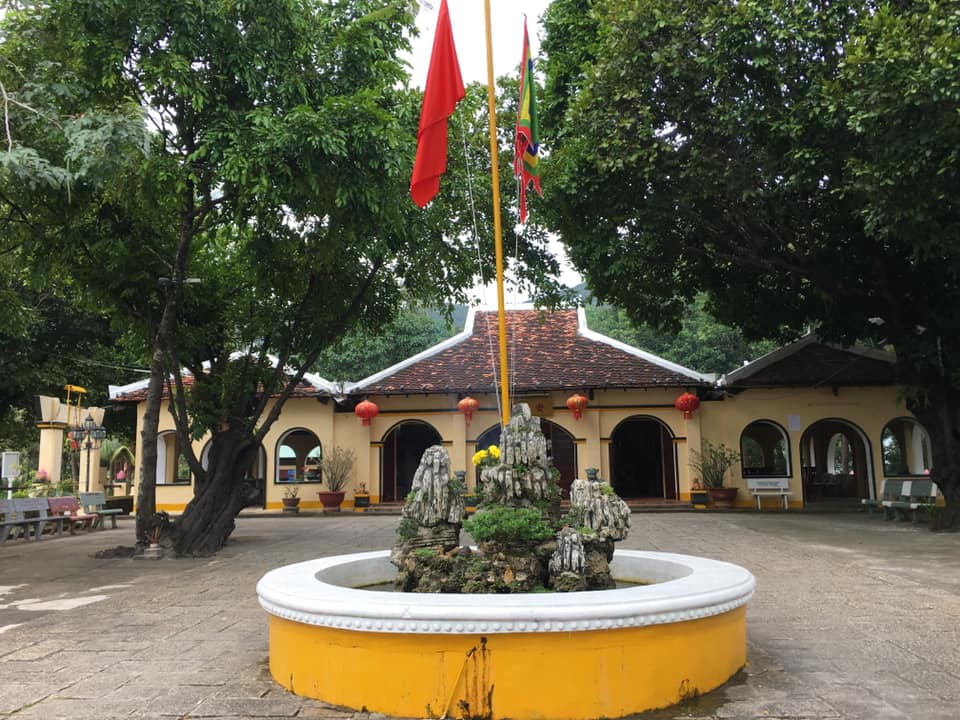
Thanh Chau is a historic village located east of central Hoi An, associated with the Cam Thanh area and the network of rivers and waterways leading toward Cua Dai Estuary.
Historically known as Lang Yen, meaning “Swiftlet Village,” Thanh Chau developed a distinctive identity through its traditional occupation of harvesting edible bird’s nests from caves in the Cham Islands.
According to historical research, Thanh Chau Village was established around the 17th century by six founding lineages: Tran, Ho, Le, Nguyen, Pham, and Huynh.
In its early history, the village also included Vong Nhi, an older settlement in the Cam Thanh area.
An inscription on the ancestral tomb of the Tran Van lineage in Vong Nhi records the settlement’s establishment in 1498, during the Canh Thong reign.
As the population grew and local communities developed, Thanh Chau was gradually divided into Thanh Dong, Thanh Tay, and Thanh Nam villages.
Before 1945, Thanh Dong underwent further administrative division, resulting in the settlements known as Thanh Dong, Thanh Nhut, Thanh Nhi, and Thanh Tam.
These changes reflect the long history of Vietnamese settlement and village development in the coastal and estuarine landscape of Hoi An.
Drawing on cultural traditions brought from northern Vietnam while adapting to the natural environment of their new homeland, Thanh Chau residents developed a variety of livelihoods.
These included agriculture, fishing, seafood harvesting, and maritime trading aboard traditional wooden cargo boats known as ghe bau.
Among these activities, the harvesting and preliminary processing of edible swiftlet nests became a particularly distinctive occupation.
The cultural landscape of this heritage extends beyond Thanh Chau Village itself. It also includes the sea caves of the Cham Islands, where generations of harvesters have practiced their specialized skills.
Origins of the Thanh Chau Swiftlet Nest Harvesting Tradition
Local oral traditions preserve several stories explaining how the residents of Thanh Chau first discovered edible swiftlet nests.
One legend tells of Tran Tien and his wife, a fishing couple from Thanh Chau Village.
During a fishing journey, their boat was reportedly caught in a storm and driven toward an island in the Cham Islands. While seeking shelter, they accidentally discovered swiftlet nests inside a cave.
According to the story, this discovery eventually led local residents to recognize the value of the nests and begin harvesting them.
Another traditional tale, known as Nang Yen, or “The Swiftlet Maiden,” offers a symbolic explanation for the origin of edible bird’s nests.
The story describes a young woman who wished to save her father from starvation. In the legend, she used her own saliva to create food, providing a folk explanation for the formation of swiftlet nests.
These stories form part of the community’s oral heritage. They reflect local imagination, moral values, and traditional interpretations of the natural world rather than historically verified accounts of the occupation’s beginnings.
Historical sources cited in studies of the craft suggest that edible swiftlet nests had been recognized as valuable products for many centuries.
Swiftlet nest harvesting was also practiced by communities in Southeast Asia, including the inhabitants of the former Champa civilization.
As Vietnamese settlers moved southward, they encountered and adopted knowledge of local natural resources and harvesting practices from earlier communities.
In Thanh Chau, this knowledge was gradually adapted to the specific environmental conditions of the Cham Islands.
Under the Nguyen Lords and later the Nguyen Dynasty, swiftlet nest harvesting became increasingly organized, developing from small-scale activities into a more specialized occupation.
Historical documents written in classical Chinese and Nom script, preserved by descendants of the Tran and Ho lineages in Cam Thanh, together with relevant stone inscriptions, indicate that these two families played particularly important roles in the history of Thanh Chau’s swiftlet nest harvesting tradition.
Swiftlet Nest Harvesting and the Trading History of Hoi An
During the period when Hoi An flourished as an international trading port, products from the mountains, rivers, and coastal waters of Quang Nam became important commodities in regional trade.
Edible swiftlet nests were among the valuable natural products associated with this commercial network.
In traditional royal cuisine, bird’s nest was regarded as a prestigious ingredient and was often included among the bat tran, or eight treasured delicacies.
Its historical value reflected its relative rarity, the difficulty of harvesting it, and its status within elite culinary traditions.
For Thanh Chau residents, swiftlet nest harvesting became more than a supplementary livelihood.
It developed into a specialized occupation requiring knowledge of island geography, cave locations, weather conditions, tides, and the nesting behavior of swiftlets.
Harvesting teams needed to coordinate closely when traveling between islands, approaching cave entrances, and collecting nests from difficult terrain.
Over time, the occupation became an important component of Hoi An’s traditional economy.
It also illustrates the historical relationship between the trading port and the surrounding maritime environment, particularly the Cham Islands.
The Swiftlet Caves of the Cham Islands
The traditional harvesting grounds of Thanh Chau are located among the islands of the Cham Islands archipelago, more than 15 kilometers offshore from Hoi An.
The archipelago contains rocky coastlines, steep cliffs, and natural sea caves that provide nesting habitats for swiftlets.
According to traditional village records, harvesting locations have included several caves on different islands.
On Hon Kho Me, one of the recognized sites is Kho Cave.
On Hon Tai, traditional harvesting sites include Xanh Reu Cave, Bac Cau Cave, Ky Trau Cave, and Can Cave.
On Hon Lao, the recorded locations include To Vo Cave, Ca Cave, Cot Buom Cave, and Tran Quy Cave.
Each cave has its own physical characteristics, including entrance conditions, rock formations, accessibility, and exposure to the sea.
For experienced harvesters, understanding these differences is essential.
They must remember the locations of caves, recognize safe approaches, assess waves and weather conditions, and determine suitable times for entering the harvesting areas.
The caves are also natural habitats for swiftlets, making their ecological protection essential to the long-term survival of the occupation.
Today, these locations are significant not only as traditional harvesting grounds but also as environments of ecological, scientific, and cultural importance.
They form part of the maritime heritage landscape of the Cham Islands and require careful management to protect the birds and their nesting habitats.
Indigenous Knowledge and Traditional Harvesting Techniques
The central value of Thanh Chau swiftlet nest harvesting lies in the knowledge and skills transmitted through generations of practical experience.
Harvesters must understand marine conditions, island geography, cave environments, swiftlet nesting behavior, and the factors that influence the safety and timing of harvesting activities.
Reaching the sea caves requires boating experience, careful observation of weather conditions, teamwork, and the ability to move across rugged coastal terrain.
In caves with steep rock walls or difficult entrances, the work demands particular caution, physical skill, and discipline.
Once inside the caves, harvesters apply their experience to identify nests, determine appropriate harvesting conditions, and collect the products.
The harvested nests are then transported and subjected to cleaning and preliminary processing.
Traditional tools, equipment, and working arrangements have been adapted to the conditions of different harvesting sites.
These methods represent knowledge accumulated over centuries rather than techniques developed through formal instruction alone.
The occupation is also associated with customary practices, traditional restrictions, and beliefs observed by members of the harvesting community.
Such customs reflect respect for the occupation, the natural environment, and the dangers encountered while working at sea.
In the present day, traditional harvesting knowledge must be combined with modern safety requirements, ecological monitoring, and conservation regulations.
Responsible harvesting is particularly important because swiftlet populations depend on suitable nesting environments and successful reproduction.
Organization and Conservation Since 1975
Following 1975, swiftlet nest harvesting, processing, and distribution in Hoi An entered a new phase of organization and management.
On December 20, 1975, the Hoi An municipal authorities established the Hoi An Swiftlet Nest Management and Harvesting Team.
The organization was formed on the foundation of the traditional harvesting teams associated with Thanh Chau’s swiftlet-harvesting community.
This marked an important transition from community-based harvesting practices toward a more formally managed system.
In subsequent years, local authorities introduced new equipment and management measures intended to improve harvesting efficiency, product quality, and the protection of swiftlet nesting habitats.
These efforts also aimed to maintain the economic value of the occupation and support its contribution to local livelihoods.
However, edible swiftlet nests are a natural resource dependent on the survival and reproduction of wild birds.
For this reason, the sustainability of harvesting activities requires careful attention to nesting cycles, habitat conditions, population monitoring, and the effects of human disturbance.
Combining the traditional experience of Thanh Chau harvesters with modern conservation and resource-management approaches remains essential to the long-term future of the occupation.
Edible Bird’s Nests and the Cultural and Economic Value of the Craft
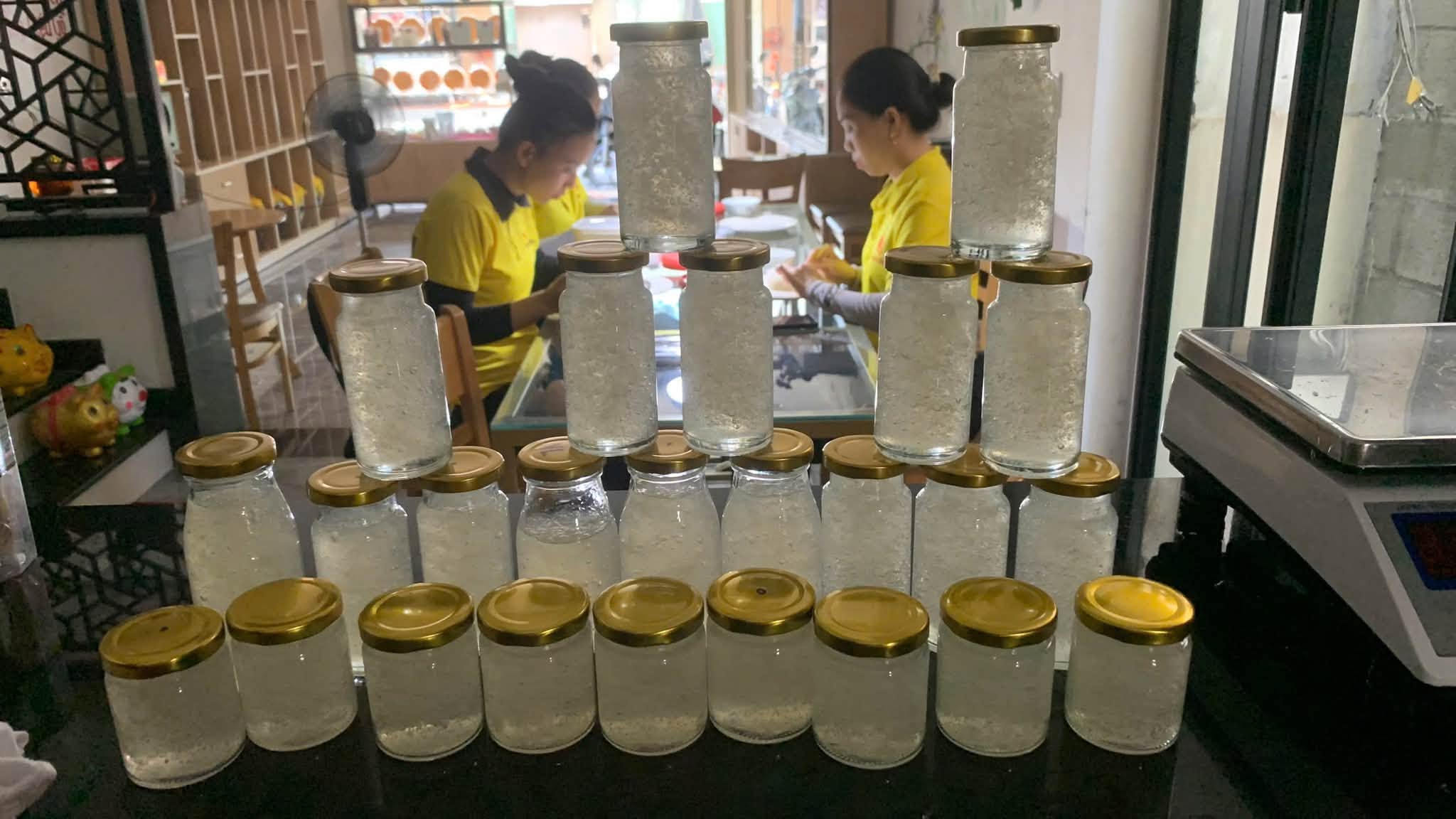
The principal product of Thanh Chau’s traditional occupation is the edible nest of wild swiftlets harvested from natural caves in the Cham Islands.
Obtaining this product involves several stages, including preparing boats and equipment, reaching harvesting locations, collecting nests, transporting them ashore, and carrying out cleaning and preliminary processing.
The product’s value reflects not only its characteristics as a natural ingredient but also the demanding conditions of harvesting and the specialized knowledge required.
Economically, swiftlet nest harvesting has historically contributed to the livelihoods of Thanh Chau residents and the commercial activities of Hoi An.
Culturally, it reflects the ability of coastal communities to adapt to a challenging marine environment and develop occupational traditions based on shared experience.
The historical role of the Tran and Ho lineages also illustrates the importance of family networks and intergenerational knowledge transmission in maintaining the occupation.
From a scientific perspective, traditional observations concerning cave geography, swiftlet behavior, and marine conditions provide valuable material for research into coastal cultures, occupational history, and natural resource conservation.
Above all, the heritage demonstrates the enduring relationship between the communities of Hoi An and the Cham Islands.
This relationship has been shaped not only by trade and economic activity but also by generations of interaction with the sea and its natural ecosystems.
Preserving Thanh Chau’s Maritime Heritage
Today, Thanh Chau swiftlet nest harvesting represents far more than the production of a valuable regional specialty.
It is a living heritage that reflects settlement history, seafaring experience, traditional resource management, and the ability of communities to adapt to distinctive island environments.
As cultural tourism continues to develop in Hoi An and the Cham Islands, the history of Thanh Chau’s swiftlet-harvesting community offers opportunities to introduce visitors to a lesser-known aspect of the region’s heritage.
Visitors may learn about the occupation through historical accounts, local traditions, village cultural landscapes, and appropriate presentations of traditional products.
However, swiftlet caves are sensitive wildlife habitats, and some may be located within areas subject to strict conservation or access regulations.
Entering these caves should not be considered an unrestricted tourist activity.
Any tourism experience associated with swiftlet harvesting must comply with local regulations and avoid disturbing nesting birds or damaging their natural environment.
Preserving the heritage therefore requires a dual approach: safeguarding the traditional knowledge and cultural practices of Thanh Chau’s harvesting community while protecting the ecological conditions of the Cham Islands.
Recognition as National Intangible Cultural Heritage
On November 21, 2016, the Ministry of Culture, Sports and Tourism issued Decision No. 4036/QĐ-BVHTTDL, officially including Thanh Chau Swiftlet Nest Harvesting on Vietnam’s National List of Intangible Cultural Heritage.
Kim Bong Woodworking, another traditional occupation associated with Hoi An, was also recognized under the same decision.
The recognition acknowledges the historical, cultural, scientific, and economic significance of a distinctive occupation closely connected to the people of Thanh Chau and the marine environment of the Cham Islands.
The heritage encompasses much more than edible bird’s nests.
It includes traditional seafaring experience, knowledge of cave environments, observations of swiftlet behavior, harvesting techniques, working arrangements, and occupational customs passed down through generations.
From legends about the discovery of swiftlet nests to the development of organized harvesting practices, Thanh Chau’s occupation has become an important part of Hoi An’s maritime cultural memory.
Today, safeguarding this heritage means preserving traditional knowledge while recognizing the responsibility to protect the island ecosystems that have sustained the occupation for centuries.
Basic Information
| Item | Details |
|---|---|
| Heritage name | Thanh Chau Swiftlet Nest Harvesting |
| Cultural location | Thanh Chau Village, Cam Thanh area, Hoi An, Da Nang City |
| Traditional harvesting grounds | Swiftlet caves in the Cham Islands archipelago |
| Village origins | Around the 17th century, according to historical research |
| Founding lineages | Tran, Ho, Le, Nguyen, Pham, and Huynh |
| Lineages closely associated with the occupation | Tran and Ho |
| Traditional products | Wild edible swiftlet nests and preliminarily processed bird’s nests |
| Traditional knowledge | Seafaring, cave identification, swiftlet behavior, nest harvesting, collection, and processing |
| Natural environment | Sea caves, coastal cliffs, and island ecosystems of the Cham Islands |
| Organizational milestone | Establishment of the Hoi An Swiftlet Nest Management and Harvesting Team on December 20, 1975 |
| Cultural significance | Maritime heritage, traditional ecological knowledge, occupational history, and natural resource conservation |
| Recognition | National Intangible Cultural Heritage |
| Decision number | 4036/QĐ-BVHTTDL |
| Recognition date | November 21, 2016 |