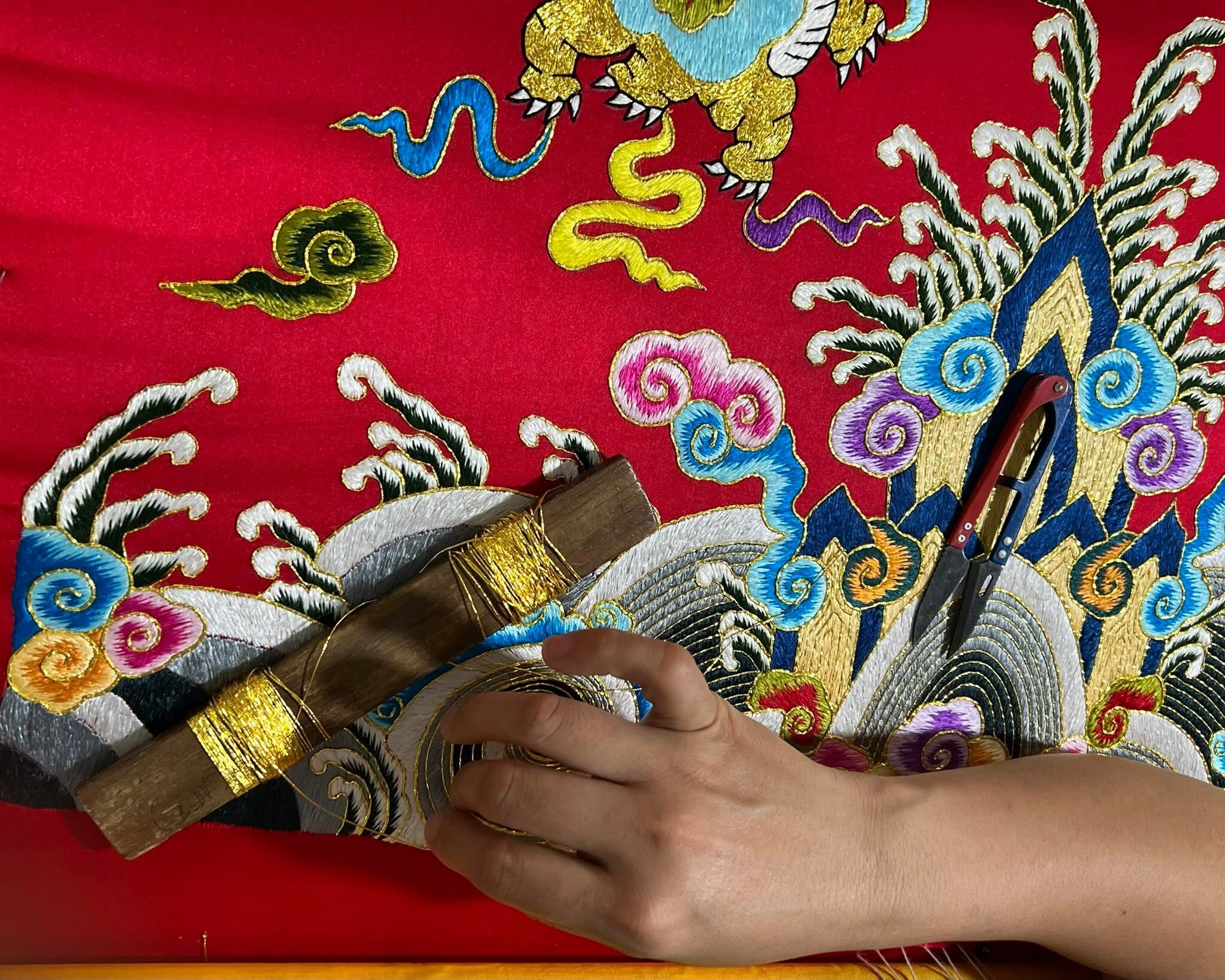
Dong Cuu is one of the villages where traditional Vietnamese embroidery techniques have been preserved, particularly the highly specialized practices of restoration embroidery and embroidery for religious and spiritual purposes.
The craft is not simply a decorative tradition. Through embroidered costumes, ceremonial objects, footwear, parasols, banners, and other products, Dong Cuu artisans contribute to the restoration and preservation of traditional cultural forms.
Dong Cuu belongs to the former Ngu Xa area, which included Dong Giai, Dong Cuu, Binh Lang, and Quat Dong. Today, these areas are part of Thuong Phuc Commune, Hanoi. According to local tradition, the villages of Ngu Xa share the same embroidery craft ancestor, Le Cong Hanh, whose real name was Bui Cong Hanh. He is said to have learned embroidery during a diplomatic mission to China under the reign of Emperor Le Thai Tong and later brought the craft back to Vietnam. Each village was traditionally associated with particular embroidery techniques and product groups, including ritual textiles, shoes, ceremonial boots, parasols, hats, fans, clothing, and other embroidered objects.
Dong Cuu and the Tradition of Restoration Embroidery
Today, Dong Cuu remains known for preserving traditional embroidery techniques, with a particular specialization in restoration work and products associated with religious and spiritual practices. These include hia, hai, ceremonial parasols, banners, ritual costumes, and costumes used in hau dong ceremonies.
During the 1950s, many Dong Cuu embroiderers traveled to Hang Non and Hang Quat in Hanoi’s Old Quarter to work as hired embroiderers. By the 1970s, the craft had entered a period of decline.
After 1986, embroidery for spiritual and religious purposes began to develop again. From around 2000 onward, the restoration of many communal houses, temples, pagodas, and festivals in northern Vietnam created new demand for traditional embroidered products. Skilled artisans gradually established home-based workshops, helping the craft regain momentum.
Materials and Traditional Tools
Dong Cuu embroidery uses a wide range of materials, including different types of fabric, threads and yarns, cotton, straw, foam, and other supporting materials. These materials may be sourced domestically or imported.
The traditional toolkit includes rectangular and circular embroidery frames, with rectangular frames being more commonly used. Artisans also work with different embroidery needles, tools for securing metallic threads and creating raised embroidery, spools for winding metallic thread, finger guards, embroidery machines, kerosene, drawing powder, small applicators, and tracing paper or mica sheets used for transferring designs.
For restoration embroidery, the first step is to examine the original piece carefully. The artisan must determine its dimensions, fabric, motifs, and thread colors before selecting or reproducing the appropriate materials.
For ordinary embroidery, the final design may depend more heavily on the artisan’s creativity or the requirements of the commission.
The materials are then prepared according to the type of product. Artisans select fabric, colored thread, metallic thread, and thread used to secure the metallic elements. Threads may be treated with sizing or dyed before use.
Products requiring a supporting structure, such as ceremonial boots or hats, may also require paper, wood, bamboo, metal, or woven fabric made from jute or hemp fibers.
Designing, Transferring Patterns, and Stretching the Frame
Once the materials are ready, the artisan prepares the design. In restoration work, this stage requires particular precision because allowances must be calculated so that the original dimensions and motifs are not lost during the finishing process.
When an old object has lost substantial portions of its decorative pattern, the person reconstructing the design must understand the principles governing traditional motifs, especially symmetry.
For religious products without a fixed historical model, artisans may create new designs based on their knowledge of traditional motifs, accumulated experience, and additional reference materials. Some families also produce embroidered objects for foreign customers based on traditional patterns from other cultures.
The next stages involve transferring the design onto the fabric. The original drawing is placed together with tracing paper or mica, and the artisan uses a needle to perforate the lines of the pattern, creating a series of small holes.
The perforated pattern is then placed over the fabric. A long ruler is used to hold the fabric in place and prevent wrinkles or distortion. The artisan applies a mixture of kerosene and powdered chalk with a small applicator. Through the perforations, the powder adheres to the fabric and forms a dotted outline of the design.
Hats and ceremonial boots require their supporting frames to be constructed before the pattern is transferred. Ceremonial boots are commonly built around a paper-based structure, while their soles may be made from rubber or wood. When wood is used, lightweight and termite-resistant varieties are selected.
The fabric is then mounted onto the embroidery frame. Proper tension is essential. Experienced artisans know which sections should be embroidered first so that the fabric’s elasticity remains balanced and the finished piece does not become distorted.
Important motifs are often embroidered last, especially when they contain raised padding or other three-dimensional elements, so that the decorated areas do not have to be folded or rolled during earlier stages.
The Art of Metallic Thread Embroidery
Dong Cuu embroidery has two principal technical groups: thread embroidery and metallic thread embroidery, also known as gold-thread embroidery. Metallic thread embroidery is one of the defining characteristics of the village’s traditional craft.
Dong Cuu artisans are also known for techniques such as gệch độn and chênh lề, which help raise motifs above the fabric and create a vivid sense of depth. Based on the embroidery material, Dong Cuu techniques can broadly be divided into metallic thread and colored thread embroidery.
Metallic Thread Techniques
Metallic outline embroidery is used to define the edges and outlines of motifs, including claws, dragon scales, cloud clusters, and other details. Metallic thread is placed along the prepared pattern and secured with silk thread. The two threads must cross at right angles to maintain the accuracy of the design. This technique is generally entrusted to highly skilled artisans.
Circular filling around metallic thread involves placing two or three metallic threads parallel to one another and securing them with perpendicular stitches. The artisan works in successive rings from the outer edge toward the center, creating a raised and closely packed decorative surface.
Dense metallic filling follows a similar principle but fills the entire motif rather than leaving an unembroidered central area. It is commonly used for clouds, flowers, and other dense decorative motifs.
Reversible metallic filling is particularly suited to motifs with curves, bends, and complex sections, such as clouds. The artisan must calculate the spacing of each line precisely so that the return stitching fills the remaining spaces without leaving gaps. This is a technically demanding method requiring considerable experience and highly accurate visual estimation.
Twisted embroidery uses two threads of different thicknesses, one larger and one smaller, twisted together so that the larger thread wraps around the smaller one in a regular pattern. It is used for clouds, dragons, the sun, coral, and other accent details. According to the source, this technique is becoming increasingly rare.
Raised couching without padding is one of the more difficult metallic-thread techniques. It is commonly used for dragons, phoenixes, fish, birds, and roof-tile motifs. A supporting cord is first placed beneath the design to create height, then metallic thread is secured over it in carefully spaced rows. The stitches must remain even and tight so that the raised effect is clearly defined without exposing the underlying cord.
Raised couching with padding follows the same basic technique, but straw or cotton is placed underneath the motif before the supporting cord is attached, producing a higher three-dimensional effect.
Colored Thread Embroidery
In addition to metallic thread, Dong Cuu artisans use numerous techniques involving colored threads.
Twisted-loop embroidery creates raised thread formations that can be felt on the surface. Pressed-stitch embroidery is used for details such as dragon hair and tails, with very short stitches arranged in a diagonal pattern.
Horizontal stitching is one of the fundamental techniques of Dong Cuu embroidery. It is used for backgrounds as well as motifs such as clouds, dragons, phoenixes, and other decorative patterns. Each stitch must follow the same direction and maintain a consistent length.
The challenge lies in maintaining this uniformity across hundreds or even thousands of individual stitches.
Techniques for Creating a Three-Dimensional Effect
A distinctive feature of Dong Cuu embroidery is the use of specialized techniques to make motifs appear lively and dimensional. Some methods are specifically designed to create an effect resembling three-dimensional imagery.
Scale filling is used for phoenixes, dragons, fish, and similar motifs. Artisans leave carefully calculated spaces between scales so that each individual scale remains visible. Fish scales are worked from the tail, with each new scale overlapping the previous one. Phoenix feathers receive additional horizontal lines, while dragon scales are filled densely to create a realistic raised appearance.
Artisans can also create variations of light and shadow by changing the direction of the thread even when using the same type and color of thread. Different thread directions reflect light differently, producing subtle changes in appearance as the viewing angle changes.
Some techniques have disappeared from current practice. For example, the traditional method of padding dragon claws with human hair or horsehair is no longer used. Another technique, known as ghệch, is used along the edges of dragon motifs to give the dragon a more imposing and powerful appearance.
Dong Cuu Embroidery Products
After the embroidery is completed, the artisan trims excess thread and metallic thread, checks the work carefully, and prepares the piece for cutting, sewing, and final assembly.
Dong Cuu embroidery products can be classified in several ways. Based on the design, there are restored pieces following historical models and products designed independently by artisans.
Based on quality, the source distinguishes between simpler products and higher-quality pieces. Higher-quality embroidery requires greater precision, with very short and even stitches and carefully controlled metallic-thread work.
Products can also be classified according to cultural style. These include Malaysian-inspired pieces using seven-color metallic thread, Hong Kong-style embroidery, ritual garments, traditional Chinese costumes, ceremonial clothing, and garments for religious practitioners of the San Diu community.
According to function, products include ceremonial clothing such as hau dong costumes and costumes for village guardian deities, as well as ritual objects such as y mon, ceremonial parasols, banners, and hia.
Several skilled families have developed specialized areas of expertise. The family of Vu Van Gioi specializes in restoring court costumes; the family of Nguyen Dac Bay specializes in restoring and producing ceremonial parasols and banners; while the family of Nguyen Van Doc specializes in ceremonial boots, hats, and headdresses.
Passing the Craft from One Generation to the Next
Embroidery skills in Dong Cuu are traditionally taught through direct, hands-on instruction. Beginners start with seemingly simple matters, such as how to sit comfortably for long periods, how to hold an embroidery needle, how to insert the needle vertically, and how to pull the thread so that each stitch remains tight and even.
They then learn to recognize traditional patterns, determine which technique should be used for each motif, embroider, stretch the frame, and transfer designs.
The traditional embroidery method follows strict rules. The direction of each stitch, the way the needle is withdrawn, the length of the thread, and the angle at which the needle enters the fabric all have to follow established practices.
According to the source, a beginner may need three to five months of diligent practice simply to learn the fundamentals. With continued dedication, an embroiderer may become highly skilled after three to five years, although expertise is often concentrated in a particular technique or stage of the craft. In Dong Cuu, ordinary stitches should generally not exceed 3 millimeters, while some techniques use stitches of approximately 1 millimeter.
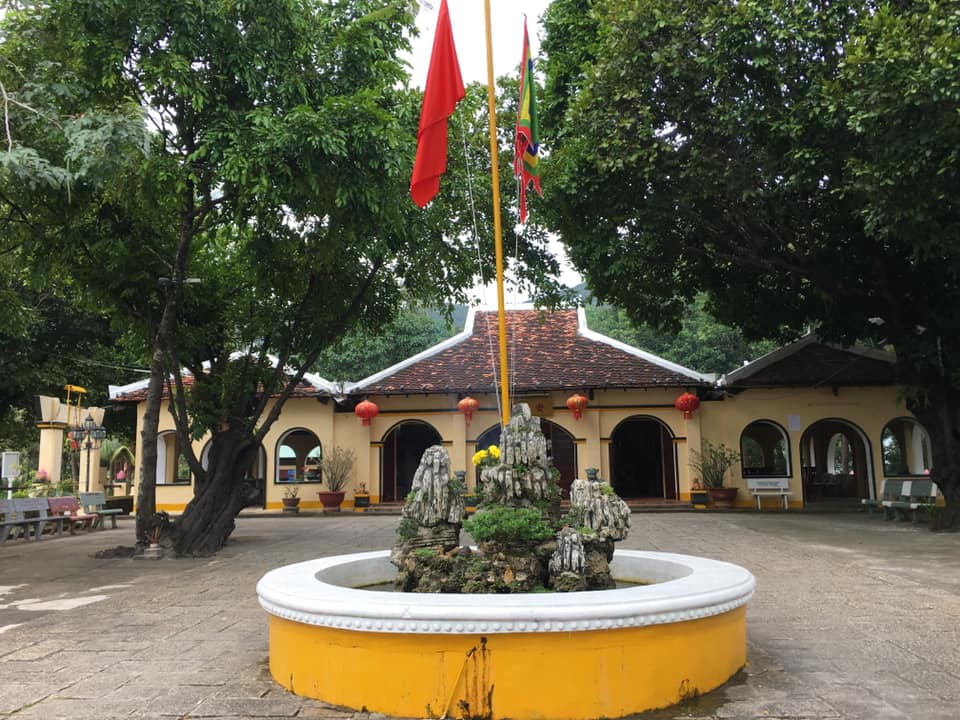
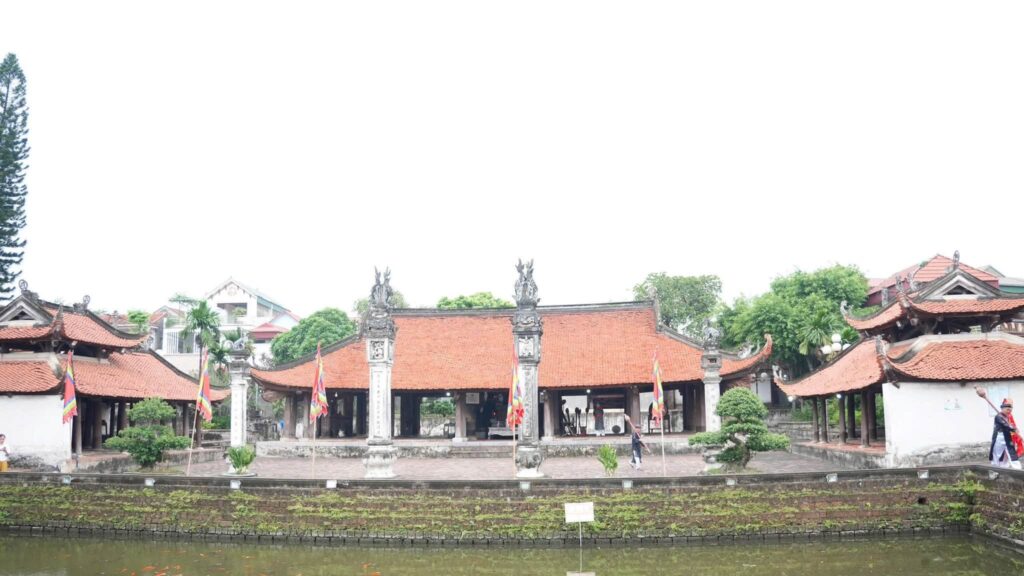
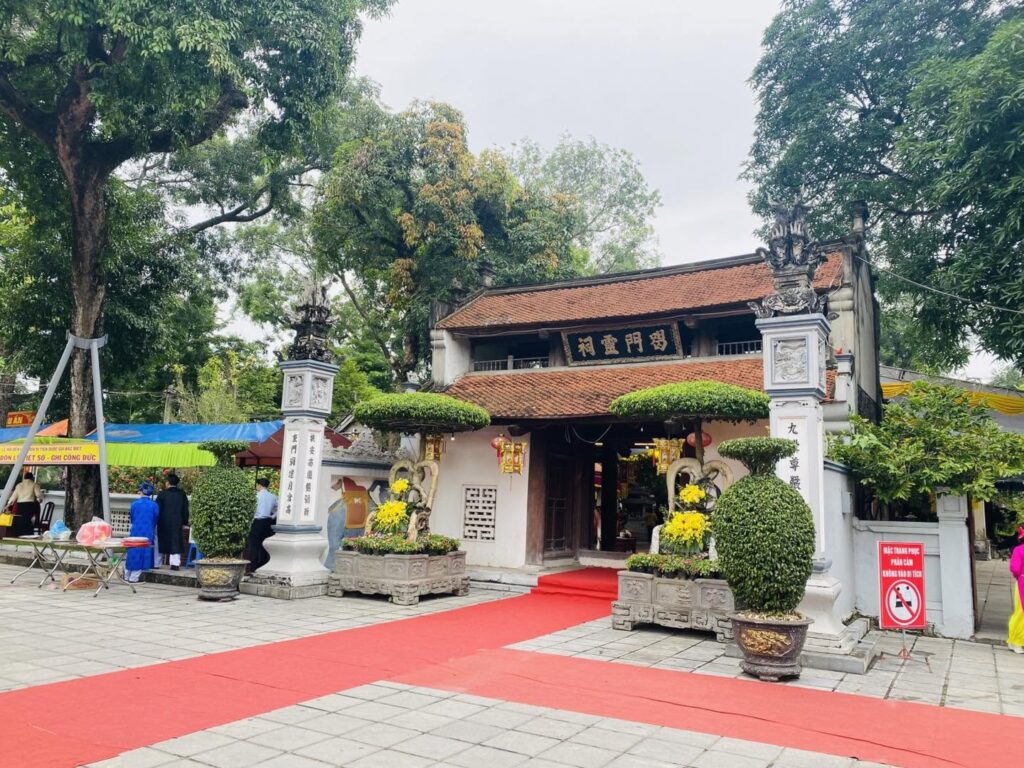
The village also has a temple dedicated to the embroidery craft ancestor within the grounds of a pagoda. Each year, villagers hold the craft ancestor’s memorial ceremony on the 12th day of the sixth lunar month.
According to the source, 52 people in the village currently receive embroidery orders directly or organize work for other embroiderers, including 14 people who operate embroidery workshops from their homes.
Cultural Value of Traditional Dong Cuu Embroidery
Traditional embroidery in Dong Cuu contributes to the preservation and restoration of historical cultural forms through embroidered costumes, ritual objects, and traditional decorative motifs.
Restoration products can help reconstruct parts of the visual heritage of earlier periods, while the craft itself preserves traditional technical knowledge and aesthetic principles. Passed down through generations, the craft combines inherited techniques with the creativity of individual artisans and continues to provide economic value for the community.
The embroidery profession also strengthens community connections through networks of artisans, workshops, customers, and professional associations extending beyond the village itself.
For its distinctive cultural values, Traditional Embroidery in Dong Cuu was included in the National Intangible Cultural Heritage List by the Minister of Culture, Sports and Tourism under Decision No. 4036/QD-BVHTTDL dated November 21, 2016, in the category of traditional craftsmanship.
Basic Information
| Information | Details |
|---|---|
| Heritage | Traditional Embroidery in Dong Cuu |
| Location | Dong Cuu, Thuong Phuc Commune, Hanoi |
| Historical cultural area | Former Ngu Xa area |
| Craft ancestor | Le Cong Hanh, whose real name was Bui Cong Hanh |
| Key techniques | Colored-thread embroidery, metallic-thread embroidery, restoration embroidery |
| Signature products | Ceremonial boots, shoes, parasols, banners, ritual costumes, religious garments |
| Distinctive techniques | Metallic outlining, metallic filling, raised couching, twisted embroidery, scale filling |
| Craft transmission | Hands-on apprenticeship across generations |
| Heritage category | Traditional Craftsmanship |
| Recognition | National Intangible Cultural Heritage, 2016 |
| Decision | No. 4036/QD-BVHTTDL, November 21, 2016 |