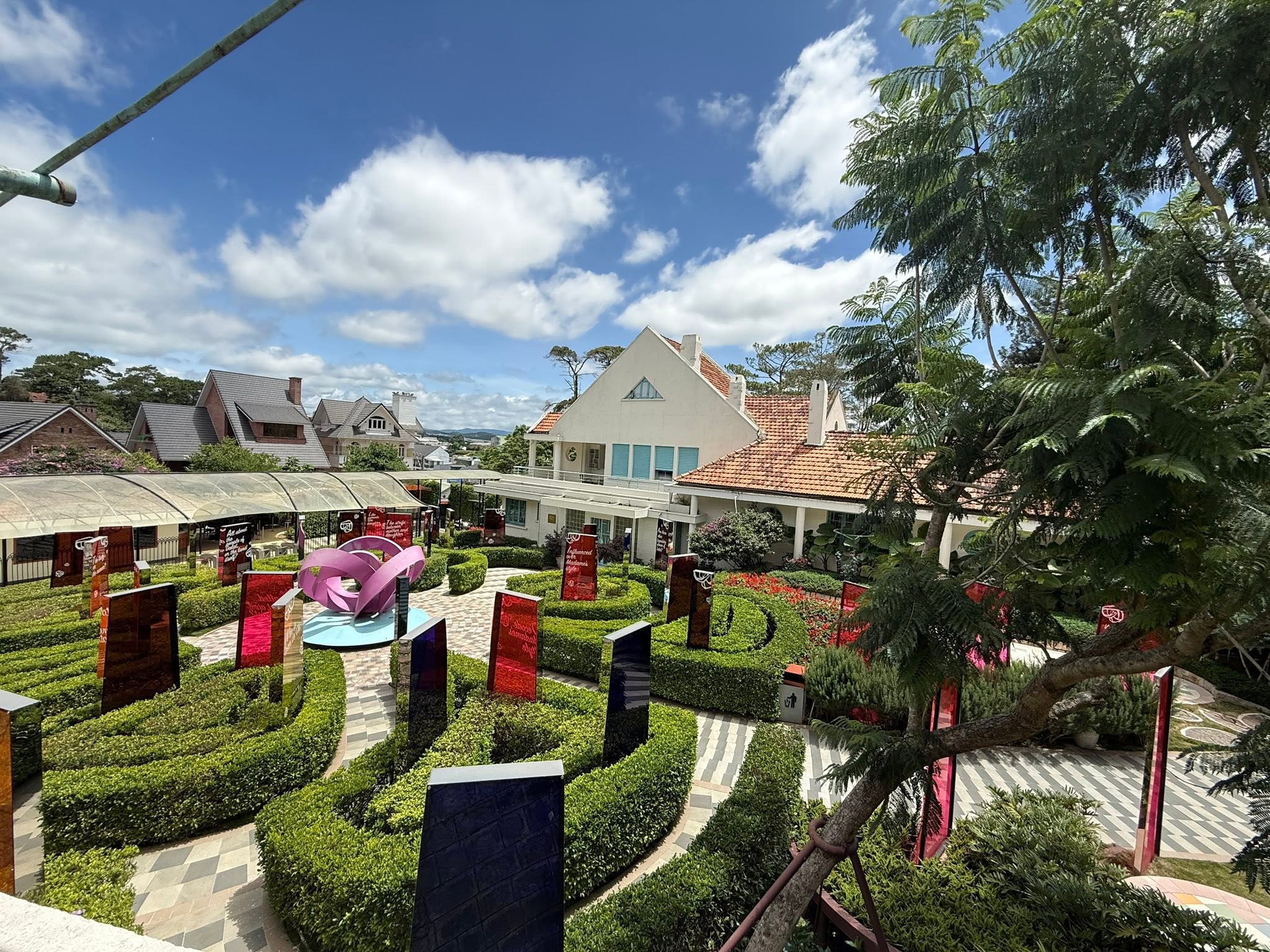
Located at 2 Yet Kieu Street in Da Lat, Tran Le Xuan Palace is a historic architectural complex set among the pine-covered hills of the city. Covering approximately 13,000 square meters, the complex is closely associated with the family of Ngo Dinh Nhu and Tran Le Xuan during a turbulent period of Vietnam’s 20th-century history.
Once known for its luxurious architecture and secluded setting, the complex has undergone major changes in function over the decades. It was once a private retreat and reception complex, later became the Central Highlands Ethnic Museum, and was eventually restored to become the home of National Archives Center IV.
Today, the site is particularly significant because it combines the architectural legacy of the former palace with an important national archival collection, including the Nguyen Dynasty Woodblocks, one of Vietnam’s most valuable documentary heritages.
From a Luxurious Highland Retreat to a Historic Complex
Construction of the complex began in 1958 on Lam Son Hill. It originally consisted of three villas known as Bach Ngoc, Lam Ngoc and Hong Ngoc, each serving a different function for the family and their guests.
Lam Ngoc Villa was used primarily as a weekend retreat by Tran Le Xuan and her family. The building included working and meeting rooms, a ballroom, dressing rooms and various private living spaces.
Bach Ngoc Villa was used for entertainment, recreation and receptions. It once included spaces for parties and gatherings, together with a heated swimming pool, an observation platform and landscaped gardens.
Hong Ngoc Villa was built for Tran Van Chuong, Tran Le Xuan’s father, who served as Ambassador of South Vietnam to the United States.
The entire complex was designed with a range of facilities intended for private life, recreation and official receptions. Its location among the pine forests, spacious grounds and considerable investment made it one of the most luxurious private retreats in Da Lat at the time.
One of the most notable features was the outdoor heated swimming pool in front of Bach Ngoc Villa. According to the source material, the pool had a capacity of approximately 300 cubic meters and was equipped with a water-heating system, making it suitable for Da Lat’s cool climate.
Behind Lam Ngoc Villa was a Japanese-style garden featuring a landscaped pond, greenery and decorative elements associated with the geography of Vietnam. Some sources describe stone features within the pond as symbolizing Vietnam’s geographical divisions, while the garden bridge was associated with the southern part of the country.
Lam Ngoc Villa also contained a steel shelter and an escape tunnel system. Some accounts suggest that the tunnels were designed in the direction of Cam Ly Airport, although this remains a reported theory rather than a fully established fact.
During the period when the Ngo family remained in power, the complex was heavily guarded and largely separated from everyday life outside its grounds. Its secluded position among the hills further reinforced its character as a private retreat for an influential political family.
Following the political events of 1963, the Ngo Dinh Nhu – Tran Le Xuan family no longer used the complex. The property was subsequently taken over by the South Vietnamese government and used as the Central Highlands Ethnic Museum.
After 1975, the complex remained under state management. Over time, however, parts of the buildings and landscape deteriorated, while some structures and interior spaces were altered or lost.
In early 2007, the Ministry of Home Affairs approved an investment of more than VND 53 billion for the restoration and upgrading of the complex and its conversion into the headquarters of National Archives Center IV.
The restoration sought to preserve the original architectural character while adapting parts of the complex for archival preservation, exhibitions and public visits.
By the end of 2007, the complex had become the new home of National Archives Center IV.
The Nguyen Dynasty Woodblocks in the Heart of Da Lat
While the three villas represent the architectural and modern historical value of the site, the Nguyen Dynasty Woodblocks give Tran Le Xuan Palace another, much deeper layer of significance.
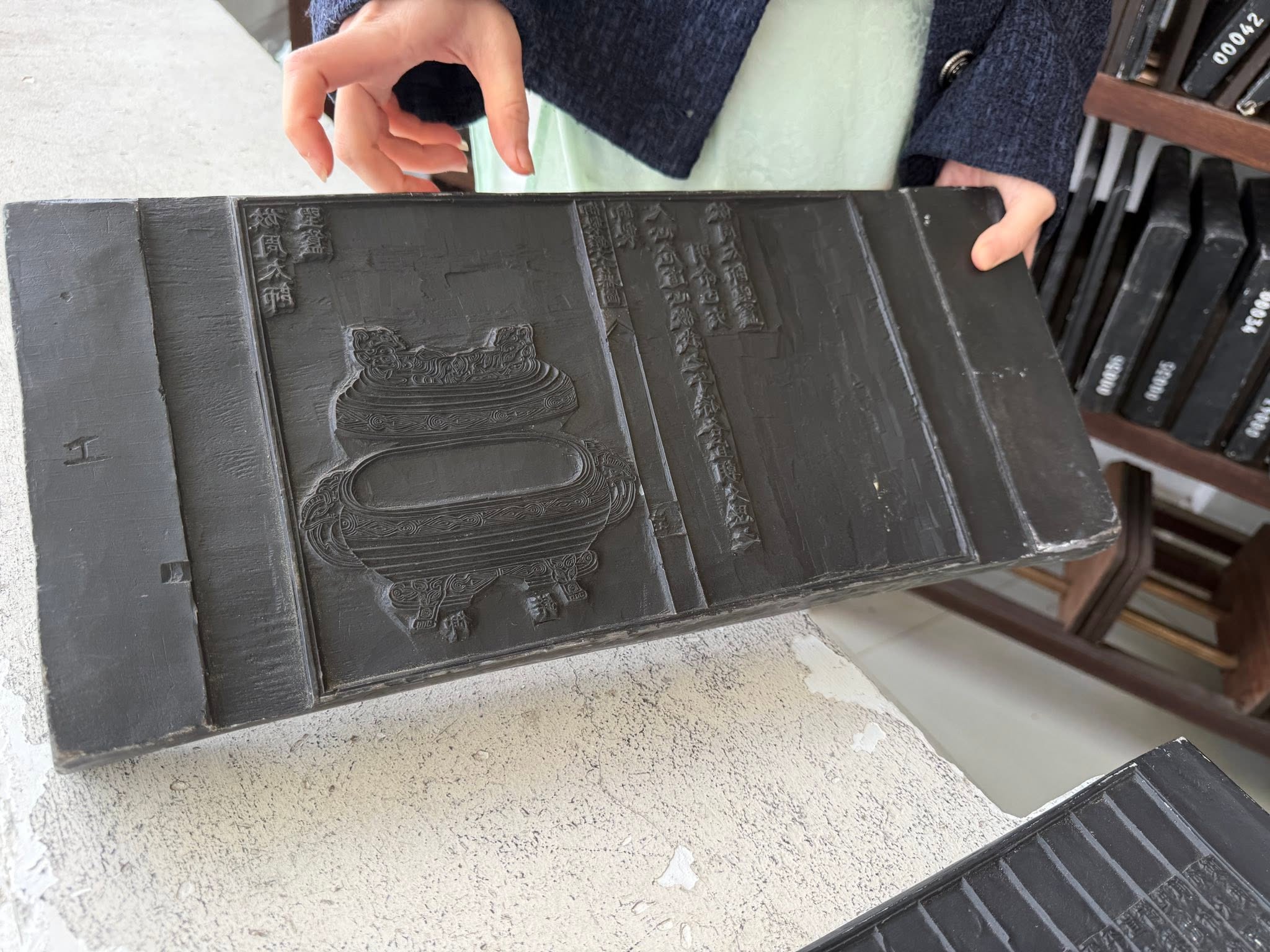
Woodblocks are wooden printing blocks carved with reversed Han and Nom characters for the reproduction of historical, literary, administrative and educational documents. They contain information relating to history, geography, politics, society, military affairs, law, education, religion, philosophy, language and literature during the Nguyen Dynasty.
Before texts were carved onto wood, manuscripts generally went through a process of review and approval. Skilled craftsmen then transferred the characters onto wooden blocks for printing.
According to the source material, an average woodblock measures approximately 43 cm by 27 cm, with a thickness of 2 to 4 cm and a weight of around 300 to 400 grams.
In 1849, during the reign of Emperor Tu Duc, the Nguyen court built the Tang Ban Duong to preserve the woodblocks. Together with the Nguyen Dynasty’s imperial administrative documents and other royal manuscripts, the woodblocks became an important source for the study of Vietnamese history and society during the Nguyen period.
The wood commonly used for carving included thi wood, valued for its fine, smooth and relatively stable grain. Other high-quality woods were also used for certain blocks.
Beyond their historical content, the woodblocks are also significant examples of traditional craftsmanship. The precision of the carved characters, page composition and wood-working techniques reflects the skill of the craftsmen who produced them.
According to the provided material, during the Republic of Vietnam period, part of the woodblock collection was transferred from Hue to Da Lat and subsequently managed by archival authorities. After several changes of storage location, the collection was eventually preserved at the Tran Le Xuan Palace complex.
Today, the specialized archive reportedly houses more than 30,000 Nguyen Dynasty Woodblocks, covering a wide range of subjects including history, geography, politics and society, military affairs, law, culture and education, religion, philosophy, language and literature.
The preservation of the collection has faced considerable challenges because the woodblocks passed through different historical periods and were moved between locations. Some pieces were damaged, lost or deteriorated over time.
To address these issues, archival specialists and Han-Nom researchers have undertaken programs to classify, arrange, restore and document the collection. The woodblocks have also been reproduced on do paper, while their contents have been digitized to facilitate preservation, research and access.
According to the source material, the collection has been organized into 152 titles, covering major groups of Nguyen Dynasty historical works, literary works and classical texts used in education.
The archival facility is equipped with specialized environmental-control, security and fire-protection systems. The source material states that the storage system has a capacity of approximately 5,000 linear meters of archival shelving, designed to provide appropriate conditions for long-term preservation.
In 2009, the Nguyen Dynasty Woodblocks were inscribed on UNESCO’s Memory of the World Register, recognizing their exceptional documentary value.
Historical Exhibitions within the Palace Complex
Following its restoration and transformation into National Archives Center IV, the former palace complex became not only a preserved architectural site but also a venue for historical exhibitions and documentary displays.
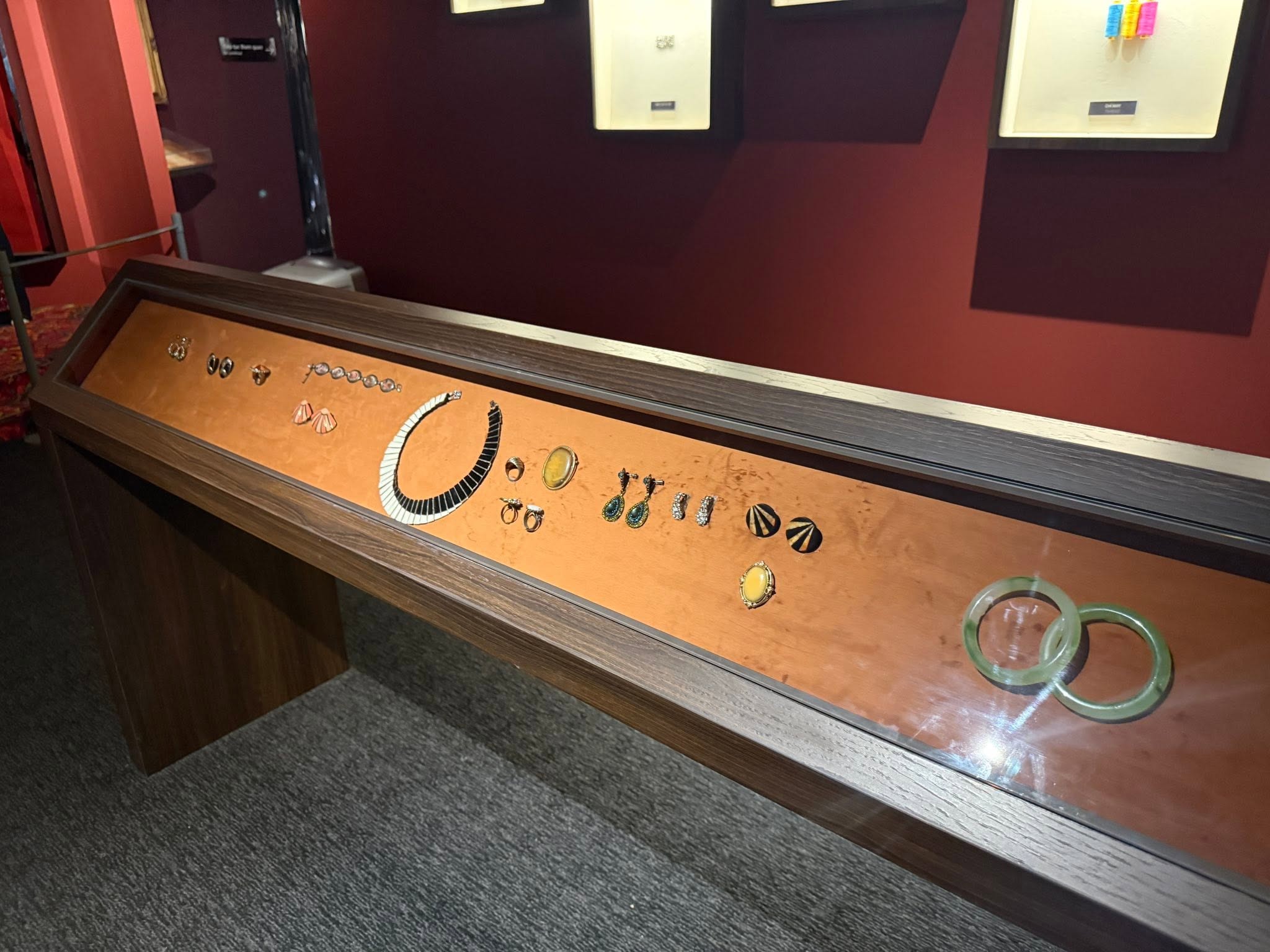
Exhibitions have focused on subjects including the history of archival work in Vietnam, documentary materials relating to Central Vietnam and the Central Highlands during the struggle for national liberation, the Nguyen Dynasty Woodblocks and historical materials concerning Ngo Dinh Nhu and his involvement in archival work.
The relationship between Ngo Dinh Nhu and archival studies forms another interesting chapter in the history of the site. According to the provided material, he studied at the École Nationale des Chartes, the renowned French institution specializing in archival science and historical documents.
Visitors can also learn more about the palace complex itself, its three villas and the political and historical changes it experienced from the late 1950s onward.
Other exhibitions have presented historical documents, maps and cultural materials, including subjects related to Hoang Sa and Truong Sa and Vietnam’s modern history.
Bach Ngoc, Lam Ngoc and Hong Ngoc Villas
Lam Ngoc Villa remains one of the most prominent buildings in the complex. Once used as the private weekend retreat of Tran Le Xuan and her family, it contains various living and working spaces, together with the shelter and escape tunnel system that became an important part of its historical identity.
Bach Ngoc Villa was associated with entertainment, receptions and social gatherings. Its heated swimming pool is among the most recognizable features, while the interior reflects a combination of modern architectural elements and details associated with the cultural setting of the Central Highlands.
Hong Ngoc Villa was built for Tran Van Chuong and occupies a more secluded position within the complex. The building reflects a French-influenced residential style, with substantial walls and architectural solutions suited to Da Lat’s cool climate.
The three villas are complemented by the Japanese-style garden, landscaped ponds, swimming pool, observation platform and mature greenery. Together, these elements create the distinctive character of the former palace complex.
Following restoration, many architectural and landscape features were preserved or reconstructed to help visitors understand the appearance and function of the site during its earlier period.
Tran Le Xuan Palace in the Da Lat Travel Experience
The significance of Tran Le Xuan Palace lies in the fact that it carries several layers of history within a single site.
The three villas, Bach Ngoc, Lam Ngoc and Hong Ngoc, reflect a turbulent period in Vietnam’s 20th-century history. Their gardens, swimming pool, observation areas and other facilities reveal the character of a secluded highland retreat built for an influential political family in the late 1950s and early 1960s.
At the same time, National Archives Center IV introduces visitors to another chapter of Vietnamese history through the preservation of documentary heritage from the Nguyen Dynasty.
The carefully carved woodblocks, historical records, literary works and classical texts preserved here have survived generations and are now being catalogued, digitized and made available for research.
For this reason, Tran Le Xuan Palace is more than a former private residence among the pine forests of Da Lat. It is a place where modern Vietnamese history, architectural heritage and the documentary legacy of the Nguyen Dynasty come together.
For travelers interested in history, architecture, archival heritage and Vietnamese culture, the site offers a different perspective on Da Lat, one that goes beyond the city’s better-known landscapes and reveals the layers of history preserved within the highland city.
Visitor Information
Name: Tran Le Xuan Palace – National Archives Center IV
Address: 2 Yet Kieu Street, Ward 5, Da Lat City, Lam Dong Province, Vietnam.
Reference opening hours:
- Morning: 7:30 AM – 11:30 AM
- Afternoon: 1:30 PM – 4:30/5:00 PM
- Opening hours may vary depending on the center’s activities and exhibition schedule.
Reference admission fee: approximately VND 30,000 – 40,000 per visitor for access to the archival and palace exhibition areas. Special exhibitions, cultural programs or other activities may have separate fees.
With its combination of architecture, modern history and documentary heritage, Tran Le Xuan Palace is one of Da Lat’s noteworthy cultural destinations, offering visitors an opportunity to explore the city through a deeper historical lens while discovering the remarkable legacy of the Nguyen Dynasty Woodblocks.