Van Thanh Flower Village is located in Cam Ly Ward, Da Lat, Lam Dong Province, along Van Hanh Street at the gateway to the Ta Nung Pass route. Approximately 3 km west of central Da Lat, the village is one of the city’s oldest and largest flower-growing areas.
From its early beginnings as a settlement established by migrants from northern Vietnam, Van Thanh gradually developed a strong tradition of flower cultivation, becoming particularly well known for its roses. Over generations, traditional farming knowledge has been combined with greenhouses, automated irrigation, grafting techniques and modern agricultural technology, creating a flower-growing community with both economic and cultural significance.
Today, Van Thanh is not only an important flower-producing area but also a destination for agricultural tourism, where visitors can explore flower gardens, learn about cultivation techniques and experience the daily work of local growers.
From a Settlers’ Community to a Famous Flower Village
According to the provided source, the first migrants from Ha Nam, a region with a long tradition of vegetable and flower cultivation in northern Vietnam, arrived in the Da Lat highlands around 1938 to clear land and establish new livelihoods. By the 1950s, the community had become more established and agricultural production in Van Thanh began to develop.
During the early years, residents mainly cultivated vegetables along the Cam Ly stream valley to meet local demand. The cool climate and favorable growing conditions gradually encouraged them to explore another direction: growing flowers suited to the highland environment.
Around the 1960s, roses became one of the village’s principal crops. Local growers began experimenting with propagation, grafting and cultivation of rose varieties introduced from France and the Netherlands, combining imported flower varieties with locally adapted rootstock.
These techniques helped produce roses with strong stems, large blooms, thick petals, vivid colors and good durability. Van Thanh gradually became closely associated with rose cultivation and earned a reputation as a “rose-growing haven” of Da Lat.
The flower-growing tradition was passed down from one generation to the next. Knowledge about varieties, soil, water, weather, planting schedules and cultivation techniques accumulated over decades, becoming an important part of the local agricultural heritage.
High-Tech Agriculture and the Evolution of Flower Production
According to the provided information, Van Thanh is now home to more than 220 households involved in flower cultivation, covering more than 200 hectares of growing areas. Extensive fields of roses, gerberas and other temperate flowers form one of the major agricultural landscapes on the western side of Da Lat.
Since around 2000, growers have increasingly adopted modern agricultural technologies. Many farms now use greenhouses, agricultural net houses, automated drip irrigation and root-zone fertilization techniques to better control growing conditions.
In addition to roses, Van Thanh growers cultivate a wide range of high-value flowers, including lilies, carnations, gerberas, daisies, lavender, sunflowers and purple asters.
Flower production takes place throughout the year through successive growing cycles. The village becomes particularly busy during periods of high demand, including Valentine’s Day, International Women’s Day on March 8, Vietnamese Teachers’ Day on November 20 and especially the Lunar New Year flower season.
Millions of flowers from Van Thanh are supplied to markets across Vietnam and are used for festivals, celebrations, events, decoration and export.
A World of Flowers and Agricultural Experiences
Roses remain one of the most characteristic images of Van Thanh. The gardens feature numerous varieties, including classic red roses, pink roses, Song Hy roses, Queen Yellow roses, tea roses, as well as imported varieties and climbing roses.
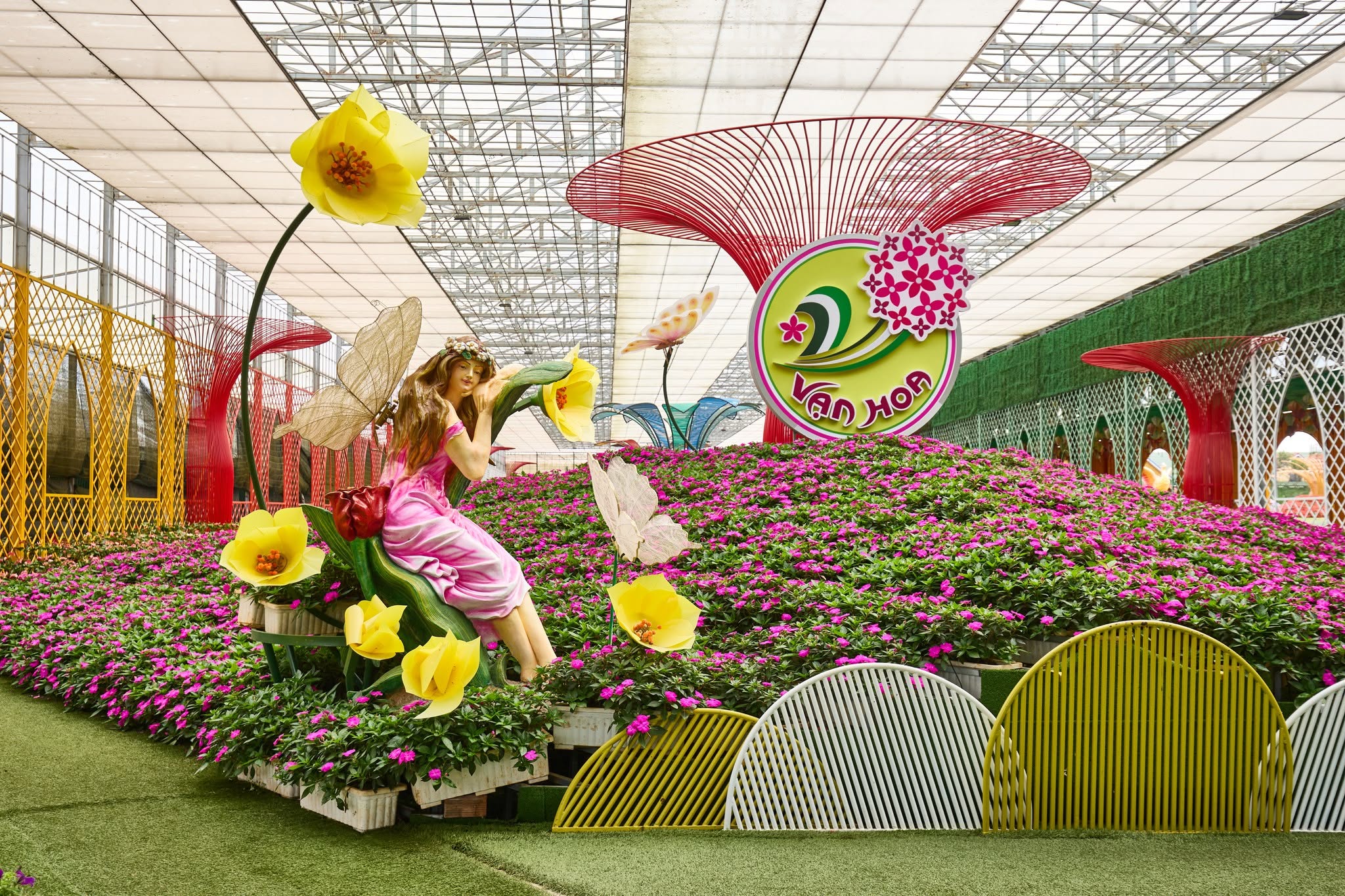
Greenhouses are also filled with lilies in shades of red, yellow and other colors, while rows of carnations and gerberas create vibrant displays ranging from orange and yellow to pink and deep red.
Depending on the season, visitors may also encounter gardens of daisies, lavender, sunflowers and purple asters.
Some farms combine flower cultivation with high-tech agriculture, including elevated strawberry gardens and hydroponic growing systems. Depending on the individual farm, visitors may find Japanese or New Zealand strawberry varieties and, in some locations, experience picking ripe strawberries directly from the garden.
Other agricultural products include chocolate cherry tomatoes, black tomatoes, baby cucumbers and sweet bell peppers.
Some gardens also feature giant pumpkins, with individual fruits described in the source as weighing from around 30 kg to more than 70-80 kg, together with Pepino melons and trellises of bottle gourds.
This diversity means that a visit to Van Thanh is not limited to flower viewing. It can also introduce visitors to the ways local farmers cultivate flowers and agricultural products in the conditions of the Da Lat highlands.
Agricultural Tourism and Life in Van Thanh
Alongside agricultural production, Van Thanh has gradually developed into a destination for agricultural tourism. According to the provided information, the area now includes Da Lat Sac Mau Tourist Area, described in the source as a pioneering agricultural tourism model in Da Lat.
Visitors can explore gardens, learn about flower cultivation, observe grafting techniques and see how flowers are harvested and prepared for distribution.
Depending on the individual garden or attraction, visitors may also be able to pick strawberries, explore greenhouses or take photographs among seasonal flower beds.
One of Van Thanh’s most interesting qualities is that tourism remains closely connected to agricultural production. Greenhouses, flower beds, farmers caring for their crops and vehicles transporting flowers together create a vivid picture of contemporary agricultural life in Da Lat.
Visitor Information and Tips
According to the provided information, Van Thanh Vegetable and Flower Tourist Area welcomes visitors from approximately 07:00 to 17:30 daily, including weekends and public holidays.
Reference admission prices are:
| Category | Reference Price |
|---|---|
| Adults | Around VND 100,000 per ticket |
| Children from 1.2 m to 1.4 m | Around VND 50,000 per ticket |
| Children under 1.2 m | Free |
Individual household gardens and smaller private farms deeper inside the village may have different policies. Some may offer free access, while others may charge a small photography fee of approximately VND 20,000-30,000 per visitor, depending on the location.
Reference address: 40 Van Hanh Street, Cam Ly Ward, Da Lat, Lam Dong Province.
Van Thanh Vegetable and Flower Tourist Area hotline: 0263 3520 833 – 0918 012 3455.
The source recommends visiting between approximately 08:00 and 10:00 in the morning. Early sunlight creates attractive conditions for photography, while flowers are fresh and greenhouse temperatures are generally more comfortable than around midday.
Visitors should stay on designated paths, avoid stepping on cultivated beds and never pick flowers, break branches or harvest produce without permission from the garden owner.
Van Thanh Flower Village on the Ta Nung Route
Because of its location at the gateway to the Ta Nung Pass route, Van Thanh Flower Village can be combined with several other attractions in a day trip.
One suggested itinerary from the provided source is:
Van Thanh Flower Village → Me Linh Coffee / The Florest → Elephant Waterfall → Linh An Pagoda.
This route offers several different sides of Da Lat’s outskirts, from flower gardens and agricultural landscapes to pine-covered hills, waterfalls and spiritual destinations.
Van Thanh Flower Village is therefore more than a place where colorful flowers are grown for the market. Behind every flower bed is a story of migrants who came to the highlands to build new lives, a profession passed down through generations, and the continuing adaptation of local farmers to modern agricultural technology.
Van Thanh today represents the meeting point between traditional farming heritage and modern agriculture, where generations of accumulated knowledge continue to work alongside greenhouses, automated irrigation and advanced cultivation techniques. This combination is what gives Van Thanh its distinctive place in the cultural and agricultural landscape of Da Lat.