


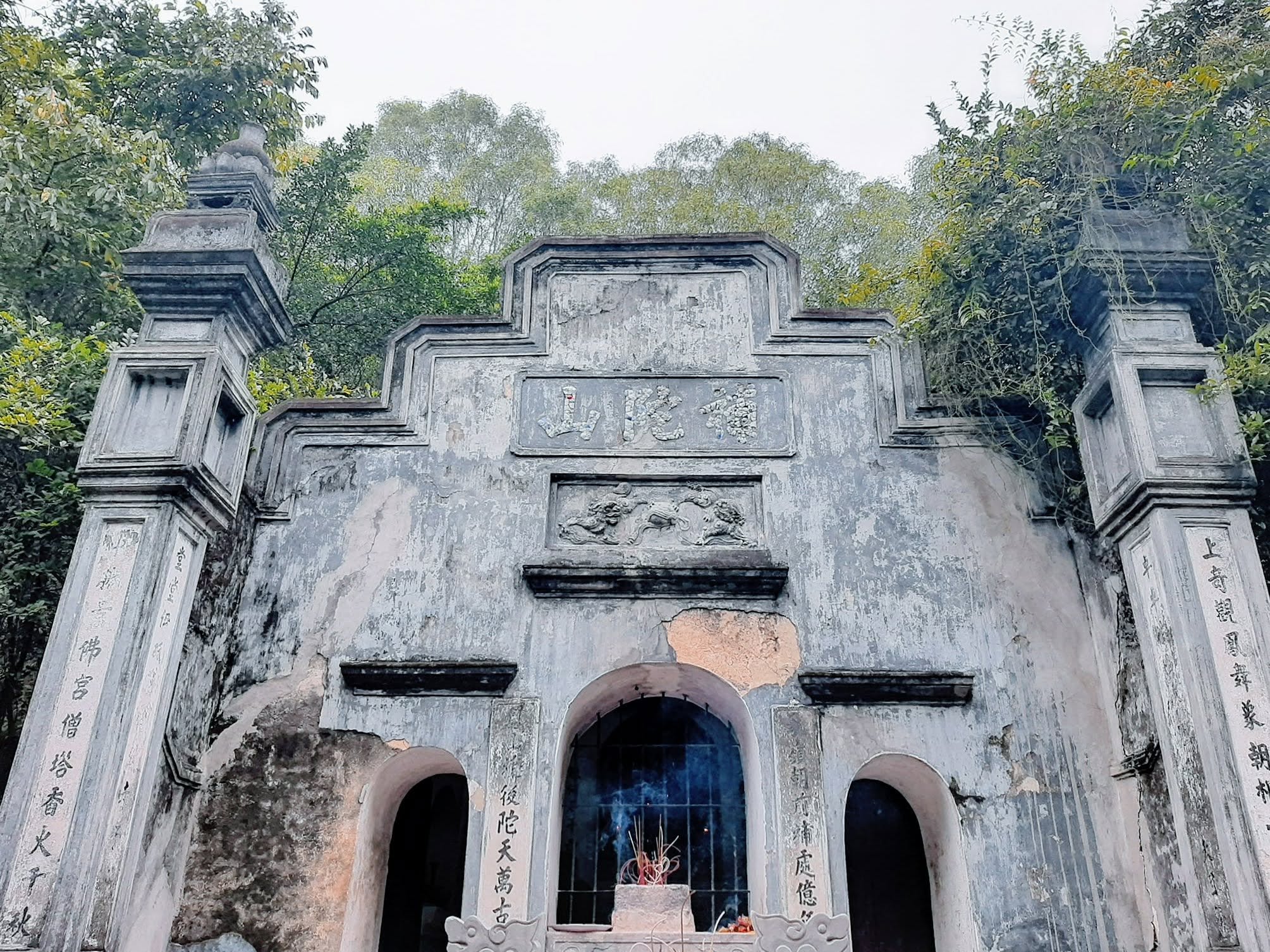
The Bo Da Pagoda Complex, also known as Ao Mieu and Bo Da Pagoda, Bo Pagoda, or Ong Bo Pagoda, is located on Bo Da Son Mountain in Van Ha Ward, Bac Ninh City. The complex is an important historical, cultural, religious, and architectural heritage site associated with the development of Buddhism in the Kinh Bac region.
According to local tradition, the pagoda dates back to the Ly Dynasty, around the 11th century. Over the centuries, Bo Da became a center for the practice and transmission of the Three Teachings in One, bringing together Buddhism, Taoism, and Confucianism, while also preserving the worship of Thach Linh Than Tuong and patriarchs of the Truc Lam Zen tradition.
A traditional saying, “North Bo Da – South Huong Tich,” reflects the important place of Bo Da in the religious and cultural life of northern Vietnam. While Vinh Nghiem Pagoda became a major center of the Truc Lam Yen Tu Zen tradition, Bo Da developed as an important Buddhist center with strong connections to the Lam Te Zen lineage.
The complex was expanded and renovated through different historical periods, particularly under the Le Trung Hung and Nguyen dynasties. During the Bao Thai era (1720–1729), Zen Master Pham Kim Hung carried out major restoration and expansion works, helping establish Bo Da as an important center for religious study and the training of monks.
Bo Da was also a place where Zen masters taught Buddhist doctrine, trained monks, and produced Buddhist scriptures. Its collection of 1,935 Buddhist woodblocks is an important source for studying Buddhist history and the transmission of the Lam Te tradition in Vietnam.
The Architectural Complex of Bo Da Pagoda
The Bo Da relic complex covers approximately 275,009.6 square meters, including a 53,808.5-square-meter core protection zone and a 221,201.1-square-meter surrounding protection zone. The complex consists of five main areas: Tu An Pagoda, Tam Duc Hermitage, Cao Pagoda, the Stupa Garden, and Ao Mieu.
One of its most distinctive characteristics is the architectural layout known as “closed outside, connected inside.” The buildings are arranged within an enclosed space surrounded by rammed-earth walls and bamboo groves. These walls create a secluded atmosphere while also protecting the architectural complex.
Traditional wood carving is found throughout the site, with decorative themes including clouds, spirals, chrysanthemums, stylized leaves, sacred animals, the Four Sacred Animals, and the Four Seasons. The architectural details combine artistic characteristics from the Le Trung Hung and Nguyen periods.
Tu An Pagoda, also known as Bo Pagoda or Bo Da Pagoda, forms the architectural center of the complex. It consists of 16 structures with 92 interconnected compartments, including the Three Jewels Hall, front ceremonial hall, patriarchs’ house, scripture tower, lecture hall, abbot’s house, guest houses, nuns’ quarters, funeral hall, and supporting structures.
The complex is surrounded by nearly 400 meters of rammed-earth walls, generally 2–3 meters high, with some sections reaching about 5 meters. The walls were built from gravelly red soil taken from Bo Da Mountain and covered with fragments of pottery and jars associated with the traditional pottery village of Tho Ha. Over time, moss has covered the walls, giving the site its distinctive weathered appearance.
The Three Jewels Hall follows a traditional Dinh-shaped layout, with a seven-bay Front Hall connected to a five-bay Upper Sanctuary. Its wooden framework contains elaborate carvings of clouds, blades, chrysanthemums, and stylized leaves. The sanctuary preserves a rich collection of statues and religious objects, including the Three Buddhas, Amitabha Buddha, the Nine-Dragon Buddha, Confucius, Lao Tzu, Thach Linh Than Tuong, and the Three Continents.
The complex also includes the Patriarchs’ House, Lecture Hall, Abbot’s House, Scripture Tower, Dharma Hall, guest houses, Nuns’ House, and other traditional structures. Many architectural details, inscriptions, wooden panels, altars, bells, and decorative elements date from the Nguyen Dynasty and earlier periods.
Tam Duc Hermitage stands halfway up Phuong Hoang Mountain behind Tu An Pagoda. The five-bay structure features a distinctive double-roof design and houses an altar dedicated to Zen Master Pham Kim Hung.
Cao Pagoda, located behind Tam Duc Hermitage, is regarded as the oldest surviving architectural structure in the Bo Da complex. Its layout and architectural details reflect the Nguyen period and its early connection with the formation of the religious site.
The Stupa Garden and Ao Mieu
The Stupa Garden is one of the most remarkable features of Bo Da Pagoda. Covering nearly 8,000 square meters, it contains around 110 stupas and tombs, including a number dating from the Le period.
The stupas are arranged into different areas for monks, nuns, and people who served the pagoda. According to the site’s historical records, 97 stupas and tombs contain relics, ashes, or remains associated with approximately 1,214 monks of the Lam Te Zen tradition.
The Stupa Garden is therefore not only a sacred space but also an important historical source for studying the transmission of Lam Te Buddhism in Vietnam. The inscriptions on the stupas record names, dates of birth, dates of death, and other information about the monks and nuns buried there.
Ao Mieu, also known as Ha Temple, is dedicated to Thach Linh Than Tuong. The structure follows a traditional one-character layout and features a double-tiered roof with eight curved roof corners. Behind the temple is Thach Long Pond and a smaller shrine associated with the local legend of Me Da, the mother of Thach Linh Than Tuong.
The combination of Buddhist structures, ancestor worship, local legends, and traditional architecture illustrates the close relationship between formal Buddhist practice and local religious traditions.
Cultural Heritage and Bo Da Festival
Bo Da Pagoda preserves a valuable collection of historical and religious objects, including 1,935 Buddhist woodblocks, more than 40 wooden statues dating from the Le Trung Hung to Nguyen periods, stone steles, ritual objects, bells, wooden fish drums, and other artifacts.
The woodblocks are particularly significant because they document the transmission and practice of Buddhism at the site. Together with the stupa inscriptions, statues, and architectural structures, they provide valuable material for studying the history of the Lam Te Zen lineage and the religious life of the Kinh Bac region.
Bo Da also reflects the interaction of Buddhism, Taoism, Confucianism, and indigenous folk beliefs. Its enclosed architectural layout, rammed-earth walls, traditional wood carvings, and extensive stupa garden give the complex a distinctive character.
The annual Bo Da Pagoda Festival takes place from the 15th to the 18th day of the second lunar month. The festival features religious ceremonies, traditional cultural activities, folk performances, and Quan Ho singing. Since 2001, it has also been associated with a Quan Ho singing competition, highlighting the connection between Bo Da’s Buddhist heritage and the wider cultural traditions of Kinh Bac.
With its outstanding historical, religious, cultural, architectural, artistic, and archaeological values, the Bo Da Pagoda Complex is an important heritage site in northern Vietnam. It was recognized as a Special National Relic under Decision No. 2499/QD-TTg dated December 22, 2016.


