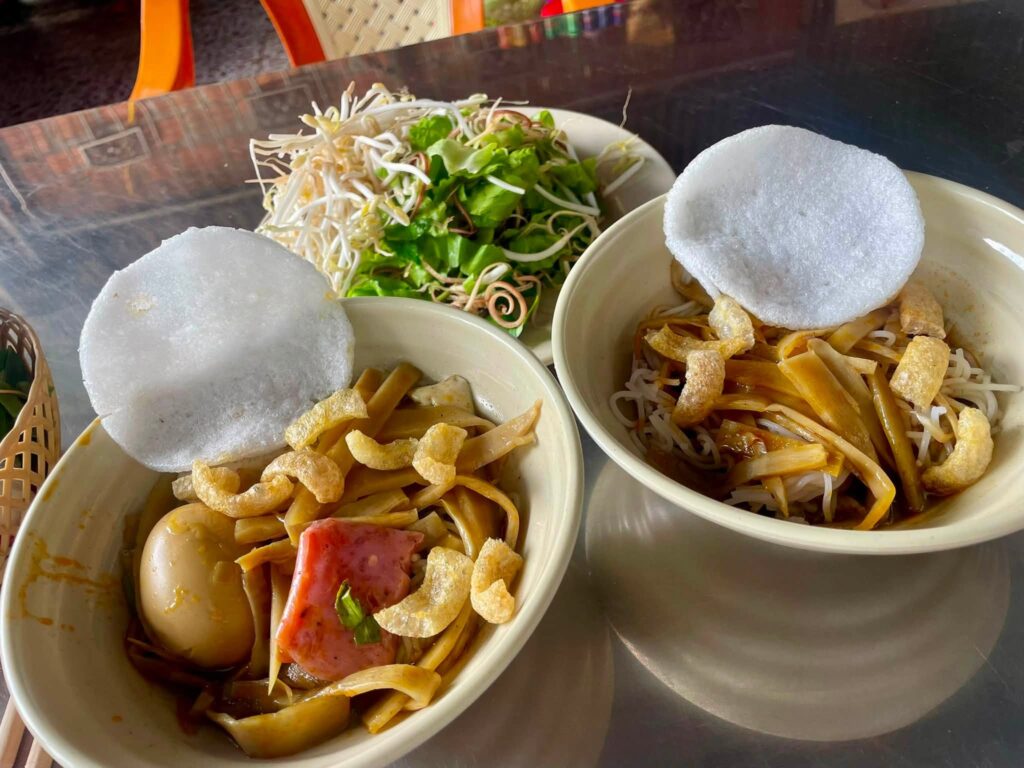


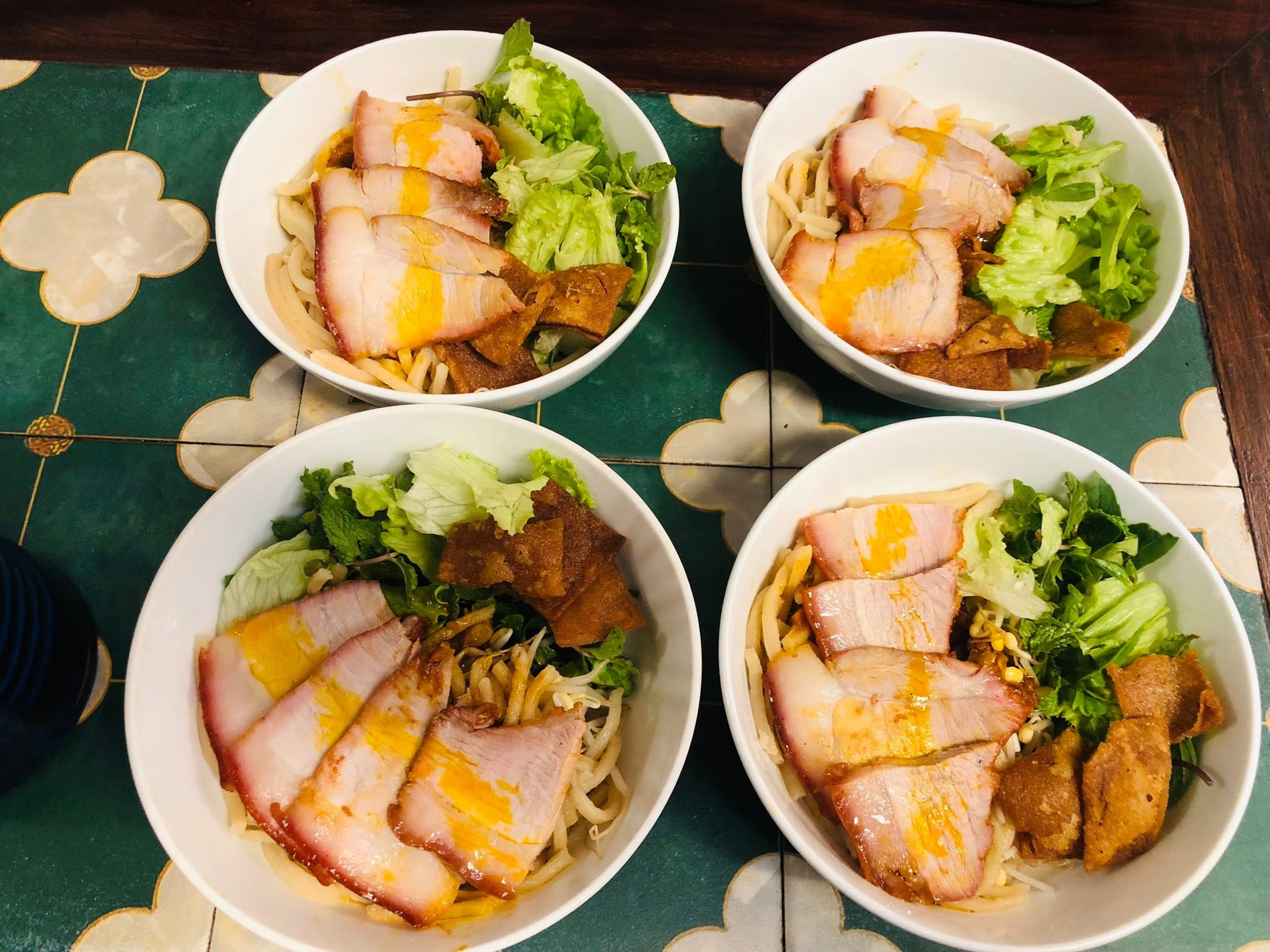
Cao Lau Hoi An is one of the most distinctive traditional dishes of Hoi An, Vietnam. Famous for its thick, chewy yellow noodles, flavorful pork slices, fresh herbs and crispy toppings, Cao Lau offers a unique culinary experience that reflects the history and cultural heritage of this ancient trading port.
Unlike Vietnamese pho or other noodle soups, Cao Lau is served with only a small amount of rich sauce rather than a bowl full of broth. This distinctive preparation gives the dish its characteristic texture and flavor.
For travelers exploring Hoi An Ancient Town, trying a bowl of Cao Lau is one of the best ways to discover the local food culture.
The Origins of Cao Lau in Hoi An
Cao Lau is closely associated with the history of Hoi An, which flourished as an international trading port between the 16th and 18th centuries.
During this period, merchants from Japan, China and other countries visited Hoi An to trade goods, contributing to the town’s multicultural atmosphere.
According to a popular local explanation, the name Cao Lau means “high floor” or “upper story.”
The story suggests that wealthy merchants once preferred dining on the upper floors of riverside restaurants, where they could enjoy their meals while observing trading activities and boats along the waterfront.
Over time, the noodle dish associated with these elevated dining spaces supposedly became known as Cao Lau.
However, this explanation remains part of local culinary folklore rather than a universally established historical fact.
Cao Lau is also often described as a reflection of Hoi An’s cultural exchanges. Its thick, chewy noodles are sometimes compared with Japanese udon, while the preparation of seasoned pork and the use of soy sauce show similarities to Chinese cooking traditions.
Despite these possible influences, Cao Lau has developed into a distinctive Vietnamese specialty closely identified with Hoi An.
What Makes Cao Lau Noodles Unique?
One of the defining features of Cao Lau is its noodles.
Unlike ordinary rice noodles, Cao Lau noodles are relatively thick, firm and chewy, with a characteristic pale yellow color.
Traditional stories about Cao Lau production often highlight two ingredients associated with Hoi An.
Water from Ba Le Well
Ba Le Well is a historic well in Hoi An, long associated with local daily life and traditional cooking.
According to local culinary traditions, water from this well was used in preparing Cao Lau noodles and was believed to contribute to their distinctive texture.
Although modern production methods vary, Ba Le Well remains an important part of the cultural story surrounding the dish.
Traditional Alkaline Ash Water
Another traditional preparation method involves soaking rice in alkaline water made using wood ash.
Local accounts often associate this ash with certain trees from the nearby Cham Islands, also known as Cu Lao Cham.
The alkaline soaking process, combined with kneading, rolling, cutting and steaming the dough, helps create the noodles’ firm texture and characteristic appearance.
Today, different producers may use different techniques, but the chewy noodles remain the most recognizable element of Cao Lau.
Main Ingredients of Cao Lau Hoi An
A traditional bowl of Cao Lau combines several ingredients that create a balance of textures, aromas and flavors.
Cao Lau Noodles
The noodles are made primarily from rice flour and are known for their thick shape, pale yellow color and firm, chewy texture.
They are usually warmed before being served with the other ingredients.
Seasoned Pork
One of the main toppings is thinly sliced pork prepared in a style similar to Chinese char siu.
The pork is typically marinated with ingredients such as garlic, soy sauce, sugar, pepper and five-spice powder.
It is then slowly cooked until tender and flavorful, developing a rich brown color and savory aroma.
Rich Pork Sauce
Unlike pho, Cao Lau is not served in a large quantity of broth.
Instead, a small amount of concentrated sauce from the braised pork is poured over the noodles.
This sauce adds a savory, slightly sweet flavor without overwhelming the texture of the noodles.
Fresh Herbs and Vegetables
Fresh herbs are essential to the Cao Lau experience.
Common accompaniments include Vietnamese basil, mint, young mustard greens, fish mint and other local vegetables.
Herbs from Tra Que Vegetable Village, a traditional farming community near Hoi An, are particularly associated with the town’s culinary heritage.
The freshness of the vegetables helps balance the richness of the pork and sauce.
Crispy Toppings and Condiments
Cao Lau is often topped with crispy fried noodle pieces or other crunchy garnishes.
These add an enjoyable contrast to the chewy noodles and tender pork.
Fresh lime, soy sauce and Hoi An-style chili paste may also be served on the side, allowing diners to adjust the flavor to their preferences.
How to Eat Cao Lau Like a Local
Cao Lau is usually served with the noodles at the bottom, topped with pork slices, fresh herbs, crispy pieces and a small amount of sauce.
Before eating, diners can squeeze a little lime over the bowl and add chili paste according to their preferred level of spiciness.
The ingredients are then mixed together so that the noodles absorb the flavorful sauce.
The appeal of Cao Lau lies in the combination of textures: chewy noodles, tender pork, crunchy toppings and refreshing herbs.
Because the dish contains relatively little liquid, each ingredient retains its individual character.
Cao Lau can be enjoyed for breakfast, lunch or dinner, making it a convenient choice while exploring Hoi An.
Where to Eat Cao Lau in Hoi An
Travelers looking to try Cao Lau can explore several traditional eateries and local food establishments around Hoi An Ancient Town.
Cao Lau Ba Le
Address: 45/3 Tran Hung Dao Street, Hoi An, Da Nang, Vietnam.
Cao Lau Ba Le is one of the local dining establishments associated with this famous Hoi An specialty.
Cao Lau Co Lien
Address: 21 Thai Phien Street, Hoi An, Da Nang, Vietnam.
Located in an area with numerous local eateries, this is another option for visitors interested in experiencing Hoi An’s traditional food culture.
Cao Lau Ba Be
Address: Hoi An Market Food Court, Hoi An, Da Nang, Vietnam.
The food court at Hoi An Market offers travelers an opportunity to explore local dishes while experiencing the atmosphere of a traditional Vietnamese market.
Cao Lau Thanh
Address: 69 Phan Chu Trinh Street, Hoi An, Da Nang, Vietnam.
This is another address travelers may consider when searching for Cao Lau in central Hoi An.
Cao Lau Trung Bac
Address: 87 Tran Phu Street, Hoi An, Da Nang, Vietnam.
Situated along one of the historic streets of Hoi An Ancient Town, this location is convenient for combining sightseeing with a local meal.
Note: Restaurant addresses are provided for reference. Travelers should confirm current opening hours, availability and menu prices before visiting.
Cao Lau vs. Mi Quang: What’s the Difference?
Cao Lau and Mi Quang are both well-known noodle dishes from Central Vietnam, but they differ in several ways.
| Feature | Cao Lau | Mi Quang |
|---|---|---|
| Noodles | Thick, firm and chewy | Usually softer and flatter |
| Main toppings | Seasoned pork, herbs and crispy pieces | Chicken, pork, shrimp, fish or other ingredients |
| Sauce or broth | Small amount of concentrated pork sauce | Small amount of flavorful broth |
| Texture | Chewy and relatively dry | Softer and more moist |
| Culinary identity | Strongly associated with Hoi An | Popular throughout Quang Nam and Central Vietnam |
Both dishes are worth trying because they represent different aspects of the region’s rich culinary traditions.
Why Should You Try Cao Lau in Hoi An?
Food is an essential part of the travel experience in Hoi An, and Cao Lau is one of the dishes that best represents the town’s culinary identity.
Its distinctive noodles, seasoned pork, fresh herbs and flavorful sauce create a combination that is difficult to find in the same traditional form elsewhere.
Beyond its taste, Cao Lau also tells a story about local ingredients, traditional cooking methods and the cultural exchanges that shaped Hoi An over centuries.
For international visitors, enjoying Cao Lau at a local restaurant is a simple and memorable way to connect with the history and everyday life of the ancient town.
If you are visiting Hoi An, make sure to try a bowl of Cao Lau and discover one of the most iconic local specialties of Central Vietnam.