

Bo Bat Pottery Village, located in present-day Bach Lien Village, Dong Thai Commune, Ninh Binh Province, is one of Vietnam’s historic pottery-making communities, closely associated with the cultural heritage of the ancient capital of Hoa Lu. According to local craft traditions, Bo Bat is regarded as one of the ancestral origins of the renowned Bat Trang Pottery Village.
Once known for producing ceramics for the royal court and local communities during the Dinh and Early Le dynasties, Bo Bat experienced centuries of decline before efforts were made to revive its traditional craft.
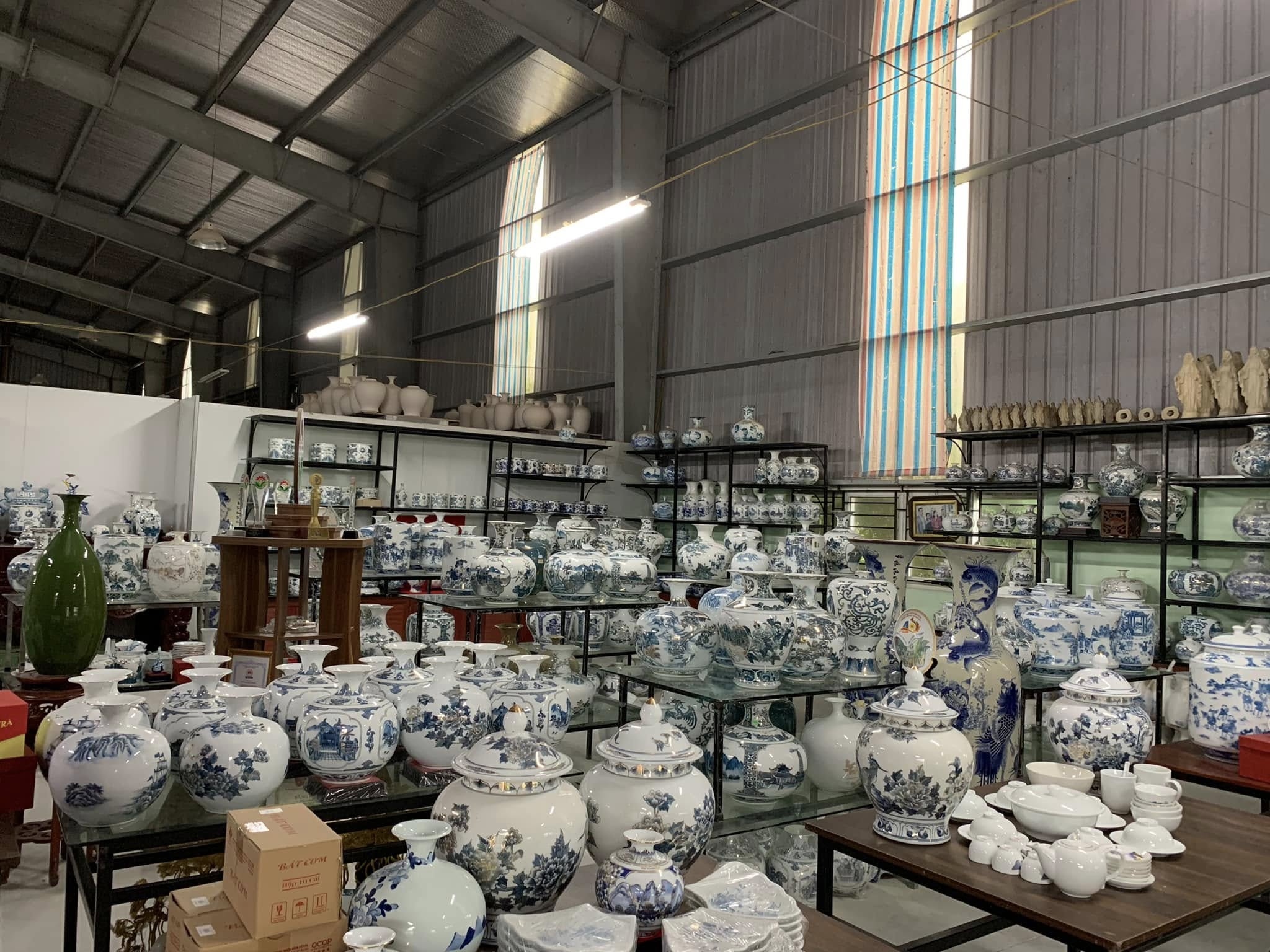
Today, the village is recognized for its distinctive white-glazed pottery, locally sourced Bo Di clay, and handcrafted ceramics decorated with cultural motifs inspired by Ninh Binh’s historical landmarks and natural landscapes.
Among Ninh Binh’s many traditional crafts, including Van Lam embroidery and Ninh Van stone carving, Bo Bat pottery tells a particularly fascinating story of craftsmanship, cultural continuity, and the preservation of local heritage.
The History of Bo Bat Pottery Village and Its Connection to Bat Trang
Bo Bat Pottery Village originated in the area now known as Bach Lien Village, Dong Thai Commune, Ninh Binh Province.
According to local historical accounts, pottery production in the area dates back more than a thousand years. Layers of fired clay and fragments of ancient ceramics discovered in the region suggest that pottery-making was once an important local activity.
During the Dinh and Early Le dynasties, when Hoa Lu served as Vietnam’s capital, Bo Bat craftsmen are believed to have produced ceramics and construction materials for royal buildings and everyday use.
Among the notable artifacts mentioned in local historical materials are fired bricks bearing the inscription “Dai Viet Quoc Quan Thanh Chuyen”, traditionally associated with the construction of fortifications.
Local artisans also produced decorative ceramic dragon heads, mythical animal figures, bowls, plates, and other household objects.
These products reflected the skills of early Vietnamese craftsmen in clay preparation, shaping, decoration, and firing techniques.
An important chapter in Bo Bat’s history is connected to the relocation of Vietnam’s capital in 1010.
That year, Emperor Ly Thai To moved the capital from Hoa Lu to Dai La, which was subsequently renamed Thang Long.
According to local craft traditions, a number of skilled potters from Bo Bat, including members of five prominent family lineages, followed the imperial court to the new capital.
These craftsmen are believed to have settled along the Red River, where suitable clay deposits supported ceramic production. Their activities are traditionally associated with the early development of what later became Bat Trang Pottery Village.
For this reason, Bo Bat is often described as one of the ancestral homes of Bat Trang pottery.
This connection remains an important part of local craft heritage, although the precise historical development of Bat Trang should also be considered alongside archaeological and scholarly research.
Following the departure of many experienced craftsmen, pottery production in Bo Bat gradually declined.
Residents increasingly turned to rice cultivation and other agricultural activities to support their families. Over successive generations, traditional pottery-making skills were no longer widely passed down, and the once-flourishing craft nearly disappeared.
Nevertheless, the memory of the village’s pottery heritage, surviving ceramic remains, and distinctive local clay deposits provided a foundation for its eventual revival.
Bo Di Clay and the Distinctive Characteristics of Bo Bat Pottery
One of the defining features of Bo Bat pottery is its locally sourced clay, known as Bo Di clay, also called dat non suong by local residents.
According to village craft descriptions, this clay is particularly suitable for producing ceramics with smooth surfaces, firm structures, and elegant white glazes.
Bo Di clay is also traditionally associated with shorter firing times compared with certain conventional pottery clays.
Some local accounts suggest that firing may require only approximately 50–70% of the time needed for other materials, while still producing ceramics with desirable hardness, smoothness, and resistance to cracking.
However, actual firing performance and product quality depend on the clay composition, kiln temperature, preparation methods, and manufacturing process.
Bo Bat pottery is especially known for its white-glazed products and ceramics featuring an antique-inspired appearance.
One traditional glaze described in local materials is known as men gan, valued for its thick coating, bright white appearance, and visual depth.
The village produces a wide range of ceramic goods, including teapots, teacups, bowls, plates, flower vases, decorative objects, wind chimes, necklaces, ceramic paintings, and souvenirs.
Each product reflects attention to shape, glaze, surface texture, and decorative details.
Beyond their practical functions, Bo Bat ceramics are distinguished by designs inspired by Ninh Binh’s cultural heritage.
Artisans incorporate stylized images of famous landmarks, historical architecture, limestone mountains, and river landscapes into their work.
Popular sources of inspiration include the Trang An Scenic Landscape Complex, Tam Coc – Bich Dong, the Hoa Lu Ancient Capital, and Bai Dinh Pagoda.
Through carefully painted patterns and decorative compositions, these familiar landscapes are transformed into distinctive ceramic motifs.
This approach gives Bo Bat pottery a recognizable regional identity while introducing visitors and customers to the cultural and natural beauty of Ninh Binh.
As a result, Bo Bat ceramics serve not only as household objects and decorative pieces but also as meaningful souvenirs representing the heritage of Vietnam’s ancient capital region.
The Revival of Bo Bat’s Traditional Pottery Craft
After a long period during which traditional pottery-making had nearly disappeared, efforts to restore the craft gradually brought renewed attention to Bo Bat.
According to the supplied local materials, Pham Van Vang, Director of the Bo Bat Pottery Workshop, played a pioneering role in reviving pottery production in the village.
Motivated by a desire to preserve his hometown’s traditional craft, he studied local clay resources, researched ceramic production techniques, and developed product designs that reflected the cultural identity of Bo Bat.
The pottery workshop was established on an area of more than 300 square meters.
Historical descriptions of the revival identify it as the first pottery production facility established in Bach Lien Village after generations of decline.
Its establishment marked an important step toward restoring a traditional craft closely associated with the area’s history.
The workshop initially focused on household ceramics and decorative products, including tea sets, bowls, plates, flower vases, and souvenirs.
Rather than relying exclusively on conventional pottery designs, the artisans developed decorative motifs inspired by Ninh Binh’s historical sites, cultural traditions, and scenic attractions.
Images associated with Trang An, Hoa Lu, Tam Coc – Bich Dong, and Bai Dinh Pagoda became recurring elements in the workshop’s ceramic designs.
These distinctive motifs helped differentiate Bo Bat products from other pottery styles available on the market.
According to descriptions of the workshop, its ceramics received positive feedback for their thick white glazes, smooth finishes, durability, and competitive pricing.
Such characteristics contributed to the renewed commercial potential of the village’s pottery products.
An important milestone occurred in 2015, when a ceramic product collection produced by the Bo Bat Pottery Private Enterprise in Ninh Binh was reportedly selected and honored by Vietnam’s Ministry of Industry and Trade as part of a national program recognizing outstanding industrial and agricultural products.
This recognition reflected the efforts made to restore traditional production, improve craftsmanship, and develop locally distinctive ceramic products.
The revival of Bo Bat pottery represents more than the reopening of a workshop.
It is also an effort to reconnect the community with its cultural heritage, preserve traditional knowledge, and create new opportunities for local economic development.
Bo Bat Pottery Village and Cultural Tourism in Ninh Binh
Ninh Binh is widely known for its remarkable natural landscapes and historical attractions, including Trang An, Tam Coc – Bich Dong, Hoa Lu Ancient Capital, and Bai Dinh Pagoda.
Alongside these destinations, traditional craft villages contribute an important cultural dimension to the visitor experience.
Bo Bat Pottery Village offers a distinctive story of a craft associated with the Dinh and Early Le dynasties, the historical relocation of Vietnam’s capital, and the later development of Bat Trang pottery.
For visitors interested in Vietnamese history, the village provides an opportunity to learn about traditional craftsmanship in the cultural setting of the ancient capital of Hoa Lu.
The story of potters who reportedly followed Emperor Ly Thai To to Thang Long in 1010 also illustrates the relationship between traditional crafts and major historical developments.
At pottery workshops that welcome visitors, travelers may have opportunities to learn about different stages of ceramic production, including clay preparation, shaping, decorative painting, glazing, and kiln firing.
However, workshop visits and hands-on activities should be arranged in advance to confirm availability.
Bo Bat pottery products decorated with images of Ninh Binh’s landmarks also make meaningful local souvenirs.
A ceramic vase, tea set, or decorative object can serve as both a practical item and a reminder of the region’s cultural traditions.
Connecting traditional pottery production with tourism offers opportunities for Bo Bat to develop while preserving its heritage.
When ceramic products are accompanied by stories about local history, craftsmanship, and cultural identity, their value extends beyond commercial production.
They become a means of sharing the community’s knowledge and traditions with visitors.
The long-term preservation of Bo Bat pottery therefore depends on continued research into traditional techniques, training new craftsmen, developing distinctive products, and creating opportunities for younger generations to engage with their local heritage.
From an ancient pottery-making community associated with Vietnam’s early imperial dynasties to a craft village gradually rediscovering its traditions, Bo Bat represents the enduring value of Vietnamese craftsmanship. Its white-glazed ceramics and Ninh Binh-inspired designs bring together history, creativity, and cultural identity, contributing to the rich heritage of the ancient Hoa Lu region.
Quick Information
| Item | Details |
|---|---|
| Craft village | Bo Bat Pottery Village |
| Vietnamese name | Làng gốm Bồ Bát |
| Location | Bach Lien Village, Dong Thai Commune, Ninh Binh Province, Vietnam |
| Craft type | Traditional pottery and ceramics |
| Historical origins | Associated with the Dinh and Early Le dynasties according to local accounts |
| Historical connection | Traditionally regarded as one of the ancestral origins of Bat Trang pottery |
| Important historical event | The relocation of Vietnam’s capital to Thang Long in 1010 |
| Distinctive raw material | Bo Di clay, locally known as dat non suong |
| Main products | Tea sets, bowls, plates, flower vases, ceramic paintings, wind chimes, and souvenirs |
| Notable revival figure | Pham Van Vang, according to local historical materials |
| Workshop size reported | More than 300 m² |
| Notable recognition | Ceramic products reportedly honored in a national program in 2015 |
| Cultural significance | Traditional craftsmanship, pottery heritage, and cultural tourism |