


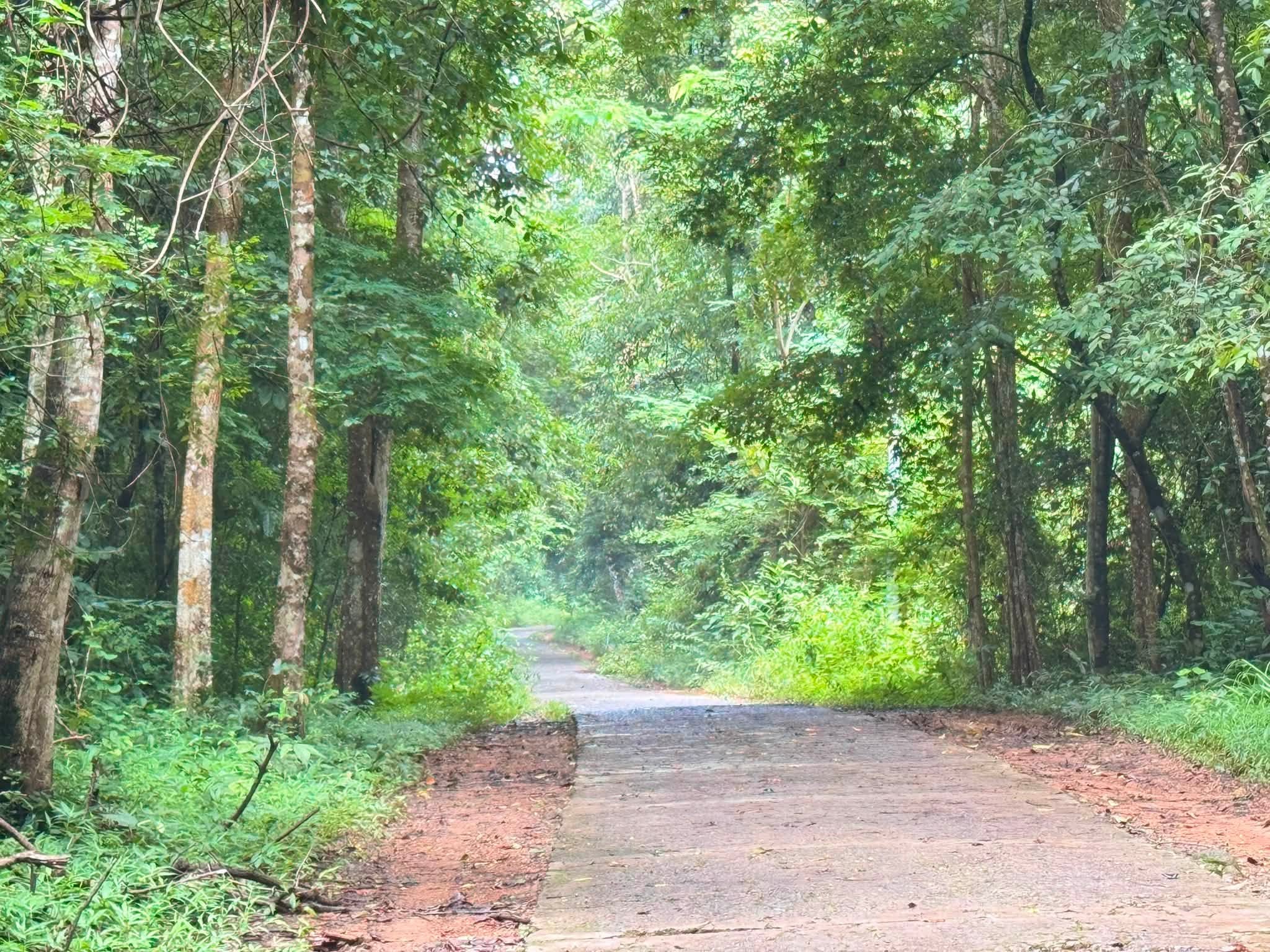
Cat Tien National Park is a natural landscape and cultural heritage complex of exceptional value, located in Dong Nai and Lam Dong provinces. On July 16, 2026, the Government issued Resolution No. 188/NQ-CP on transferring the management of Cat Tien National Park to the People’s Committee of Dong Nai City.
The park was established through the consolidation of the Nam Cat Tien Protected Forest, the Western Cat Tien Nature Reserve, and the Cat Loc Rhinoceros Reserve. The central area of the park covers approximately 71,920 hectares, including 39,627 hectares in Dong Nai, 27,850 hectares in Lam Dong, and 4,443 hectares in Binh Phuoc, which has since been incorporated into Dong Nai Province.
With its vast area, diverse terrain, and rich ecosystems, Cat Tien is one of Vietnam’s most important areas for nature conservation. Natural forests account for a large proportion of the park, with forest cover of approximately 80 percent. The landscape includes several major ecosystem types, such as evergreen rainforest, semi-deciduous forest, bamboo forest, grassland, and wetlands.
The Dong Nai River is one of the defining features of the park, with approximately 90 kilometers flowing through Cat Tien. Together with numerous streams, waterfalls, seasonal wetlands, and natural lakes, the river forms an important inland wetland ecosystem. Notable landscape features include Troi Waterfall, Ben Cu Waterfall, Dung Waterfall, Mo Vet Waterfall, and Nokrót-Nơkrót Waterfall.
Biodiversity and Natural Landscape
Cat Tien National Park is home to a remarkable diversity of plant and animal species and plays an important role in conserving tropical forest ecosystems in southeastern Vietnam. Earlier surveys recorded approximately 1,610 plant species and 1,568 animal species. More recent studies have identified 1,655 species of vascular plants and 1,729 animal species, including more than 100 species of plants and animals listed in the Vietnam Red Data Book and requiring conservation.
The park has particularly rich wildlife. Its mammal fauna includes 113 species belonging to 38 families and 12 orders, of which 43 species are considered threatened with extinction in Vietnam or globally. Cat Tien is also home to 351 bird species belonging to 64 families and 18 orders, including numerous rare species listed in the Vietnam Red Data Book.
Cat Tien is also notable for species and subspecies with high conservation value. The area was once known for three endemic Vietnamese taxa, including the black-shanked douc, the Vietnamese Javan rhinoceros, and the southern muntjac. The Vietnamese rhinoceros is now extinct, but the former population remains an important symbol of Cat Tien’s conservation significance.
Wetlands form another distinctive component of the Cat Tien landscape. Bau Sau, or Crocodile Lake, is one of the park’s most important wetland areas, with an open-water surface of approximately 92.63 hectares. It provides habitat for Siamese crocodiles and numerous aquatic species. Other important natural wetlands include Bau Ca, covering approximately 74.3 hectares, and Bau Beo, covering approximately 23.92 hectares.
These wetlands, together with rivers, streams, grasslands, and natural forests, create a variety of habitats for wildlife and provide important feeding and breeding grounds for many species.
Cat Tien’s vegetation is also highly diverse. Broadleaf evergreen forest covers approximately 17,819 hectares, with numerous species of the Dipterocarpaceae family, including dipterocarp trees and hairy dipterocarps, as well as valuable timber species such as Dalbergia bariensis, Dalbergia, rosewood, and Pterocarpus macrocarpus.
Semi-deciduous evergreen forest covers approximately 5,097 hectares and contains numerous species that shed their leaves during the dry season. Mixed hardwood and bamboo forest accounts for approximately 14,361 hectares, while pure bamboo forest covers about 29,805 hectares. Wetland and seasonally flooded vegetation covers approximately 3,516 hectares, concentrated mainly in the Nam Cat Tien area.
The scenic value of the park is not limited to its natural forests. It is created by the interaction of mountains, forests, the Dong Nai River, wetlands, grasslands, waterfalls, rapids, and seasonal floodplains. The landscape also reflects a long geological and geomorphological history, creating diverse environments for tropical ecosystems.
Cat Tien also holds international conservation significance. The Dong Nai Biosphere Reserve, of which Cat Tien National Park is an important component, has been recognized by UNESCO. Bau Sau Wetland was designated a Ramsar Site in 2005 as a wetland of international importance.
On April 20, 2024, Cat Tien National Park was recognized by the International Union for Conservation of Nature (IUCN) as meeting the standards of the IUCN Green List of Protected and Conserved Areas, becoming the first national park in Vietnam to receive this recognition.
Archaeological, Historical, and Cultural Values
In addition to its natural heritage, Cat Tien contains important archaeological remains. Archaeological surveys and excavations have identified 12 mound-type archaeological sites, believed to represent the remains of temples, towers, and other structures, together with numerous artifacts and architectural fragments. These discoveries indicate that the area was once home to an ancient cultural center that developed over several centuries.
At Mound 1 on Monkey Hill, archaeologists discovered brick architectural remains, including a worship tower, an entrance structure, and buildings arranged along both sides of a road leading toward the complex. Numerous significant artifacts were also unearthed, including a Ganesha statue, decorated bricks, Linga-Yoni sets, quartz Lingas, river-pebble Lingas, bronze or brick Yonis, and small gold Lingas.
Based on archaeological research, scholars have provisionally identified an ancient culture that flourished in the Cat Tien area from approximately the 2nd to the 7th century AD. The architectural remains and artifacts reveal cultural, religious, and technological exchanges among ancient communities in southeastern Vietnam.
Particularly notable is the large Linga-Yoni assemblage discovered at the Cat Tien archaeological site, regarded as one of the significant archaeological discoveries of its kind in Vietnam.
Historically, Cat Tien and its surrounding areas have also been home to many ethnic communities, including the Ma, Choro, S’Tieng, Mnong, Tay, Nung, H’Mong, Dao, Hoa, Muong, and Ede. These communities continue to preserve traditional customs, religious beliefs, festivals, and handicrafts.
Cultural practices include the buffalo sacrifice ceremonies of the S’Tieng and Ma peoples, the Sayangva, or new rice festival, of the Choro, as well as seasonal and harvest ceremonies practiced by the S’Tieng and Mnong communities.
During the wars against French colonial rule and the United States, the Cat Tien area also served as a base and revolutionary zone, becoming associated with the history of resistance in southeastern Vietnam.
From a conservation perspective, Cat Tien National Park represents an integrated landscape of natural and cultural heritage. Its value lies in its tropical forests, wetlands, rich biodiversity, geological and geomorphological features, archaeological remains, and the cultural traditions of local communities.
The park is also an important area for scientific research in biology, ecology, geology, geomorphology, archaeology, and cultural studies.
Recognizing its outstanding historical, cultural, scientific, and aesthetic values, on September 27, 2012, the Prime Minister issued Decision No. 1419/QD-TTg, recognizing Cat Tien National Park as a Special National Relic.
On July 16, 2026, the Government issued Resolution No. 188/NQ-CP concerning the transfer of Cat Tien National Park to the management of the People’s Committee of Dong Nai City.
Today, Cat Tien continues to be regarded as an area of exceptional importance for biodiversity conservation, natural landscapes, and cultural heritage. It also serves as an important destination for scientific research, environmental education, and ecotourism.


