Chuồn Village, in Hue, is known for its rich cultural traditions and long-standing folk crafts. Alongside traditional decorative paintings and ceremonial banners, the village is also home to a distinctive culinary tradition: bánh tét, the traditional Vietnamese cylindrical sticky rice cake.
Bánh tét is widely enjoyed throughout Vietnam, particularly during traditional festivals and Lunar New Year celebrations. In Hue, the art of making and cooking bánh tét has been preserved in many rural communities. What makes Chuồn Village bánh tét distinctive is the careful selection of ingredients and the attention given to every stage of preparation.
Fragrant Local Sticky Rice
For generations, villagers in Chuồn have set aside an area of roughly 20 mẫu of farmland to cultivate high-quality sticky rice specifically for making bánh tét. This variety is locally known as nếp Tây, prized for its fragrance, even grains, and natural stickiness.
The rice is carefully selected, ensuring that the grains are clean, uniform, and free from ordinary rice, husks, bran, grass seeds, and sand. It is then soaked, thoroughly rinsed, and drained before being used.
This careful preparation helps the rice develop the right texture while allowing the finished cake to remain fresh for an extended period.
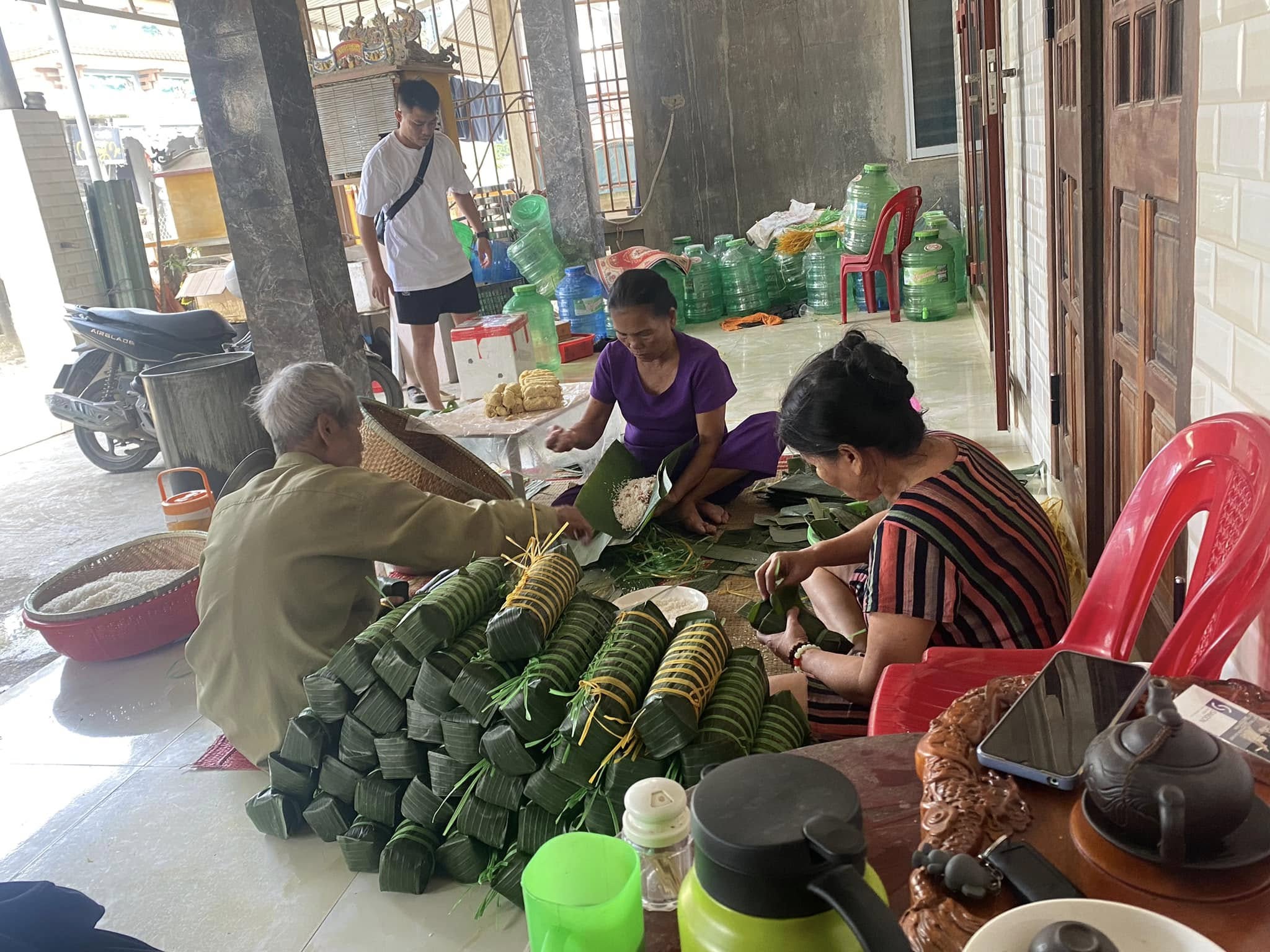
The cakes are traditionally wrapped in banana leaves, preferably leaves that are neither too young nor too old. Their broad surface and natural strength make them suitable for wrapping and protecting the cake during cooking.
Thin strips of giang bamboo are used to tie the cakes. Flexible yet strong, these strips allow the cake to be secured firmly while helping it maintain its distinctive cylindrical shape.
A Rich and Savory Filling
The filling of Chuồn Village bánh tét combines mung beans and pork fat, creating a balance between richness and nuttiness.
Large, uniform mung beans are soaked and rinsed before being prepared as the filling. Pork fat is cut into long, evenly shaped pieces and seasoned with salt, pepper, and shallots.
A small amount of salt is also mixed into the sticky rice itself, ensuring that the outer layer is flavorful rather than bland.
The finished cake brings together several contrasting flavors: the soft and chewy sticky rice, the creamy nuttiness of mung beans, the richness of pork fat, and the subtle heat and aroma of pepper and shallots.
Skillful Wrapping and Slow Cooking
Making bánh tét may look simple, but producing a beautifully shaped cake requires considerable skill.
The filling must be positioned precisely in the center, surrounded evenly by sticky rice. The banana leaves are then folded and wrapped tightly to create a firm, smooth cylinder. The bamboo strips are tied at regular intervals, securing the cake without damaging the leaves.
One traditional technique associated with Chuồn Village bánh tét involves adding mật lục leaves to the cooking pot. These wild leaves grow along hedges and uncultivated areas and are traditionally used to help give the cakes their natural green color.
During cooking, the water is changed at least twice to prevent the leaves from becoming discolored. The cakes are then simmered over a steady fire for approximately 12 hours.
The long cooking process allows the sticky rice to become thoroughly tender while helping the cake retain its texture and keeping quality. When properly cooked, the rice remains soft and cohesive without becoming watery.
Slices Like Little Full Moons
Once the bánh tét has finished cooking and cooled, it is sliced into round pieces. Traditionally, a thin string or a strip of gấc fiber can be used to cut the cake cleanly, producing smooth and even slices.
Arranged on a plate, the green sticky rice surrounding the golden mung bean filling creates a striking pattern, with each round slice resembling a small full moon.
The first bite reveals the soft, chewy texture of the sticky rice, followed by the gentle fragrance of the cake, the nutty richness of mung beans, and the savory fat. Pepper and shallots add a subtle spicy aroma that brings the flavors together.
A Taste of Rural Hue
Chuồn Village bánh tét is more than a traditional food. It reflects the patience, craftsmanship, and local knowledge passed down through generations.
From cultivating special sticky rice and selecting banana leaves to preparing the filling, wrapping each cake, and maintaining a steady fire for hours, every step contributes to the character of the finished bánh tét.
Amid Hue’s rich culinary heritage, Chuồn Village bánh tét carries the flavor of rural life: simple, carefully made, and deeply connected to local traditions.
For travelers exploring Hue beyond its famous dishes, discovering this traditional bánh tét offers another way to experience the region’s culinary culture, where food preserves not only flavors but also stories of the land and the people who call it home.