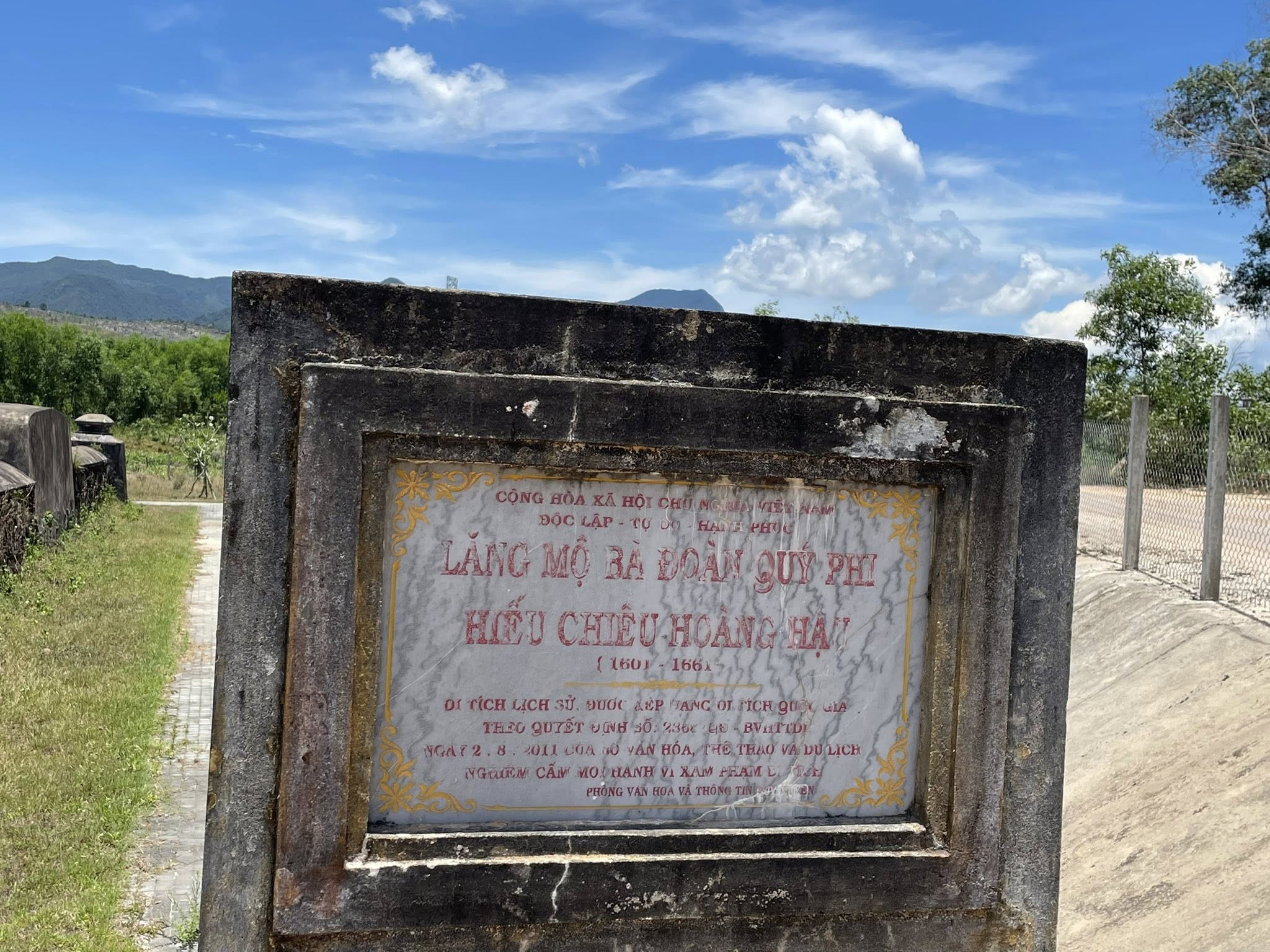
The Tomb of Lady Đoàn Quý Phi is a historical and cultural site associated with Đoàn Thị Ngọc Phi (1601–1661), the consort of Lord Nguyễn Phúc Lan. She is remembered in local history and folklore as Bà Chúa Tằm Tang, or the Silkworm Queen, for her traditional association with the development of sericulture and silk weaving in the central region of Vietnam.
Beyond its architectural and historical significance, the tomb complex reflects the cultural heritage of the Nguyễn lords’ era and preserves the memory of a woman who played a notable role in the region’s traditional textile production.
2. The Life of Lady Đoàn Quý Phi
Đoàn Thị Ngọc Phi was born in 1601, the daughter of Đoàn Công Nhạn. She later became the consort of Nguyễn Phúc Lan, one of the Nguyễn lords who ruled the southern territories of Vietnam. Following her death in 1661, she was posthumously honored with royal titles, eventually becoming known as Hiếu Chiêu Hoàng hậu.
According to local folklore, her relationship with Nguyễn Phúc Lan began when the lord encountered her near a mulberry field under the moonlight. This story has been passed down through generations and forms part of the cultural memory surrounding her life.
Lady Đoàn Quý Phi is particularly associated with encouraging sericulture and silk weaving in the areas of Điện Bàn, Thăng Hoa and Phú Xuân. These traditional crafts contributed to the development of local livelihoods and the textile economy.
In Phủ biên tạp lục, scholar Lê Quý Đôn recorded the quality of silk products made in the region:
“People in Thăng and Điện prefectures could weave various kinds of gauze, satin, silk and patterned fabrics, rivaling those of Guangdong.”
This historical account reflects the reputation of the region’s textile craftsmanship and helps explain why Lady Đoàn Quý Phi is remembered as the Silkworm Queen.
3. The Tomb Complex and Its Historical Significance
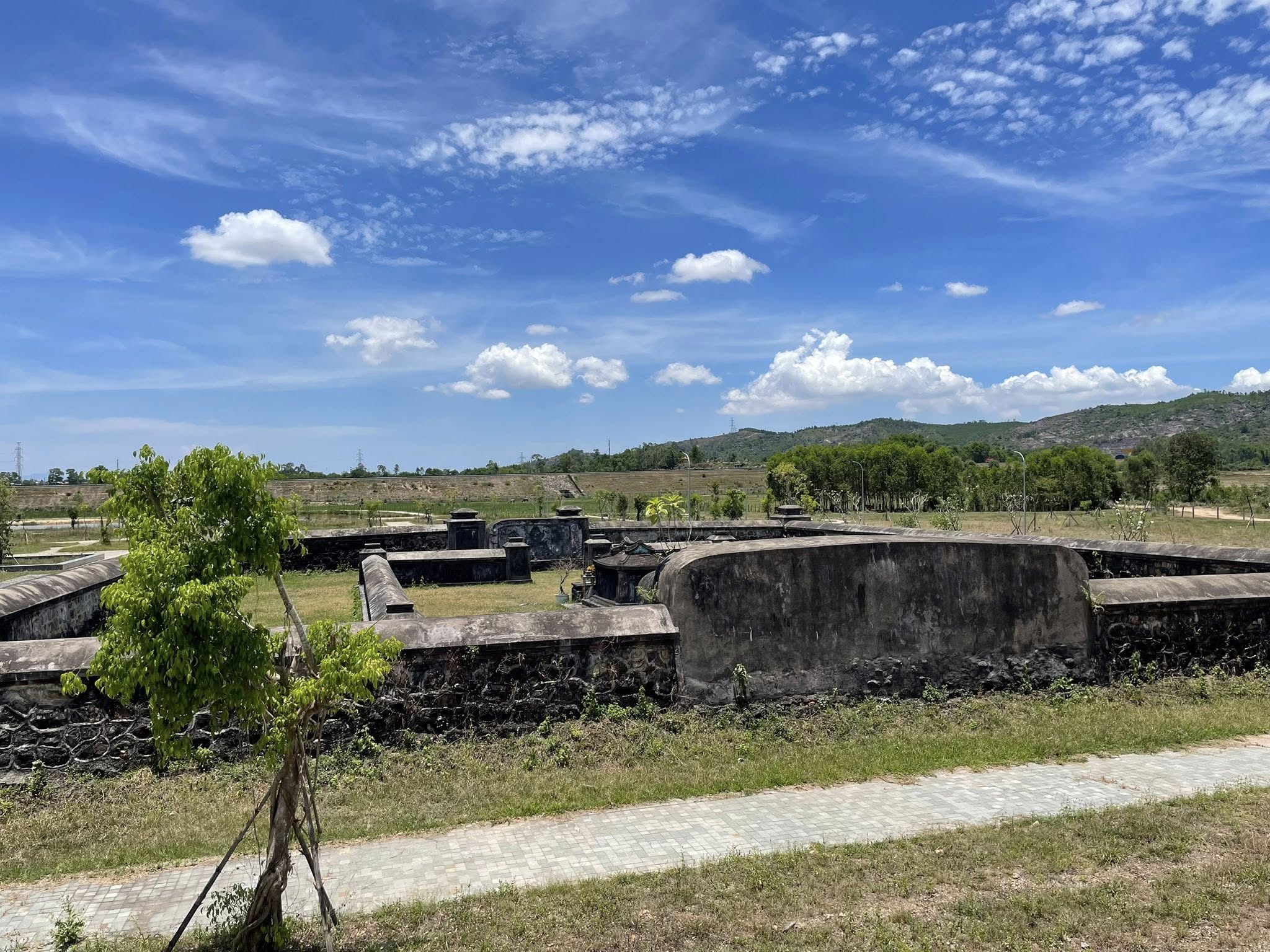
The tomb of Lady Đoàn Quý Phi is associated with the Vĩnh Diện burial area, where several historical structures preserve memories of the Nguyễn lords’ period.
The site is commonly associated with Lăng Vĩnh Diện, also known as Lăng Trên, the tomb of Lady Đoàn Quý Phi. Nearby is Lăng Vĩnh Diễn, also known as Lăng Dưới, associated with Hiếu Văn Hoàng hậu Nguyễn Thị Giai (1578–1630). Together, these tombs form part of the area’s historical and cultural landscape.
The tomb complex was once protected by two defensive walls. Although time and historical upheavals have affected the original structures, a stone tomb stele remains as an important surviving feature. The site suffered damage over the years and underwent restoration in 1992.
The surrounding area also contains traces of former religious and royal-guard activities. Chùa Vua, or the King’s Pagoda, and the area known as Vườn Chùa are associated with local traditions concerning descendants of the Đoàn clan, who served as royal guards.
These surviving features and local accounts contribute to the site’s value as a place for understanding the historical landscape of the Nguyễn lords’ era.
4. The Memorial Temple of Hiếu Chiêu Hoàng hậu
Another important site associated with Lady Đoàn Quý Phi is the Temple of Hiếu Chiêu Hoàng hậu, located in Đông Yên Đông, now within Điện Phương Commune.
The temple preserves her memory through traditional architecture and ancestral worship. Its decorative details and architectural arrangement reflect the craftsmanship and cultural practices of the region.
Together, the tomb and memorial temple offer visitors a broader understanding of Lady Đoàn Quý Phi’s place in local history, as well as the traditions associated with the royal household and the silk-weaving heritage of central Vietnam.
5. Recognition and Heritage Value
The tomb complex is valued not only as a burial site but also as a historical landmark associated with the development of traditional crafts and the cultural life of the Nguyễn lords’ era.
In 2011, the site was recognized as a National Historical and Cultural Relic, acknowledging its significance in preserving the historical and cultural heritage of the region.
Today, the Tomb of Lady Đoàn Quý Phi remains a destination for visitors interested in history, traditional craftsmanship and the cultural heritage of Quảng Nam and central Vietnam.
Quick Information
| Item | Details |
|---|---|
| Name | Tomb of Lady Đoàn Quý Phi |
| Other name | Bà Chúa Tằm Tang (Silkworm Queen) |
| Historical figure | Đoàn Thị Ngọc Phi (1601–1661) |
| Historical association | Nguyễn lords’ era; sericulture and silk weaving |
| Related sites | Vĩnh Diện Tomb, Vĩnh Diễn Tomb and the Temple of Hiếu Chiêu Hoàng hậu |
| Location | Duy Xuyên Commune, Đà Nẵng City, Vietnam |
| Heritage recognition | National Historical and Cultural Relic, 2011 |