The Gau Tao Festival is one of the most distinctive traditional festivals of the Hmong people in Lai Chau Province. It is considered the largest community-based cultural festival of the Hmong in the region, reflecting their deep spiritual beliefs, aspirations for prosperity, and strong sense of community.
The festival is traditionally held to pray for blessings, good fortune, health, abundant harvests, plentiful livestock, family happiness, and the prosperity of the village. It is also an occasion for people to express gratitude to deities and ancestors, strengthen community bonds, and preserve the cultural identity of the Hmong people.
Origins and Meaning of the Festival
Gau Tao originally developed from a fertility and child-wishing ritual practiced by Hmong couples who hoped to have children. Over time, the ritual evolved into a major community festival involving an entire village or several neighboring communities.
The Hmong people live in all districts and cities of Lai Chau Province, particularly in high mountainous areas. Their communities maintain rich cultural traditions expressed through language, costumes, music, dance, beliefs, festivals, and communal activities. Among these traditions, Gau Tao is especially important because it brings together spiritual practices, artistic performances, folk games, social interaction, and collective aspirations for a prosperous life.
The festival usually takes place from the third to the fifteenth day of the first lunar month. The opening day is often selected according to traditional beliefs, commonly falling on the Day of the Dragon or the Day of the Ox. The festival venue is generally a spacious, flat area on a hillside or at the foot of a mountain considered sacred by the local community.
Although Gau Tao is a Hmong festival, people from other ethnic groups, including the Dao and Ha Nhi, may also participate. This creates an opportunity for cultural exchange and strengthens solidarity among ethnic communities in the mountainous areas of Lai Chau.
The Ceremonial Pole at the Center of the Festival
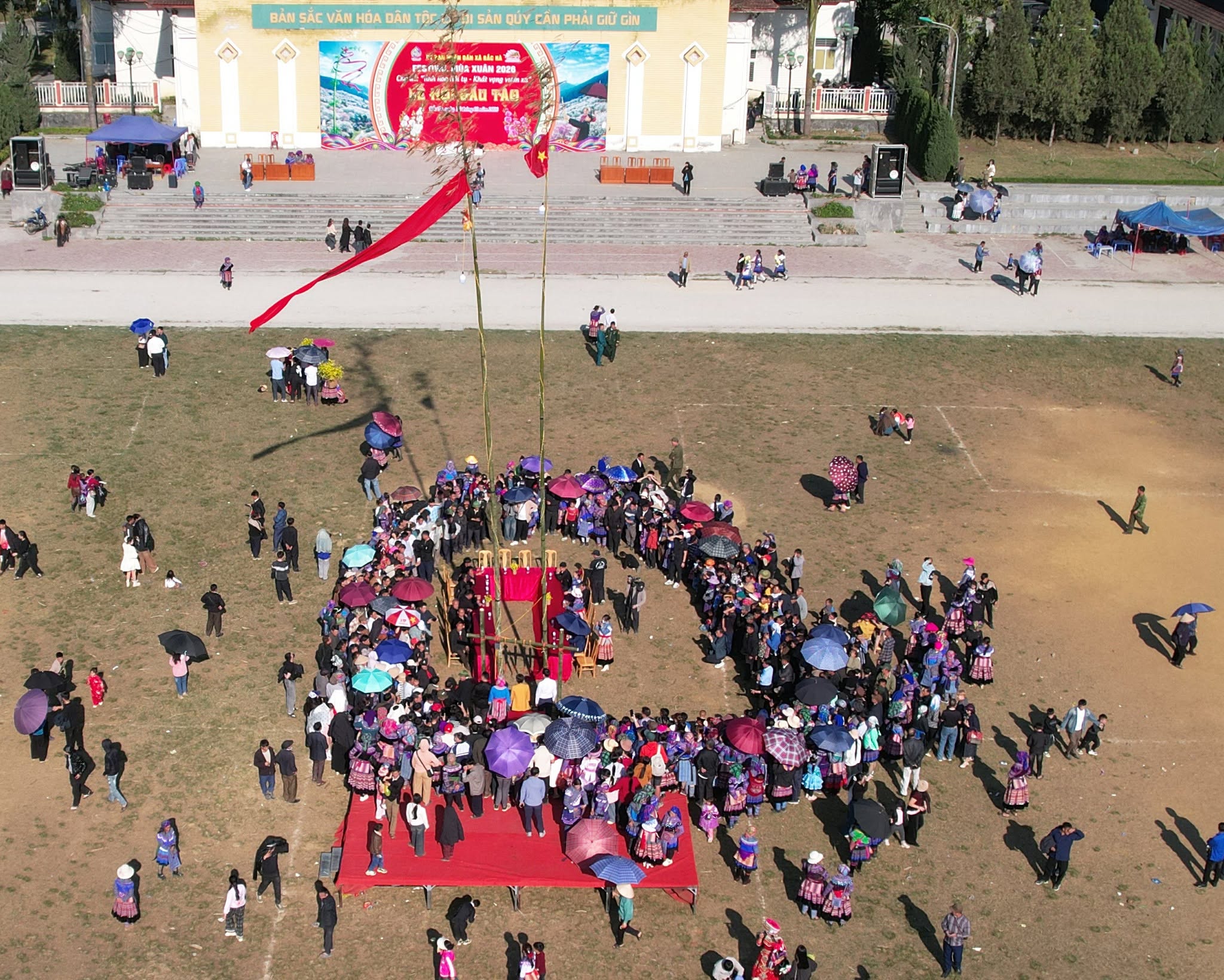
The most important symbol of Gau Tao is the ceremonial pole, known locally as the cây nêu. It is usually made from a tall, straight bamboo or mai tree with evenly spaced sections, smooth green bark, and a top pointing toward the direction of the rising sun.
The branches along the trunk are removed, giving the pole an appearance associated with the body of a dragon. The leafy top is retained and is believed to resemble the dragon’s mane.
Various objects are hung on the pole, including strips of indigo-dyed hemp fabric, pieces of red cloth, dried gourds, and bags containing seeds. These objects carry symbolic meanings. They may represent invitations to ancestors and household spirits, the sun, fertility, reproduction, and hopes for flourishing crops and abundant harvests.
The ceremonial pole therefore serves not only as the central visual feature of the festival but also as a spiritual connection between the human world, nature, ancestors, and supernatural forces.
The Ceremonial Activities
The ritual section of the Gau Tao Festival begins with traditional music, singing, dancing, and offerings around the ceremonial pole.
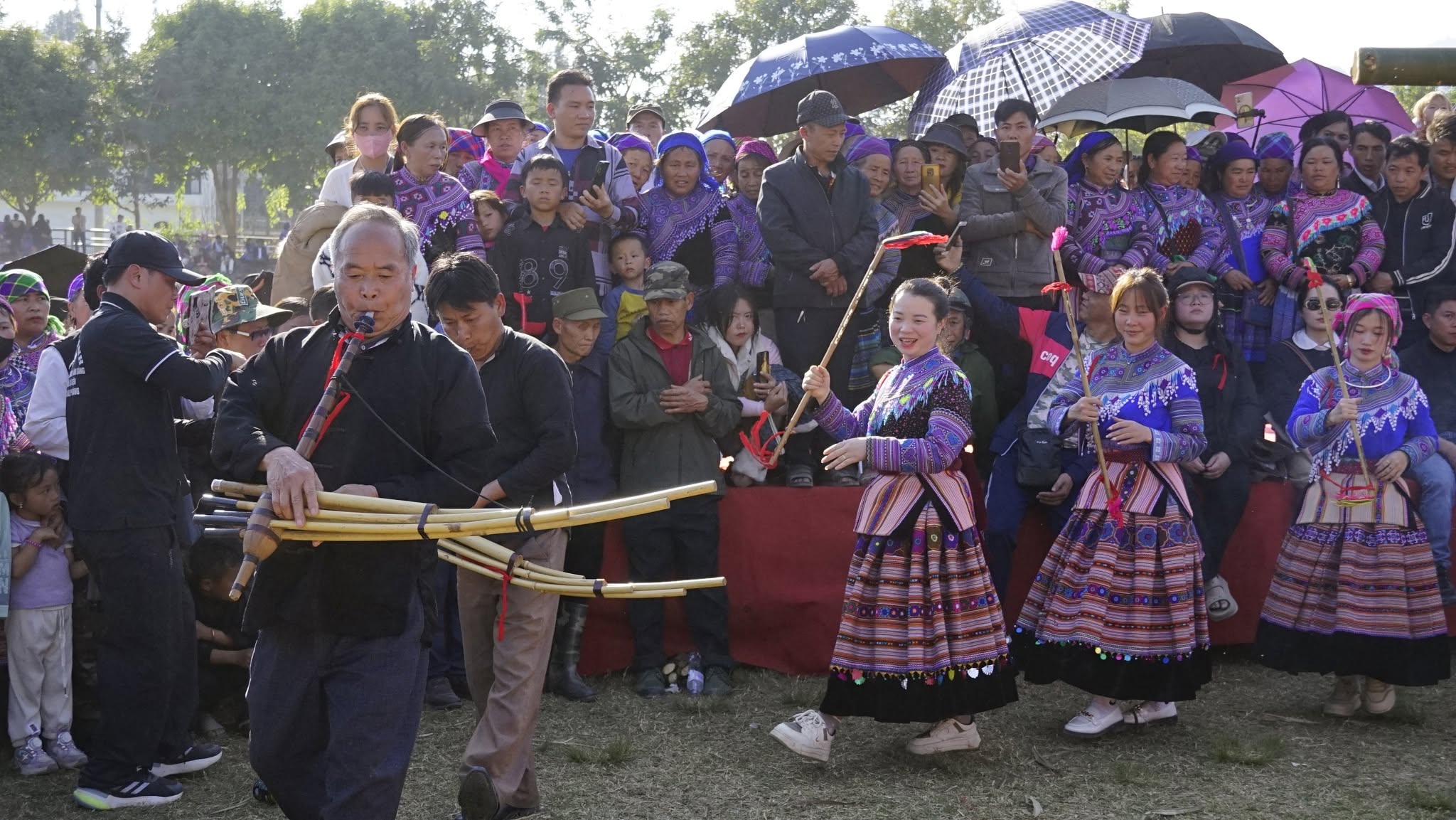
Groups of men perform dances and play the khen, a traditional Hmong wind instrument, around the pole. Young men and women sing Gau Tao songs, often expressing love, affection, hopes for marriage, family happiness, and a prosperous future.
The festival host lights incense, burns votive paper, and recites prayers to officially open the celebration. In one traditional ritual sequence, eight singers move around the ceremonial pole three times in an east-to-west direction and then twice in the opposite direction, from west to east.
At the outer circle, two pairs of young men and women pound glutinous rice to make round sticky rice cakes known as bánh dày. In the inner circle, six young men dance and play the khen. The cakes are then placed on an offering tray, while the ritual leader gives thanks to heaven, earth, deities, and ancestral spirits.
These ceremonies express the Hmong people’s wishes for favorable weather, fertile land, healthy families, successful farming, and peace within the community.
The Festive and Recreational Activities
After the solemn rituals, the festival becomes a lively community celebration filled with music, dance, games, food, and social interaction.
Traditional activities include:
- Khen dancing and performances.
- Folk singing and antiphonal courtship songs.
- Traditional Hmong costume displays.
- Spinning-top competitions.
- Tug-of-war.
- Stick-pushing competitions.
- Pao ball throwing.
- Cockfighting.
- Crossbow shooting.
- Traditional games such as “the dragon incubating eggs.”
- Singing exchanges between young men and women.
- Community dancing and musical performances.
The festival is also an important occasion for young people to meet, make friends, exchange love songs, and seek life partners. Through singing, dancing, games, and conversations, Gau Tao creates a lively social environment where traditional customs are passed from one generation to the next.
Food and Community Gathering
Temporary shelters and festival tents are often erected around the celebration area. These spaces provide places for villagers and visitors to rest, socialize, enjoy traditional food, and participate in communal activities.
Typical dishes served during the festival include bánh dày, bamboo-tube rice, forest vegetables, meat dishes, traditional cakes, and locally prepared ethnic beverages. The food reflects the natural resources of the mountainous environment and the culinary traditions of the Hmong people.
Sharing food is an important part of the festival because it reinforces hospitality, mutual support, and community solidarity.
Cultural and Tourism Significance
The Gau Tao Festival is not merely a religious or seasonal celebration. It is a comprehensive expression of Hmong cultural identity, combining spiritual beliefs, traditional music, dance, costumes, folk games, cuisine, social customs, and community organization.
The festival reflects the Hmong people’s respect for nature, ancestors, and spiritual powers, while also expressing their desire for happiness, fertility, prosperity, and peace. It provides a space where cultural values are practiced in everyday community life rather than simply displayed as performances.
In recent years, Gau Tao has also become an important cultural tourism attraction in Lai Chau. When properly preserved and organized, the festival can contribute to the development of community-based tourism, encourage visitors to explore Hmong villages and highland landscapes, and create opportunities for local people to promote their traditional culture.
However, tourism development must be implemented carefully to ensure that the spiritual meaning, traditional rituals, and community ownership of the festival are respected and maintained.
Heritage Information
| Category | Information |
|---|---|
| Name of heritage | Gau Tao Festival of the Hmong People |
| Recognition Decision | Decision No. 253/QD-BVHTTDL |
| Date of recognition | January 22, 2020 |
| Type of heritage | Traditional festival |
| Location | Lai Chau Province |
The Gau Tao Festival remains a vivid symbol of the Hmong people’s faith, aspirations, solidarity, and cultural vitality. Through its rituals, music, games, food, and communal gatherings, the festival preserves the distinctive identity of the Hmong communities in Lai Chau while contributing to the broader cultural diversity of Vietnam’s northern mountainous region.