


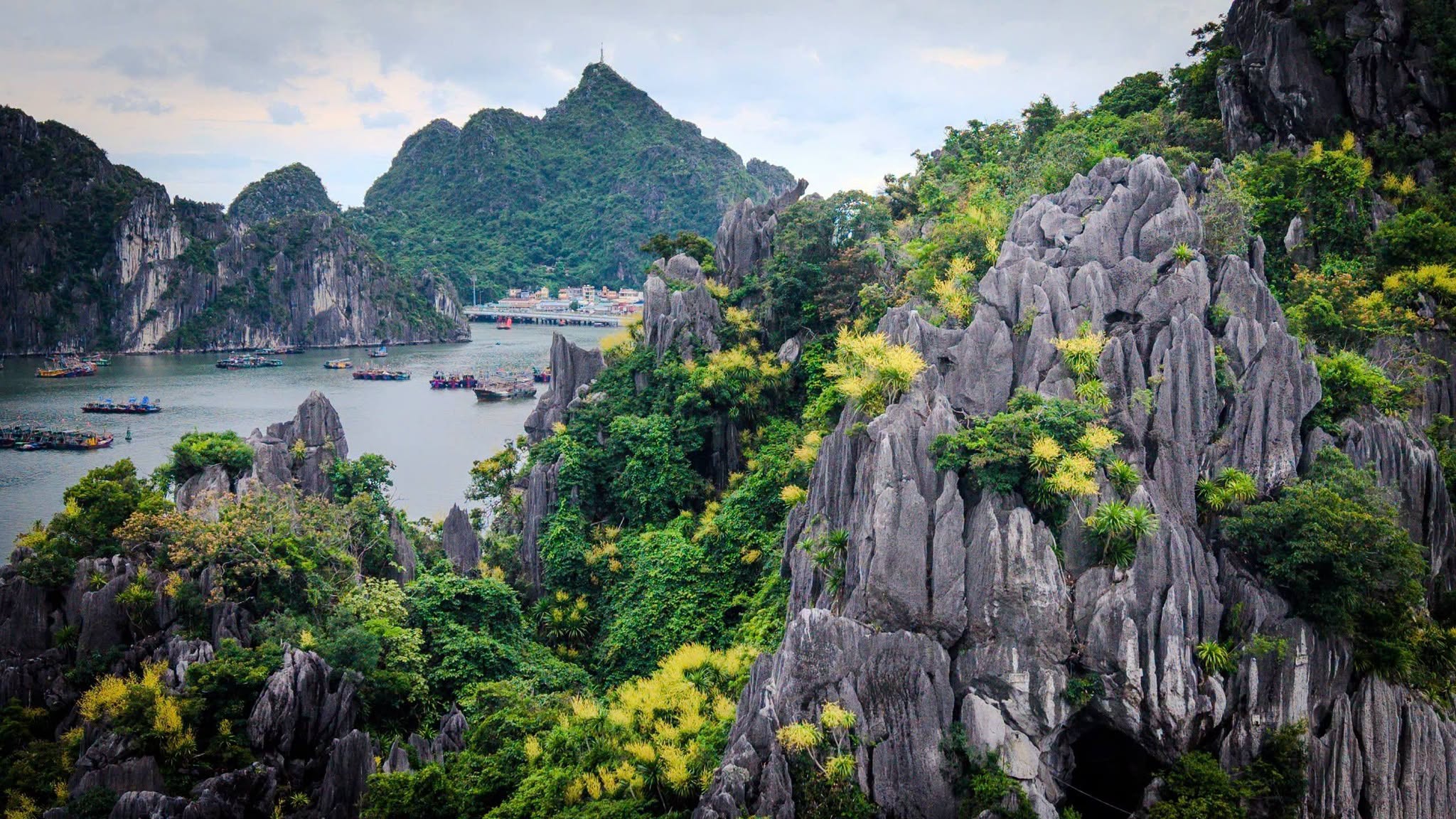
Ha Long Bay is located in northeastern Vietnam, in Quang Ninh Province, extending across the areas of Ha Long, Cam Pha, Quang Yen and the island waters of Van Don. To the east and south, the bay opens toward the Gulf of Tonkin, while its southwestern side is connected with the Cat Ba area of Hai Phong City. With thousands of limestone islands, extensive cave systems and a distinctive tropical karst landscape, Ha Long Bay is one of Vietnam’s most important natural heritage sites.

Geological and Landscape Values
The geological history of Ha Long Bay extends for nearly 500 million years, through successive periods of marine transgression and regression, tectonic activity and climatic change. The area contains various clastic and carbonate sedimentary formations, including fossils that record the development of life through different geological periods.
Ha Long is particularly notable as an outstanding example of tropical karst landscape. Over millions of years, water and weathering processes have eroded the limestone massif, creating limestone mountains, karst towers, rocky islands, valleys and caves with distinctive forms. The islands take on a remarkable variety of shapes, producing a landscape shaped by the close interaction of rock, water and sky.
The cave systems of Ha Long Bay also reflect the long development of its karst landscape. They can generally be divided into three main groups. The first includes ancient underground caves such as Sung Sot Cave, Thien Cung Cave, Dau Go Cave, Tam Cung Cave and Lau Dai Cave. The second consists of foot caves or karst-base caves, including Trinh Nu Cave, Bo Nau Cave, Tien Ong Cave and Hang Trong. The third includes marine notch caves and tunnel-like caves, represented by Ba Ham, Luon Cave and Ba Hang.
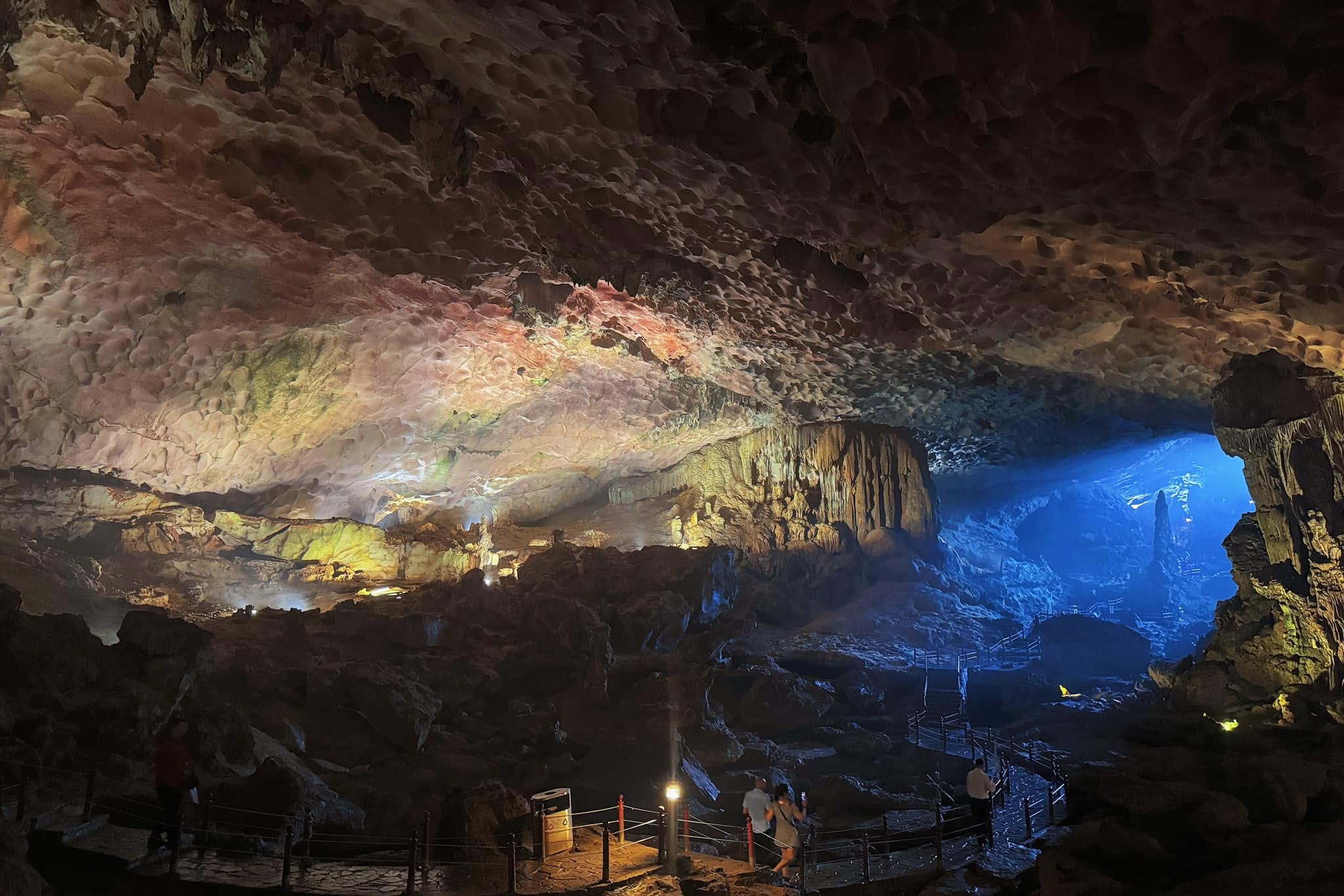
Inside these caves, rainwater penetrates cracks in the limestone, dissolves minerals and gradually deposits them to form stalactites, stalagmites and other natural formations. These geological processes have created the distinctive underground landscapes for which Ha Long Bay is renowned.
The karst landscape is significant not only for its aesthetic value but also for scientific research into geomorphology and the geological evolution of the Earth. Its geological environment provides the foundation for the development of diverse ecosystems and also contributes to the archaeological and cultural values of the bay.
Biodiversity and Evidence of Ancient Human Settlement
The limestone islands of Ha Long Bay provide a variety of habitats, including evergreen forests, vegetation growing on cliffs, cave entrances, rock crevices, sandy shores and mangrove ecosystems. Hundreds of plant species have been recorded on the islands, including species specially adapted to the limestone environment of Ha Long and some endemic species.
The Ha Long and Bai Tu Long areas also support diverse wildlife, including numerous species of birds, mammals, reptiles, amphibians and marine organisms. This biological diversity contributes significantly to the ecological value of the island and coastal environment.
Alongside its natural values, Ha Long Bay is an important archaeological landscape. Research has shown that humans have inhabited the area for thousands of years, with several major prehistoric cultural traditions identified, including the Soi Nhu Culture, Cai Beo Culture and Ha Long Culture.
The Soi Nhu Culture, dating from approximately 18,000 to 7,000 BC, was associated mainly with hunting, gathering and the exploitation of mollusks and other natural resources. During the Cai Beo Culture, prehistoric communities demonstrated a more developed ability to exploit marine environments. Archaeological sites from this period provide evidence that early inhabitants of the Ha Long area had adapted to coastal and marine conditions at a relatively early stage.
The successive cultural layers found in the region reflect the long process of human adaptation to changing natural environments. They also provide important evidence for understanding the history of human settlement along the northeastern coast of Vietnam.
Cultural Values and Scenic Attractions
The landscape of Ha Long Bay has long been an inspiration for Vietnamese literature and art. More than 500 years ago, the renowned scholar and poet Nguyen Trai, in his poem Lo Nhap Van Don, praised the spectacular scenery of the island region, evoking the image of extraordinary rocky formations rising toward the sky.
Today, destinations such as Thien Cung Cave, Dau Go Cave, Sung Sot Cave, Bo Nau Cave, Trinh Nu Cave, Tien Ong Cave, Ba Ham and Luon Cave form an important network of scenic attractions within the bay.
Ha Long Bay is also closely connected with the traditional lives of coastal communities. Fishing villages, fishing activities and other forms of marine livelihoods once created a distinctive cultural environment and contributed to the identity of the bay region.
The relationship between people and the sea remains an important part of Ha Long’s cultural landscape. Traditional knowledge, maritime livelihoods and community life developed in response to the particular environmental conditions of the bay, creating a cultural dimension closely connected with its natural setting.
The combination of geology, geomorphology, landscape, ecosystems and archaeological evidence of human settlement makes Ha Long more than a scenic destination. It is also an important area for scientific, archaeological and cultural research.
World Natural Heritage Site
In 1962, Ha Long Bay was recognized as a National-Level Scenic Landscape and Historical Site. In 1994, UNESCO inscribed Ha Long Bay on the World Heritage List for its outstanding aesthetic value. In 2000, the bay was further recognized by UNESCO for its Outstanding Universal Value in geology and geomorphology.
Ha Long Bay was also recognized by the World’s Most Beautiful Bays Club in July 2003, joining a number of renowned bays around the world.
On 12 August 2009, the Prime Minister issued Decision No. 1272/QD-TTg, recognizing Ha Long Bay as a Special National Monument.
With a geological history spanning hundreds of millions of years, a distinctive tropical karst landscape, extensive cave systems, rich biodiversity and archaeological evidence of prehistoric human settlement, Ha Long Bay represents an exceptional heritage landscape combining natural, scientific, archaeological, historical and cultural values.
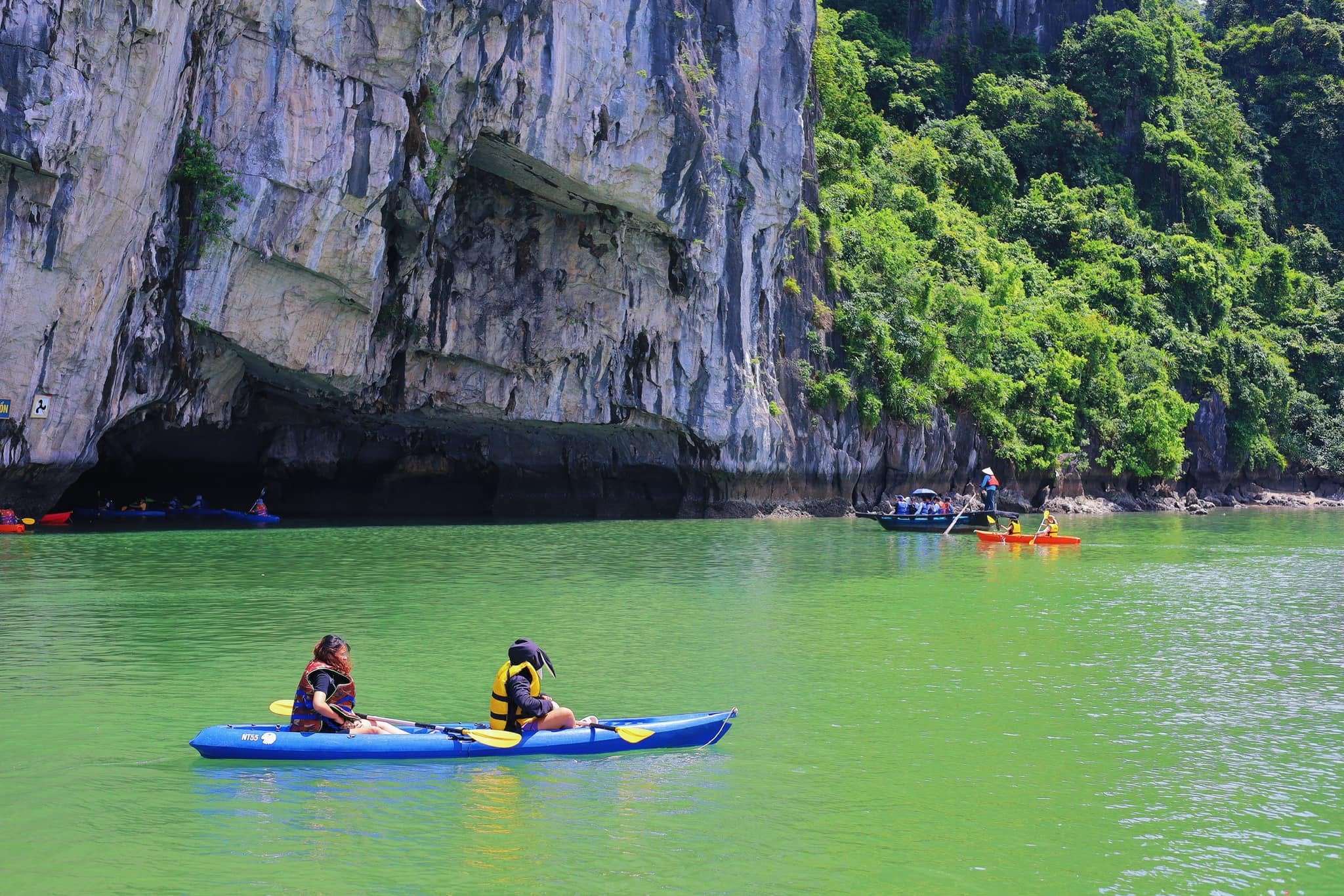
Today, activities such as stand-up paddleboarding (SUP) provide visitors with another way to experience the landscape, allowing them to explore the waters and limestone islands while observing the close relationship between the bay’s karst formations, sea and surrounding environment.


