In the historical land of Binh Dinh, the name Le Dai Cang is associated with a remarkable scholar-official who served the Nguyen Dynasty for nearly four decades. His career took him across different regions of Vietnam, where he undertook responsibilities in administration, military affairs, economic development, culture, education, and diplomacy.
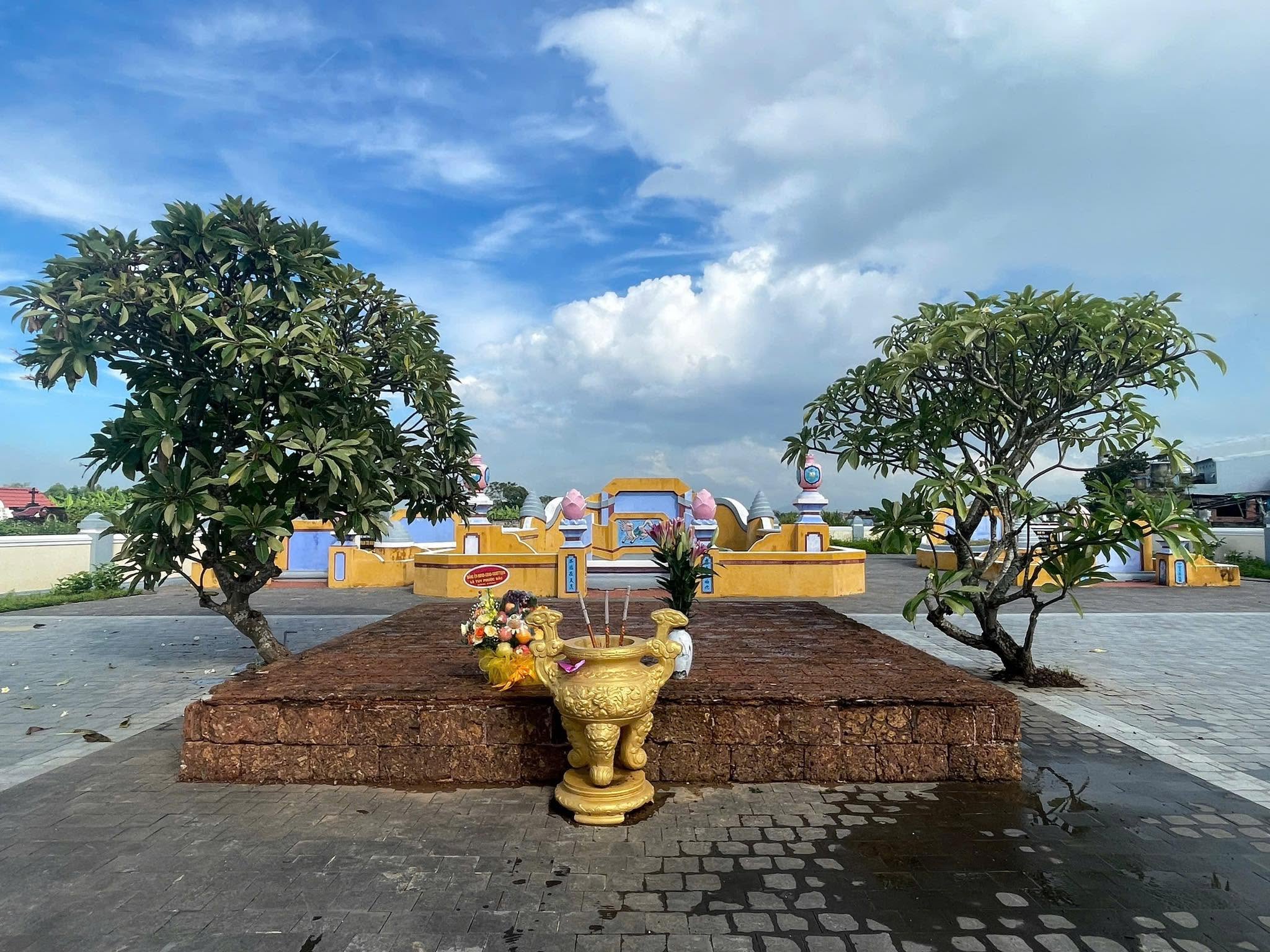
Today, his tomb complex in Luat Chanh, Tuy Phuoc, preserves the memory of a historical figure whose life was closely connected with the political and social transformations of Vietnam in the first half of the 19th century.
The site was recognized as a provincial historical relic on September 27, 2013. As parts of the site deteriorated over time, a restoration and heritage-value promotion project was approved under Decision No. 683/QD-UBND dated March 9, 2023.
A Historical Site Associated with Le Dai Cang
The tomb complex is located in the homeland of Le Dai Cang and includes the tombs and commemorative structures associated with his family.
The restoration project was undertaken by the provincial Department of Culture and Sports in coordination with relevant departments, Tuy Phuoc authorities, the construction contractor, and the project supervision unit.
The project followed the principle of preserving the original architectural structure while restoring damaged elements in accordance with their original form and improving the surrounding landscape.
The restoration was intended to provide a dignified space where local residents and visitors could commemorate Le Dai Cang and learn more about his life and contributions.
Le Dai Cang, a Scholar-Official of the Nguyen Dynasty
Le Dai Cang was born in 1771. Historical materials also record his name as Le Dai Cuong. He used the courtesy name Thong Thien, the literary name Ky Phong, and the minor literary designation Thuong Chanh Thi.
According to the source materials, he was born in Phu Nhon Village, Tuy Vien District, Quy Nhon Prefecture, an area corresponding to present-day Luat Chanh, Phuoc Hiep, Tuy Phuoc.
He was both a scholar and a high-ranking state official. His career lasted for approximately four decades, from 1802 to 1842, during which he advanced from district-level administration to positions including acting regional governor, governor-general, minister, and imperial military adviser.
His career brought him into contact with political, military, economic, cultural, educational, and diplomatic affairs in different parts of the country.
A Career Marked by Advancement and Setbacks
Le Dai Cang’s official career reflected the complexities of the political environment of his time.
According to the source, he was promoted approximately 20 times and demoted five times. At certain points, he was dismissed from office and even assigned the role of carrying a sedan chair. He also experienced the severe punishment recorded as “trảm giam hậu.”
These episodes illustrate the uncertainties faced by high-ranking officials in the imperial bureaucracy. His career was not a straightforward rise through the ranks but included both periods of recognition and difficult setbacks.
Despite these changes, he continued to serve the state for many years and held responsibilities in different regions.
Family Background and Scholarly Formation
Le Dai Cang came from a family with roots in Nghe An.
His ancestor Le Cong Mien (1739-1800) was a tutor to the Tay Son kings Thai Duc and Canh Thinh and later served as Minister of the Ministry of Justice under Canh Thinh.
Le Dai Cang himself grew up in difficult circumstances and was largely self-taught. He later studied under scholars Nguyen Tu Nghiem and Dang Duc Sieu, who contributed to his intellectual development.
At the age of 31, he was appointed Tri Huyen of Tuy Vien, marking an important step in his official career.
His background and education were closely connected with the scholarly traditions of his homeland, while his later career brought him into the administrative and political structures of the Nguyen Dynasty.
Contributions Across Different Regions
During his long career, Le Dai Cang worked in different parts of the country and was involved in a wide range of state affairs.
The source materials associate him with activities including the development of southern territories, the construction of dikes in Bac Thanh, the excavation of the Vinh Dien River, the construction of the An Giang Citadel, and the protection of the southwestern frontier.
These activities demonstrate the broad responsibilities undertaken by high-ranking officials of the period, extending beyond court administration to infrastructure, economic development, territorial administration, and military affairs.
His career therefore provides a historical lens through which to understand the operation of the Nguyen Dynasty’s administration during the first half of the 19th century.
Returning to His Homeland
In 1842, at the age of 72, Le Dai Cang returned to his homeland.
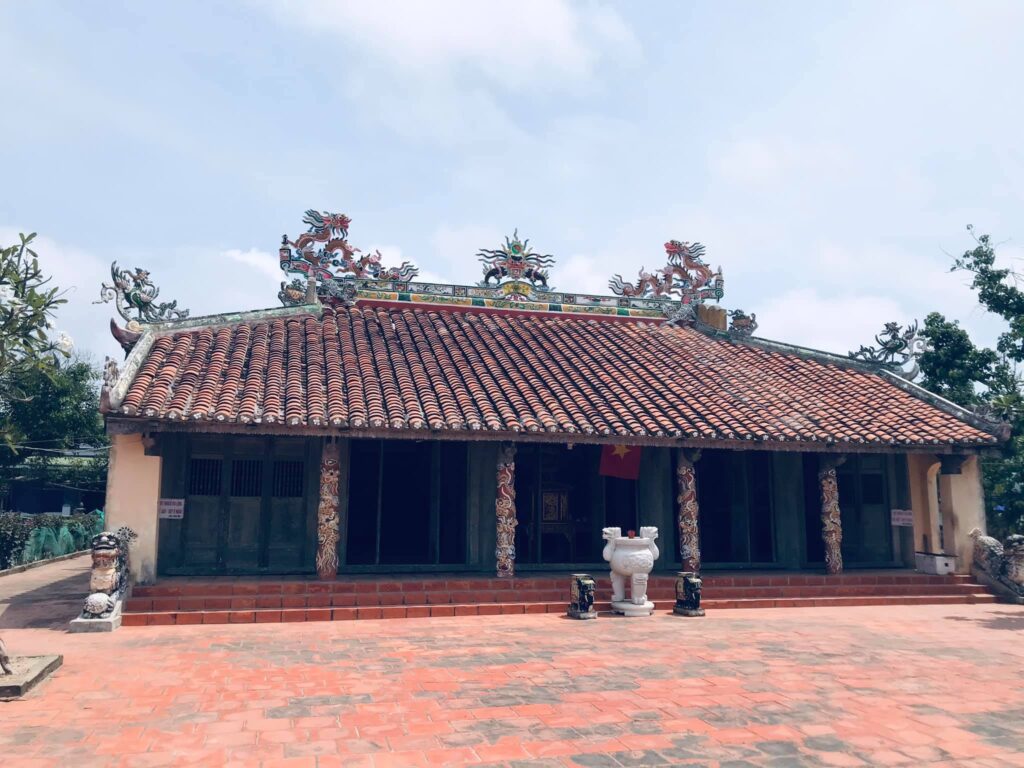
After returning to Luat Chanh, he restored the ancestral temple of the Le family and founded Giac Am Pagoda. He adopted the name Giac Am Cu Si and also established Van Chi Tuy Phuoc, a place associated with local scholars and education.
His later years were therefore closely connected with cultural and educational activities in his native community.
A sedan-carrying pole associated with his life has been preserved at the family ancestral temple as a reminder of the principles and values associated with his career. The family temple also retains royal titles and parallel sentences emphasizing virtue and moral conduct.
The Tomb Complex and Restoration Project
The tomb complex includes the tomb of Le Dai Cang, as well as the tombs of members of his family, including his first wife Pham Thi Doan and his second wife, Princess Quan Ngoc Phien.
The restoration and embellishment project included the tombs, an incense altar and shrine, walls and gates, internal roads, parking areas, landscaping, a commemorative stele, retaining structures, lighting, and water systems.
The total investment was more than VND 4.5 billion.
The project aimed to preserve the historical character of the site while creating a more suitable environment for commemoration, historical education, and visits.
Through the restoration, the tomb complex is positioned not simply as a family burial site but as a place where the public can learn about the life and historical legacy of Le Dai Cang.
Remembering Le Dai Cang Through Culture
The historical memory of Le Dai Cang has also been expressed through traditional performing arts.
The “Quan Khiêng Võng” tuồng performance, based on episodes from his life, has been staged at the site. The performance provides another way of presenting the life of a historical figure through the cultural traditions of his homeland.
On October 15, 2025, corresponding to the 24th day of the eighth lunar month, Le Dai Cang’s family and local authorities held his 178th death anniversary at the Le family ancestral temple in Luat Chanh. Local officials, including Huynh Thi Thanh Nguyet, attended the ceremony.
Such commemorative activities continue to connect the historical figure with the community and descendants who preserve his memory.
A Historical Legacy in His Homeland
The tomb complex of Le Dai Cang is a place where family memory and broader historical heritage intersect.
From a scholar who entered public service in the early Nguyen Dynasty to a high-ranking official who worked across different regions of the country, Le Dai Cang’s life reflects many aspects of Vietnam’s political and administrative history in the first half of the 19th century.
His return to Luat Chanh in his later years also marked a return to the cultural and educational life of his homeland.
Today, the restored tomb complex provides a physical setting in which visitors can encounter that history. Amid the landscape of Tuy Phuoc, the site preserves the memory of a scholar-official whose career extended across administration, military affairs, economic development, culture, education, and diplomacy.
Basic Information
| Information | Details |
|---|---|
| Site name | Le Dai Cang’s Tomb Complex |
| Historical figure | Le Dai Cang |
| Other name | Le Dai Cuong |
| Born | 1771 |
| Hometown | Luat Chanh, Phuoc Hiep, Tuy Phuoc |
| Location | Luat Chanh, Tuy Phuoc |
| Period of service | Approximately 1802-1842 |
| Historical role | Nguyen Dynasty scholar and high-ranking official |
| Provincial relic recognition | September 27, 2013 |
| Restoration policy | Decision No. 683/QD-UBND, March 9, 2023 |
| Restoration investment | More than VND 4.5 billion |
| Associated family tombs | Pham Thi Doan; Princess Quan Ngoc Phien |
| Cultural activity | “Quan Khiêng Võng” tuồng performance |