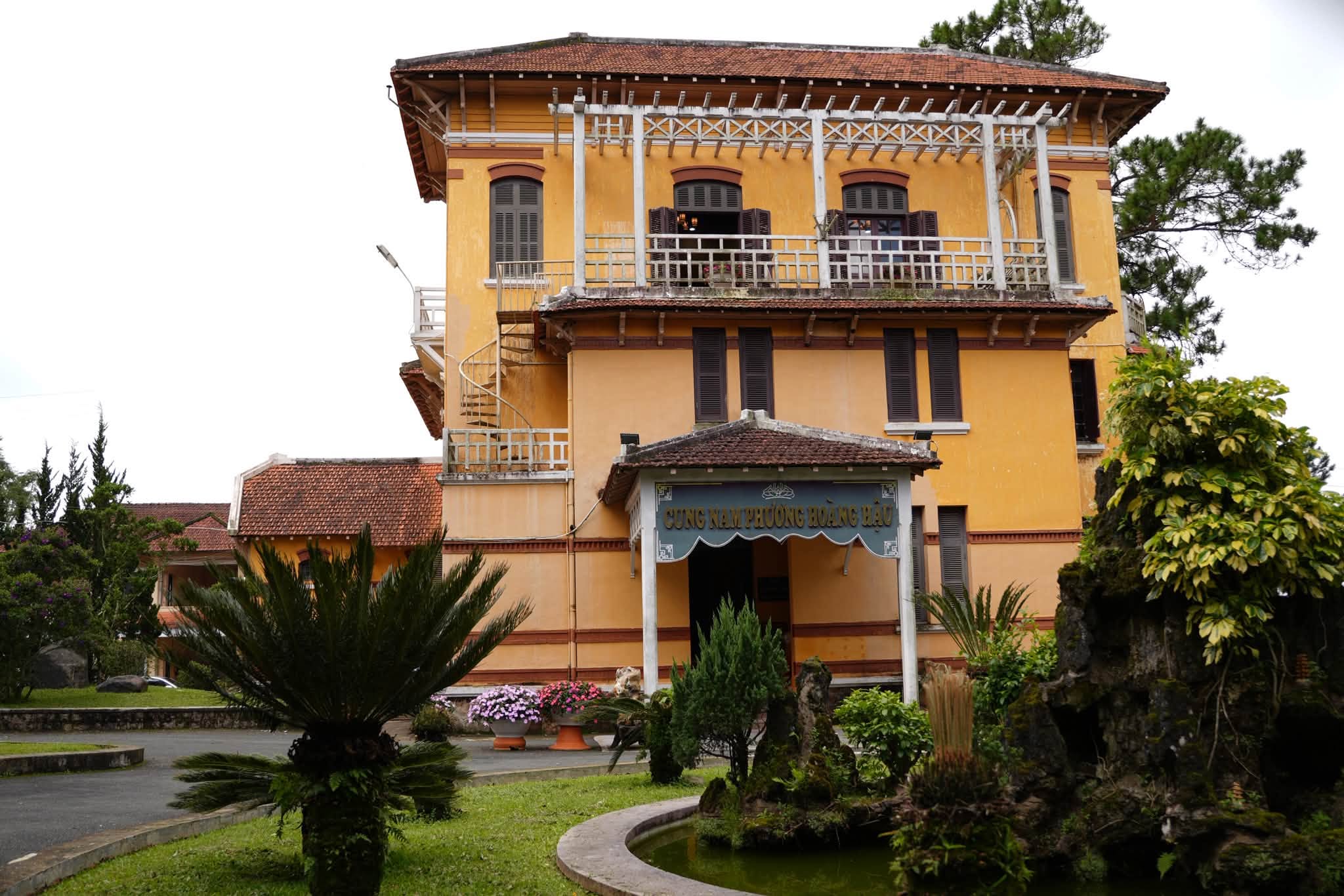
Set among the pine-covered hills of Da Lat, Nam Phuong Queen’s Palace is a historic residence associated with Queen Nam Phuong, the last queen of Vietnam’s monarchy. Surrounded by greenery and built in the elegant style of a French colonial villa, the residence offers visitors a glimpse into the private life of Vietnam’s final royal family.
Today, the palace is part of the Lam Dong Museum complex, where historical photographs, personal belongings and royal artifacts help tell the story of Queen Nam Phuong and the Nguyen dynasty during the early decades of the 20th century.
Rather than resembling a grand royal palace, the residence has the character of an elegant private villa. Its appeal lies in its architecture, quiet setting and the personal stories preserved within its rooms.
The Story Behind Nam Phuong Queen’s Palace
The residence was built in the early 1930s by Nguyen Huu Hao, a wealthy landowner from southern Vietnam. He became involved in developing land and coffee plantations around Cau Dat, near Da Lat, and commissioned the villa on a scenic hillside overlooking the surrounding landscape.
Nguyen Huu Hao later gave the residence to his daughter, Nguyen Huu Thi Lan, as a wedding gift when she married Emperor Bao Dai and was proclaimed Queen Nam Phuong. From that time onward, the villa became known as Nam Phuong Queen’s Palace.
Unlike the royal residences associated with government affairs, political activities or imperial ceremonies, this property was essentially a private family residence. That distinction gives it a more intimate character.
Over the decades, the building went through several periods of changing use while retaining much of its original appearance. In 1999, it was placed under the management of the Lam Dong Museum. Museum staff later researched historical documents and developed the residence into an exhibition space focusing on the daily life of Vietnam’s last royal family. It opened to visitors as a museum attraction in late 2011.
Today, the palace provides an opportunity to explore an important chapter of Da Lat’s history and learn more about the people behind the final years of Vietnam’s imperial dynasty.
A French Villa Among the Pine Trees
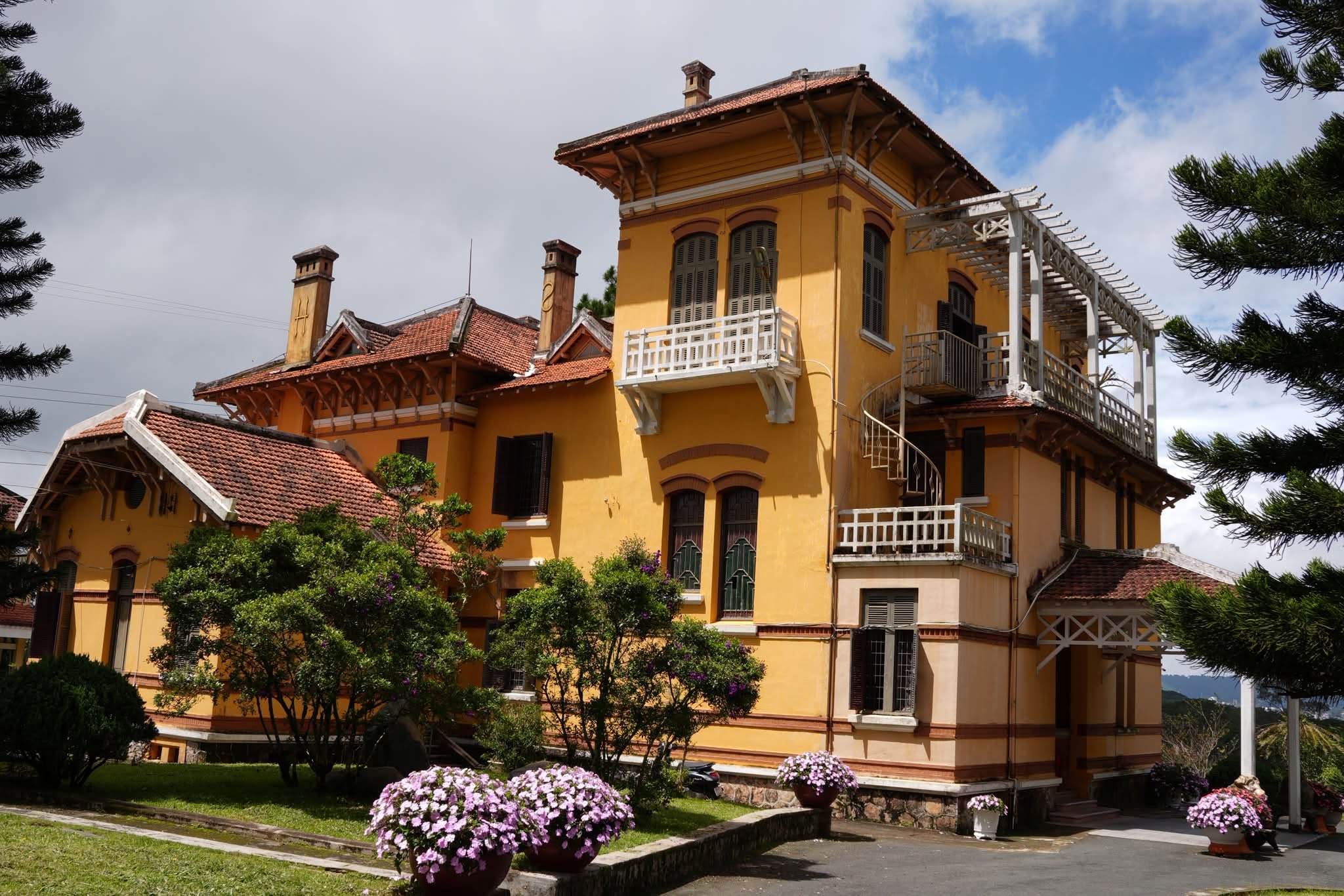
Nam Phuong Queen’s Palace stands on a quiet pine-covered hill, reached by a winding road and a series of stone steps. Its elevated position and surrounding greenery give the residence a sense of privacy that distinguishes it from many other historic buildings in Da Lat.
The architecture reflects the classical French villa style popular in the 1930s, with sloping roofs, large windows, balconies and carefully crafted decorative details.
Stone and wood feature prominently throughout the building. Some construction materials and furnishings were reportedly imported from Europe during the period when the villa was built.
Inside, the residence was designed as a family home, with reception rooms, dining areas, private rooms and living spaces. Wooden floors, doors, staircases, fireplaces and other interior details offer a glimpse into the lifestyle of an affluent Vietnamese family in early 20th-century Da Lat.
The fireplaces are particularly noteworthy. Several rooms were equipped with fireplaces, an important feature in a city known for its cool climate. Their decorative details also formed part of the interior design rather than serving only a practical purpose.
Outside, the surrounding pine trees and hillside landscape provide a strong sense of place, connecting the historic residence with the distinctive atmosphere of Da Lat.
Preserving the Memory of Queen Nam Phuong
The most compelling part of a visit is not only the architecture but also the collection of objects and documents connected with Queen Nam Phuong and her family.
The rooms have been arranged to recreate aspects of the family’s domestic life. Historical photographs, personal belongings, clothing and household objects help visitors imagine the people behind the official images of the Nguyen dynasty.
The private quarters associated with Queen Nam Phuong are among the areas that attract the most attention. Items such as a bed, wardrobe, dressing table and clothing are displayed alongside photographs and historical documents.
The exhibition also includes artifacts associated with the Nguyen imperial court, representing different materials and forms of craftsmanship, including ceramics, metalwork and other objects connected with court life.
Historical photographs are another important part of the collection. Images of Queen Nam Phuong, Emperor Bao Dai and members of their family reveal a more personal side of the final Vietnamese royal household, beyond political events and formal ceremonies.
The combination of architecture, personal artifacts and historical photographs gives the palace its particular character. Visitors are not simply looking at an old villa but entering a space connected with the everyday lives and memories of one of the most notable figures in modern Vietnamese history.
Visiting Nam Phuong Queen’s Palace
Located within the Lam Dong Museum complex, Nam Phuong Queen’s Palace can easily be included in a broader cultural and heritage itinerary around Da Lat.
The peaceful surroundings make it especially appealing to visitors interested in historic architecture, photography and Vietnamese royal history. The winding approach through the pine trees, the villa’s exterior, its preserved rooms and the museum displays all offer different perspectives for exploration.
The residence is not overwhelmingly grand. Instead, its charm comes from its relatively intimate scale and the atmosphere of a private family home.
For first-time visitors to Da Lat, the palace offers a different perspective on the city. While Da Lat’s lakes, markets and pine forests represent its familiar tourist image, historic residences such as Nam Phuong Queen’s Palace reveal another layer of the city’s past, when Da Lat was developing as a highland resort town.
Quick Facts
| Information | Details |
|---|---|
| Name | Nam Phuong Queen’s Palace |
| Location | Lam Dong Museum complex, Da Lat |
| Associated with | Queen Nam Phuong and the Nguyen Huu Hao family |
| Construction | Early 1930s |
| Architectural style | Classical French villa |
| Highlights | Historic rooms, private quarters, photographs and royal artifacts |
| Collection | Personal belongings, clothing, historical photographs and Nguyen dynasty artifacts |
| Main significance | A private residence associated with Vietnam’s last queen |
| Can be combined with | Lam Dong Museum and other heritage and cultural sites in Da Lat |