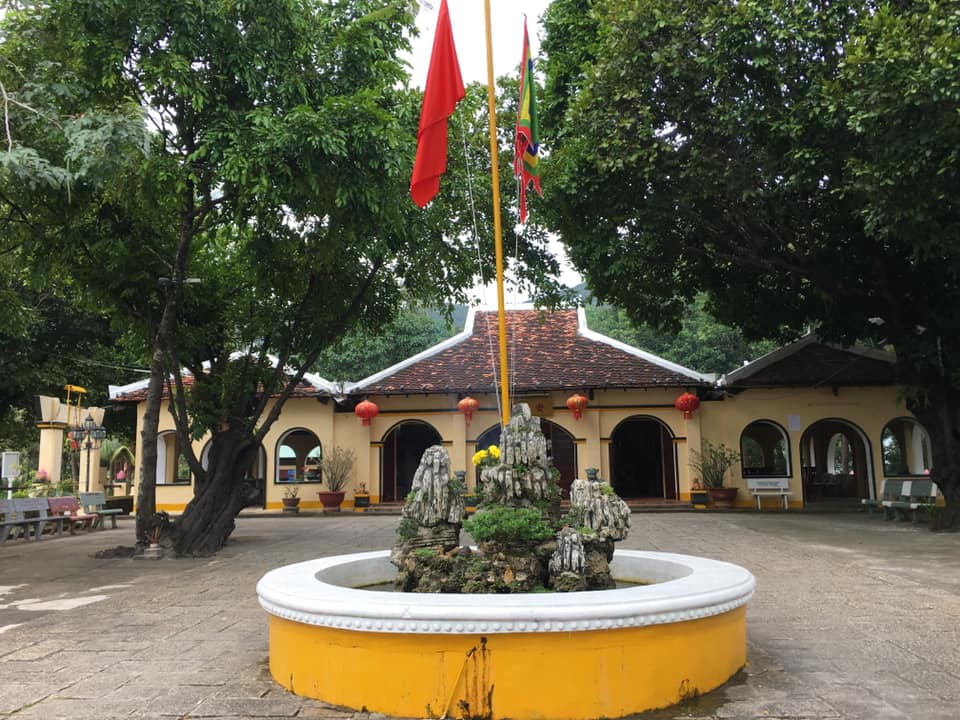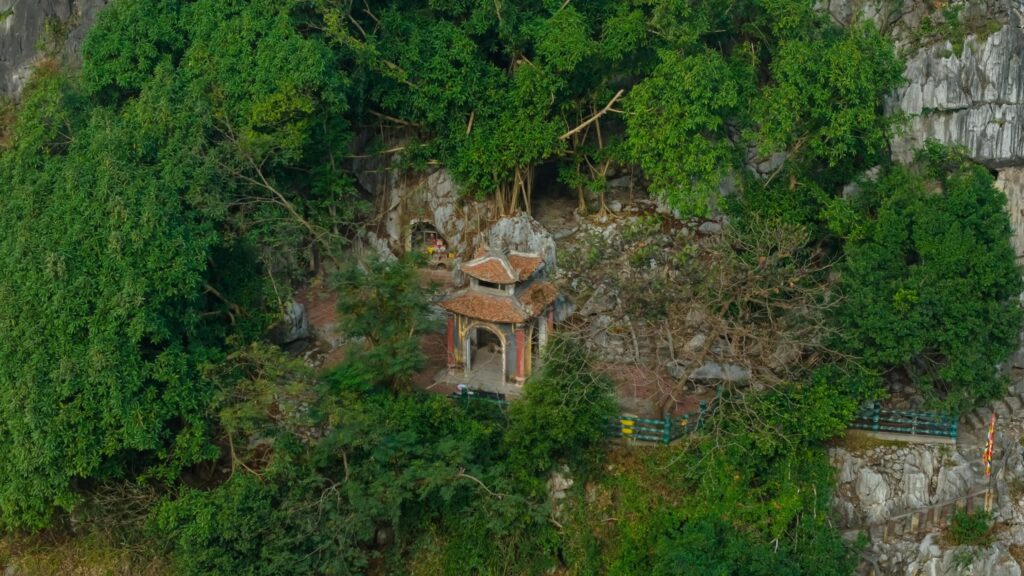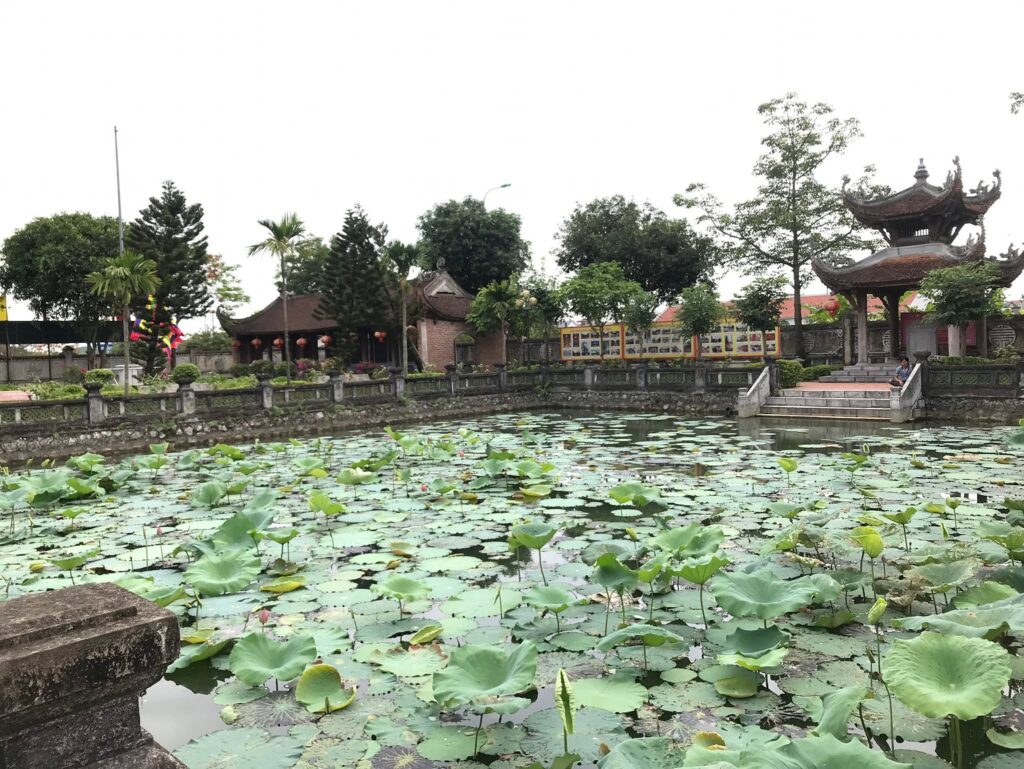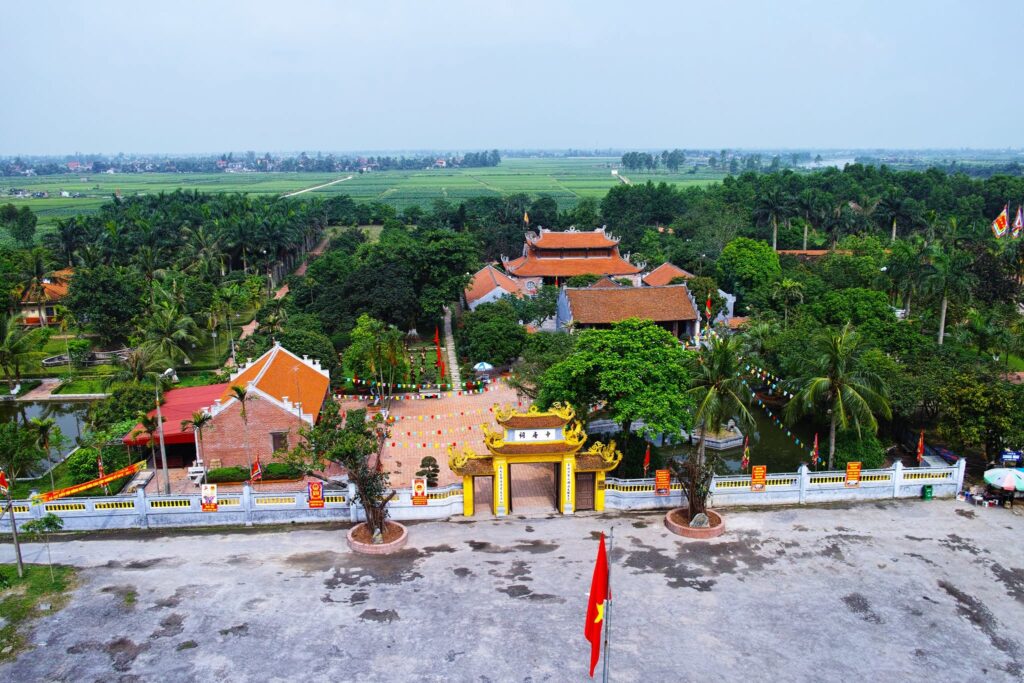
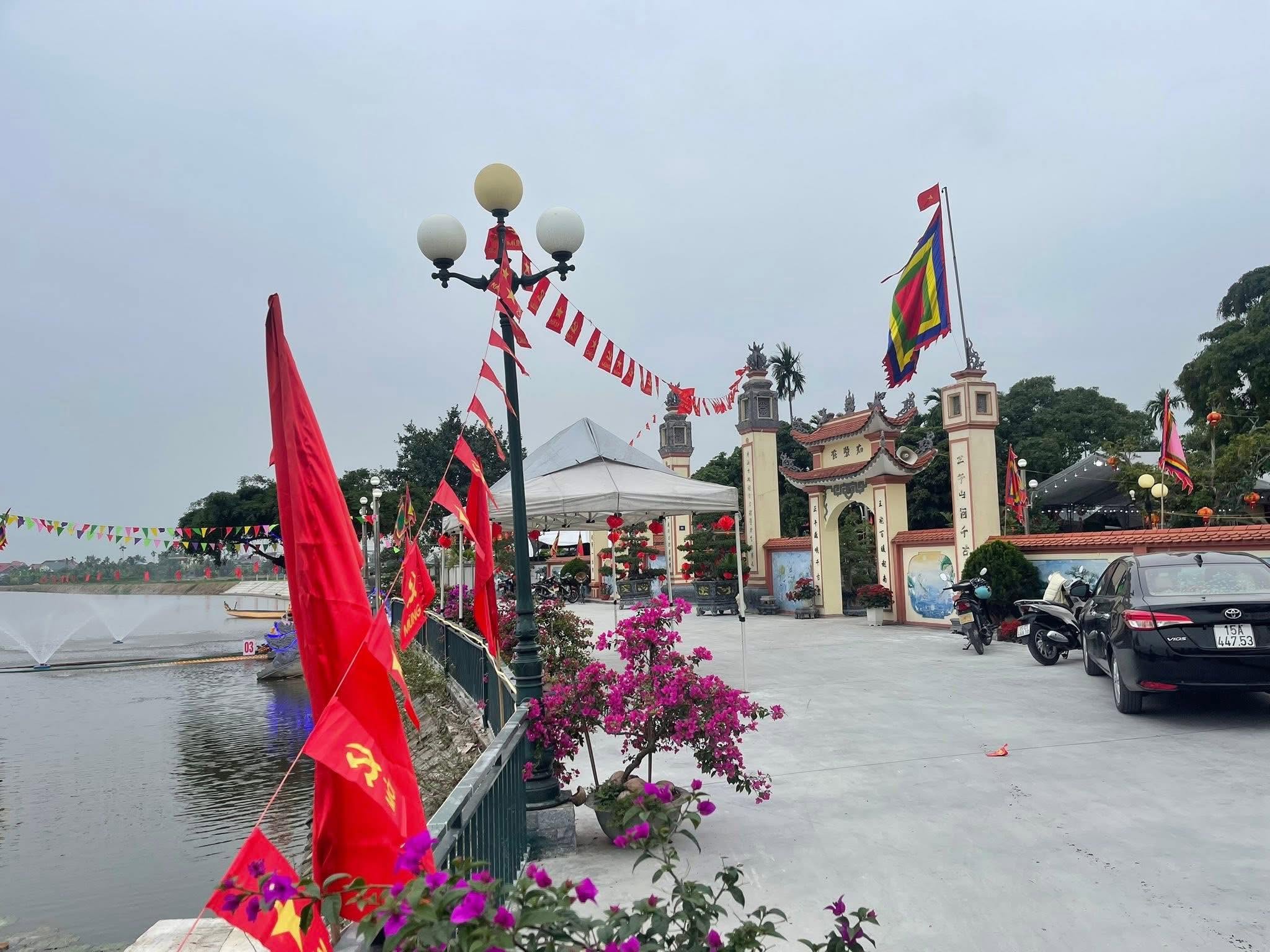
The Ngọ Dương Temple and Pagoda Boat Racing Festival is a traditional festival held in An Hòa Commune, An Dương District, Hải Phòng City. The festival is associated with the worship of Hoàng Độ Cư Sĩ, a village tutelary deity whose homeland was Nại Thượng, now in Kim Thành, Hải Dương Province.
Held annually in remembrance of the day Hoàng Độ Cư Sĩ and his six brothers are believed to have passed away, the festival honors their contributions to the country and local communities. At the same time, it preserves traditional rituals, boat racing, folk performances, and community customs that have been passed down through generations.
Origins and Historical Significance
According to historical documents, village regulations, the 1934 collection of thần tích and thần sắc, and local oral tradition, the Ngọ Dương festival has a long history. The tradition was reportedly threatened during the Later Lê period in the 18th century but continued until before 1947. It was restored in 1954 and has since been maintained at the temple and pagoda and along the Cổ Bồng River.
Local tradition tells of Hoàng Độ and his six brothers crossing the river when a violent storm struck. All seven are said to have died in the river and were later buried and worshipped by local villagers. During a ceremonial river crossing, the incense burner is said to have suddenly caught fire, which was interpreted by the community as a sacred response. Since then, the annual festival has incorporated water processions and boat racing as important ceremonial activities.
The festival traditionally emphasizes vegetarian offerings. Village regulations specifically record the use of vegetarian food in the ceremonies, reflecting the spiritual character of the festival.
Festival Schedule and Ceremonies
The festival takes place on the 24th and 25th days of the twelfth lunar month, followed by activities on the 2nd, 3rd, and 5th days of the first lunar month.
On the 24th day, the community conducts the cáo yết and nhập tịch ceremonies. On the 25th, the boats are launched and the water procession takes place. Boat races are then held on the 2nd, 3rd, and 5th days of the first lunar month, with the festival concluding with the tống tịch ceremony on the 5th.
The offerings include bánh dày, bánh đường, bánh xu xê, bánh khảo, bánh gai, bánh gấc, white sticky rice, betel and areca, fruit, and incense. The traditional cakes are arranged on square trays in ten circular layers, with two cakes forming each pair. Each clan prepares around 100 cakes, with one pair traditionally representing each adult male member.
The round cakes placed on square trays are understood as expressing the relationship between yin and yang, as well as wishes for fertility and prosperity.
The Water Procession on the Cổ Bồng River
The water procession is one of the most distinctive rituals of the festival.
Today, five villages representing the five racing teams participate in the procession, together with a male ceremonial group. Participants wear traditional clothing associated with the five elements and carry yellow parasols. The procession carries betel and areca, votive paper, incense, and other ceremonial offerings from the temple to the Cổ Bồng River.
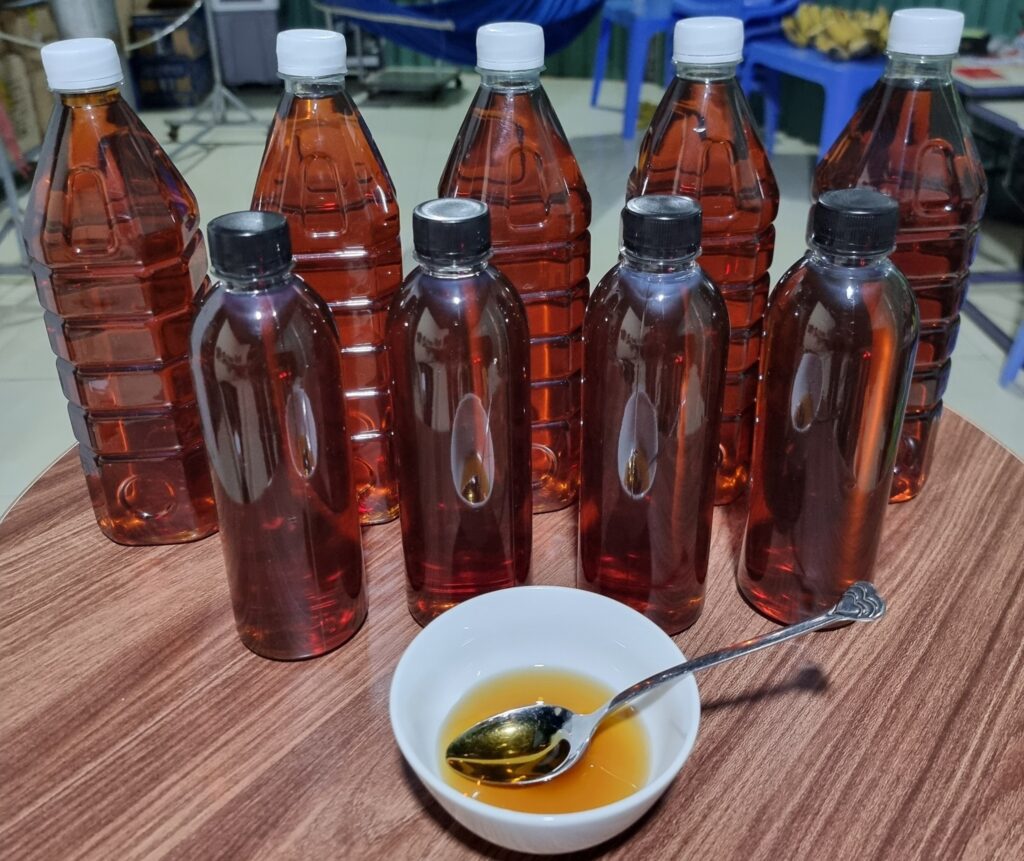
After reaching the river, the participants board boats and row toward the middle of the waterway. Water is then collected in a bowl placed on a red cloth-covered tray. Following the ceremonial prayers, the procession returns to the temple. The water is used during the festival and later distributed to the community as a blessing.
Unlike some traditional water-procession festivals associated with rain or agricultural fertility, the Ngọ Dương water procession primarily expresses remembrance and gratitude toward the village tutelary deity Hoàng Độ and his six brothers.
The Ngọ Dương Boat Racing
After the water procession, the racing teams draw their starting lanes and prepare for the competition. Traditionally, participants must observe strict rules. They should not be in mourning for a deceased family member during the year and are expected to stay together, abstain from alcohol and meat, and eat vegetarian food during the preparation period.
The main race takes place in the afternoon of the 2nd day of the first lunar month, generally from around 1:30 p.m. to 3:00 p.m. Five teams representing five villages compete.
Each boat has 16 participants, including one steerer, one person responsible for the drum or signaling instrument, and 14 rowers. Older versions of the boat reportedly had 17 participants, including a person responsible for bailing water.
The traditional boats were made of wood, while modern boats are made from composite materials. Their design features a dragon’s head and tail and a body decorated to resemble dragon scales.
Before the race, each team performs its own worship ceremony. Three drum beats and a flag signal mark the start.
The course on the Cổ Bồng River is approximately 1,000 meters long and consists of three laps: two single laps and one double lap. A central marker bearing a sacred flag is placed in the middle of the course, around which boats make the required turns. Additional markers with five-colored flags identify the lanes, while two small red flags indicate the turning points.
The race demands both speed and technical skill. The combination of single and double turns requires the rowers and steerer to coordinate closely. Poor handling can result in collisions or even capsizing.
The races continue on the 3rd and 5th days, with the final competition taking place on the 5th. The traditional scoring system awards 100 points for first place, 80 for second, 60 for third, and 40 for fourth. Teams that violate the rules receive no points.
In the past, winning teams were reportedly awarded silk that had been blessed at the temple. Today, prizes may include food or cash.
Folk Performances and Traditional Games
Beyond the boat races, the festival features a range of traditional cultural activities.
The opening of the community festivities is accompanied by gongs and cymbals. Participants form a circle and perform Tăng Bu/Xépang, holding bamboo poles more than one meter long and rhythmically striking the ground. The movements imitate the making of planting holes and sowing seeds.
Other traditional performances include Khắp Tọp antiphonal singing, Khắp Báo Sao courtship singing, Tầm Đao Tỏi Điểng dance, and Xék Loỏng bamboo dance.
Traditional games held during the festival include Chặc Cáng tug-of-war, Tọt Cón con throwing, Xu Điêng stick pushing, Bén Nak crossbow shooting, and Tók Sáng spinning tops.
On the evening of the 5th day, a female ceremonial group performs a thanksgiving ritual, marking the conclusion of the festival.
Cultural Significance
The Ngọ Dương Temple and Pagoda Boat Racing Festival is not simply a sporting event. The boat races are closely integrated with worship, water procession, traditional performances, and community customs.
The festival expresses gratitude toward the village tutelary deity, preserves the traditional spirit of “uống nước nhớ nguồn”, and reflects the community’s historical association with the river. The demanding boat races also preserve a strong spirit of physical skill, coordination, discipline, and communal solidarity.
Through ceremonies, performances, games, and intergenerational participation, the festival provides an important setting for transmitting local traditions and educating younger generations about their cultural roots.
The Ngọ Dương Temple and Pagoda Boat Racing Festival was recognized as a National Intangible Cultural Heritage under Decision No. 2740/QĐ-BVHTTDL dated September 30, 2020.
Quick Information
| Item | Information |
|---|---|
| Festival | Ngọ Dương Temple and Pagoda Boat Racing Festival |
| Location | An Hòa Commune, An Dương District, Hải Phòng City |
| Associated deity | Hoàng Độ Cư Sĩ |
| Main river | Cổ Bồng River |
| Festival period | 24th-25th days of the 12th lunar month; 2nd, 3rd and 5th days of the 1st lunar month |
| Racing teams | 5 village teams |
| Participants per boat | 16 people |
| Race course | Approximately 1,000 meters |
| Race format | Two single laps and one double lap |
| Main rituals | Water procession, worship ceremonies, boat racing, thanksgiving |
| Traditional performances | Khắp Tọp, Khắp Báo Sao, Tầm Đao Tỏi Điểng dance, Xék Loỏng bamboo dance |
| Traditional games | Tug-of-war, con throwing, stick pushing, crossbow shooting, spinning tops |
| Heritage status | National Intangible Cultural Heritage |
| Recognition | Decision No. 2740/QĐ-BVHTTDL, September 30, 2020 |