Quang Noodles (Mi Quang) is one of the most distinctive dishes of Quang Nam, known for the harmonious combination of rice noodles, richly seasoned toppings, fresh herbs, sesame rice crackers, peanuts, green chili, and peanut oil. Behind a seemingly simple bowl of noodles lies a body of knowledge and skills passed down through generations, from selecting ingredients and making the noodles to preparing the toppings and combining and enjoying the dish.
More than an everyday food, Quang Noodles is closely connected with the history of settlement and development in Quang Nam, traditional crafts, and community life. On August 9, 2024, Folk Knowledge of Quang Noodles in Quang Nam Province was included by the Ministry of Culture, Sports and Tourism in Vietnam’s National List of Intangible Cultural Heritage, under Decision No. 2327/QD-BVHTTDL.
- Heritage name: Folk Knowledge of Quang Noodles in Quang Nam Province
- Heritage category: Folk Knowledge
- Cultural area: Quang Nam
- Main components: Rice noodles, toppings, fresh herbs, and accompanying ingredients
- Characteristic ingredients: Rice, shrimp, meat, chicken, Vietnamese shallots, peanut oil, turmeric, peanuts, sesame rice crackers, fresh herbs, and green chili
- Characteristics: Soft and chewy rice noodles, richly seasoned toppings, and a small amount of broth that coats the ingredients rather than filling the bowl
- Values: Culinary, historical, cultural, folk knowledge, and community livelihood values
- Recognition: National List of Intangible Cultural Heritage, 2024
From Hoi An’s Trading Networks to the Identity of Quang Noodles
Quang Noodles developed within the cultural landscape of Quang Nam, a region where trade and cultural exchange flourished, particularly around the port of Hoi An from the 16th to the 18th centuries.
Through contact with different cultures and culinary traditions, the dish absorbed outside influences while being adapted by local communities to suit the natural environment, available ingredients, and local tastes.
One of the defining characteristics of Quang Noodles is its rice-based noodles. While some other noodle traditions use wheat flour, the people of Quang relied on the abundant supply of rice that formed the foundation of local agricultural life.
From this familiar agricultural product, generations of local cooks developed a distinctive type of noodle through accumulated knowledge and practical experience. The rice noodle became the foundation of the dish and an important element of the identity of Quang Noodles.
The Craft of Making Quang Noodles
According to traditional knowledge passed down within the community, the 13/2 rice variety (IR17494) is considered suitable for making Quang noodles because it can produce noodles that are soft and chewy without becoming overly soft.
The rice is soaked for approximately three to four hours before being finely ground in a stone mill and carefully filtered to remove impurities. The resulting flour is then mixed with water in an appropriate ratio before the noodle sheets are steamed.
Steaming the noodle sheets is one of the stages that requires considerable experience. The rice batter is spread into a thin layer over a cloth stretched across a steaming pot. The maker must judge the amount of batter, the temperature of the steam, the thickness of the sheet, and the cooking time through practical experience.
After steaming, the noodle sheets are removed and cooled with a fan before being brushed with a layer of cooked peanut oil. The oil prevents the sheets from sticking together while giving them a glossy appearance and distinctive aroma.
The sheets are then cut into individual noodles. This stage also requires skill to ensure that the noodles are relatively even in width while remaining soft and chewy.
The entire process, from selecting and soaking the rice to grinding, filtering, mixing, steaming, cooling, and cutting the noodles, demonstrates that Quang Noodles is not simply a cooking recipe but a system of folk knowledge and practical skills.
The Toppings and the Distinctive Flavor of Quang Noodles
If the rice noodles provide the foundation, the toppings, locally known as nhưn, give Quang Noodles much of its depth and character.
Depending on the locality and individual family traditions, the toppings may be prepared with river shrimp braised with pork, free-range chicken, or other locally available ingredients. Some variations use small crabs, particularly in areas associated with the waterways of Nui Thanh.
Seasonings are equally important. Vietnamese shallots, peanut oil, fresh turmeric, lemongrass, pepper, and other spices are combined to create a richly flavored topping with a distinctive aroma and color.
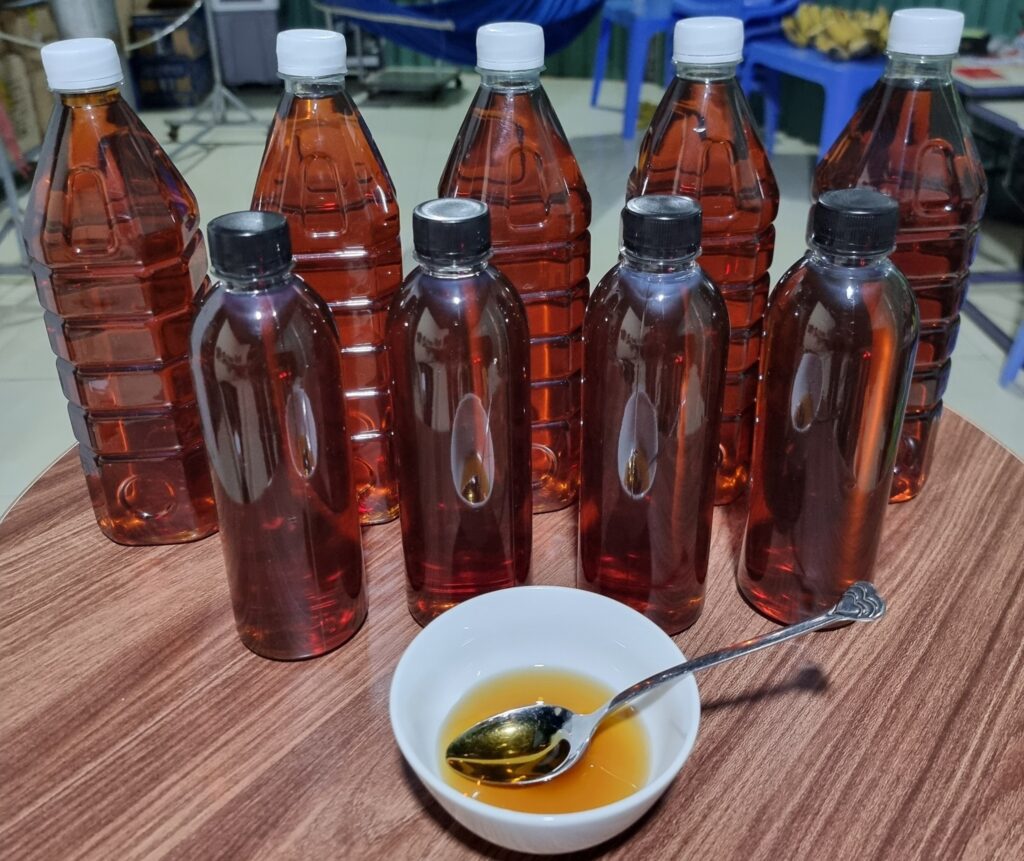
Peanut oil is particularly characteristic of Quang cuisine. Pressed from peanuts, including varieties traditionally grown on the sandy soils of Quang Nam, the oil has a golden color, a gentle aroma, and a rich, nutty flavor.
When peanut oil is heated with Vietnamese shallots, their aromas blend together and create one of the distinctive flavor foundations of the dish. Traditional knowledge emphasizes the importance of peanut oil in Quang cuisine through the saying:
“Phi phụng du bất thành Quảng mỳ.”
At Phu Chiem Quang Noodles, the toppings may also include quail eggs and ground peanuts, adding another layer of richness and nuttiness to the dish.
Fresh Herbs and Accompanying Ingredients
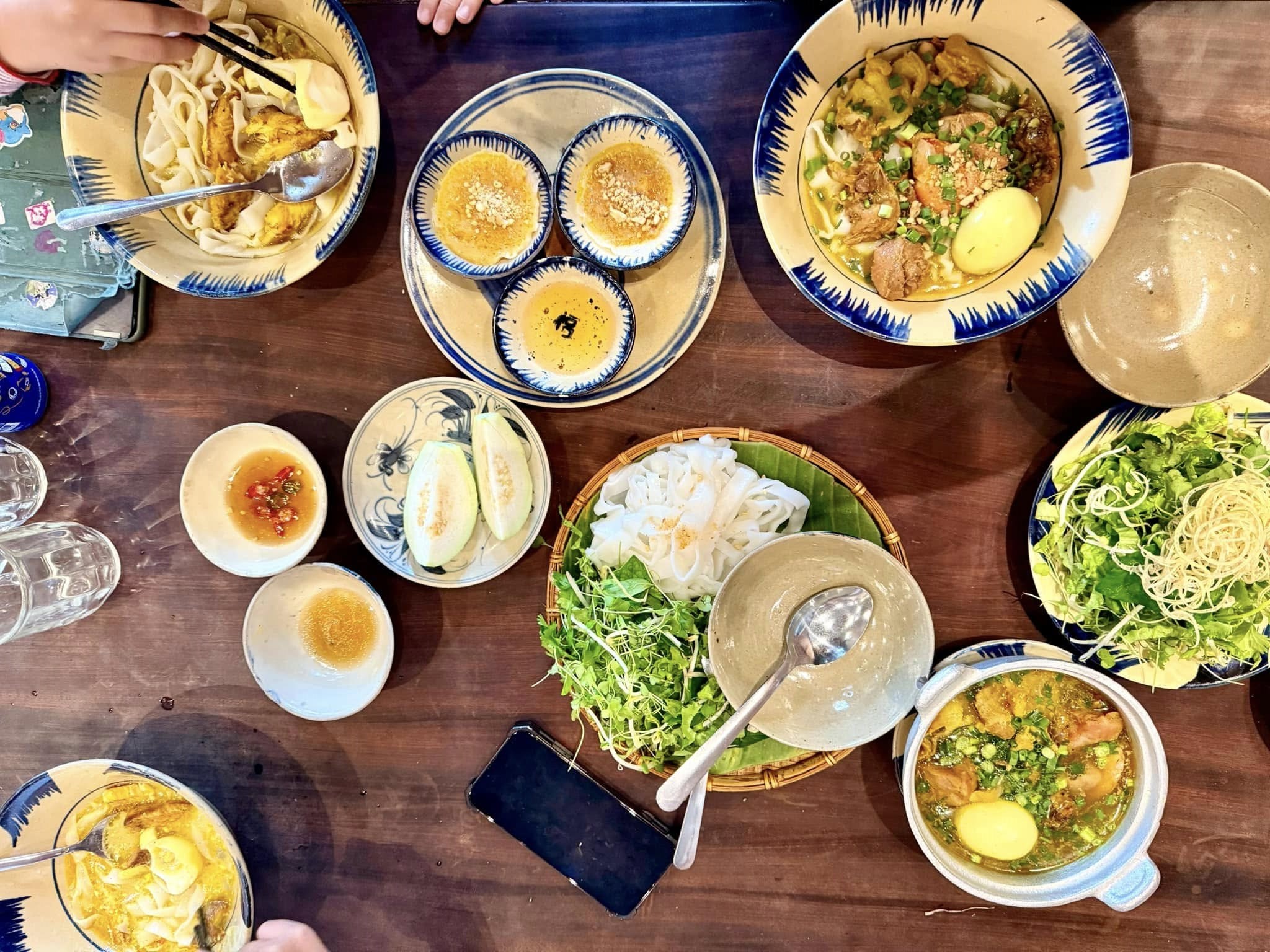
Quang Noodles is not defined solely by its noodles and toppings. A complete bowl also combines fresh herbs, sesame rice crackers, roasted peanuts, green chili, lime or traditional vinegar, and peanut oil infused with Vietnamese shallots.
Fresh herbs balance the richness of the toppings while adding freshness, aroma, and color. Among them, Tra Que herbs from Hoi An are particularly appreciated for the distinctive flavors associated with this famous vegetable-growing area.
Sesame rice crackers are toasted until crisp, while roasted peanuts provide a rich and nutty texture. Green chili contributes a characteristic heat, while lime or traditional vinegar adds a subtle acidity that balances the overall flavor.
This combination demonstrates how Quang communities have traditionally used a wide range of local agricultural products to create a dish with multiple layers of flavor and texture.
The Culture of Eating Quang Noodles
The way Quang Noodles is served and eaten is itself part of the culinary culture of Quang Nam.
The noodles are commonly placed over fresh herbs, followed by the toppings and a small amount of broth. Unlike many other noodle soups, Quang Noodles is not served with the bowl filled with broth. Instead, just enough broth is added to coat and bring together the different ingredients.
The diner mixes the noodles with the toppings, herbs, and accompanying ingredients. Sesame rice crackers may be broken into pieces and mixed into the bowl or eaten alongside it, together with roasted peanuts and green chili.
A bowl of Quang Noodles therefore creates several layers of sensory experience: the sweetness of shrimp and meat, the richness of peanut oil and peanuts, the aroma of Vietnamese shallots, the freshness of herbs, the heat of green chili, and the crisp texture of sesame rice crackers.
This way of eating reflects one of the distinctive characteristics of Quang cuisine, in which a dish is experienced not only through taste but also through color, aroma, and contrasting textures.
Quang Noodles in the Cultural Life of Quang Nam
Over time, Quang Noodles has spread beyond its place of origin and become familiar in many parts of Vietnam. In Quang Nam, however, traditional preparation methods continue to be practiced within families, food establishments, and communities associated with the noodle-making craft.
Phu Chiem is one of the places particularly associated with Quang Noodles. The noodle-making tradition has been maintained across generations, creating a distinctive culinary cultural space in the region.
Quang Noodles also appears in many aspects of community life, from everyday meals to festivals, Tet celebrations, ancestral ceremonies, family gatherings, and other social occasions.
The dish therefore serves not only a culinary purpose but also contributes to maintaining bonds within families and communities.
Behind a bowl of Quang Noodles lies a network of occupations and local resources, including rice cultivation, noodle making, vegetable growing, sesame rice-cracker production, peanut cultivation and processing, livestock and poultry raising, and fishing.
In this sense, Quang Noodles provides a vivid reflection of the livelihoods and natural resources of the people of Quang Nam.
Folk Knowledge of Quang Noodles
The value of Quang Noodles lies not only in the finished dish but also in the body of folk knowledge accumulated and transmitted by the community.
This includes knowledge of selecting suitable rice varieties, processing ingredients, grinding and filtering rice flour, steaming the noodle sheets, cutting the noodles, preparing the toppings, combining seasonings, selecting fresh herbs, and organizing the way the dish is served and enjoyed.
Such knowledge is passed from one generation to another through practical experience within families, craft communities, and local communities.
On August 9, 2024, the Minister of Culture, Sports and Tourism issued Decision No. 2327/QD-BVHTTDL, officially including Folk Knowledge of Quang Noodles in Quang Nam Province in Vietnam’s National List of Intangible Cultural Heritage.
The recognition establishes the cultural value of Quang Noodles as an element of intangible cultural heritage, with emphasis on the knowledge, skills, and cultural practices maintained by the community, rather than simply on the dish as a culinary product.
Quang Noodles can therefore be understood from several interconnected perspectives: as a traditional food, a culinary symbol of Quang Nam, and a body of folk knowledge preserved, practiced, and transmitted by the community.
Quang Noodles – From a Local Dish to Cultural Heritage
Quang Noodles is the result of a long process of creativity and adaptation by the communities of Quang Nam. From rice, peanut oil, Vietnamese shallots, fresh herbs, and other familiar local products, people developed a dish with a distinctive regional identity.
Its value lies in this very process: knowledge is accumulated, skills are practiced, recipes are transmitted, and culture is maintained through community life.
Today, Quang Noodles has become one of the culinary symbols of Central Vietnam and an important example of the relationship between local cuisine and intangible cultural heritage.
On Travelin.vn, Quang Noodles can therefore be presented not merely as a specialty of Quang Nam, but as a living heritage in which the story of the land, its people, traditional occupations, and folk knowledge come together in a simple bowl of noodles.