Location: Son Tra Ward, Da Nang, Vietnam.
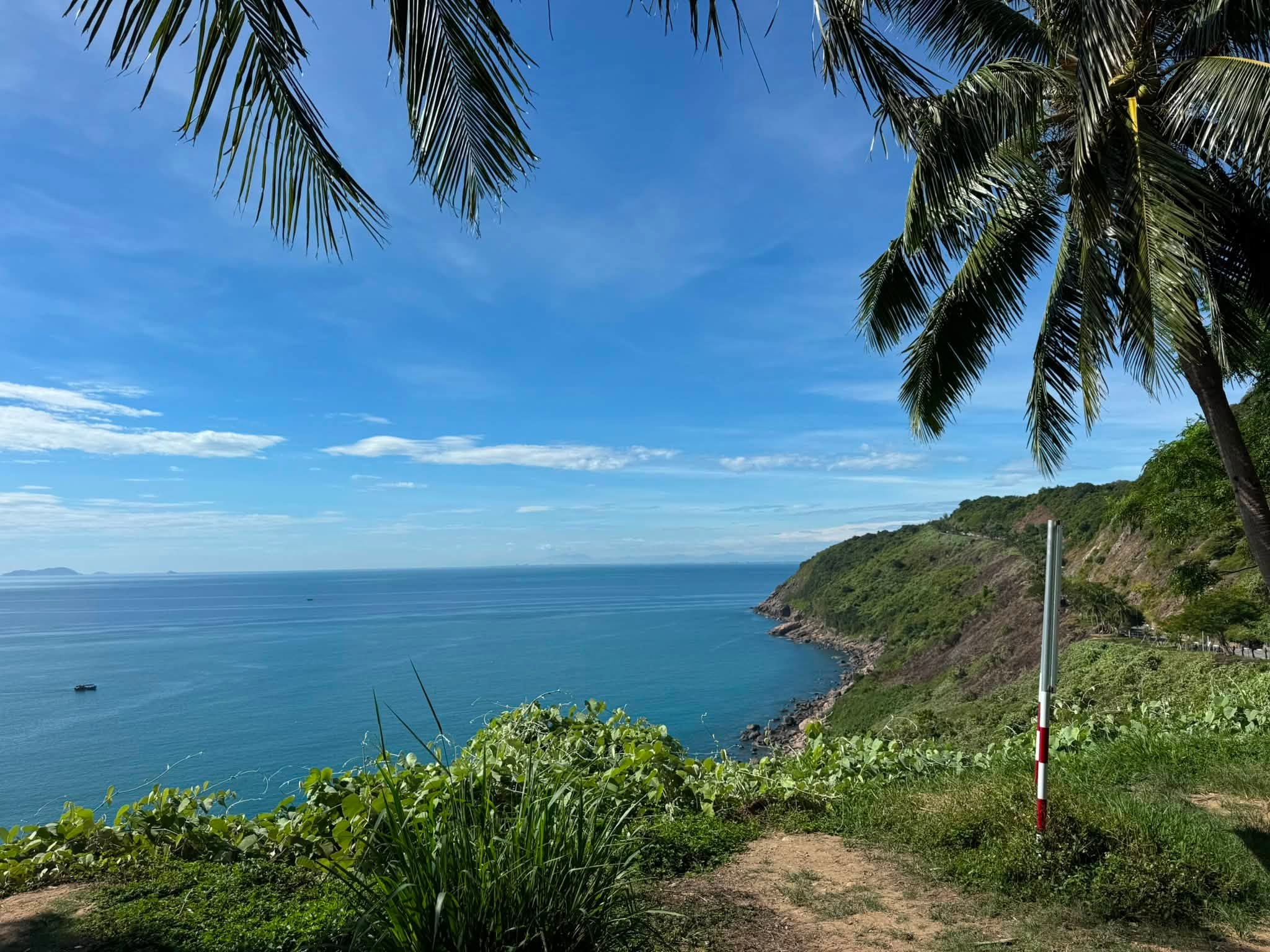
Located about 10 km northeast of central Da Nang, Son Tra Peninsula is one of the city’s most distinctive natural landscapes. Surrounded by the sea on three sides and connected to the mainland on the other, the peninsula brings together tropical forest, mountains, rocky shores and open sea within a relatively compact area.
Covering approximately 4,439 hectares, Son Tra serves not only as a major sightseeing destination but also as a natural shield and the “green lung” of Da Nang. From its winding mountain roads, visitors can explore forest ecosystems, look for the red-shanked douc langur, visit Buddhist landmarks and scenic viewpoints, and descend toward beaches and rocky coves that retain much of their natural character.
From Offshore Islands to Son Tra Peninsula
According to the provided source, Son Tra was once a group of three separate islands rising from the sea. Over thousands of years, coastal currents and sediment gradually formed a sandbar connecting the islands to the mainland. This geological process, known as a tombolo, eventually created the peninsula seen today.
Three main peaks form the peninsula: Nghê Mountain in the southeast, whose shape resembles a mythical nghê facing the sea; Mo Dieu Mountain in the west, with a gentle slope resembling a kite’s beak; and Co Ngua Mountain in the north, whose narrow profile is likened to a horse’s neck.
Because it projects prominently into the East Sea and surrounds Da Nang Bay, Son Tra has long held considerable strategic importance. Controlling the peninsula meant controlling an important section of the maritime route along central Vietnam.
In 1858, Son Tra was associated with the opening of the French and Spanish military campaign that marked the beginning of the colonial invasion of Vietnam. During the later war period, the peninsula also served as an important area for radar, observation and naval logistics.
Today, its strategic importance has taken on a different character. Son Tra is one of Da Nang’s most valuable natural, scenic and tourism areas, where a rapidly developing coastal city meets a large forested peninsula.
A Pristine Forest and the “Queen of Primates”
One of Son Tra’s most remarkable features is its coastal tropical rainforest ecosystem, where dense forest extends from the mountain slopes toward the sea. According to the provided information, the peninsula is home to nearly 1,000 species of higher plants, including valuable species such as chestnut, Dalbergia, chò chai and sea coconut.
Son Tra is particularly well known for the red-shanked douc langur (Pygathrix nemaeus), a striking primate distinguished by its vividly colored coat. It is often referred to as the “Queen of Primates.”
According to the source, Son Tra is home to more than 1,300 individuals, representing a significant proportion of the species living in the wild. The red-shanked douc langur is recognized as a rare and endangered primate in Vietnam and internationally.
Visitors may occasionally spot the langurs moving through the treetops along the mountain roads. The source suggests that the best times for observation are early morning, from around 06:00 to 08:30, and late afternoon, from 15:30 to 17:30, when the animals are more active.
Son Tra is, above all, a protected natural area. Visitors should never feed monkeys or langurs, as artificial feeding can disrupt their natural foraging behavior and cause animals to become dependent on humans. Littering should also be avoided, particularly plastic and foam containers that can threaten the forest environment.
Scenic and Cultural Landmarks Across the Peninsula
A journey through Son Tra can take visitors from Buddhist landmarks and mountain viewpoints to beaches and rocky coastal areas.
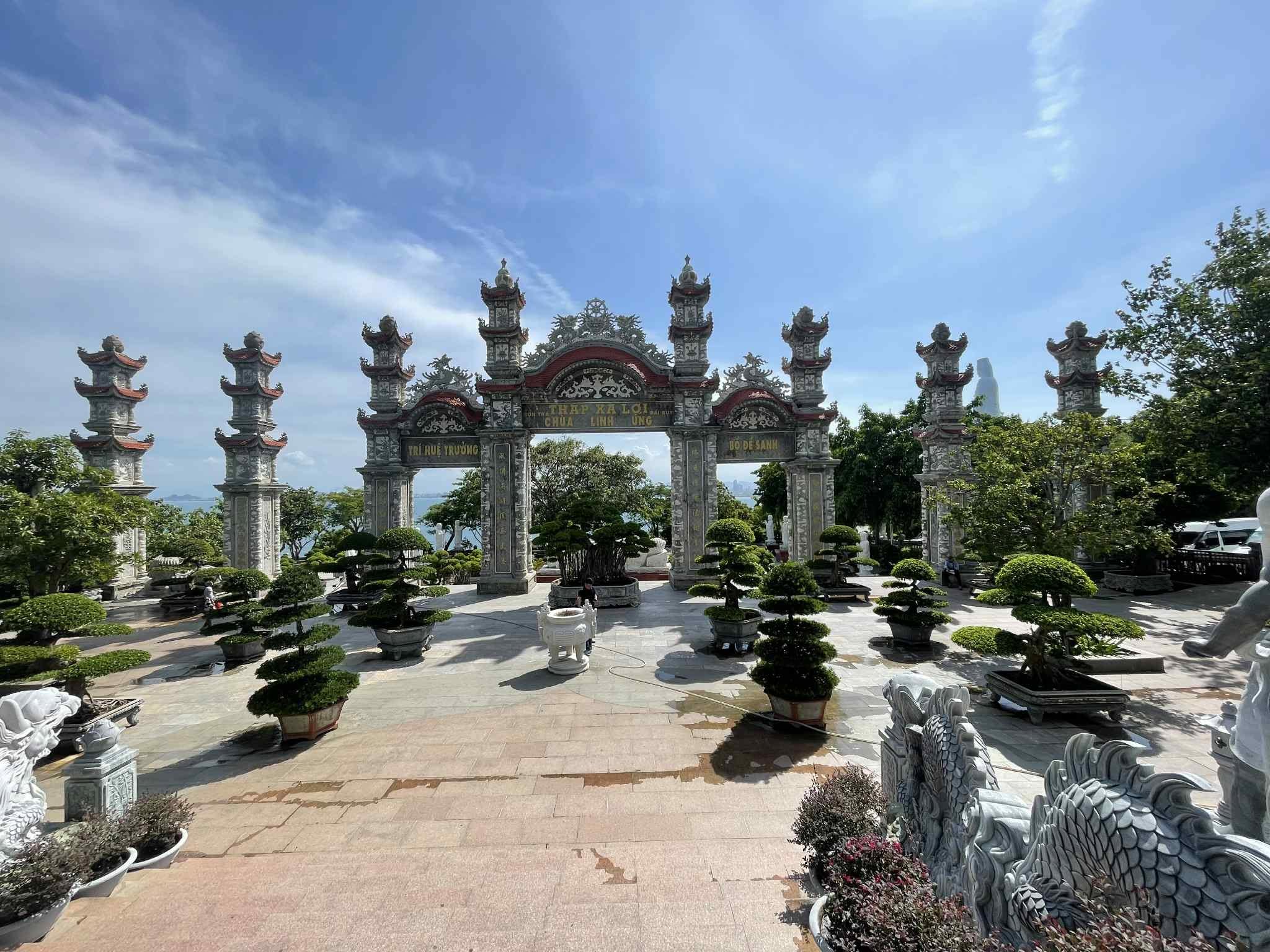
Linh Ung Pagoda, Bai But is one of the peninsula’s best-known destinations. Perched on the mountainside overlooking the East Sea, the pagoda is famous for its 67-meter Guanyin statue, which faces the sea and has become one of the most recognizable symbols of Son Tra.
Ban Co Peak, at approximately 700 meters above sea level, is another popular destination. It is associated with the legend of two celestial beings descending to the mountain to play chess. A stone statue of a celestial figure sits beside an unfinished chessboard, overlooking Da Nang and the sea. The viewpoint offers an expansive panorama of the city and coastline.
The thousand-year-old banyan tree stands on the northeastern slope of the peninsula. Its massive trunk and sprawling network of aerial roots have become a distinctive natural landmark. According to the provided source, the tree was recognized as a Vietnam Heritage Tree in 2014.
Higher on the mountain is Radar Station 29, whose white spherical radar domes have earned it the nickname “the Eye of Indochina.” The station plays an important role in observing and monitoring the airspace and maritime area of central Vietnam.
Another historic landmark is Tien Sa Lighthouse, built during the French colonial period and characterized by traditional French architectural features.
Closer to the coast, Son Tra reveals a collection of beaches and rocky coves with very different landscapes. Bai But, Bai Rang, Bai Nam, Bai Bac, Bai Om and Mui Nghe are among the names frequently associated with exploring the peninsula.
Mui Nghe is particularly known for its sunrise views over the sea, while the surrounding waters provide opportunities for coral viewing and other marine experiences.
Beaches, Marine Activities and Coastal Experiences
At the foot of the mountain, visitors can explore Suoi Da, stretches of sandy beach and rocky shoreline. Waves and tides have gradually smoothed many of the rocks along the coast, creating naturally sculpted formations.
Tien Sa Beach is known for its fine sand and clear blue water. The area lies near Tien Sa Port, an important maritime gateway of Da Nang and a port that welcomes international cruise ships.
Beyond swimming and sightseeing, Son Tra offers activities such as snorkeling and coral viewing, boat trips, jet skiing and parasailing. Visitors can also learn more about the traditions of coastal communities, including local whale-worship and fishing festivals.
One of Son Tra’s greatest attractions is the rapid change of scenery within a relatively short journey. In a single trip, visitors can move from primeval forest to the beach, from a peaceful Buddhist sanctuary high on the mountain to open waters along the coast.
Getting Around and the Best Time to Visit
The source identifies March to September as the most favorable period for exploring Son Tra. During these months, the weather is generally drier and sunnier, sea conditions are often more favorable, and visibility across the peninsula is wider. During the winter months, fog can appear and mountain roads may become more difficult to navigate.
Travelers who want to explore independently can use a motorbike or bicycle. For the steeper and more winding mountain roads, the source recommends manual motorcycles rather than scooters. Certain sections of the peninsula have vehicle restrictions and checkpoints, so visitors should follow local regulations and instructions.
Son Tra can be reached from several directions. Travelers arriving from Hue can follow Nguyen Tat Thanh Street and cross Thuan Phuoc Bridge toward the peninsula. From Hoi An, the coastal route via Truong Sa and Vo Nguyen Giap provides access toward Son Tra. From central Da Nang, routes via Han River Bridge, Le Duan Street, My Khe Beach and Pham Van Dong Street also connect conveniently with the peninsula.
When riding through Son Tra, visitors should pay close attention to speed, weather and road conditions. Restricted areas should not be entered, and travelers should remain on permitted routes.
Seafood and Coastal Flavors
No visit to Son Tra would be complete without trying some of the area’s fresh seafood. The source mentions eel, grouper, catfish, pomfret, tiger prawns, lobster, octopus, snails, squid and crab, among other local catches.
Seafood is commonly prepared in a variety of ways, including steaming, grilling and stir-frying, often with locally inspired marinades and seasonings.
The area around the Hoang Sa – Le Duc Tho intersection is mentioned as a popular place for visitors looking to purchase fresh seafood. Travelers can select their preferred seafood and have it prepared by local vendors or nearby restaurants according to their preferred cooking style.
Son Tra, Da Nang’s Great Green Landscape
Son Tra occupies a unique place on Da Nang’s tourism map. It is where city, mountains and sea meet within the same landscape. From the mountain peaks, visitors can look down over the arc-shaped city; from the winding roads, the East Sea stretches toward the horizon; and beneath the forest canopy lies a rich ecosystem home to rare plants and wildlife.
Son Tra Peninsula is therefore much more than a scenic viewpoint or a day-trip destination. It is an important part of Da Nang’s natural landscape, preserving a rare ecosystem where forest and sea exist side by side immediately next to a modern coastal city.
A journey through Son Tra might begin with an early morning ride through the mountain forest, continue with visits to spiritual and natural landmarks, and end beside a quiet beach as the sun sinks toward the horizon. That extraordinary variety is what makes Son Tra one of the defining destinations of Da Nang.