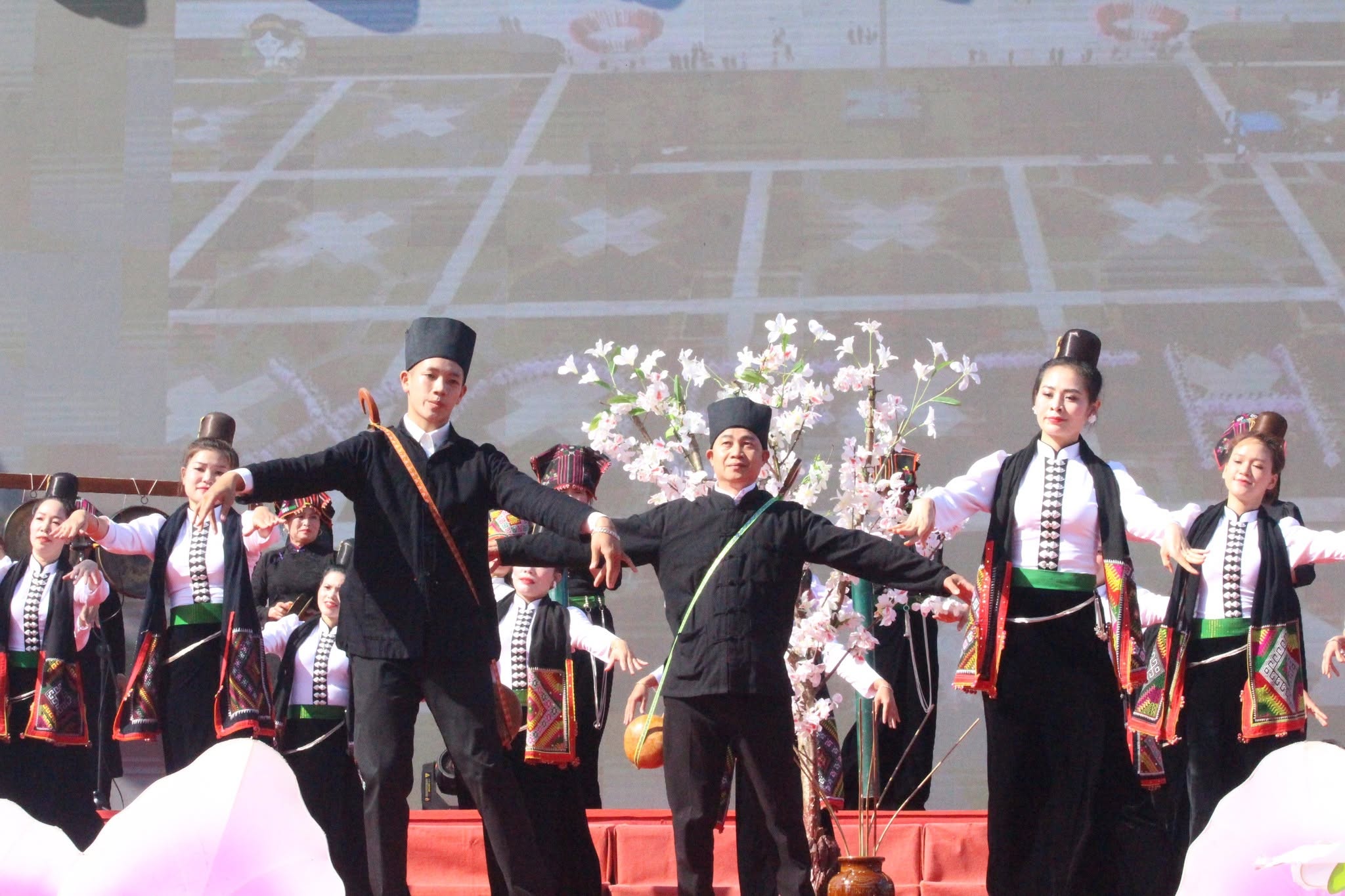
Thai Xoe art is a distinctive traditional dance form that holds an important position in the cultural and spiritual life of the Thai ethnic community in northwestern Vietnam. More than a folk dance, Xoe is a cultural symbol expressing the Thai people’s worldview, philosophy of life, emotions, aspirations, community spirit, and desire for prosperity and happiness.
Thai Xoe art is particularly associated with areas where large Thai communities live, including Phong Tho District in Lai Chau Province, Muong Lay District in Dien Bien Province, Quynh Nhai District in Son La Province, and Nghia Lo Town in Yen Bai Province. Through a long process of formation and development, Xoe has become an indispensable part of community activities, traditional festivals, folk rituals, and celebrations held by families and villages.
A Cultural Symbol in Thai Community Life
No one can determine exactly when Xoe dancing first appeared. However, since ancient times, the Thai people of Muong Lo have passed down the following verses:
“Without Xoe, there is no joy.
Without Xoe, maize will not produce ears.
Without Xoe, rice will not flower.
Without Xoe, young men and women will not become couples.”
These verses demonstrate the special place of Xoe in Thai life. Xoe symbolizes joy, solidarity, romantic love, harmony between people and nature, and the hope for abundant harvests. As a result, almost every celebration, festival, or community gathering among the Thai people includes lively Xoe dances.
From small family celebrations to major festivals of villages and communities, Xoe is always present as a cultural practice that strengthens social bonds. The Thai people also have a saying:
“If you do not dance Xoe, the flowers will wither.
If you do not dance Xoe, spring will pass away.”
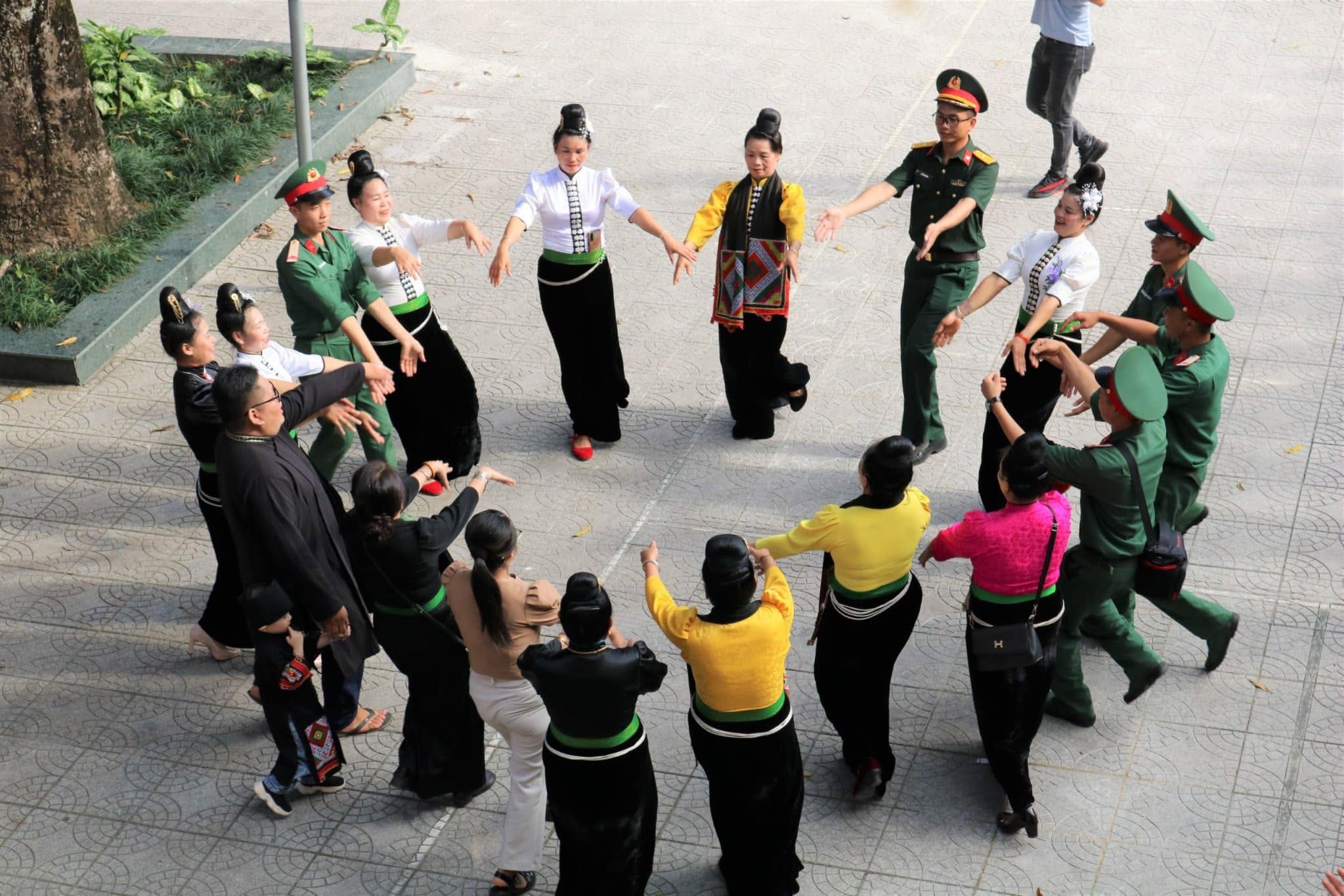
Xoe developed alongside the historical formation of the traditional cultural identity of the Thai people. Its dances vividly reflect their working life, customs, beliefs, community relationships, love, social activities, and cultural behavior. In a Xoe circle, people hold hands and move together to the rhythm of music, without distinction based on age, gender, social status, or personal background.
Xoe is therefore both an artistic form and a means of transmitting cultural knowledge and strengthening solidarity within the community.
The Diversity of Xoe Dances
Thai Xoe art includes many different forms of expression. In addition to familiar dances such as Fan Xoe, Scarf Xoe, Hat Xoe, and Musical Fruit Xoe, the Thai people also perform dances named after particular movements, objects, activities, or themes, such as Chan Khon Xoe, Kep Phak Xoe, and Kep Bok Xoe.
According to traditional accounts, the Thai people have more than 30 Xoe dances. However, most of them originate from six ancient dances, which are regarded as the six fundamental forms of Xoe:
- Kham Khan Moi Lau: Raising a scarf to invite others to drink wine.
- Pha Xi: Dividing into four directions.
- Don Hon: Moving forward and backward.
- Nhom Khan: Tossing scarves.
- Om Lom Top Mu: Forming a circle while clapping hands.
- Kham Khen: Holding hands.
These six ancient dances form the foundation of the movement system, formations, and performance techniques of Thai Xoe. From seemingly simple movements such as stepping, leaning, raising the arms, changing direction, moving forward, or stepping backward, dancers convey different emotional nuances and cultural meanings.
In Xoe, the way dancers walk, stand, arrange themselves, and move in formation all carry specific expressive values. The movements not only create a graceful and fluid visual effect but also reflect Thai ideas about life, nature, and the relationship between individuals and the community.
For example, Nhom Khan is a lively dance in which performers wear colorful brocade scarves around their necks and toss them rhythmically to the beat of the drums. It expresses joy and excitement over a successful harvest and a prosperous life. Meanwhile, Don Hon, characterized by coordinated forward and backward movements, conveys the belief that although life may sometimes be unstable and full of hardships, human affection and community solidarity remain intact.
Music and Instruments in Ancient Xoe
Music plays an essential role in Thai Xoe. The instruments traditionally used in ancient Xoe generally include one drum, two gongs, and a pair of cymbals. Each instrument not only produces a distinctive sound but is also associated with traditional ideas about the universe and human existence.
According to Thai beliefs, the sound of the drum represents the earth, the resonance of the gongs symbolizes the sky, while the cymbals are associated with fertility, reproduction, and the flourishing of all living things.
The rhythm of Xoe is often repeated through musical patterns such as:
“Tung tung ring, ring ring tung”
This rhythm is associated with the traditional concept of three fundamental elements of existence: heaven, earth, and human beings, expressing harmony between people, nature, and the universe.
The combination of drums, gongs, cymbals, and synchronized footsteps creates an atmosphere that is both sacred and joyful. Music guides the Xoe circle and enables participants to move together in a unified rhythm, highlighting the strong communal character of this art form.
Performance Space and the Symbolic Xen Xinh Tree
In the traditional Xoe space of the ancient Thai people, a central pole known as the “Xen Xinh tree” was often erected in the middle of the dance circle. It symbolized the tree of all living things or an axis connecting different realms in the traditional worldview.
Figures of land animals, aquatic creatures, the sun, and the moon might be hung from the tree. These figures were woven from bamboo or carved from wood. Such images reflected the richness of the natural world and traditional beliefs about the origin and movement of all things.
At night, the Thai people could perform Xoe around a fire. The fire served both as the center of the dance circle and as a source of light for the festival space. The flames, music, colorful traditional costumes, and interlinked circle of dancers created a unique cultural setting in which people became closely connected with one another and with nature.
The Xoe performance space was therefore not merely a place for artistic presentation. It was also a setting for practicing beliefs, transmitting customs, exchanging emotions, and recreating the traditional cultural values of the village and community.
Spiritual Values and Community Bonding
Xoe allows people to temporarily forget the fatigue and pressures of everyday life. After participating in the dance, they return to their daily work with renewed energy, a stronger love for labor, affection for their village, and a deeper appreciation of life.
Within the Xoe circle, social distances are reduced. Older people, younger generations, men, women, villagers, and visitors can all participate together. Holding hands and forming a circle expresses equality, solidarity, mutual support, and harmony within the community.
Xoe also creates opportunities for young men and women to meet, communicate, and express their feelings. In the festive atmosphere, coordinated movements, glances, smiles, and shared steps become subtle yet meaningful ways of expressing affection. Many relationships and marriages among Thai young people have traditionally been nurtured during such Xoe gatherings.
In addition to dance and music, Xoe art incorporates many other cultural elements, including traditional costumes, language, songs, cuisine, rituals, customs, and social etiquette. Xoe can therefore be understood as a comprehensive cultural space in which numerous traditional values are preserved and practiced together.
Preserving and Promoting Thai Xoe Art
Thai Xoe art was included in the National Intangible Cultural Heritage List in 2013 by the Ministry of Culture, Sports and Tourism. This recognition acknowledges the outstanding value of a traditional dance form that has existed for generations in the cultural life of Thai communities in northwestern Vietnam.
Heritage Information
| Category | Information |
|---|---|
| Heritage name | Thai Xoe Art |
| Decision No. | 1877/QD-BVHTTDL |
| Date of recognition | June 8, 2015 |
| Heritage category | Folk performing arts |
| Representative locality | Lai Chau Province |
In recent years, cultural, sports, and tourism authorities in localities where Xoe is practiced have organized numerous activities to preserve and promote the heritage. Xoe has been included in cultural events, traditional festivals, community solidarity days, artistic exchanges, and community-based tourism programs.
Many localities have also incorporated folk performing arts, including Thai Xoe, into extracurricular activities at schools. These programs help younger generations gain a better understanding of ethnic culture while creating opportunities for artisans to pass down dance movements, rhythms, performance techniques, and the meanings behind each Xoe dance.
Preserving Xoe requires more than simply reconstructing ancient movements. It also involves maintaining the community environments in which the art is practiced, encouraging artisans to teach younger generations, protecting traditional village spaces, preserving costumes and folk instruments, and safeguarding the customs associated with Xoe activities.
The Continuing Vitality of Thai Xoe in Modern Life
Today, Thai Xoe art continues to be maintained and developed within Thai communities while spreading to other ethnic groups and localities throughout Vietnam. Xoe circles are not only found in traditional rituals and festivals but have also become highlights of cultural events, tourism programs, and community exchanges.
From ritual Xoe dances performed in traditional village settings to large-scale performances presented to the public, Xoe continues to preserve its essential spirit of solidarity, harmony, and shared joy. Although its forms of presentation may change over time, the core values of Xoe remain alive through every step, drumbeat, and linked hand.
With its outstanding historical, cultural, artistic, and communal values, Thai Xoe art is a precious heritage of the Thai people in particular and Vietnamese culture as a whole. Preserving, transmitting, and promoting Xoe art not only contributes to safeguarding national cultural identity but also creates opportunities for cultural tourism, community-based tourism, and the promotion of northwestern Vietnam to domestic and international visitors.