The traditional craft of Thanh Ha pottery has been closely associated with the history and development of Hoi An and the wider Quang Nam region for centuries. Using clay from the riverine landscape, generations of Thanh Ha potters have produced pottery, stoneware, bricks, yin-yang roof tiles and other objects for everyday life, production and religious practices. Beyond providing livelihoods, the craft has preserved a rich body of traditional knowledge, craftsmanship and specialized vocabulary.
Before 1945, Thanh Ha Village belonged to Thanh Ha Commune, Dien Phuoc District, Dien Ban Prefecture, Quang Nam Province. Pottery, stoneware, brick, yin-yang tile and lime production was distributed across several hamlets west and south of the village, including Nam Dieu, Thanh Chiem, An Bang, Hoa Yen and Hau Xa. Today, the pottery production area is concentrated in Hoi An Tay Ward, Da Nang City.
A Pottery Village Passed Down Through Generations
According to the memories of village elders, around 70 years ago, Nam Dieu alone had approximately 50 pottery-making households, 30 to 40 pottery wheels, eight stoneware kilns and dozens of pottery trading households. Between 200 and 300 people were involved in the craft at the time.
Other households in Thanh Chiem, An Bang and Hau Xa also produced pottery, stoneware, bricks, tiles and lime. The craft therefore once occupied a broad production area and formed an interconnected community of artisans, producers and traders.
According to the source material, Thanh Ha currently has 32 pottery-making households employing approximately 134 people out of a total of 320 households. Five households continue to make traditional pottery, while 13 specialize in con thoi, or pottery whistles. Other households focus on decorative and artistic ceramics. The village also has several professional pottery traders and a system of traditional and modern kilns serving different product lines.
Today’s potters are descendants of the founding clans of Thanh Ha Village, including the Nguyen Viet, Nguyen Van, Nguy, Bui, Pham and Le families. Through generations, pottery techniques have been transmitted through hands-on practice, from preparing clay and shaping vessels to firing and judging the quality of finished products.
Clay and the Traditional Pottery-Making Process
The principal raw material is yellow clay, known for its plasticity and strong binding properties. In the past, clay was extracted from fields along the rivers, usually at depths of around 50 to 100 centimeters below the surface. Areas around An Bang, Thanh Chiem and land adjoining Thanh Ha in present-day Dien Phuong were important sources of clay.
Today, potters purchase clay from Thanh Quyt in Dien Ban and Thi Lai in Duy Xuyen. The clay is transported by boat to Thanh Ha, maintaining the long-standing relationship between pottery production and the river-based transportation network of Quang Nam.
The process begins by mixing clay with water. The clay is then chopped and worked with traditional tools before being kneaded repeatedly until it becomes clean and sufficiently pliable.
For shaping, the potter operates the wheel and places a prepared lump of clay on it. Sitting beside the wheel, the artisan uses both hands to shape the clay into the desired form. This stage requires precise coordination between hand pressure, wheel speed and experience.
The newly formed pieces are partially dried in the sun. Artisans then carry out a cold-finishing stage, correcting the shape and balance of each piece before allowing it to dry completely.
Traditional Kilns and the Knowledge of Firing
Firing is one of the most important stages of Thanh Ha pottery making. Traditional pottery and stoneware are fired in different types of kilns, including the lo bau, or dome-shaped kiln, as well as the traditional lo xanh and lo do.
The lo xanh is rectangular, with brick walls and a clay dome. According to the source material, it is approximately 3 meters high, 5 to 6 meters wide and 4 to 5 meters long, with fire openings at the front, ventilation openings at the rear and vents in the roof. The lo do is smaller and is used for pottery firing.
Traditional firewood included various forest woods such as den, de, truong and tram. Today, artisans also use casuarina wood.
The firing process itself consists of several stages, requiring the potter to control the fire carefully. Experienced kiln workers observe the smoke and other signs from the kiln to judge its temperature and determine whether the pottery has reached the desired state.
In the past, stoneware firing also involved a traditional testing vessel known as the om tham. Placed near an opening in the kiln, it was exposed to the heat escaping from inside. When the om tham reached a certain firing condition, the artisan could use it to judge the state of the products inside the kiln.
The color and condition of the testing vessel were described through specialized terms, forming part of the craft’s traditional knowledge for recognizing firing conditions and product quality.
Certain products, such as Thanh Luu Ly and Hoang Luu Ly roof tiles, also use glazing techniques. Glazes were traditionally made from materials such as copper, lead, cinnabar stone and kaolin. These materials were finely ground and mixed with water to create a coating that could be applied to the pottery before a second firing.
More Than 40 Types of Traditional Products
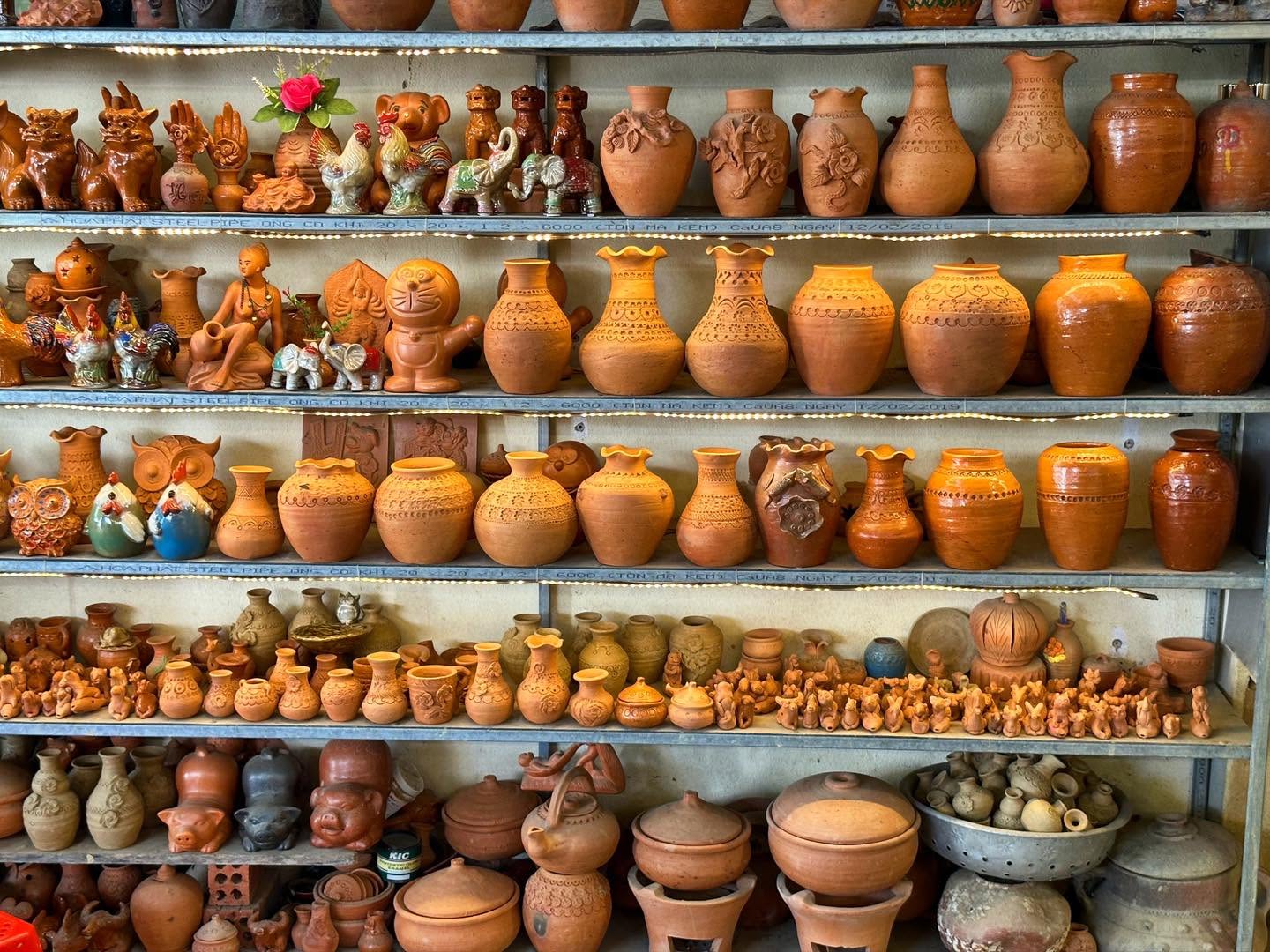
Thanh Ha traditional pottery and stoneware encompass more than 40 types of products serving domestic, productive and religious purposes.
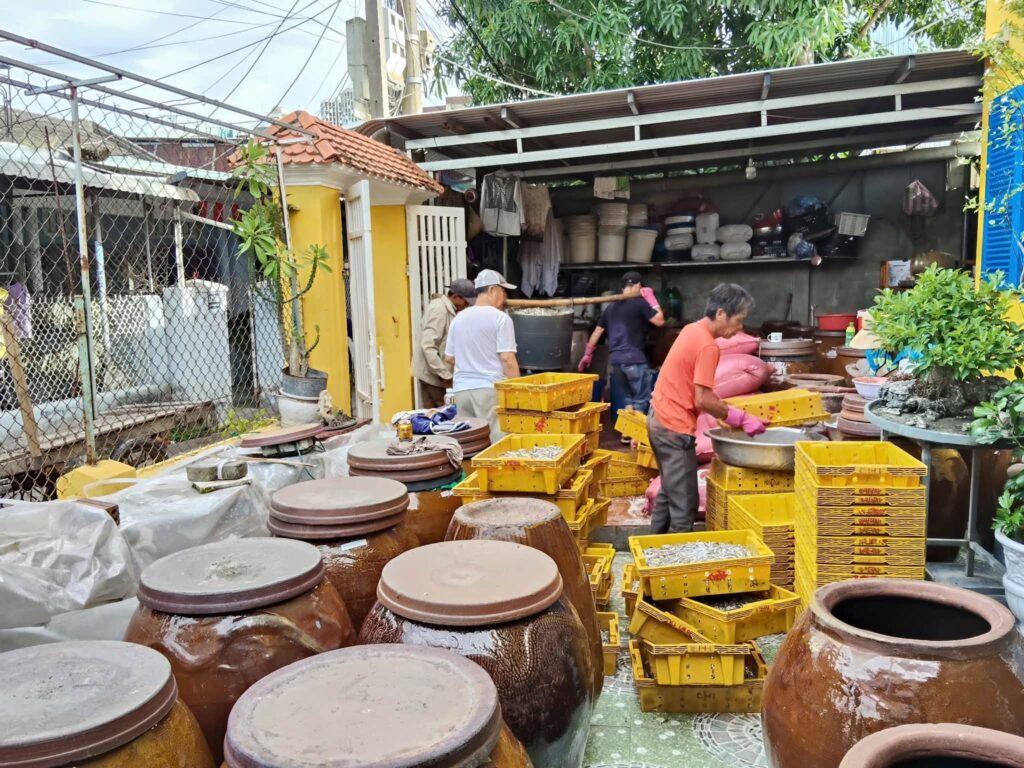
Household products include jars, lime containers, large storage vessels, cooking pots, thap, diem, tra, om, bung and lung binh, among others. They were used to store water, salt, fish sauce, rice, grains and local agricultural products.
Thanh Ha pottery also supplied tools for other traditional occupations in Quang Nam, including weaving in Duy Xuyen and Dien Ban and sugar making in Dai Loc. Products included containers for raising silkworms, thread containers used in weaving and vessels used in sugar processing.
Other products included fired bricks, roof tiles and religious objects such as incense burners, Taoist kitchen-god figurines and ceramic burial containers.
Traditional pottery generally has an unglazed surface, ranging from smooth to coarse, with a fine ceramic body. Most pieces have little or no decoration, although certain stoneware jars feature raised serrated borders or wave motifs around the neck and shoulder.
The shapes themselves are distinctive. Jars generally have flared mouths, narrowed necks, shoulders, tapered lower bodies and flat bases. Cooking pots, pans and other vessels often share a flared mouth, rounded rim, short narrow neck, wide body and rounded base.
Artistic Ceramics and Pottery Whistles
Alongside traditional household pottery, Thanh Ha has developed a more elaborate line of artistic ceramics. Clay is beaten, settled and filtered into a fine slurry, which is then poured into molds and left for a period of time so that the clay can settle before the pieces are dried.
Artistic ceramics are often decorated with Chinese characters carrying auspicious meanings, geometric motifs, business names and other decorative designs. Some pieces are also given a ceramic coating made from eggshells.
The range of artistic products includes Buddha and Christian figures, wall-mounted ceramic lamps, balusters, planters, flower vases, architectural models, boxes, ashtrays, ceramic masks and other decorative objects.
According to the source material, these products have been commissioned by tourism and hospitality businesses, including restaurants, hotels and cafés in Hoi An, Da Nang, Hue, Da Lat and Ho Chi Minh City. Some products have also been exported to Japan, Australia, Germany, the United Kingdom, France and the United States.
Con thoi, or pottery whistles, represent a newer product line that emerged in the late 1990s. Although simpler to make, they continue to feature traditional cultural themes such as the twelve zodiac animals and images of children herding buffalo. They have become popular souvenirs among visitors to Thanh Ha.
Yin-Yang Tiles, Bricks and Religious Ceramics
Thanh Ha also preserves the traditional techniques of making yin-yang roof tiles and fired bricks. Yin-yang tiles are made from the same yellow clay used for pottery and pass through several stages, including kneading, molding, drying, shaping and arranging before being fired.
The tiles can be fired in dome-shaped kilns or updraft kilns, and are produced in different sizes. Brick making follows a similar process, although molds are used and the shaping stage for curved tiles is omitted.
Religious objects form another important part of the craft. Taoist kitchen-god figures are shaped by hand from prepared clay, dried and fired. Ceramic burial containers are assembled from individual pieces of clay, joined together, dried and then fired.
These products demonstrate that Thanh Ha pottery has served not only practical household needs but also the spiritual and ritual life of the local community.
Ancestor Worship and Cultural Life in Nam Dieu
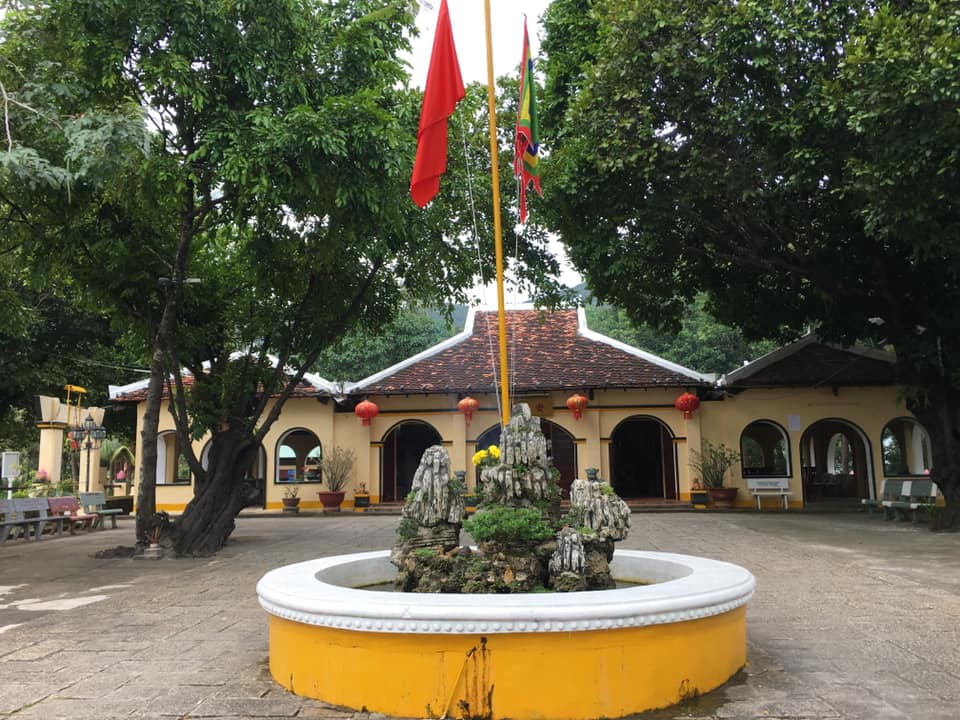
The Thanh Ha community maintains the worship of the pottery craft ancestors at the Nam Dieu Craft Ancestors’ Shrine. Each year, villagers hold the Spring Ceremony on the 10th day of the first lunar month and the Autumn Ceremony on the 10th day of the seventh lunar month.
The Spring Ceremony includes the Long Chu ritual, in which a ceremonial boat is taken to the Thu Bon River. The ritual is associated with removing misfortune and praying for peace and well-being within the community.
Potters also traditionally choose auspicious days in the middle of the first lunar month to hold ceremonies marking the reopening of kilns and the beginning of production for the new year.
In the past, young potters who had completed their training in wheel throwing also participated in a ceremony to present themselves before the craft ancestor. This marked their transition into the profession and expressed their hopes for a safe and successful career.
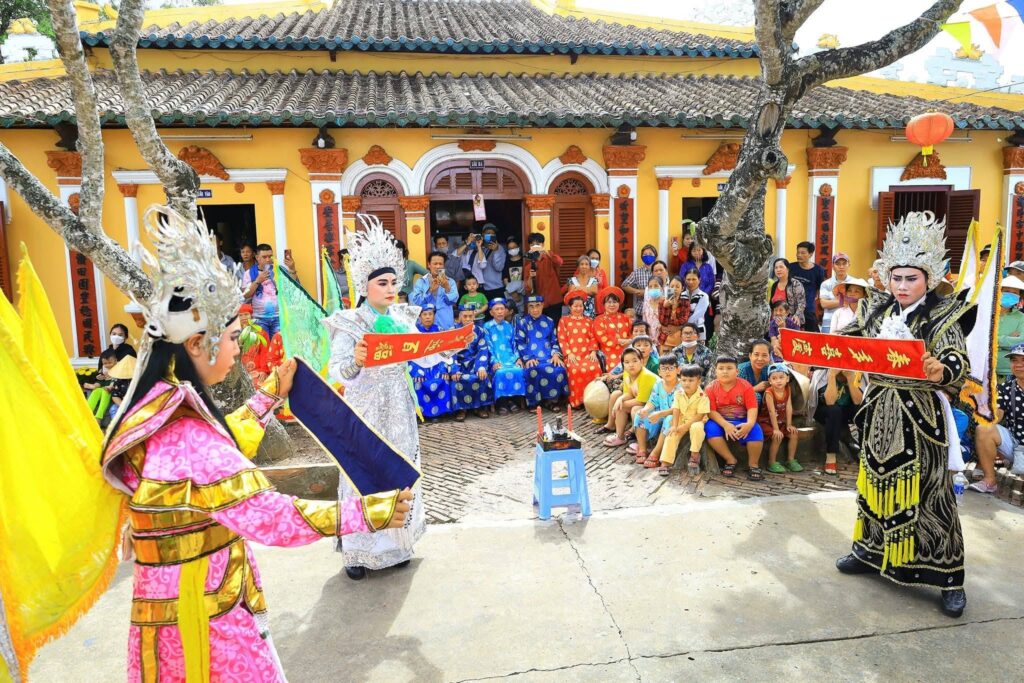
Nam Dieu’s cultural life has also included traditional theater. In the mid-20th century, the village had a hat boi troupe led by an organizer known as Ong Quynh. The troupe ceased operating after 1975 due to economic difficulties. In 2004, local potters helped revive the troupe, receiving strong support from the community.
These activities demonstrate that Thanh Ha artisans have contributed not only to preserving pottery techniques but also to reviving and promoting the broader cultural heritage of their village.
A Specialized Vocabulary of Pottery Making
One of the distinctive values of Thanh Ha pottery lies in the specialized vocabulary developed by artisans over generations. Potters created their own terminology to describe techniques, shapes, uses and firing conditions.
For example, some stoneware jars were classified according to the number of clay pieces used to make them, resulting in names such as hu 6, hu 5 and hu 4. Other products were named according to their function, such as au suot, a vessel used to hold weaving bobbins or thread tools.
Artisans also identified the condition of fired products through the colors and appearance of their ceramic surfaces. Terms such as cham to gach describe particular color characteristics observed on finished stoneware.
This specialized vocabulary contains valuable information for linguistic, ethnographic and historical research. It represents an intangible dimension of the craft that exists alongside the physical pottery itself.
Thanh Ha Pottery and the History of Hoi An
The formation and development of Thanh Ha pottery during the 16th and 17th centuries contributes to an understanding of the history of villages, traditional crafts and occupations in Hoi An.
Bricks and roof tiles produced in Thanh Ha helped shape the architecture of Hoi An Ancient Town and other urban settlements in central Vietnam. Thanh Ha pottery also played a long-standing role in everyday life in Hoi An, Quang Nam and the central coastal region.
According to the source material, Thanh Ha pottery was recognized as a distinctive local product of Quang Nam in the Nguyen dynasty historical work Dai Nam Nhat Thong Chi. Highly skilled artisans also contributed products to certain imperial structures, tombs and residences associated with Nguyen dynasty rulers and officials in Hue.
Today, Thanh Ha pottery continues to be maintained within the local community and has become closely connected with tourism. Traditional clay preparation, wheel throwing, kiln firing and tile making continue alongside the specialized vocabulary, craft ancestor worship and other cultural practices of the village.
The craft therefore represents more than a collection of ceramic products. It is a living cultural system in which technical knowledge, community memory, religious practices and traditional language continue to intersect.
Recognizing its outstanding historical, technical, cultural and community values, Thanh Ha Pottery Making was included in Vietnam’s National Intangible Cultural Heritage List under Decision No. 2965/QĐ-BVHTTDL dated August 27, 2019, issued by the Minister of Culture, Sports and Tourism.
Basic Information
| Information | Details |
|---|---|
| Heritage | Thanh Ha Pottery Making |
| Current location | Hoi An Tay Ward, Da Nang City |
| Historical setting | Thanh Ha, Quang Nam |
| Type | Traditional craft |
| Main material | Yellow clay |
| Products | Pottery, stoneware, bricks, yin-yang roof tiles, artistic ceramics, pottery whistles and religious objects |
| Cultural setting | Thanh Ha Village, Nam Dieu and traditional pottery-making areas |
| Key values | Craftsmanship, folk knowledge, specialized vocabulary, beliefs and history |
| Heritage status | National Intangible Cultural Heritage |
| Recognition | Decision No. 2965/QĐ-BVHTTDL, August 27, 2019 |