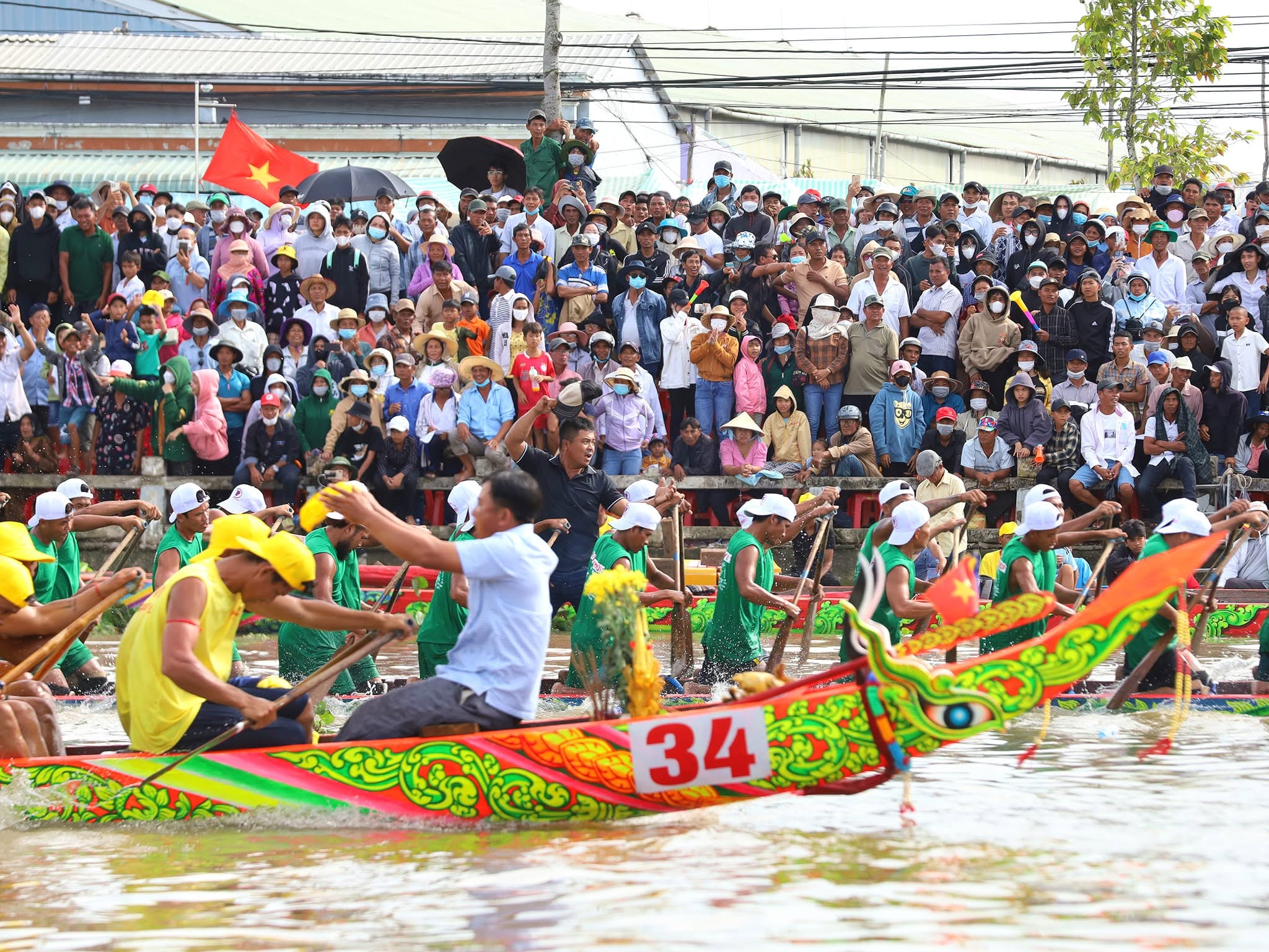
Ngo boat racing is one of the most distinctive traditional cultural activities of the Khmer community in southern Vietnam. Closely associated with the Oóc Om Bóc Festival, the race reflects the Khmer people’s agricultural beliefs, river culture, communal spirit and respect for nature. The festival is also an occasion for Khmer communities to gather, celebrate the end of the agricultural season and express gratitude for favorable weather and a good harvest.
The Oóc Om Bóc Festival traditionally takes place on the night before the full moon of the Khmer month of Ka-đâk, corresponding approximately to the 15th day of the tenth lunar month. This is generally the period marking the end of the rainy season and the completion of an important stage of the agricultural cycle. Families prepare offerings such as young rice flakes, coconut, sugarcane, cassava and taro for the Moon Worship ceremony.
According to Khmer traditional beliefs, the Moon is regarded as an important natural force associated with the land, water, crops, weather and the changing seasons. The Oóc Om Bóc ceremony therefore carries the meaning of expressing gratitude and praying for favorable conditions, abundant crops and peace for the community. The exact origin of the festival and Ngo boat racing has not been definitively established. Various folk stories and legends have been passed down through generations, including stories connecting the festival with the Buddha’s previous life as a white rabbit and the Khmer people’s traditional worship of the Moon.
The Ngo Boat and Its Sacred Tradition
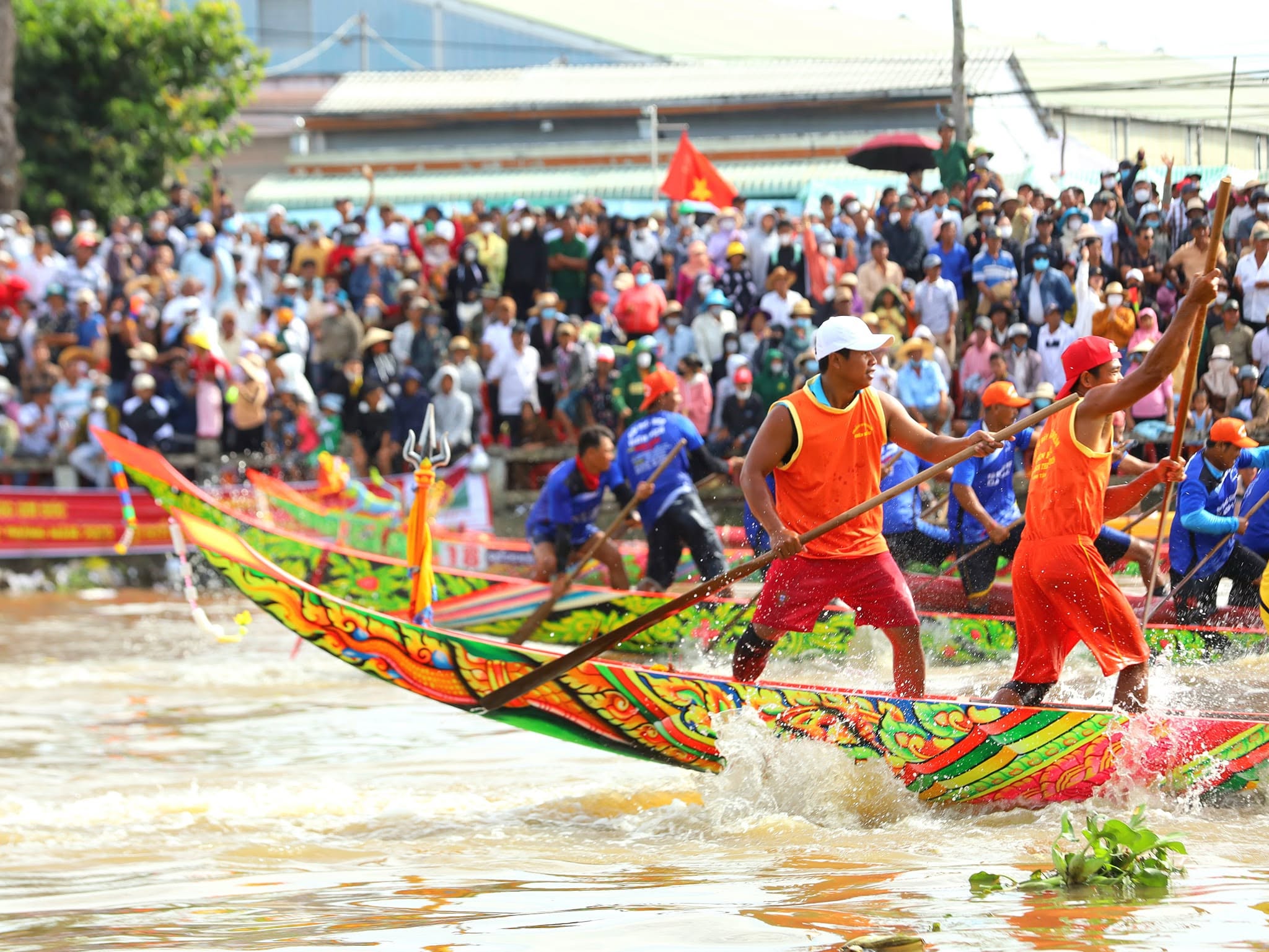
The Khmer call the Ngo boat Tuk Ngô. Traditional Ngo boats are associated with the image of the Naga, a sacred serpent in Southeast Asian cultural traditions. Early boats were made from a single large tree trunk, traditionally requiring a ritual before the tree was cut down. Over time, boat construction developed from dugout forms into long boats assembled from wooden planks.
The boat has a long, slender hull with a raised bow and stern. Its surface is often painted and decorated with colorful patterns, flowers, animals or traditional Khmer motifs. The bow and stern may be shaped in ways that evoke the Naga, giving the boat a distinctive appearance. Depending on the period and construction method, Ngo boats vary considerably in length and capacity. Modern racing boats can reach around 30 meters or more and accommodate dozens of paddlers.
A Ngo boat is traditionally kept at a boat house associated with a Khmer pagoda. In Khmer cultural practice, the boat is not simply a piece of sporting equipment but is regarded as a sacred community object. In the past, access to the boat was subject to strict customary rules. Today, while many traditional practices remain, Ngo boat racing has become more open to community participation, including the development of women’s racing teams.
Before the race, the boat undergoes a ceremonial blessing. Offerings are prepared, monks chant prayers and traditional five-tone music may accompany the ceremony. Coconut oil, red cloth and other ritual elements can be used according to local customs. The ceremony is intended to seek protection, good fortune and strength for the boat and its crew.
Training for the race is demanding. Teams may practice on land at the pagoda for an extended period before moving onto the water. In the final stage, crews train according to river conditions, currents and tides. A racing team can involve dozens of people, including paddlers, reserves, a person responsible for the central rhythm and commands, and members responsible for steering the boat.
The crew works according to a carefully coordinated rhythm. The paddlers must move almost simultaneously, following signals from the people responsible for maintaining the pace. The steering team at the rear controls the direction of the boat, while the front and middle positions contribute to maintaining balance and rhythm. The result is a highly synchronized performance requiring physical strength, discipline and teamwork.
Ngo Boat Racing at the Oóc Om Bóc Festival
Ngo boat races are normally organized in heats before the strongest teams advance to the later rounds and finals. Race schedules are influenced by river conditions and tides. During a race, boats compete in designated lanes, maintaining a safe distance from one another. Actions such as intentionally interfering with another boat, pulling another boat or obstructing its movement may result in penalties.
The race is accompanied by a lively atmosphere involving traditional music, supporters and community activities. A support boat, commonly known as ghe cà hâu, may accompany the competitors, while traditional five-tone music adds to the festive atmosphere.
After the competition, the celebration continues with community gatherings and other activities associated with Oóc Om Bóc. Depending on the locality, the festival may include floating lanterns, sky lanterns, traditional games, pétanque, Rom Vong dancing and Rong Leo, creating a festive space that brings together different generations.
Ngo boat racing therefore goes beyond the outcome of a sporting competition. The synchronized strokes of dozens of paddlers demonstrate solidarity, discipline and collective strength. For Khmer communities, the race is also a way of maintaining cultural memory and strengthening ties between pagodas, villages and generations.
Since the early 21st century, particularly with the organization of larger-scale festivals in Sóc Trăng, Ngo boat racing has developed into a major cultural event attracting teams and spectators from many Khmer communities. The festival has also become an occasion for wider community participation, bringing together Khmer, Kinh and Hoa residents in a shared festive atmosphere.
Today, the Oóc Om Bóc Festival and Ngo boat racing continue to preserve an important part of Khmer cultural heritage in southern Vietnam. While the boats, racing organization and participation have evolved over time, the central values remain closely connected to agricultural life, waterways, community solidarity and respect for traditional beliefs.
National Intangible Cultural Heritage
| Heritage | Information |
|---|---|
| Heritage name | Ngo Boat Racing in the Oóc Om Bóc Festival of the Khmer People |
| Decision | No. 74/QĐ-BVHTTDL, dated January 12, 2022 |
| Type | Traditional Festival |
| Recognized location | Sóc Trăng Province, now part of Cần Thơ City |
The recognition of Ngo boat racing within the Oóc Om Bóc Festival as national intangible cultural heritage highlights the cultural significance of a tradition that has long been closely connected with the spiritual life, agricultural practices and community identity of the Khmer people in southern Vietnam.