
The worship of Mother Âu Cơ, revered as the Ancestral Mother of the Vietnamese people, is one of Vietnam’s distinctive spiritual and cultural traditions. Rooted in the legend of Lạc Long Quân and Âu Cơ, it reflects the Vietnamese belief in their shared ancestry as descendants of the Dragon and the Fairy.
Passed down through generations, Mother Âu Cơ represents not only the origins of the Vietnamese nation but also unity, gratitude toward ancestors, and the traditional principle of remembering and honoring one’s roots.
In Phu Tho Province, widely regarded as the ancestral homeland of the Vietnamese people, the worship of Mother Âu Cơ has been preserved through temples, traditional festivals, and folk rituals that reflect the region’s rich cultural identity.
Mother Âu Cơ in Vietnamese Legend
According to Vietnamese mythology, Âu Cơ was the daughter of Emperor Đế Lai and married Lạc Long Quân, the son of Kinh Dương Vương.
Legend tells that Âu Cơ gave birth to a sac containing one hundred eggs, which hatched into one hundred sons. These children are regarded as the legendary ancestors of the Vietnamese people.
When their children grew older, Lạc Long Quân and Âu Cơ agreed to separate and lead them to different regions. Fifty sons followed their father toward the sea, while the other fifty accompanied their mother into the mountains.
The eldest son became the first Hùng King and established the ancient kingdom of Văn Lang.
This legend symbolizes the shared origins of the Vietnamese people and explains the cultural significance of the Vietnamese word đồng bào, meaning compatriots, traditionally understood as people born from the same womb or birth sac.
In Vietnamese cultural consciousness, Mother Âu Cơ is remembered as a compassionate and devoted mother who gave birth to, nurtured, and guided her descendants in building their communities.
The Worship of Mother Âu Cơ in Phu Tho
The worship of Mother Âu Cơ is an important part of the spiritual and cultural life of communities in Phu Tho Province. It is closely connected with the tradition of worshipping the Hùng Kings, the legendary founders of the Vietnamese nation.
According to local legends, after separating from Lạc Long Quân, Mother Âu Cơ traveled with her children to explore and settle new lands.
Upon reaching Hien Luong, she discovered a fertile landscape surrounded by rivers and mountains. She decided to settle there, establish a community, and teach local people essential agricultural and domestic skills.
Mother Âu Cơ is traditionally credited with teaching people how to cultivate rice, grow mulberry trees, raise silkworms, weave cloth, and prepare traditional cakes.
These activities helped improve local livelihoods and contributed to the development of Hien Luong into a prosperous settlement.
According to legend, Mother Âu Cơ ascended to heaven on the 25th day of the twelfth lunar month.
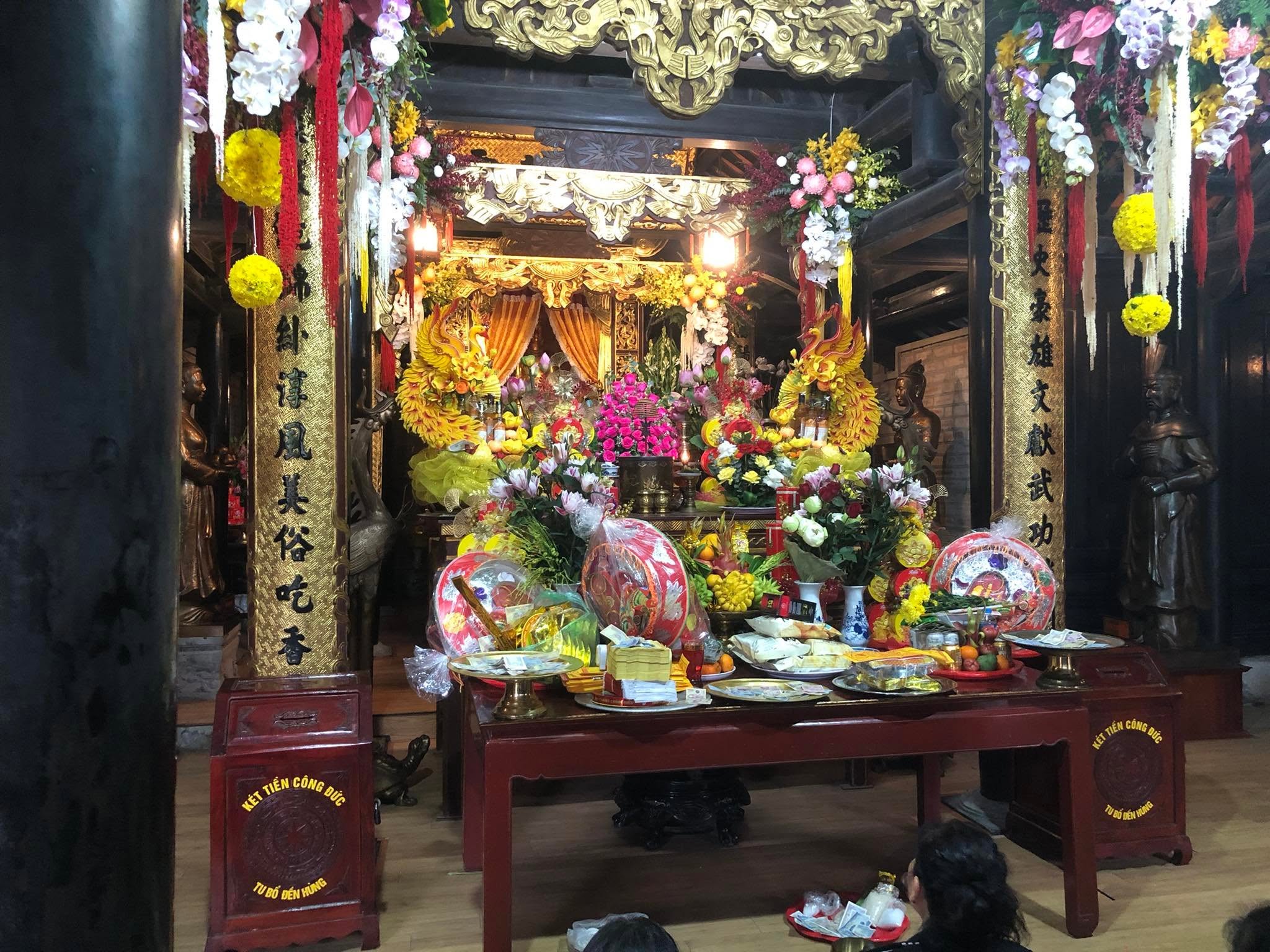
To honor her contributions, local communities established a temple and maintained incense offerings and commemorative rituals over successive generations.
What began as a form of folk worship gradually developed into an important community tradition, expressing respect for ancestors and hopes for peace, prosperity, and well-being.
Mother Âu Cơ Temple in Hien Luong
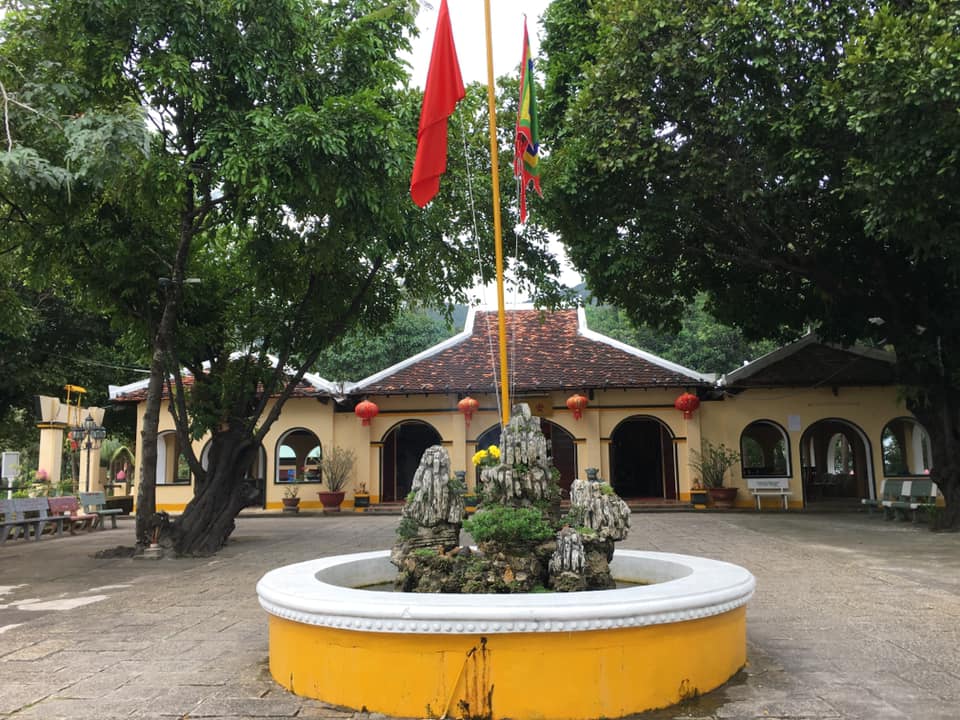
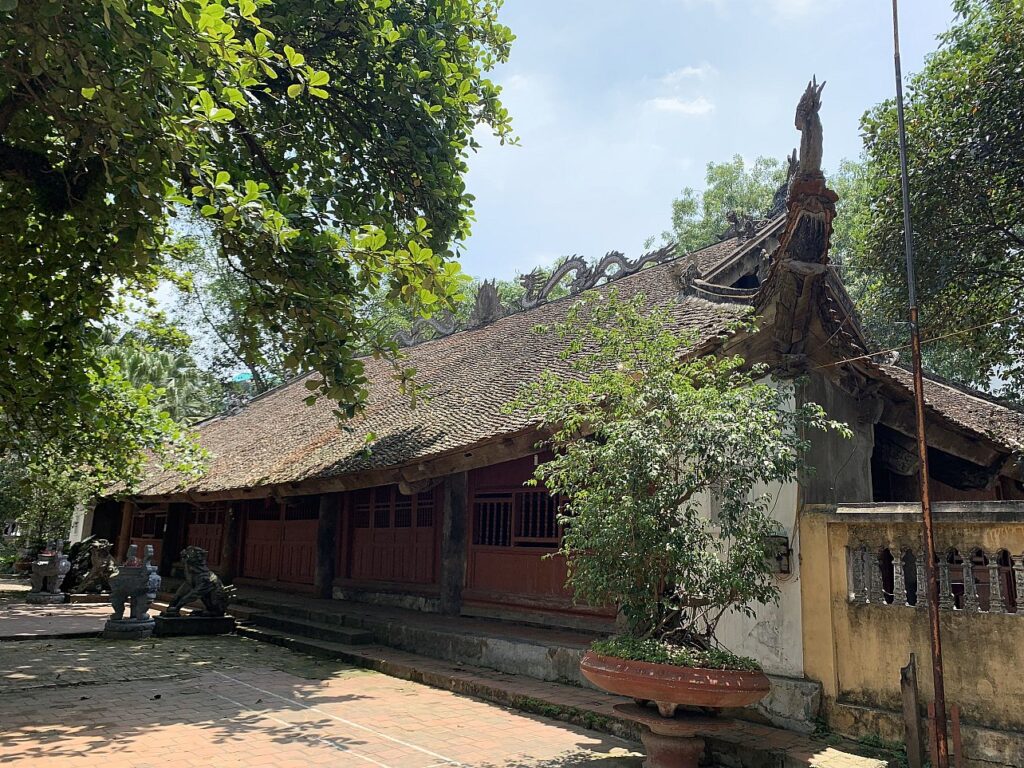
Mother Âu Cơ Temple, located in Hien Luong Commune, Phu Tho Province, is one of Vietnam’s most significant places of worship dedicated to the legendary Ancestral Mother.
The temple stands in a peaceful rural setting near the Red River, surrounded by traditional landmarks associated with local legends, including Loan Well, Phuong Well, Giac Mountain, and ancient banyan trees.
According to local historical records, during the reign of King Lê Thánh Tông in 1465, the royal court provided financial support for the restoration of the temple dedicated to Mother Âu Cơ.
Over the centuries, the temple has undergone several restorations while preserving important elements of traditional Vietnamese architecture and decorative arts.
The temple features wooden columns, traditional tiled roofs, intricate carvings of sacred animals and symbolic plants, and ceremonial objects decorated with red lacquer and gold leaf.
Inside the main sanctuary stands a statue of Mother Âu Cơ, portrayed with a dignified yet compassionate expression.
Of particular importance is the 19th-century wooden statue of Mother Âu Cơ, which demonstrates the craftsmanship of traditional Vietnamese sculpture and lacquerwork.
The statue was officially recognized as a National Treasure of Vietnam under Decision No. 88/QĐ-TTg, dated January 15, 2020.
Mother Âu Cơ Temple was designated a National Historical and Cultural Relic in 1991.
In 2017, the worship of Mother Âu Cơ at the temple was added to Vietnam’s National List of Intangible Cultural Heritage.
Today, the temple attracts visitors and pilgrims who come to offer incense, explore traditional architecture, and learn about the cultural origins of the Vietnamese people.
Mother Âu Cơ Temple Festival
The Mother Âu Cơ Temple Festival is one of the most important traditional cultural events in Hien Luong.
The festival takes place in early spring, with its principal celebration held on the seventh day of the first lunar month.
According to local tradition, this date commemorates the legendary arrival of Mother Âu Cơ in Hien Luong.
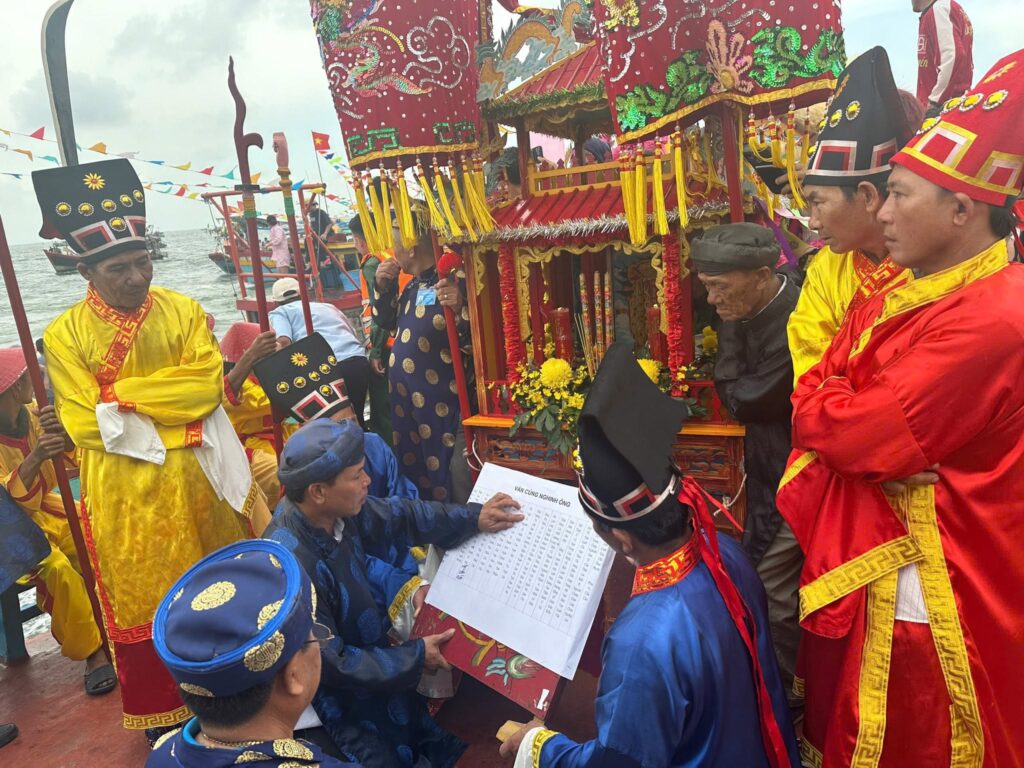
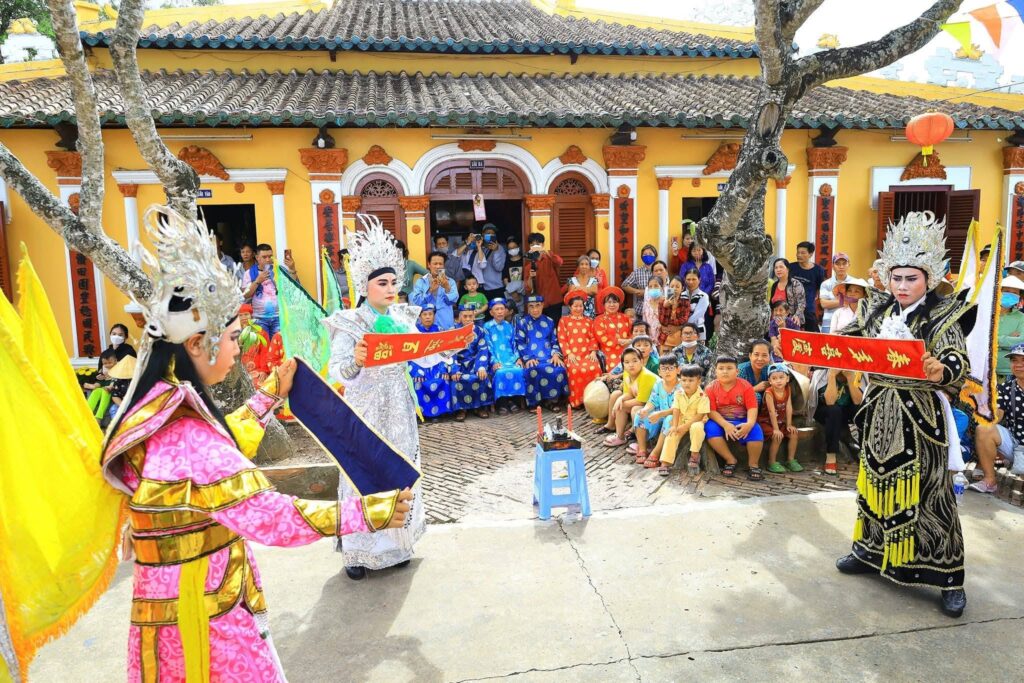
The festival features traditional ceremonies, including incense offerings, palanquin processions, ceremonial worship, and community cultural activities.
One of its most distinctive traditions is the women’s ceremonial worship ritual, performed by a specially selected group of local women wearing traditional ceremonial clothing.
The ritual is conducted in a solemn atmosphere, expressing gratitude and reverence toward the Ancestral Mother.
Offerings generally include fruits, flowers, vegetarian dishes, and traditional cakes.
A particularly meaningful offering is bánh mật, also known locally as bánh Giằng, a traditional sweet cake.
According to local custom, one hundred cakes are prepared to symbolize the one hundred children of Lạc Long Quân and Âu Cơ.
Beyond its religious significance, the festival helps preserve traditional customs, folk rituals, and the cultural identity of local communities.
Important Temples Dedicated to Mother Âu Cơ
In addition to Mother Âu Cơ Temple in Hien Luong, several other spiritual and cultural sites in northern Vietnam are associated with the worship of the legendary Ancestral Mother.
Mother Âu Cơ Temple at the Hung Kings Temple Historical Site
Located within the Hung Kings Temple Historical Site in Phu Tho Province, the Temple of Ancestral Mother Âu Cơ is an important destination for visitors exploring Vietnam’s legendary origins.
The temple was constructed on a mountain and is reached by climbing hundreds of stone steps.
Its architectural complex includes an entrance gate, a stele pavilion, auxiliary structures, and the main sanctuary.
Inside the sanctuary stands a bronze statue of Mother Âu Cơ, representing the gentle, dignified, and compassionate qualities traditionally associated with Vietnamese motherhood.
The temple is often included in pilgrimages to the Hung Kings Temple complex, where visitors pay tribute to the Hùng Kings, National Ancestor Lạc Long Quân, and Ancestral Mother Âu Cơ.
Mother Âu Cơ Temple at Dam Da
Mother Âu Cơ Temple at Dam Da is located within the Dam Da spiritual tourism area in the Lac Thuy region of present-day Phu Tho Province.
The temple stands on the slopes of So Mountain, also known as Worship Mountain, surrounded by limestone formations, caves, and traditional religious sites.
According to local historical accounts, the original temple was constructed using simple materials such as bamboo and thatched roofing.
After several restorations, the temple was rebuilt in 1999 on its original site using traditional Vietnamese architectural styles.
Inside are altars dedicated to Mother Âu Cơ, Lạc Long Quân, and other figures associated with local spiritual traditions.
Today, Dam Da attracts visitors interested in religious heritage, natural scenery, limestone caves, and traditional Vietnamese folk beliefs.
Cultural Significance of the Worship of Mother Âu Cơ
The worship of Mother Âu Cơ carries profound cultural and spiritual significance for the Vietnamese people.
First, it represents the legendary origins of the nation and reinforces the belief that Vietnamese people share a common ancestry.
The story of the Dragon and the Fairy serves as a powerful symbol of national unity, connecting communities across different geographical regions.
Mother Âu Cơ also embodies the importance of motherhood in Vietnamese society.
Her image reflects traditional values such as compassion, devotion, generosity, responsibility, and sacrifice.
Furthermore, temple rituals, festivals, and oral traditions help preserve cultural identity and pass historical and moral values from one generation to the next.
The worship of Mother Âu Cơ is closely associated with the worship of the Hùng Kings in Phu Tho, which was inscribed on UNESCO’s Representative List of the Intangible Cultural Heritage of Humanity in 2012.
Through these traditions, communities continue to express gratitude toward their ancestors and maintain a strong connection with Vietnam’s cultural roots.
Preserving Mother Âu Cơ Worship Through Cultural Tourism
Alongside the preservation of historical monuments, Phu Tho Province has continued efforts to safeguard and promote the cultural values associated with the worship of Mother Âu Cơ.
Research projects, academic conferences, temple restoration programs, and traditional festivals contribute to raising public awareness of the historical, spiritual, and cultural significance of this heritage.
Connecting Mother Âu Cơ Temple with the Hung Kings Temple Historical Site and other cultural destinations also creates opportunities for heritage tourism.
Visitors to Phu Tho can explore traditional architecture, learn about Vietnamese mythology, experience local festivals, and discover customs that have been preserved across generations.
These cultural experiences help introduce both domestic and international travelers to the spiritual traditions and historical identity of northern Vietnam.
Exploring Vietnam’s Ancestral Heritage in Phu Tho
For travelers interested in Vietnamese history, traditional culture, and spiritual tourism, Mother Âu Cơ Temple is a meaningful destination in Phu Tho Province.
A cultural heritage journey can combine a visit to Mother Âu Cơ Temple in Hien Luong with the Hung Kings Temple Historical Site and other landmarks associated with the Hùng Kings period.
Amid the peaceful landscapes of Vietnam’s northern midlands, the legends of Lạc Long Quân, Âu Cơ, and the Hùng Kings continue to be passed down through generations.
The worship of Mother Âu Cơ is therefore more than a spiritual tradition. It remains an enduring symbol of Vietnamese unity, gratitude toward ancestors, respect for motherhood, and the importance of remembering one’s cultural origins.