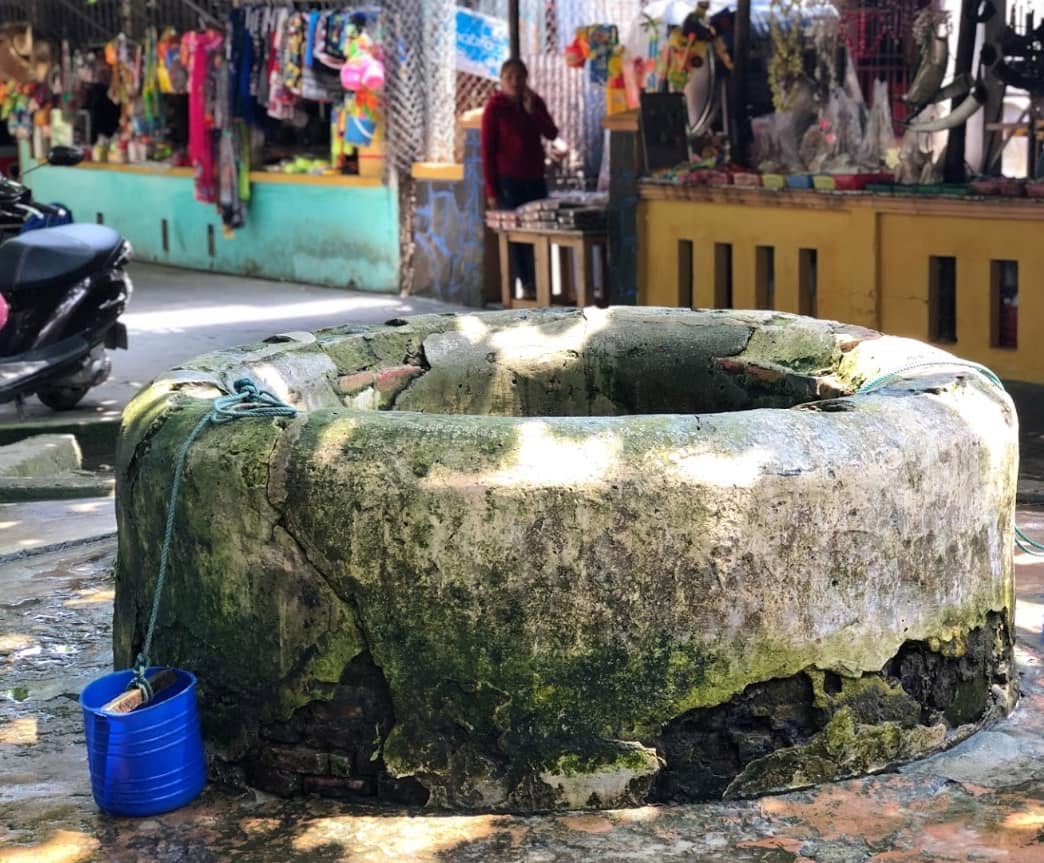
Xóm Cấm Well, also known as Xóm Trong Well, is located in the Xóm Cấm residential area of Cấm Village, Tân Hiệp Commune, on Cù Lao Chàm. It is one of the ancient wells on the archipelago that has survived to the present day and still retains distinctive architectural features believed to reflect the well-building techniques of the ancient Cham people.
Beyond providing fresh water for the island community, Xóm Cấm Well is also associated with the history of maritime trade around Cù Lao Chàm. Historical sources cited in the monument records indicate that international merchant ships once stopped at Cù Lao Chàm to replenish food, provisions and fresh water for their onward journeys.
Location and Access
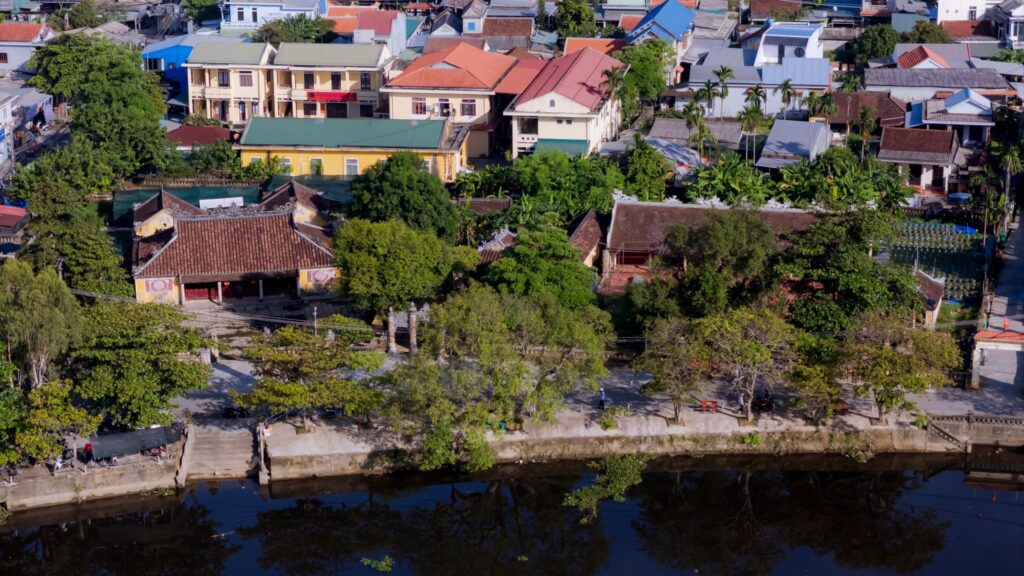
The well stands at a concrete-road junction in the Xóm Cấm residential area of Cấm Village, Tân Hiệp Commune. It is located near the boundary between Xóm Cấm and Bãi Làng, approximately 200 meters west of Bãi Làng Pier. Its location made it convenient for residents of both areas to collect water for everyday use.
From Bãi Làng Pier, walk northeast for approximately 200 meters toward the Tân Hiệp Commune sports ground. Turn right and continue along the concrete road for about 100 meters. The well is located at the next concrete-road junction.
Cù Lao Chàm and the Ancient Cham Wells
Cù Lao Chàm lies approximately 15 kilometers offshore from Hội An and has played an important role in the economic, cultural and military history of the region. Archaeological discoveries indicate that the islands were inhabited from prehistoric times and continued to experience successive periods of settlement.
Archaeological excavations conducted between 1998 and 2000 uncovered numerous artifacts at Bãi Ông, including household objects, production tools, ornaments and jar burials. The site has been dated to approximately 3,100 ± 60 BP, indicating that communities associated with the Early Sa Huỳnh period lived relatively intensively on Cù Lao Chàm more than 3,000 years ago.
At the Bãi Làng settlement site, archaeological surveys and excavations in 1998 and 1999 uncovered Cham ceramics, Islamic ceramics and Tang-period Chinese ceramics. These discoveries indicate that from approximately the 7th to 10th centuries, Champa communities lived continuously on Cù Lao Chàm and maintained strong commercial connections with merchants from the Middle East and China.
These discoveries demonstrate that Cù Lao Chàm experienced continuous human settlement from prehistoric and early historic periods and later became an important location along regional maritime trade routes.
Xóm Cấm Well and Maritime Trade
Historical sources cited in the monument records, including the Book of Sui, the Book of Tang and the Hải ngoại ký sự by the Buddhist monk Thích Đại Sán, describe Cù Lao Chàm as a stopping point for international merchant vessels traveling along the maritime route of the South China Sea. Merchants could replenish provisions and obtain fresh water from wells on the islands before continuing their voyages.
Within the wider cultural landscape of Hội An, several ancient wells with characteristics associated with Cham construction techniques are still found and, in some cases, continue to be used. They are distributed across areas including Thanh Hà, Cẩm Hà, Minh An, Tân Hiệp on Cù Lao Chàm and the Trung Phường area. Notable examples include Trà Quế Stone Well, Bá Lễ Well and Xóm Cấm Well.
Archaeologists have also discovered traces of stone-lined channels that carried water down from the mountains on Cù Lao Chàm. Together with the ancient wells, these structures demonstrate the ways in which earlier communities developed systems for collecting and distributing fresh water on the islands.
From the 16th and 17th centuries onward, Vietnamese communities became established and developed in Cù Lao Chàm and Hội An. As they settled, they built various structures for religious, cultural and everyday purposes. Local communities may have inherited, reused and repaired existing Cham wells while retaining their original forms, materials and structural characteristics. Xóm Cấm Well is considered one of the monuments that reflects this process of continuity and adaptation.
In 1989, researchers including the late Professor Trần Quốc Vượng, Vũ Hữu Minh and Trần Kỳ Phương surveyed Cham wells on Cù Lao Chàm and recorded a large brick-built well with a wooden base that was still being used by local residents. According to the monument documentation, this description may refer to Xóm Cấm Well.
In July 1997, specialists from the Hội An Centre for Heritage Management and Preservation, in cooperation with the Tân Hiệp Commune People’s Committee, surveyed the well and conducted an initial assessment of its heritage value.
Architecture and Construction Techniques
According to archaeological studies of Cham wells in Hội An, these ancient wells generally have circular, square or round-top-and-square-bottom forms. Their walls are built from bricks or stones arranged in a characteristic “collar-ring” construction. At the bottom, wooden beams, often made from ironwood, or stone elements are arranged into a square structure.
One notable characteristic is the quality of their water. Ancient Cham wells are traditionally described as having clear, sweet and abundant water, even during periods of severe drought.
The original structure of Xóm Cấm Well had a cylindrical-prismatic form, with a circular shaft, square base and traces of square pillars at the corners. The well occupies an area of approximately 15 square meters, with an opening about 118 centimeters in diameter. The shaft is built of bricks coated with lime mortar, with the bricks measuring approximately 30 × 14 × 4 centimeters. The depth from the mouth to the bottom is approximately 4.5 meters, with ironwood beams at the base.
Some parts of the well have been modified during its continued use. These include a cement-brick wall around the well mouth, a cement-paved surface and an outer surrounding edge. The original structure was altered after sections were demolished to create an inter-village road.
Compared with other ancient wells in Hội An, Xóm Cấm Well shares several characteristics in terms of form, construction techniques and treatment of the well base. These similarities provide valuable material for studying Cham well-building techniques and the process by which Vietnamese communities later inherited and adapted such techniques on the island.
Water Supply and Community Life
One of the most distinctive values of Xóm Cấm Well is its ability to provide a stable source of fresh water in the challenging environment of an offshore island.
According to the monument documentation, the well continues to provide abundant, clear, sweet and cool water. More than 30 households, comprising approximately 150 people in the Bãi Làng and Xóm Cấm areas, have used water from the well for daily needs. Fishing boats have also continued to stop at the well to obtain fresh water.
Because of its location close to the sea, the well was important not only to local residents but also to merchant and fishing vessels visiting Cù Lao Chàm. Fresh water was an essential resource for people undertaking long journeys at sea.
The well is therefore more than a simple water-supply structure. It reflects the relationship between people, freshwater resources and maritime trade in the historical development of Cù Lao Chàm.
The Belief in the Well Deity
In Vietnamese folk belief, including among the residents of Cù Lao Chàm, wells are traditionally regarded as being under the protection of a deity who governs and influences the water source. The people of Xóm Cấm have therefore maintained customs associated with the Well Deity.
Residents traditionally burn incense at the well at night. On the first and fifteenth days of the lunar month and during the Lunar New Year, nearby residents hold offerings that may include paper votive objects, incense, lamps and fruit. They pray for peace in Xóm Cấm, a stable community and an abundant supply of water.
This tradition demonstrates how a structure originally built for everyday practical needs can also become part of community spiritual life, where people express respect for water and the natural environment on which their lives depend.
Historical, Scientific and Cultural Value
Historically, no surviving document provides a precise construction date for Xóm Cấm Well. However, its present structure, construction techniques and similarities with other ancient wells in Hội An suggest that it has existed for several hundred years.
In cultural and social terms, the well played an important role in island life while also serving fishermen and merchants arriving from other places. It therefore reflects the interaction between the island community and outside traders and fishing communities during the development of maritime commerce.
From a scientific perspective, Xóm Cấm Well provides valuable information for understanding the daily life of local communities, the development of settlements and the role of Cù Lao Chàm along historical maritime routes in the South China Sea. Folk stories and oral traditions associated with the well also provide additional evidence of its importance in the cultural life of the Xóm Cấm community.
Most importantly, the construction techniques preserved in the well provide useful material for studying the system of ancient Cham wells in Hội An and the ways in which Vietnamese communities inherited and adapted earlier methods of developing freshwater sources on the island.
Xóm Cấm Well was recognized as a national-level historical and cultural monument in 2006, becoming an important part of the heritage landscape of Cù Lao Chàm.
Quick Information
| Item | Information |
|---|---|
| Name | Xóm Cấm Well |
| Other name | Xóm Trong Well |
| Location | Xóm Cấm, Cấm Village, Tân Hiệp Commune, Cù Lao Chàm |
| Heritage type | Architectural and Artistic |
| Date | Not precisely established; believed to have existed for several hundred years |
| Architectural features | Circular well shaft, square base and construction techniques associated with ancient Cham wells |
| Well opening | Approximately 118 cm in diameter |
| Depth | Approximately 4.5 m |
| Materials | Brick, lime mortar and ironwood at the base |
| Water | Clear, sweet and abundant |
| Key values | Settlement history, water-management techniques, maritime trade and local spiritual traditions |
| Heritage status | National-level historical and cultural monument, 2006 |
| Access | From Bãi Làng Pier, walk about 200 m to the sports ground, turn right and continue approximately 100 m |