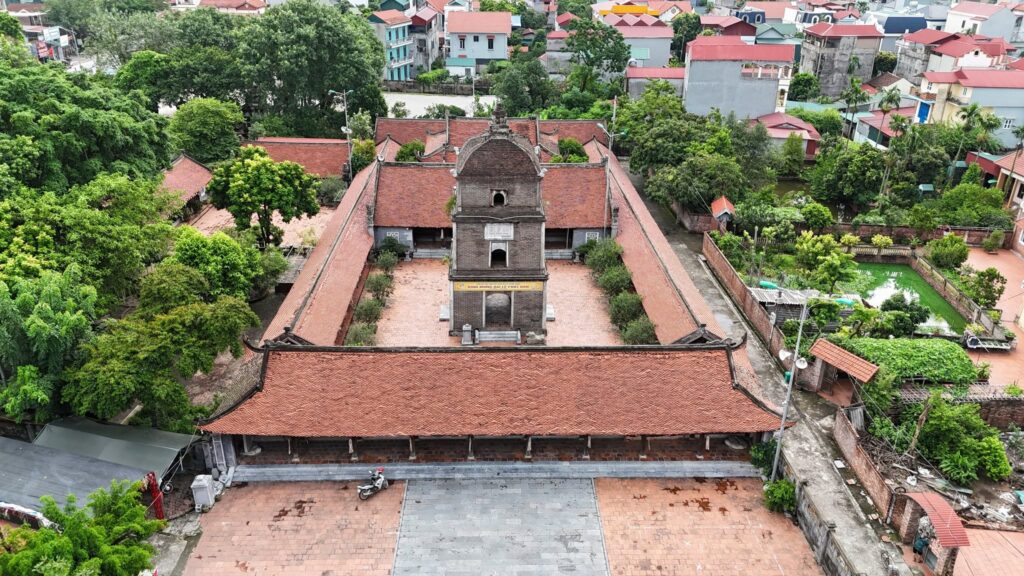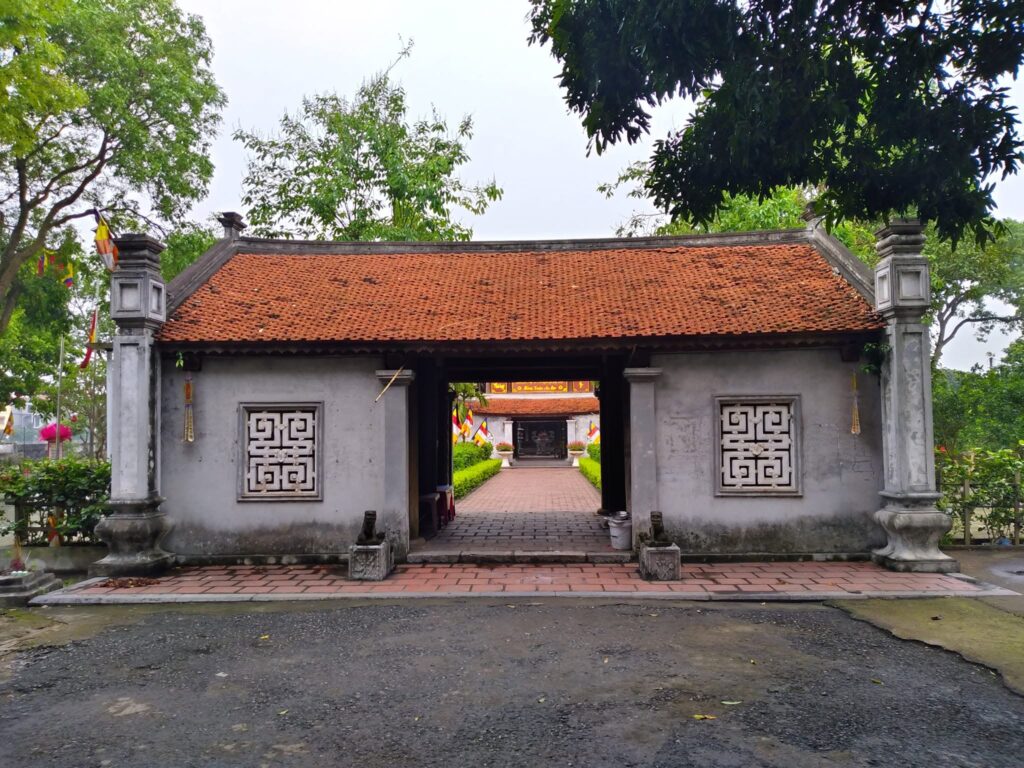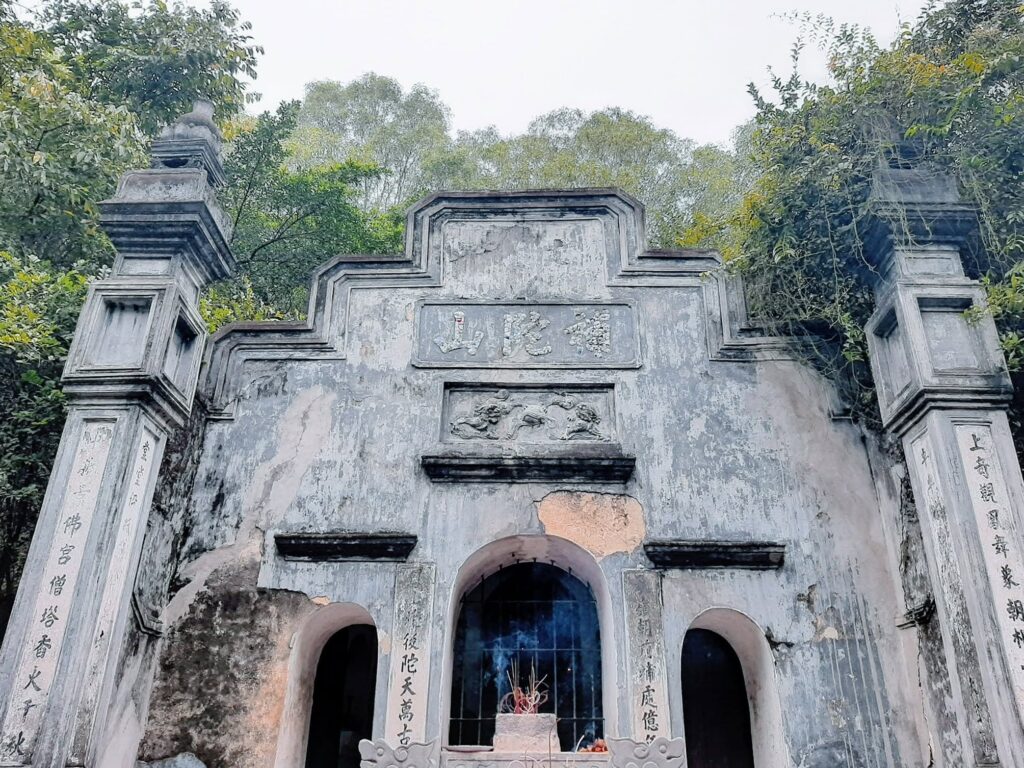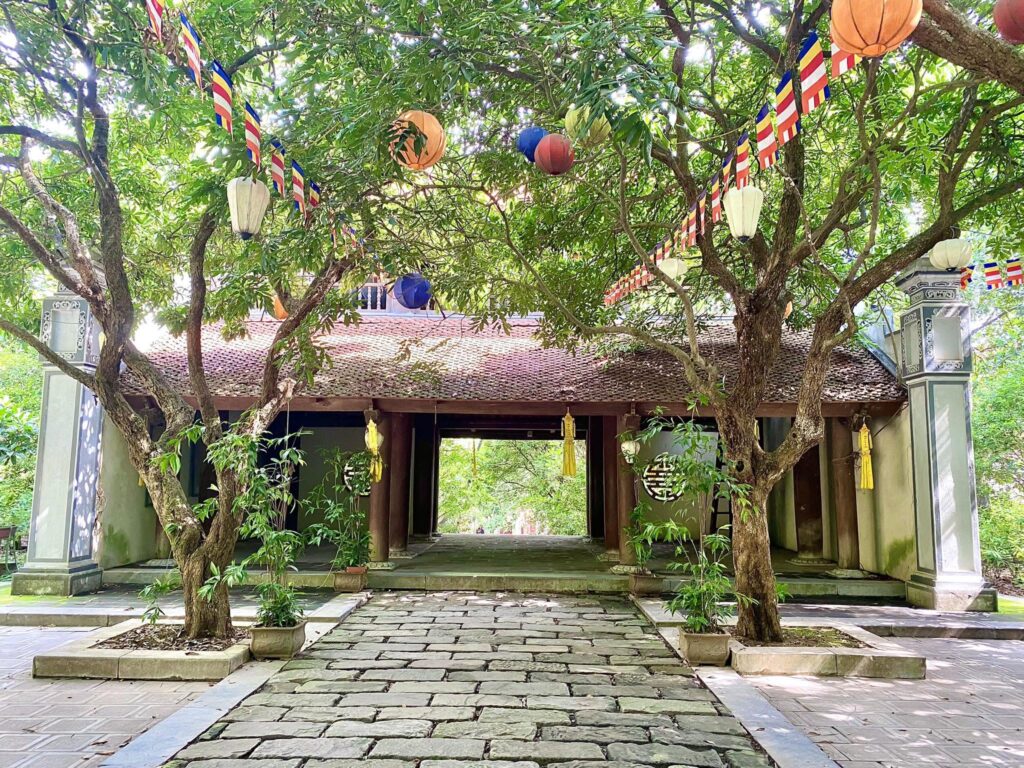
Bắc Ninh Quan họ folk songs are a distinctive form of Vietnamese traditional performing art originating in the Kinh Bắc cultural region. Historically regarded as one of the important cultural regions surrounding Thăng Long, Bắc Ninh and Kinh Bắc have been a fertile environment for the formation and development of Quan họ, a musical tradition characterized by refined melodies, poetic lyrics, intricate performance conventions, and a strong sense of community.
The aesthetic values of Quan họ are expressed through idealized and sincere concepts of human relationships, particularly respect, affection, courtesy, and faithfulness. Over the course of its development, generations of artisans creatively absorbed elements from different folk traditions while establishing a distinctive musical style and performance culture of its own.
The Quan họ Cultural Space
Traditional Quan họ activities follow established conventions and highly structured performance practices. Quan họ can be performed in several contexts, including hát canh, hát hội, hát chúc, hát mừng, and hát thờ. Among these, hát canh and antiphonal singing are particularly characteristic forms.
The traditional Quan họ cultural space is closely connected with village communities, festivals, and the everyday cultural life of Kinh Bắc. It is not simply a place where songs are performed, but also an environment in which generations transmit songs, performance conventions, etiquette, and cultural values associated with Quan họ.
Male-Female Antiphonal Singing
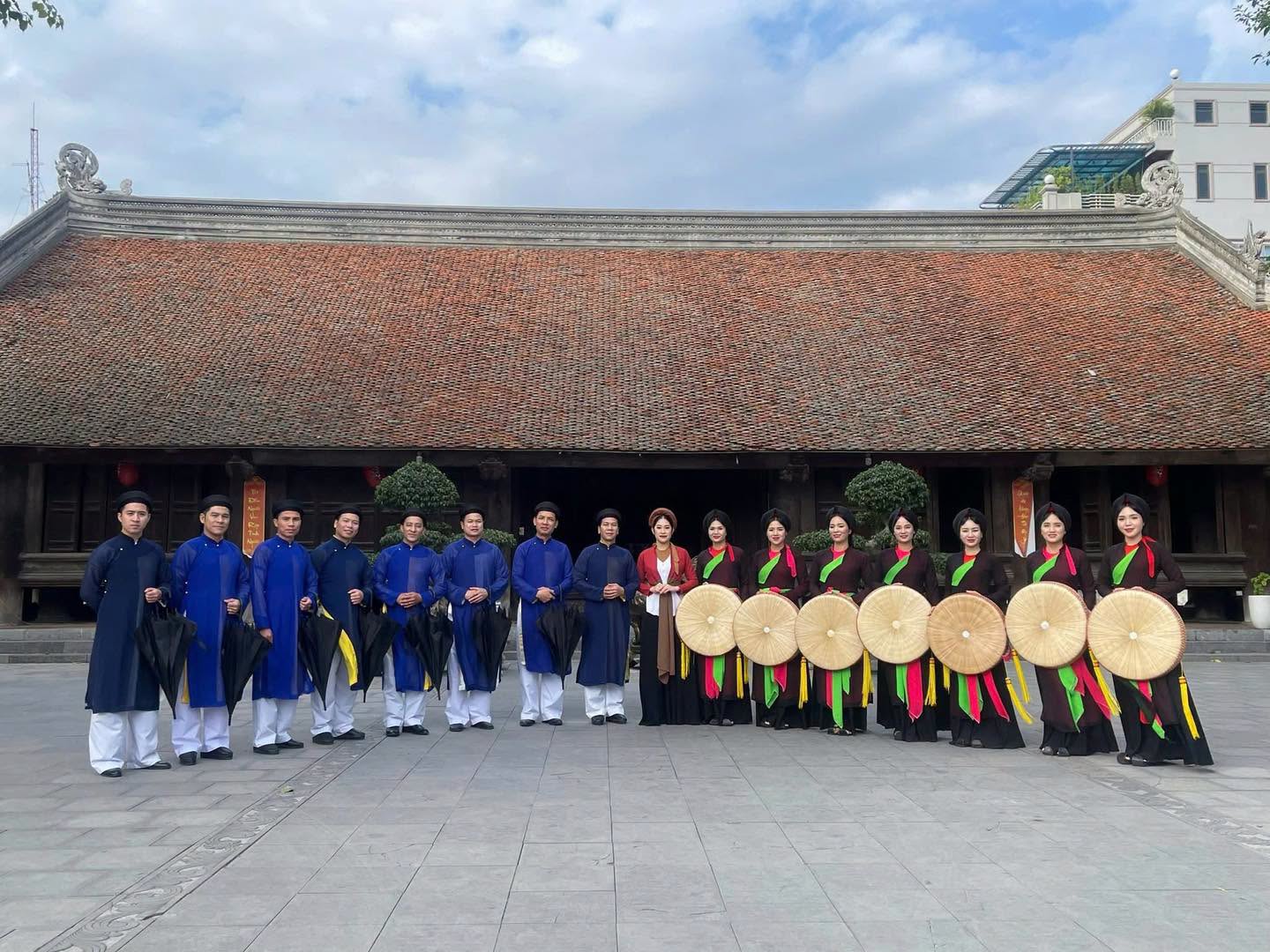
One of the most distinctive characteristics of Bắc Ninh Quan họ is its male-female antiphonal singing, traditionally performed between a pair of male singers and a pair of female singers.
Within each pair, one singer takes the lead while the other provides the supporting vocal line. Their voices must blend so closely that they can sound almost like a single voice. This distinctive technique demonstrates the sophisticated relationship between vocal performance and the collective nature of Quan họ singing.
Typically, a female pair from one village sings with a male pair from another village. The two sides may sing the same melody while using different lyrics, creating an exchange through words, meanings, and musical responses.
Improvisation and a Rich Repertoire of Melodies
One of the remarkable characteristics of Bắc Ninh Quan họ is its tradition of improvisation during performance. Based on established lyrics, liền anh and liền chị can create or adapt new words to respond to the melody and meaning of their singing partners.
According to the source material, Bắc Ninh Quan họ has 213 different giọng (melodic forms), giving it an exceptionally rich melodic repertoire among Vietnamese folk music traditions.
Researchers, collectors, and Quan họ communities have identified approximately 400 songs. A Quan họ song generally consists of two components: the main lyrics and supplementary vocal sounds.
The main lyrics form the core of the song and convey its principal meaning. They frequently draw on folk poetry, ca dao, the six-eight verse tradition, and literary allusions. As a result, Quan họ lyrics are often highly refined, poetic, and expressive.
The supplementary vocal sounds include syllables and vocal ornaments such as “i,” “hi,” “ư,” and “hư la.” These sounds help the singing flow smoothly, enrich the meaning and expression of the main lyrics, and strengthen the musical character of the performance.
The Relationship Between Music and Lyrics
Bắc Ninh Quan họ represents a sophisticated artistic relationship between music and lyrics. Traditional Quan họ singers referred to each melodic form as a giọng, with specific lyrics associated with each melodic structure.
During a performance, singers must master melody, lyrics, and vocal techniques simultaneously. Four techniques commonly associated with Quan họ singing are vang, rền, nền, and nảy, each contributing to the distinctive vocal character of the tradition.
The combination of these techniques gives Quan họ singing its resonance, sustained quality, flexibility, and expressive depth.
Themes and Poetic Beauty
Quan họ songs frequently explore themes closely connected with human relationships, particularly love, affection, longing, remembrance, and faithfulness.
The lyrics are often simple in language yet deeply lyrical and emotional. They are closely associated with village life, rural landscapes, festivals, and encounters between liền anh and liền chị.
Feelings of joy at reunion, longing during separation, and the emotional anticipation of meeting again are expressed through carefully crafted lyrics and melodies. This combination of musical beauty and emotional depth has allowed Quan họ to remain appealing across generations.
Community Values and Local Identity
According to Decision No. 4.COM 13.76 of the Intergovernmental Committee of the 2003 UNESCO Convention for the Safeguarding of the Intangible Cultural Heritage, Quan họ songs express the spirit, philosophy, and local identity of communities in the region while strengthening relationships within villages and among villages that share this cultural practice.
The value of Quan họ therefore lies not only in individual songs but also in the way the community practices and transmits the heritage. Quan họ singing creates opportunities for cultural exchange, social connection, and the transmission of values from one generation to the next.
Safeguarding and Promoting Quan họ
Safeguarding Bắc Ninh Quan họ involves a wide range of activities aimed at maintaining both its traditional elements and the cultural environment in which the heritage developed.
Traditional artisans play an essential role in transmitting songs, melodies, performance conventions, and vocal techniques. Recognizing and honoring artisans is an important way of encouraging them to continue preserving and teaching Quan họ within the community.
Community activities such as festivals, competitions, and performances are also maintained at local and provincial levels, providing opportunities for people to continue practicing and introducing the heritage to wider audiences.
Research, collection, compilation, and publication of materials on Quan họ also help bring its distinctive cultural values to the public, particularly younger generations.
Preserving the Quan họ Cultural Space
Safeguarding Quan họ involves more than preserving songs. It is closely connected with the protection of cultural spaces, historical and cultural sites, cultural institutions, traditional festivals, customs, and community practices that have historically provided the environment in which Quan họ was created and transmitted.
Preserving these spaces helps maintain the relationship between Quan họ songs and community life rather than reducing Quan họ to a purely stage-based performance.
Planning, conserving, and restoring traditional cultural spaces therefore form an important part of maintaining the heritage within its community context.
Quan họ in Contemporary Life
Safeguarding Quan họ does not necessarily mean freezing every aspect of the tradition in its historical form. An important principle is to preserve its core traditional elements, including old Quan họ songs, traditional forms of social practice, performance conventions, customs, and community traditions.
At the same time, new artistic creations inspired by Quan họ and accepted by the community can contribute to giving the tradition new vitality in contemporary life.
Maintaining a balance between safeguarding traditional values and allowing appropriate creativity enables Bắc Ninh Quan họ to remain a living cultural practice while preserving its connection with the communities that created, practiced, and transmitted it across generations.
Representative Intangible Cultural Heritage of Humanity
Bắc Ninh Quan họ folk songs were inscribed by UNESCO on the Representative List of the Intangible Cultural Heritage of Humanity in 2009.
The inscription contributed to greater awareness of the value of Quan họ’s musical traditions at local, national, and international levels, while encouraging cultural exchange, dialogue among communities, and respect for cultural diversity.
Today, Quan họ continues to be practiced, taught, and transmitted within the community. Its rich repertoire of melodies, male-female antiphonal singing, improvisational tradition, performance conventions, and refined forms of social interaction together constitute one of the distinctive cultural heritages of the Kinh Bắc region.
Safeguarding Quan họ therefore means preserving not only traditional songs but also a cultural space, a way of social interaction, and a community tradition that has evolved and been transmitted across generations.
Quick Information
| Item | Information |
|---|---|
| Heritage name | Bắc Ninh Quan họ Folk Songs |
| Type | Folk Performing Arts |
| Cultural region | Kinh Bắc, Bắc Ninh |
| Key characteristics | Male-female antiphonal singing, hát canh, festival singing, improvisation |
| Number of melodic forms | 213 giọng (melodic forms), according to the source |
| Number of songs | Approximately 400 songs, according to research and community records |
| Vocal techniques | Vang, rền, nền, nảy |
| Outstanding values | Music, lyrics, improvisation, performance conventions, and community culture |
| UNESCO inscription | Representative List of the Intangible Cultural Heritage of Humanity |
| Year of inscription | 2009 |
| Province | Bắc Ninh Province |
Location: The Quan họ cultural region of Bắc Ninh Province, Vietnam.