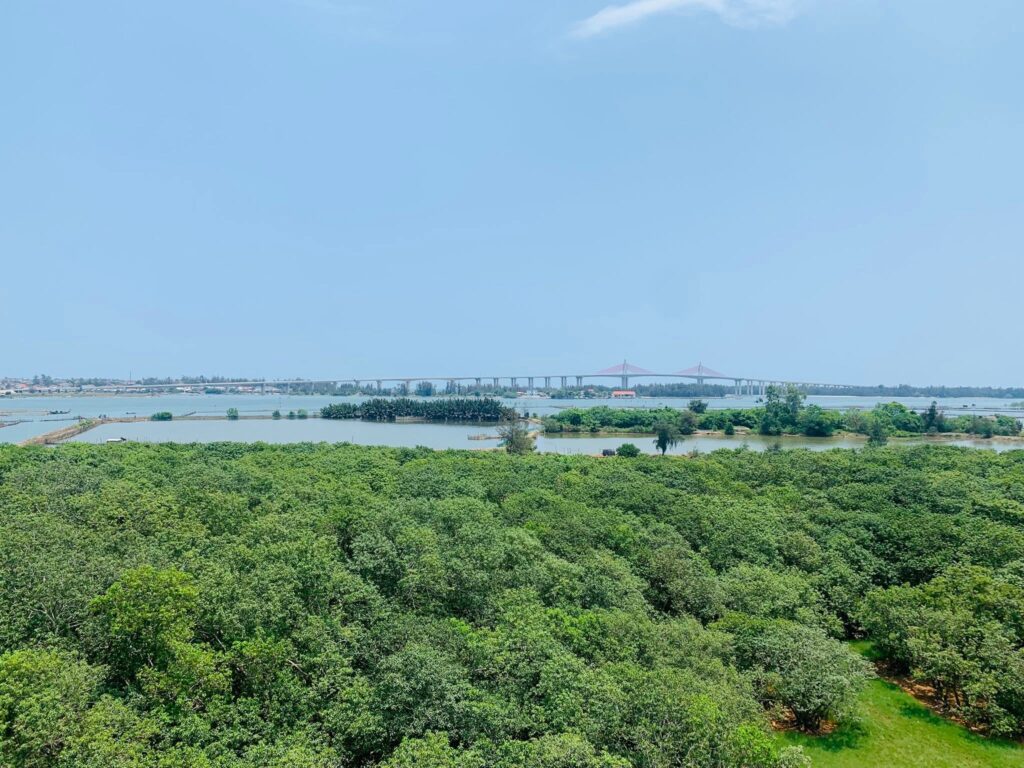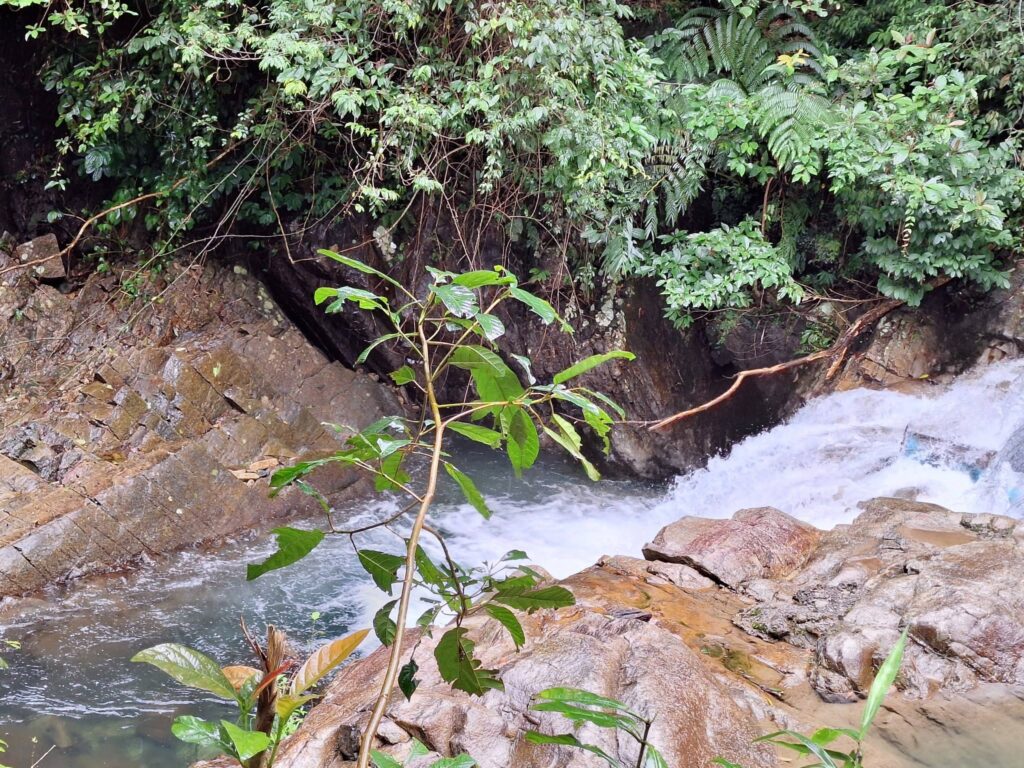
Located on a hill near Cam Ly Waterfall, Cam Ly Church, also known as Son Cuoc Church, is one of Da Lat’s most distinctive religious landmarks. The church stands at 11 Nguyen Khuyen Street, Ward 5, Da Lat City, just a few hundred meters from Cam Ly Waterfall.
Unlike many churches built in Da Lat during the early development of the city, Cam Ly Church was designed specifically to serve the local ethnic minority communities. Its architecture combines the traditional form of a Central Highlands communal house, or rong house, with the structural and spatial principles of a Catholic church, creating a distinctive architectural expression in the highland city.
A Church Inspired by the Spirit of the Central Highlands
Among the Catholic structures built in Da Lat from the 1920s to the 1960s, Cam Ly Church stands apart because of its close connection with the indigenous communities of the region.
The idea for the church was initiated by French priest Patrice Bouttet, a member of the Paris Foreign Missions Society (MEP). Having spent much of his life living and working among K’Ho, Lach and Chil communities, he envisioned a church where local worshippers could encounter Christianity within a setting that remained closely connected to their own cultural traditions.
The concept sought to create a shared spiritual space between the Christian image of God and the indigenous concept of Yang, the Sky or divine being revered by Central Highlands communities. This approach became an important expression of cultural integration through architecture.
According to the provided materials, construction began around late 1959 or in 1960 and was completed in 1968 after nearly eight years of work. The design is attributed to architects Nguyen My Loc and Huynh Ngoc An, with local craftsmen and ethnic artisans contributing their skills to the construction.
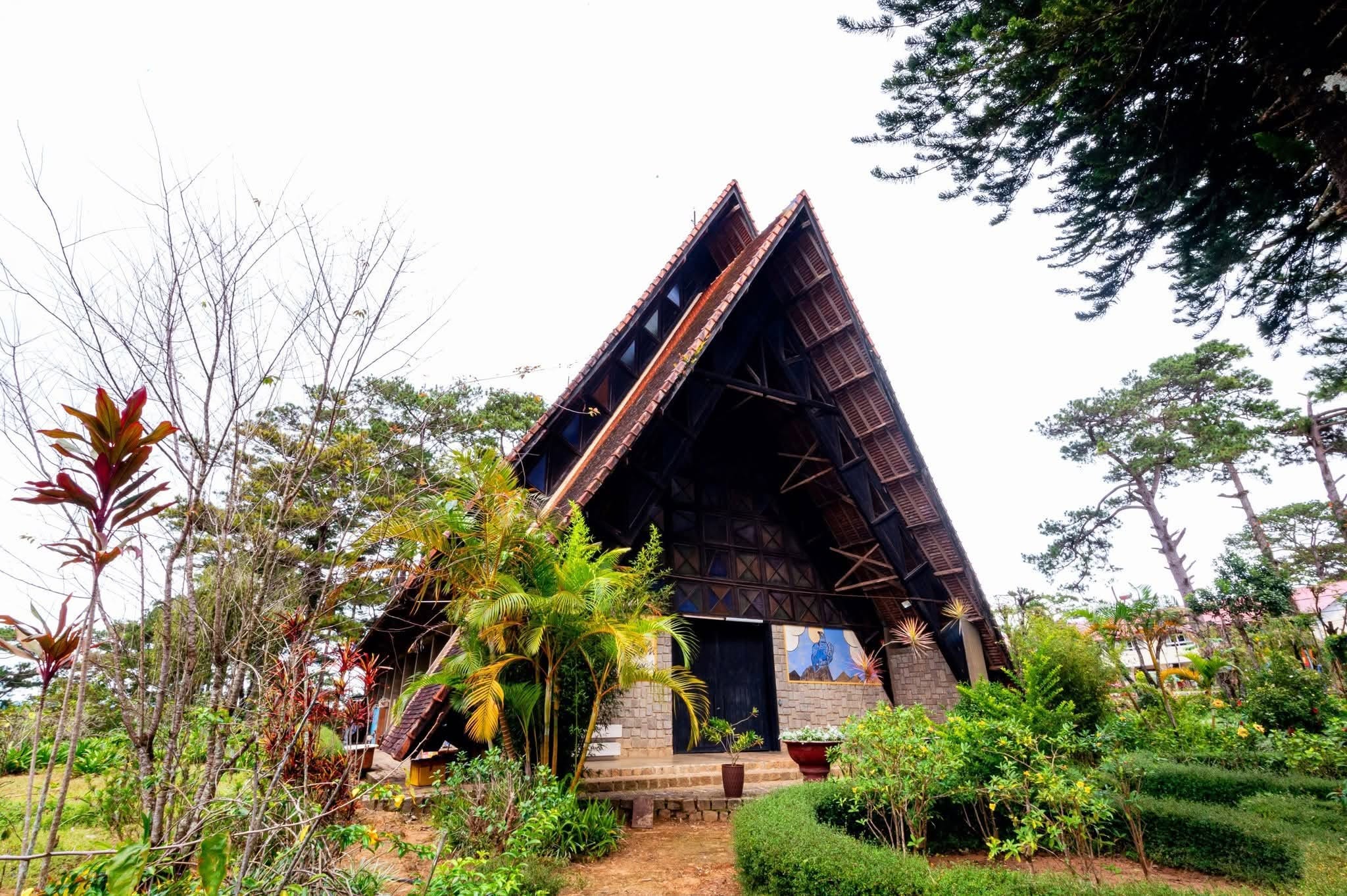
The building uses materials closely associated with the highlands, including wood, stream stones, roughly split stone and fired clay tiles. Its foundations were carefully reinforced to support the substantial weight of the roof, columns and structural framework.
The Highland Communal-House Roof and Indigenous Symbols
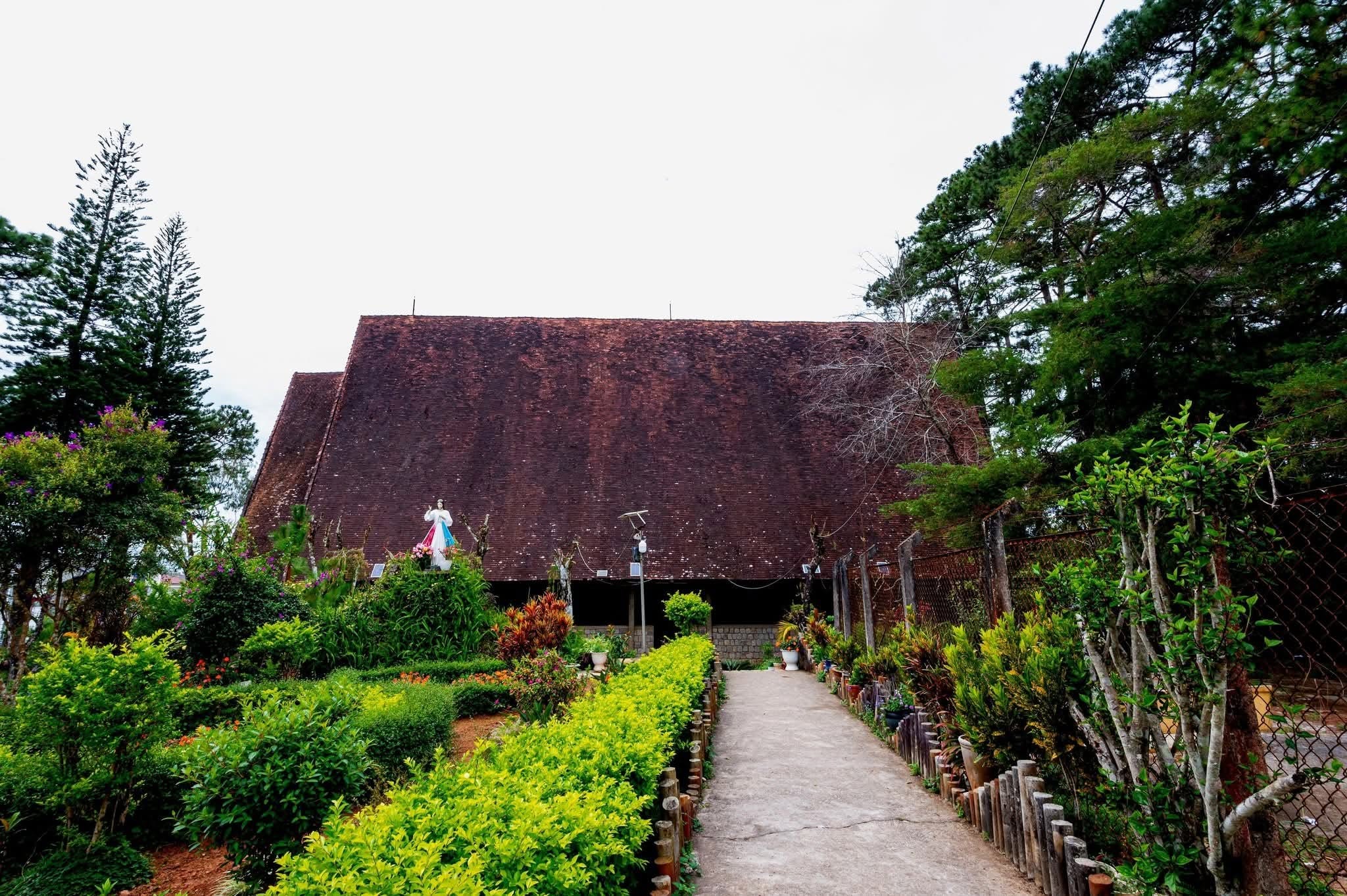
The most striking feature of Cam Ly Church is its tall, steeply pitched roof rising dramatically above the surrounding landscape. Viewed from the side, the two roof planes resemble a giant axe blade, reaching approximately 17 meters in height.
The roof is covered with around 80,000 tiles, with a total weight estimated in the source material at approximately 90 tons. Its distinctive form evokes the traditional roof of a Central Highlands rong house while giving the church a powerful vertical presence.
The entrance is decorated with animal imagery familiar to the traditional worldview of the local communities. The tiger represents strength, while the phoenix symbolizes wisdom. These images can also be understood as representing the transformation of the wild strength of the mountains into a gentler spiritual life through religious faith.
Animal imagery continues inside the church, where deer, birds and fish appear as symbolic representations of innocence, closeness and other qualities associated with the natural world.
One of the most distinctive details is found beneath the cross, beside the wooden sanctuary. Three buffalo heads are displayed at different heights. Buffalo have traditionally played an important role in ceremonial life among Central Highlands communities, serving as offerings in rituals associated with communication with Yang. Within the Christian setting of Cam Ly Church, the image takes on a new meaning as an expression of devotion to God.
An Interior Shaped by Highland Culture
Beyond the three large entrance doors lies the main church interior, covering nearly 400 square meters. The space combines a solemn, mysterious atmosphere with the openness associated with the architecture of the highlands.
Low walls built from split stone rise to approximately 3 meters and are combined with wooden-framed stained-glass windows in shades of blue, brown and yellow. The adjoining window frames extend toward the roof, together with a series of structural trusses decorated with stylized Central Highlands motifs.
The dominant geometric forms are squares and triangles, interpreted in the source material as representations of the moon and sun within indigenous cosmological symbolism.
Along both sides of the church are stone artworks, including scenes depicting the Passion of Jesus, his death and resurrection. The combination of Christian religious art with local patterns, materials and symbolic imagery creates an interior that is distinctly Catholic while retaining a strong Central Highlands character.
Another notable feature is the solid stone altar, described in the source material as having been transported from the Cam Ly stream and shaped in a deliberately rustic style. The altar further emphasizes the connection between spiritual life, nature and the highland environment.
A Church for the Ethnic Minority Communities
From its foundation, Cam Ly Church served primarily as a place of worship for ethnic minority Catholic communities living around the Cam Ly stream valley.
The church grounds were once associated with a convent and an orphanage operated by the Daughters of Charity of Saint Vincent de Paul, which cared for and raised orphaned children from ethnic minority communities.
According to the provided materials, the church continues to hold Masses in both Vietnamese and K’Ho. It also welcomes pilgrims, architectural researchers and visitors interested in the relationship between Catholicism and the traditional cultures of the Central Highlands.
Cam Ly Church in Da Lat’s Cultural Landscape
What makes Cam Ly Church particularly distinctive is not simply its towering roof or combination of stone and wood, but the deliberate incorporation of Central Highlands cultural elements into a Catholic architectural setting.
From the rong-house-inspired roof and geometric motifs to the animal imagery, buffalo symbolism, natural materials and handcrafted details, the building brings together two cultural traditions in a remarkably distinctive form.
Set among the pine-covered hills of Da Lat and close to Cam Ly Waterfall, Cam Ly Church is more than a place of worship. It is also an important architectural and cultural landmark, offering visitors a glimpse into the meeting point between Catholic faith and the indigenous heritage of Vietnam’s Central Highlands.