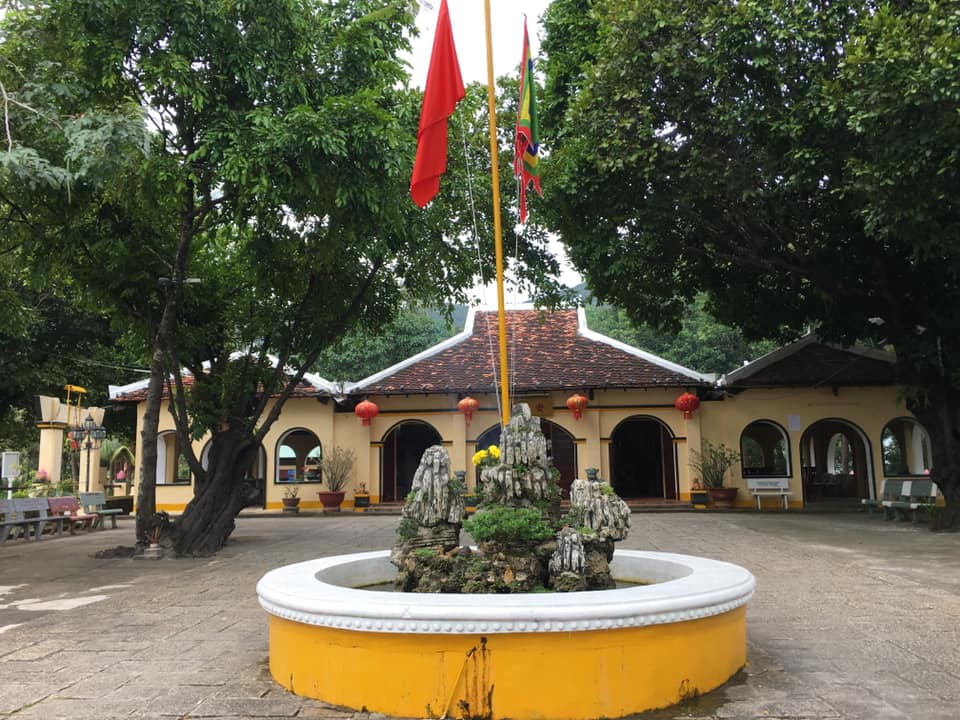
Cat Dang Lacquerware Village, located in Van Thang Commune, Ninh Binh Province, is one of the most renowned traditional handicraft villages in northern Vietnam. With a history spanning more than 600 years, the village is celebrated for its sophisticated lacquer techniques, particularly the traditional art of red lacquer and gold gilding used to decorate religious statues, ceremonial objects, and architectural features.
From intricately decorated statues, ancestral altars, and gilded wooden panels in temples and communal houses to contemporary household products and interior decorations, Cat Dang’s lacquer craft has continuously evolved to meet the needs of different generations. Skilled artisans transform wood, bamboo, and other natural materials into products that combine artistic beauty with practical functionality.
On May 8, 2017, the Traditional Lacquer Craft of Cat Dang was officially included in Vietnam’s National List of Intangible Cultural Heritage by the Ministry of Culture, Sports and Tourism. This recognition marked an important milestone in acknowledging the cultural significance of a craft preserved and developed by generations of local artisans.
Today, Cat Dang is known not only for its traditional lacquerware but also for its expanding production of lacquered bamboo products for domestic and international markets. By combining inherited craftsmanship with modern production technologies, the village is creating new opportunities for sustainable development and cultural tourism in Ninh Binh Province.
History of Cat Dang Lacquerware Village and Its 600-Year Heritage
Cat Dang Village is located in Van Thang Commune, Ninh Binh Province. Before Vietnam’s administrative restructuring, it belonged to Yen Tien Commune, Y Yen District, Nam Dinh Province.
The area has a longstanding tradition of handicraft production, with generations of residents specializing in woodworking, decorative painting, and the creation of objects used in religious and cultural settings.
According to local historical documents, the lacquer craft of Cat Dang originated around the 14th century, giving the village a heritage of more than 600 years.
Local traditions associate the founding of the craft with two respected masters, Ngo Duc Dung and Ngo An Ba.
Some other accounts record their names as Ngo Dung and Dinh Ba and connect the introduction of the craft with the Dinh Dynasty.
Because these accounts differ, the precise names of the craft founders and the date of its introduction require further comparison with historical records, village traditions, and official heritage documentation.
Nevertheless, the tradition of honoring the founding masters remains an important part of Cat Dang’s cultural identity.
From early decorative painting techniques, local artisans gradually developed specialized skills in producing lacquered objects for traditional architecture and places of worship.
In Vietnamese communal houses, temples, pagodas, and shrines, red lacquer and gold-gilded objects symbolize solemnity and reverence toward deities, ancestors, and honored historical figures.
Traditional products associated with Cat Dang include religious statues, ceremonial thrones, altar shrines, carved decorative screens, horizontal inscribed panels, parallel couplet boards, and ornamental architectural details.
Creating these objects requires technical precision, an understanding of traditional decorative compositions, and the ability to combine carving, lacquer application, and gilding.
Over generations, craft knowledge was transmitted through families and local workshops, helping establish a community of highly skilled artisans.
Apprentices traditionally began with basic tasks such as preparing materials, smoothing surfaces, and applying preliminary coatings.
Only after gaining sufficient experience would they undertake more demanding work, including decorative painting, inlay, polishing, and gold gilding.
This gradual learning process has played an important role in maintaining the quality and distinctive identity of Cat Dang lacquerware.
Recognition as National Intangible Cultural Heritage
On May 8, 2017, the Ministry of Culture, Sports and Tourism included the Traditional Lacquer Craft of Cat Dang in Vietnam’s National List of Intangible Cultural Heritage.
The recognition is particularly meaningful because the protected heritage encompasses more than the finished objects themselves.
It also includes the specialized knowledge, production techniques, traditional practices, and intergenerational transmission of skills that sustain the craft.
This designation provides an important foundation for efforts to preserve, promote, and develop Cat Dang’s traditional lacquer-making heritage.
Traditional Lacquer Techniques and the Art of Red Lacquer and Gold Gilding
Lacquerware production is a demanding craft involving numerous stages, including material preparation, shaping, surface treatment, lacquer application, polishing, and decoration.
One of Cat Dang’s distinctive strengths is the ability of its artisans to apply traditional lacquer techniques to different materials, ranging from wood to bamboo and other suitable natural substances.
Selecting and preparing materials
Traditional Cat Dang lacquerware commonly uses wood, including jackfruit wood and vang tam wood, for religious statues, ceremonial objects, and decorative products.
Other materials, such as bamboo, paper made from traditional do fibers, and decorative inlays, may also be incorporated depending on the product’s structure and purpose.
Selecting appropriate materials is essential because the quality of the base directly affects durability, shaping, and the final lacquer surface.
Wooden products must be carefully shaped, prepared, and smoothed before the lacquer process begins.
For laminated bamboo products, preparation can be more complex because the material must be treated to reduce the risks of deformation, insect damage, and cracking.
Crafting laminated bamboo products
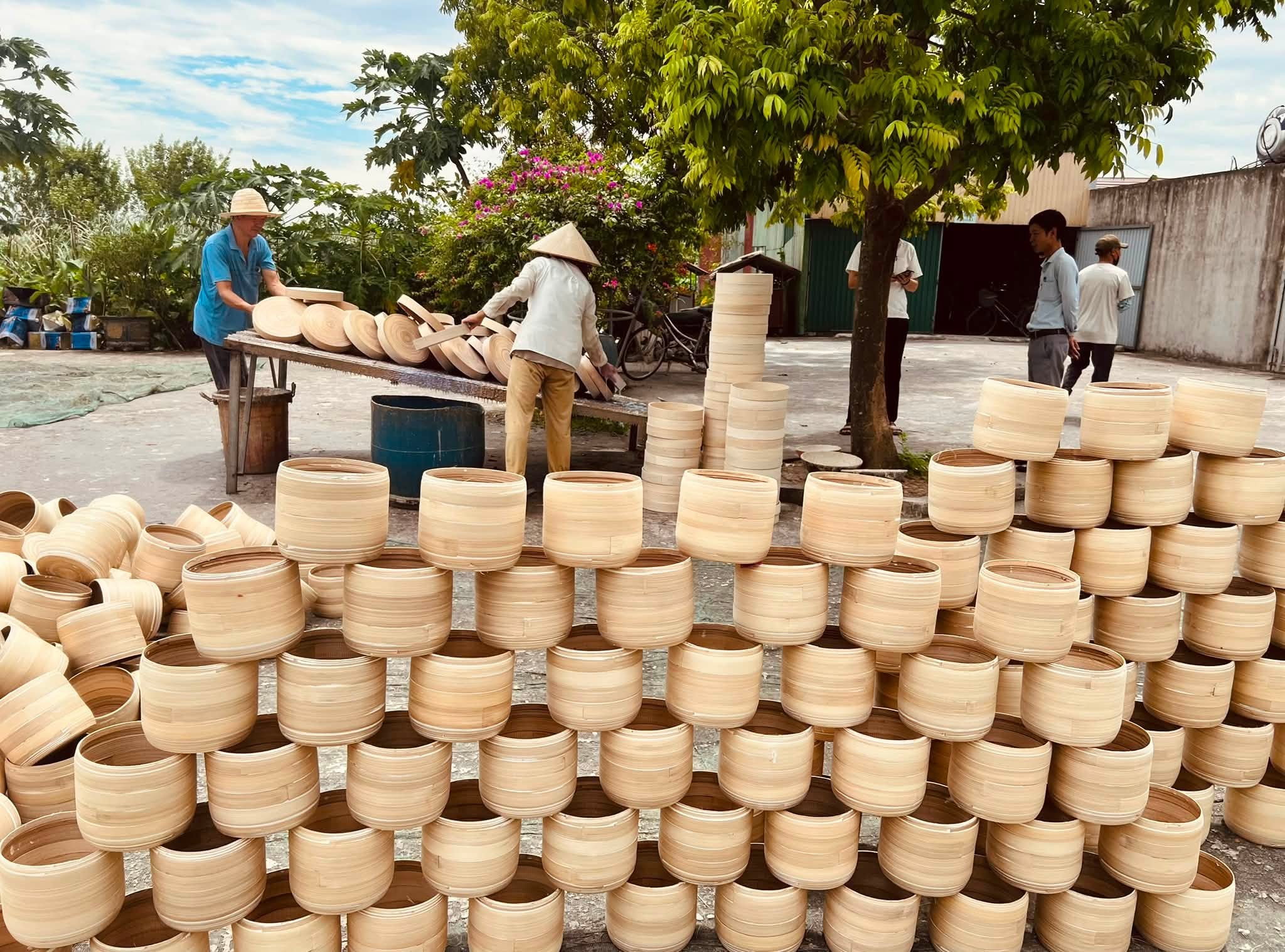
One of the most notable developments in Cat Dang is the production of lacquerware using shaped and laminated bamboo.
According to local production experience, artisans select bamboo of suitable maturity, avoiding stems that are either too young or excessively old.
The bamboo is soaked in water for an extended period before further processing. At some workshops, soaking may last approximately six months.
After soaking, the bamboo is dried, split into strips, trimmed, and prepared for shaping.
The strips are bent around molds, assembled into the desired form, and secured using suitable adhesives.
Workers carefully arrange the bamboo layers to minimize gaps and maintain a stable structure.
The unfinished products are then dried, sanded, and polished in preparation for the lacquer-finishing stages.
Bui Thi Thu, an experienced producer of laminated bamboo lacquerware, has emphasized the importance of selecting suitable bamboo and treating it carefully before production.
Her experience illustrates that the quality of lacquerware depends not only on the decorative surface but also on the preparation of the underlying material.
Applying primer, lacquer layers, and polishing
Once the base structure has been completed, the product enters the lacquer-finishing process.
Depending on the design and production method, several layers of primer and lacquer may be applied.
Each coating must be prepared and handled appropriately to ensure adhesion, consistency, and a smooth surface.
Sanding and polishing help refine the surface, control its sheen, and create the desired decorative effects.
In artistic lacquerware, coating and polishing may be repeated several times to achieve greater visual depth and reveal decorative layers.
The process requires patience because imperfections in an early stage may affect the appearance of the finished piece.
Mother-of-pearl inlay, eggshell decoration, and ornamental patterns
Some Cat Dang lacquerware incorporates mother-of-pearl inlay, using iridescent shell fragments to create intricate decorative patterns.
Eggshell inlay may also be used to produce distinctive textures and contrasting color effects.
Artisans combine these techniques with painted motifs, carefully selected colors, and other decorative methods suited to each product.
From traditional patterns to contemporary compositions, this artistic flexibility allows Cat Dang lacquerware to appeal to different aesthetic preferences.
The traditional art of red lacquer and gold gilding
Red lacquer and gold gilding, known in Vietnamese as son son thep vang, are among the most important techniques associated with Cat Dang’s traditional religious craftsmanship.
Objects such as religious statues, ceremonial thrones, altar shrines, inscribed wooden panels, and parallel couplet boards are often decorated with rich red lacquer and gilded details.
The combination creates a solemn and elaborate appearance suited to traditional Vietnamese religious architecture.
The process requires careful surface preparation, multiple finishing stages, and precise application of decorative gilding materials.
Carved details, borders, and ornamental patterns demand particular attention, as even small mistakes may affect the overall composition.
The artisan’s expertise is therefore demonstrated through the combination of technical skill, artistic judgment, and knowledge of traditional materials.
Cat Dang Lacquerware in Modern Production and International Markets
Originally associated primarily with religious objects and traditional decorative products, Cat Dang has gradually expanded into contemporary handicrafts for household use and interior decoration.
Alongside statues, gilded panels, and architectural ornaments, workshops now produce a diverse range of decorative and functional items.
Representative products include vases, decorative containers, lacquer paintings, relief artworks, trays, boxes, and other interior accessories.
Laminated bamboo lacquerware has become an increasingly important product category because of its relatively light weight, design flexibility, and suitability for contemporary interiors.
Compared with certain traditional materials, bamboo can offer advantages in transportation, raw material costs, and product design.
However, the durability and environmental performance of finished products depend on their processing methods, adhesives, coatings, and actual manufacturing practices.
Combining traditional craftsmanship with modern machinery
Historically, most stages of Cat Dang lacquerware production were performed by hand.
Today, many workshops use machinery to assist with cutting, splitting, shaping, sanding, and other suitable production processes.
According to Dang Thanh Cong, the owner of a lacquerware production workshop in Van Thang Commune, the introduction of machinery in recent years has helped increase production capacity.
He has also noted growing demand for laminated bamboo lacquerware and increasingly demanding customer expectations regarding quality and craftsmanship.
These developments reflect the village’s transition from small-scale household production toward a manufacturing model that combines traditional techniques with more organized commercial operations.
Nevertheless, many stages, particularly detailed shaping, surface finishing, decoration, and quality inspection, continue to require experienced craftspeople.
Quality control for export products
As Cat Dang lacquerware enters international markets, manufacturers must meet different requirements depending on the product’s intended use and the regulations of the destination market.
For decorative products, important considerations may include durability, finishing quality, consistency, and material safety.
For kitchenware and products intended to come into contact with food, manufacturers must pay particular attention to the suitability of materials, coatings, and production processes.
Such products must comply with applicable food-contact safety requirements rather than relying solely on their traditional craftsmanship or natural-material origins.
According to Trinh Ngoc Thuy, Deputy Director of Nam Hai Company in Van Thang Commune, quality control is essential in producing handicrafts for export.
This illustrates how the development of traditional lacquerware increasingly depends on both inherited expertise and the ability to satisfy modern market standards.
Cat Dang products in international markets
According to information provided by local producers and authorities, Cat Dang lacquerware has reached international markets, including the United States, European Union countries, Japan, and Russia.
Export products mainly include handicrafts, household accessories, and decorative items.
Their presence in overseas markets demonstrates the adaptability of traditional Vietnamese craftsmanship to changing consumer preferences.
From gilded religious objects used in communal houses and temples, Cat Dang artisans have expanded into contemporary designs suitable for modern homes and commercial interiors.
Economic importance of the craft village
According to the supplied local information, more than 3,000 workers in Van Thang Commune are involved in lacquerware production.
This figure indicates the importance of handicraft manufacturing to the local economy, although it should be updated against a clearly dated official statistical source before being presented as a current employment total.
Lacquerware production creates employment not only for artisans but also for people involved in material supply, product shaping, transportation, packaging, and commercial distribution.
Local authorities have also identified equipment modernization, trade promotion, and brand development as important priorities.
According to Pham Tien Dien, Vice Chairman of the Van Thang Commune People’s Committee, the locality aims to support traditional handicraft production while preserving cultural identity and creating favorable conditions for businesses to expand.
The combination of heritage preservation and commercial development is contributing to a new phase in the evolution of Cat Dang Lacquerware Village.
Preserving Cat Dang’s Lacquer Heritage and Developing Craft Village Tourism
Beyond its role as a production center, Cat Dang holds considerable cultural and educational significance.
With a history extending over 600 years and recognition as National Intangible Cultural Heritage, its lacquer-making tradition offers valuable insights into Vietnamese handicrafts, traditional decorative arts, and village life.
The annual festival honoring the craft founders
According to local tradition, the festival commemorating the founders of Cat Dang’s lacquer craft is generally held from the 14th to the 16th day of the first lunar month.
The occasion allows residents to honor the ancestors and craft masters credited with passing down traditional lacquer-making skills.
It also provides an opportunity for the community to celebrate its heritage and encourage younger generations to appreciate the village’s traditional occupation.
Festival dates and programs may vary each year. Visitors interested in attending should confirm the schedule with local authorities before traveling.
Introducing Cat Dang’s heritage at Ninh Binh Provincial Museum
As part of efforts to preserve and promote traditional craftsmanship, Ninh Binh Provincial Museum has presented Cat Dang’s lacquer heritage through photographs, artifacts, products, and documentary materials.
According to the supplied information, the exhibition was organized around three main themes.
Cat Dang Lacquerware: The Essence of Vietnamese Craftsmanship introduces the village’s history, traditional techniques, and cultural significance.
The Living Heritage of Cat Dang Lacquerware Village explores how local artisans have maintained and developed their craft while adapting to changes in contemporary life.
Representative Products of Cat Dang Lacquerware Village showcases traditional and modern products, highlighting the diversity of materials, techniques, and decorative styles.
The exhibition featured more than 200 photographs, lacquerware products, and documentary materials associated with the craft.
Through images of artisans, production processes, and stories of intergenerational craftsmanship, visitors could gain a deeper understanding of the village’s heritage.
Museum staff also provided explanations and assistance to help visitors explore the historical and cultural significance of Cat Dang lacquerware.
Those wishing to see this exhibition should verify its dates and current availability, as special exhibitions may only operate for a limited period.
Experiencing traditional lacquer craftsmanship in Cat Dang
Cat Dang has potential to develop craft village tourism centered on its distinctive production techniques.
At workshops able to welcome visitors, travelers may learn about material selection, product shaping, lacquer application, polishing, and decoration.
The production of laminated bamboo lacquerware is particularly interesting because visitors can observe how simple strips of bamboo are transformed into shaped objects with carefully finished surfaces.
Meeting local artisans may also provide insights into the technical challenges, creativity, and dedication involved in the craft.
However, not all production facilities offer regular public visits.
Travelers should contact workshops or local authorities in advance to confirm whether visits can be arranged.
Because lacquerware production may involve sharp tools, machinery, adhesives, and chemical coatings, any hands-on activities should take place under appropriate supervision and safe conditions.
Toward sustainable development
Preserving Cat Dang’s lacquerware heritage requires a balance between traditional craftsmanship, product innovation, and modern manufacturing standards.
Apprenticeship programs, documentation of traditional techniques, artifact preservation, and cultural exhibitions can all contribute to safeguarding the craft’s intangible heritage.
At the same time, technological improvements, product design, quality control, and market diversification are important for maintaining economic viability.
The use of bamboo and other natural materials should also be supported by responsible sourcing, safe processing, and appropriate waste management.
Within Ninh Binh’s broader tourism development, Cat Dang could be connected with historical attractions, cultural sites, and other traditional craft villages to create meaningful heritage itineraries.
Such experiences could help promote local products, generate additional livelihood opportunities, and increase awareness of traditional Vietnamese craftsmanship.
For more than 600 years, Cat Dang Lacquerware Village has preserved a remarkable tradition of artistic craftsmanship, from red lacquer and gold-gilded religious objects to contemporary laminated bamboo products. Its recognition as National Intangible Cultural Heritage in 2017 affirms the cultural importance of this living craft while creating opportunities for future generations to preserve, develop, and introduce Vietnamese lacquer artistry to the wider world.
Quick Information
| Item | Details |
|---|---|
| Craft village | Cat Dang Lacquerware Village |
| Vietnamese name | Làng nghề sơn mài Cát Đằng |
| Current location | Van Thang Commune, Ninh Binh Province, Vietnam |
| Former administrative location | Yen Tien Commune, Y Yen District, Nam Dinh Province |
| Craft type | Traditional lacquerware and decorative handicrafts |
| Main specialties | Lacquerware, red lacquer and gold gilding, artistic handicrafts |
| Traditional history | More than 600 years |
| Historical origins | Around the 14th century, according to local materials |
| Traditional craft founders | Ngo Duc Dung and Ngo An Ba, according to certain local sources |
| Note on founders | Names and founding periods vary among historical accounts |
| Recognized heritage | Traditional Lacquer Craft of Cat Dang |
| Heritage designation | National Intangible Cultural Heritage |
| Recognition date | May 8, 2017 |
| Recognizing authority | Ministry of Culture, Sports and Tourism |
| Traditional materials | Jackfruit wood, vang tam wood, bamboo, do paper, and decorative materials |
| Main techniques | Base shaping, priming, lacquer coating, polishing, mother-of-pearl inlay, eggshell decoration, and gilding |
| Traditional products | Religious statues, ceremonial thrones, altar shrines, decorative screens, inscribed panels, and parallel couplet boards |
| Contemporary products | Vases, lacquer paintings, relief artworks, household accessories, and interior decorations |
| Growing product category | Laminated bamboo lacquerware |
| Reported export markets | United States, European Union, Japan, and Russia |
| Reported local employment | More than 3,000 workers, according to supplied local information |
| Traditional craft festival | Approximately the 14th–16th days of the first lunar month |
| Heritage presentation | Special exhibition at Ninh Binh Provincial Museum |
| Reported exhibition scale | More than 200 photographs, products, and documentary materials |
| Cultural significance | Preservation of traditional lacquer techniques, gold gilding, and specialized craft knowledge |
| Tourism potential | Craft village visits, lacquer-making demonstrations, artisan encounters, and cultural experiences |