Address: At the corner of Bach Dang and Trung Nu Vuong Streets, along the Han River, Da Nang, Vietnam.
Located in the heart of Da Nang beside the Han River, the Da Nang Museum of Cham Sculpture is one of the city’s most distinctive cultural attractions. Established in the early 20th century, the museum preserves nearly 2,000 Champa sculptures, most dating from the 7th to the 15th centuries. The collection consists primarily of sandstone works, along with terracotta and bronze objects, offering an important glimpse into the history, religious beliefs and artistic traditions of the ancient Champa civilization.
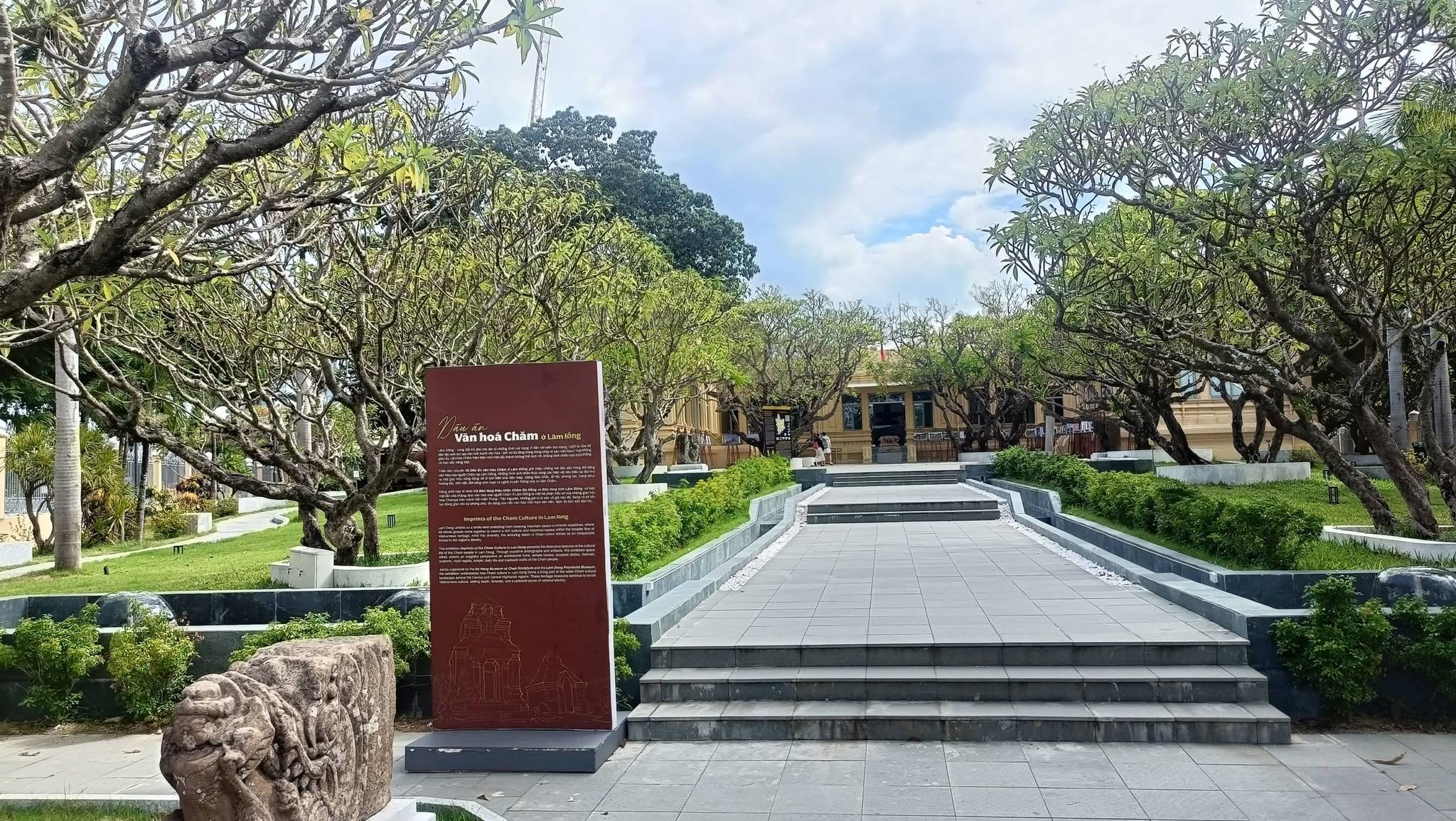
The museum has a quiet, historic atmosphere within the modern city, with galleries, open corridors and sculptures displayed among mature trees. Rather than simply presenting ancient statues, the museum provides visitors with an opportunity to explore the religious world, mythology, artistic traditions and cultural achievements of the Champa people.
More Than a Century of History
From the late 19th century onward, French archaeologists and researchers began collecting Champa sculptures discovered across Quang Nam, Da Nang and other parts of central Vietnam. The need to preserve, study and display these archaeological discoveries eventually led to the creation of a specialized museum.
In July 1915, with support from the École Française d’Extrême-Orient, construction began on a museum dedicated to Champa sculpture in Da Nang. The original building was completed in 1919 and designed by French architects Delaval and Auclair, with archaeological guidance from Henri Parmentier.
The museum was expanded for the first time in the early 1930s, with the project completed in 1936. Two additional galleries were added to accommodate sculptures recovered from archaeological excavations. The collection was organized according to archaeological sites, creating galleries dedicated to My Son, Tra Kieu, Dong Duong and Thap Mam, together with corridors displaying objects from several central Vietnamese provinces.
A second expansion added a two-storey building behind the original structure. This provided additional exhibition space, storage, conservation and restoration facilities. The new galleries also introduced aspects of contemporary Cham culture through traditional costumes, musical instruments and photographs of festivals.
In 2007, the Da Nang Museum of Cham Sculpture became an independent institution. By the end of 2011, it had been recognized as a Grade I museum.
A Remarkable Collection of Champa Sculpture
The museum currently preserves nearly 2,000 objects, with around 500 displayed in its exhibition spaces and more than 1,200 kept in storage. The collection spans the 7th to the 15th centuries and represents a wide range of Champa artistic styles.
The galleries are organized around major archaeological centers including My Son, Tra Kieu, Dong Duong and Thap Mam, together with corridors dedicated to Quang Nam, Quang Ngai, Quang Tri, Binh Dinh, Kon Tum and other regions. This arrangement allows visitors to follow the development of Champa art across different periods and geographical areas.
Among the museum’s most important treasures are three National Treasures of Vietnam: the My Son E1 Altar, Tra Kieu Altar and Tara Bodhisattva. These masterpieces are significant not only for their artistic quality but also for what they reveal about Champa religion, mythology and spiritual life.
The Tra Kieu Altar, dating from around the 7th to 8th centuries, features Linga, Yoni and intricately carved reliefs. Particularly impressive are the Apsaras, celestial dancers depicted alongside musicians playing the Vina. Their clothing, jewelry, hairstyles and graceful movements demonstrate the sophistication of Champa sculpture.
A rare Vishnu relief depicts the deity seated upon the coils of the Naga serpent. Meanwhile, the museum’s Linga-Yoni altars reflect religious symbolism associated with creation, fertility and the cosmic order.
My Son, Dong Duong and Thap Mam
The My Son Gallery presents sculptures from the My Son Sanctuary, once one of the most important religious centers of Champa and a major site associated with the worship of Shiva.
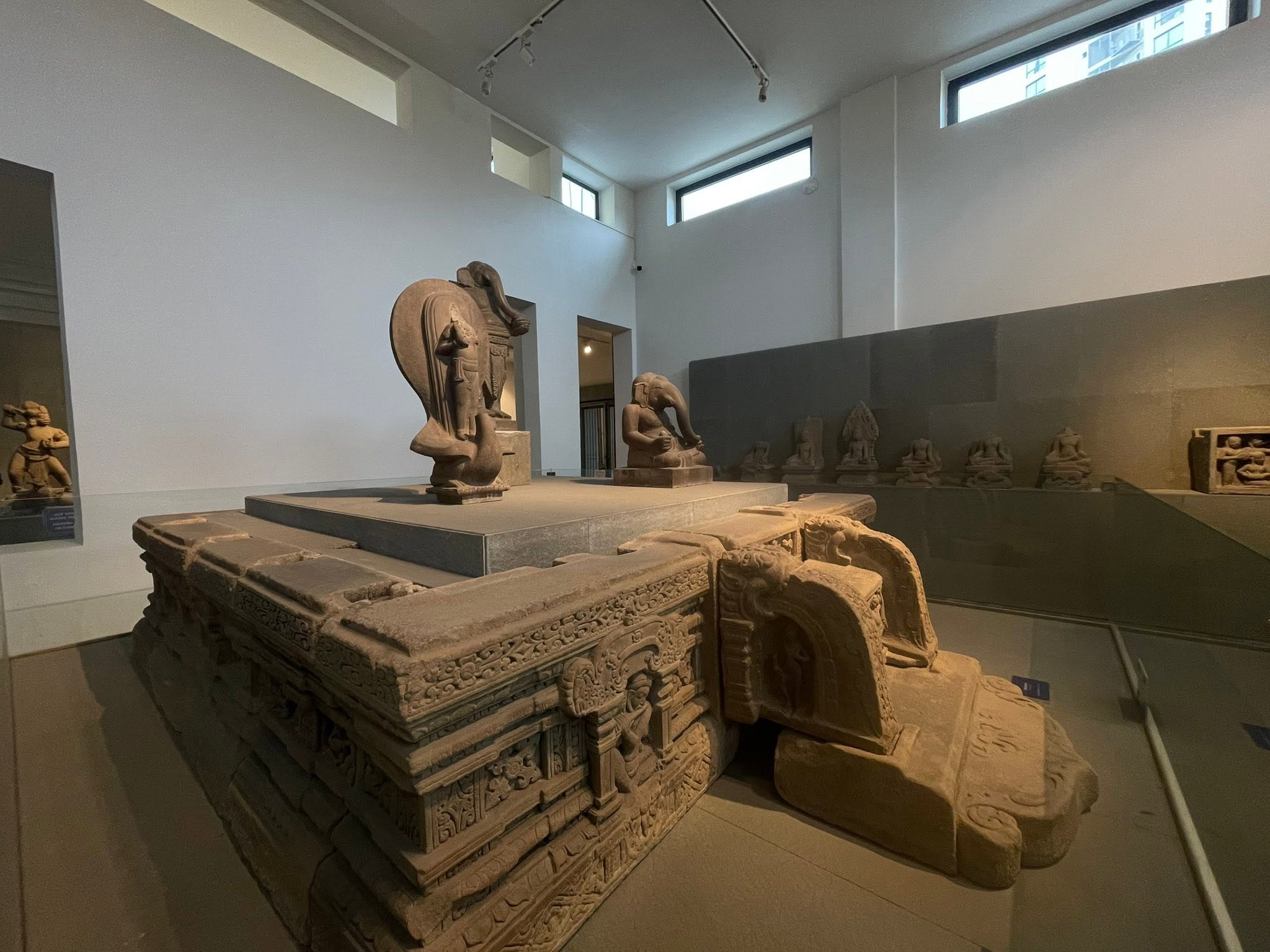
One of its highlights is the My Son E1 Altar, whose carvings depict ritual scenes, dancers, musicians, meditating monks, religious teachings and other aspects of spiritual life. Sculptures of Skanda, Ganesha and Shiva further illustrate the strong influence of Hinduism on Champa art.
The Dong Duong Gallery introduces visitors to another important religious center, particularly associated with Buddhism. Its most remarkable object is the Tara Bodhisattva, dating from the late 9th to early 10th century. Made of bronze, the sculpture represents Tara, the female form associated with Avalokitesvara, standing gracefully with carefully rendered clothing and elaborate jewelry.
The gallery also features a Dvarapala, a guardian deity portrayed with a powerful and imposing appearance. Together, these works demonstrate the important role Buddhism played alongside Hindu traditions in Champa religious life.
The Thap Mam Gallery presents Champa art from approximately the 11th to the 15th centuries. Its collection includes representations of Shiva, Brahma, Makara, dragons and religious altars, revealing distinctive characteristics of the later Champa artistic tradition.
Other galleries and corridors add further works from Quang Nam and Quang Ngai, including representations of dancing Shiva, Yaksa, Krishna, Sarasvati and Lakshmi, allowing visitors to explore an even broader range of Champa mythology and religious imagery.
A Museum That Tells Stories Through Art
One of the most fascinating aspects of the Da Nang Museum of Cham Sculpture is that its history is told not only through written explanations but through the sculptures themselves.
An Apsara dancer, a musician playing an ancient instrument, Shiva performing a sacred dance, Vishnu beneath the Naga serpent, Ganesha with his distinctive form or Tara standing in quiet elegance each reveals a different aspect of the spiritual world of the Champa people.
The collection demonstrates the profound cultural connections between Champa and the Indian civilization, particularly through Hindu and Buddhist beliefs, mythology and religious symbolism. At the same time, Champa artists developed their own distinctive visual language, transforming outside influences into a unique local artistic tradition.
The museum’s garden setting adds another dimension to the experience. Stone sculptures and altars stand among mature trees, creating an atmosphere that allows visitors to appreciate the works as archaeological objects while also imagining the religious landscapes in which they once existed.
For travelers interested in history, archaeology and art, the museum rewards close observation. For first-time visitors discovering Champa culture, the chronological and geographical organization of the galleries provides a useful introduction to the major artistic centers of central Vietnam.
A Cultural Landmark in the Heart of Da Nang
Located beside the Han River, the Da Nang Museum of Cham Sculpture can easily be combined with other attractions in the city center, including APEC Sculpture Park, Dragon Bridge, Love Bridge, the Carp-to-Dragon statue and Bach Dang riverside promenade.
Visitors can spend part of the day exploring the museum before continuing along the Han River or discovering Da Nang’s central neighborhoods. Its location also makes it an ideal stop for travelers who want to experience a side of Da Nang beyond beaches, modern architecture and entertainment.
According to the source information, the visitor address is No. 02, 2 Thang 9 Street, Binh Hien Ward, Hai Chau District, Da Nang, with reference opening hours from 07:30 to 17:00 daily. Reference admission fees are VND 60,000 for adults and VND 30,000 for students, while children under 16 and people with severe disabilities are admitted free. Audio guide services are also available through QR codes or multilingual audio systems.
Visitors are encouraged not to touch the sculptures or lean against the exhibits and to follow museum regulations regarding photography. Maintaining a quiet atmosphere also helps preserve the character of the galleries.
The Da Nang Museum of Cham Sculpture is more than a collection of ancient statues and stone altars. It is one of the most important gateways into the world of Champa culture, where art, religion, mythology and history remain intertwined in stone.
Amid modern Da Nang and the ever-changing skyline along the Han River, these centuries-old works continue to tell the story of a civilization that once flourished across central Vietnam. For anyone seeking to understand the deeper cultural layers of Da Nang, the museum is a destination well worth exploring.