Dù Kê theater is a distinctive form of traditional musical theater practiced by the Khmer people in southern Vietnam. It emerged and developed in the Mekong Delta in the early 20th century. It is a comprehensive performing art that combines singing, dialogue, dance, music, martial arts, makeup, costumes and stage design, reflecting the spiritual life, moral values and artistic creativity of the Khmer community.
Dù Kê is also known as Lakhôn Bassắc, meaning the musical theater of the Khmer people living along the Bassac River, or the Hau River. Unlike Rô băm, a traditional form of theater with courtly origins and a strong emphasis on dance, Dù Kê developed from the everyday life of Khmer communities in the Mekong Delta and later flourished in areas such as Sóc Trăng, Trà Vinh, Kiên Giang, An Giang and Bạc Liêu.
There are several interpretations of the origins of Dù Kê. Some sources suggest that it developed from earlier Khmer performing arts such as Rô băm and Dì kê, while also absorbing influences from Chinese theater and Vietnamese cải lương. Other studies associate the emergence of the earliest Dù Kê troupes with Trà Vinh or Sóc Trăng in the 1920s. Artists such as Kru Cô in Trà Vinh and Lý Cọl, also known as Chhà Cọl, in Sóc Trăng are often mentioned in accounts of the early development of the art form.
Despite differences in how its origins are interpreted, Dù Kê can be understood as the result of a long process of artistic creativity and cultural exchange. Elements borrowed from other traditions were not simply copied but Khmerized and integrated with Khmer language, music, dance, beliefs and aesthetics to create a distinctive theatrical style.
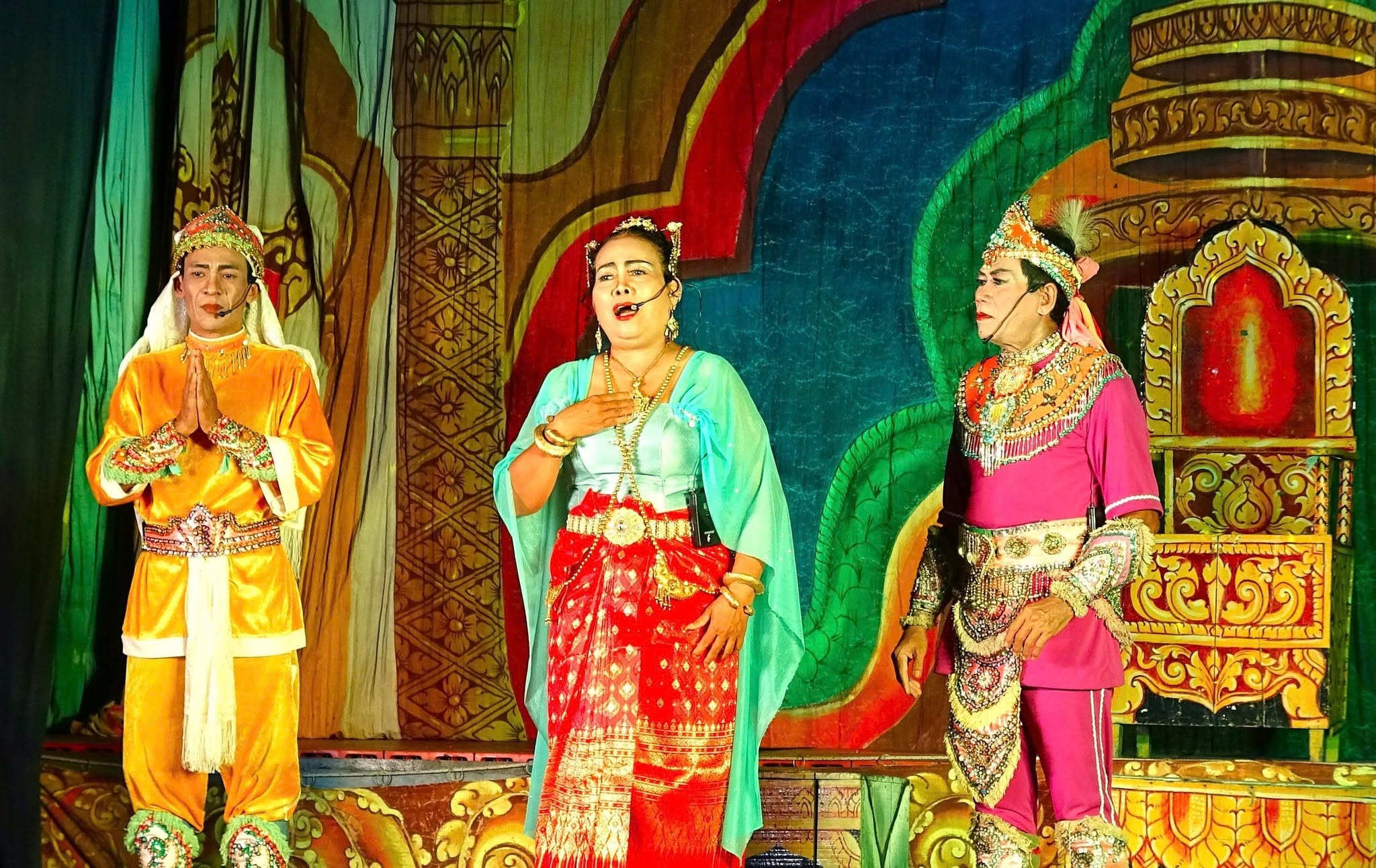
A Rich and Distinctive Form of Musical Theater
A Dù Kê performance generally has a clear storyline organized into acts and scenes and develops through three main forms of expression: singing, dialogue and physical performance. One of its most distinctive features is the close relationship between song and dance, with hand, foot and full-body movements following established conventions appropriate to each character. As a result, even audiences who do not speak Khmer can often understand aspects of the characters and storyline through music, movement and stage expression.
Traditional Dù Kê stories draw from Khmer legends, folktales and mythology, as well as Indian epics such as the Ramayana and Mahabharata. The repertoire has also incorporated familiar stories from Kinh and Chinese traditions. Stories such as Tum and Tiêu, Xê-đa, Thạch Sanh and the Ogre, Tấm Cám, as well as Chinese legendary tales, have been adapted and presented through the artistic language of Khmer theater.
Over time, Dù Kê has expanded beyond traditional stories to include contemporary themes involving society, love, family, labor, homeland, community solidarity, resistance to oppression and the pursuit of a peaceful life. Despite the diversity of themes, many performances maintain a clear contrast between protagonists and antagonists, good and evil, reflecting moral ideas strongly influenced by Khmer Buddhism. Concepts such as doing good, avoiding evil, good deeds bringing good fortune and evil deeds bringing consequences are often conveyed through the actions and destinies of the characters.
A traditional Dù Kê performance often begins with spiritual rituals. Before traveling to perform or opening a show, a troupe may conduct a ceremony to honor the theater ancestors and masters, known as cúng Tổ, praying for safety and a successful performance. The traditional ensemble performs ritual pieces while the artists sing songs associated with the ceremony. Before the main performance begins, audiences may also enjoy instrumental music and dance. The performers then sing a greeting, introduce the play and present a number of prescribed musical and dance pieces before the story itself begins.
The comic character, or clown, holds a distinctive position in traditional Dù Kê. This character creates a lively atmosphere and may also summarize or explain parts of the story to the audience. In the past, a theater prompter, known as thầy tuồng, worked behind the stage, dividing scenes and acts and prompting performers with their lines. Today, this practice has changed considerably. Most troupes perform from prepared scripts and rehearsed productions, incorporating modern sound, lighting and stage-design technologies.
Music and Dù Kê Repertoire
Music is inseparable from Dù Kê theater. Traditional ensembles use a variety of Khmer instruments, including the trô u, or spike fiddle, the khưm, the tà khê and the Pinpeat ensemble, also known as the Khmer traditional percussion and wind ensemble. Music serves many functions, from opening the performance and establishing the atmosphere to guiding emotions, supporting acting and highlighting the characteristics of individual characters.
In addition to the main ensemble, Pinpeat music is often used in scenes involving deities, supernatural characters or ritual elements. Over time, some artistic troupes have also incorporated modern instruments and ensembles to accommodate new scripts and contemporary performance requirements.
The Dù Kê repertoire is highly diverse. Songs and musical patterns are organized according to male and female voices, character types and emotional states. Some groups express joy, sadness, anger or love, while others are intended for ensemble singing or particular characters such as clowns, hunters, celestial beings or ogres. Many melodies have developed through cultural exchange with other performing arts, but after generations of use they have been Khmerized in melody, rhythm and performance style.
Some specialist studies have identified 163 Dù Kê melodies and songs, including traditional Khmer musical pieces from southern Vietnam, melodies influenced by Chinese theater, European music and other theatrical traditions in the region. This repertoire demonstrates the breadth of cultural exchange while also reflecting the ability of Khmer artists to absorb, transform and creatively reinterpret outside influences.
Dance, Martial Arts and Character Representation
Dance is an essential component of many Dù Kê performances. It does more than embellish the stage. Dance helps establish the identity, personality and social position of each character. Performances may include dances depicting celebration, harvests, military training, ceremonial service or other activities.
The system of choreography follows relatively established conventions for different groups of characters. Protagonists such as kings, princes, princesses, officials and ordinary people generally use restrained, graceful and balanced movements. In contrast, antagonists such as ogres, evil officials and evil generals often perform exaggerated, forceful and aggressive movements.
The ogre, or chằn, is one of the most recognizable figures in Dù Kê theater. This character combines dance, physical acting and martial arts. Combat scenes may involve hand-to-hand fighting, short knives, swords, staffs, blades or bows. As a result, the ogre is not simply an antagonist but also one of the most distinctive theatrical figures in Dù Kê.
Makeup, Costumes and Stage Design
Dù Kê makeup follows its own conventions to help audiences identify a character’s gender, age, social status, personality and role. Colors are generally vivid and clearly defined, combined with facial lines and physical movements.
Makeup for human characters varies according to whether the role is male or female, young or old, heroic or villainous. Ogre characters have a more elaborate system of makeup, commonly using red, black, white, green and yellow according to the type of character. Many ogres also wear artificial fangs, creating a distinctive appearance. There are also forms of makeup combining human and ogre features or ogres with supernatural beings.
Animal characters also require elaborate makeup. Facial colors, movements and costumes are combined to emphasize the characteristics of each animal represented in the performance.
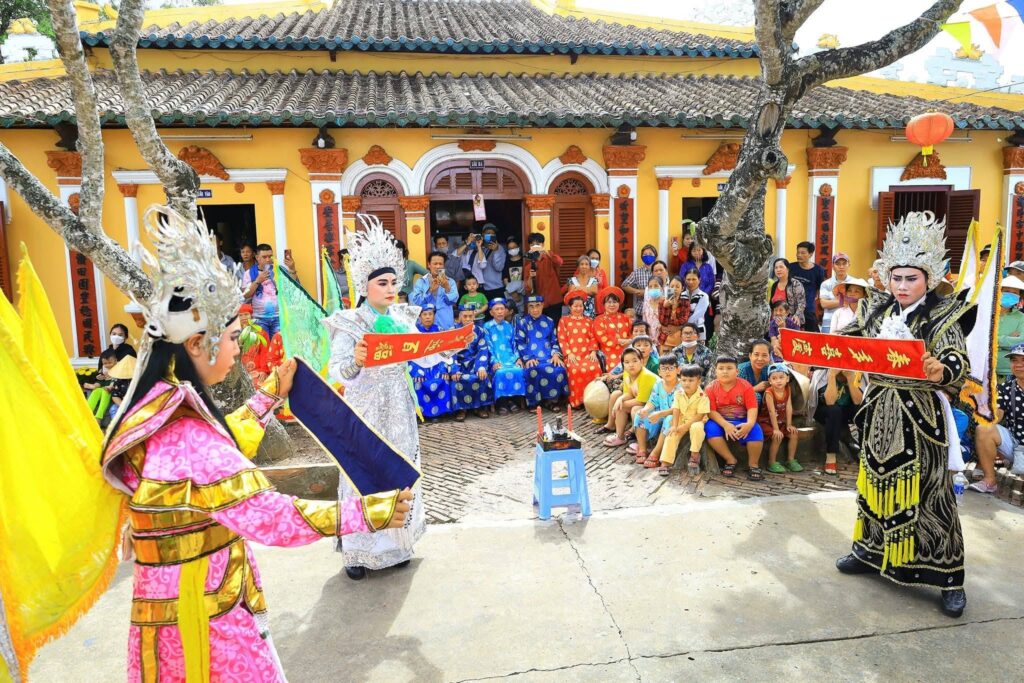
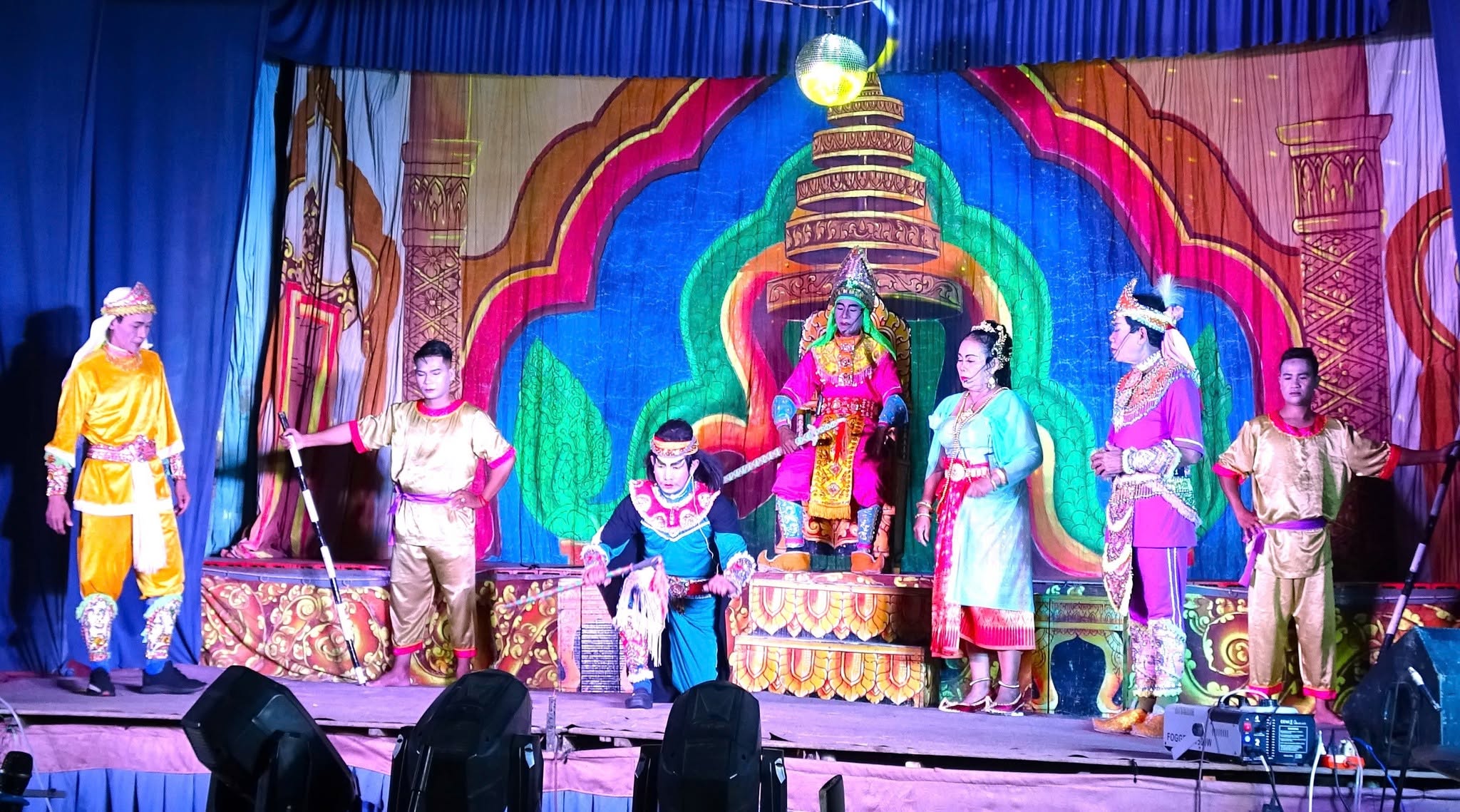
Dù Kê costumes are equally diverse. Kings, princes, officials, ogres, eagles and dragons may wear multilayered costumes with vivid colors and elaborate decorative details. Ogre costumes are generally loose and dark-colored, with strong patterns designed to convey power and menace. Meanwhile, costumes for queens, princesses, young noblewomen and female ogres are often brightly colored and shimmering, reflecting Khmer aesthetic traditions.
Stage design has also changed over time. Early performances were often staged directly on the ground under simple shelters resembling a temporary giàn bầu, or thatched stage structure, giving rise to the expression “giàn bầu musical theater.” Later, painted scenic backdrops became common, followed by stage settings designed specifically for each script and combined with modern lighting and technical equipment. Although the form of presentation has evolved, many troupes continue to use traditional Khmer motifs and decorative elements as the foundation of their visual identity.
Cultural Values and the Preservation of Dù Kê
Dù Kê has maintained an important place in the spiritual and cultural life of the Khmer people in southern Vietnam. In the past, performances were commonly presented during festivals, flower-offering ceremonies, Chôl Chnăm Thmây, Oóc Om Bóc and Ngo boat racing. A performance could last for several hours, creating a distinctive communal space where people gathered to enjoy music, singing and dance while following the story until its conclusion.
The value of Dù Kê extends beyond entertainment. It also serves as a means of transmitting moral ideas and social values. Through stories in which good triumphs over evil, good people are protected and wrongdoers are punished, the theater conveys ideas about compassion, ethical behavior, love of homeland and community responsibility.
Dù Kê is also a vivid example of cultural exchange in the Mekong Delta. The art form combines elements of traditional Khmer culture with influences from Indian traditions, Chinese theater, Vietnamese cải lương and other regional musical traditions. Yet these influences have been transformed through Khmer artistic expression, language, aesthetics and ways of thinking.
As modern forms of entertainment become increasingly influential, Dù Kê faces challenges related to the shortage of playwrights, directors, performers, musicians and younger generations of artists. Preservation therefore cannot stop at collecting, recording and archiving materials. The art must also continue to live within the community through training, the restoration of traditional performances, the creation of new scripts and the development of opportunities for public performance.
Incorporating Dù Kê into cultural programs, festivals and tourism activities can create additional spaces for the art form to remain visible in contemporary life. At the same time, efforts to promote it need to go hand in hand with the preservation of its essential elements, including theatrical language, music, dance, makeup, costumes and traditional rituals.
With a history spanning nearly a century, Dù Kê has become an important part of the artistic and cultural heritage of the Khmer people in southern Vietnam. It is more than a form of theater. It is also a space for preserving collective memory, traditional artistic knowledge and ideas about humanity, morality and life.
National Intangible Cultural Heritage
| Information | Details |
|---|---|
| Heritage name | Dù Kê Theater Art of the Khmer People |
| Decision | No. 2684/QĐ-BVHTTDL |
| Date | August 25, 2014 |
| Type | Folk Performing Arts |
| Recorded location | Sóc Trăng Province, now part of Cần Thơ City |
Its inclusion in the National Intangible Cultural Heritage List recognizes the distinctive values of Dù Kê theater in the cultural life of the Khmer community in southern Vietnam, while also highlighting the need to continue preserving, transmitting and promoting this traditional art form in contemporary life.