Hoàng Diệu’s Tomb is a historical site commemorating the life and legacy of Hoàng Diệu, a Nguyễn Dynasty official renowned for his integrity, honesty and devotion to his country. He commanded the defense of Hanoi against the French attack on April 25, 1882. When the citadel fell, he took his own life rather than surrender, leaving behind a lasting example of patriotism, loyalty and personal honor.
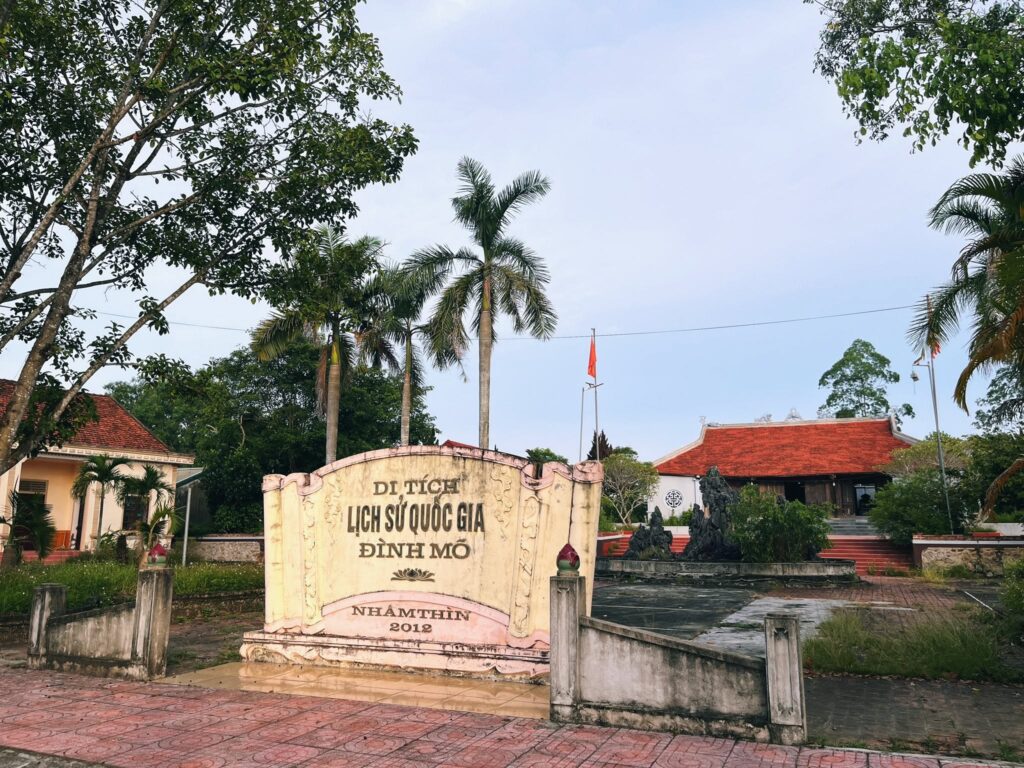
The memorial complex is located in Gò Nổi Commune, Đà Nẵng City, Hoàng Diệu’s homeland. With its tomb, ancestral shrine, memorial buildings and historical displays, the site preserves memories of his life, public service and sacrifice. It also serves as a place for visitors to learn about Vietnamese history and reflect on the values upheld by earlier generations.
Hoàng Diệu: An Upright Official and the Defender of Hanoi Citadel
Hoàng Diệu, whose courtesy name was Kim Tích, style name Quang Viễn and literary name Tĩnh Trai, was born on March 25, 1828, in Xuân Đài Village, in the Gò Nổi region, now part of Gò Nổi Commune, Đà Nẵng City. He came from a Confucian family with a strong scholarly tradition and several successful candidates in the imperial examinations.
In 1848, Hoàng Diệu passed the regional examination in Thừa Thiên, earning the degree of Cử nhân. In 1853, he achieved the Phó bảng degree in the imperial palace examination. Throughout his official career, he was known for his upright character, integrity, decisiveness and strong sense of responsibility toward the people and the country.
Hoàng Diệu also valued filial duty and family discipline. When his father died in 1854, he requested leave to return home and observe the mourning period, resuming his official duties only after it ended. In late 1879, before taking up his post as Governor-General of Hà Ninh, he returned to visit his mother, who was then over 80 years old. Despite holding a senior position in the imperial administration, his family continued to live simply in their home village.
A story preserved in family tradition recounts that while serving far from home, Hoàng Diệu once sent his mother a piece of fine silk to make a garment. She returned it with a mulberry switch, reminding him to remain honest and to serve the people and country faithfully. This story is depicted in a painting at the memorial site, illustrating the family’s moral values and the principles associated with his life.
The Defense of Hanoi Citadel in 1882
From 1879 to 1882, Hoàng Diệu served as Governor-General of Hà Ninh, overseeing Hanoi and its surrounding areas, a strategically important region in northern Vietnam at the time.
At dawn on April 25, 1882, French forces attacked Hanoi Citadel. Hoàng Diệu personally directed the defense. The French assault was powerful, and an explosion at the gunpowder store further weakened the defenders. The situation became increasingly desperate.
Realizing that the citadel could no longer be held and seeking to prevent further casualties among his troops, Hoàng Diệu ordered his soldiers to disperse. He then entered the administrative palace and wrote a memorial to Emperor Tự Đức in his own blood, accepting responsibility for the citadel’s fall. He subsequently went to the Temple of Military Valor and took his own life by hanging. He was 54 years old.
In his final memorial, Hoàng Diệu expressed profound sorrow that he had been unable to save the citadel. He also conveyed his loyalty and his wish to follow the example of Nguyễn Tri Phương, the senior commander who had died defending Hanoi against the French in 1873.
Hoàng Diệu’s death deeply saddened the people of Hanoi. They arranged his funeral and buried him in the garden of the Dinh Đốc Học residence, near the area of Hanoi Railway Station today. In the autumn of 1882, his remains were transferred to his hometown of Xuân Đài in Quảng Nam.
To honor the two officials who sacrificed their lives defending Hanoi, local residents and scholars established a place of worship for Hoàng Diệu beside Nguyễn Tri Phương at Trung Liệt Temple on Đống Đa Hill. Contemporary scholars also composed poems and parallel couplets praising his integrity and loyalty.
The Tomb and Memorial Grounds
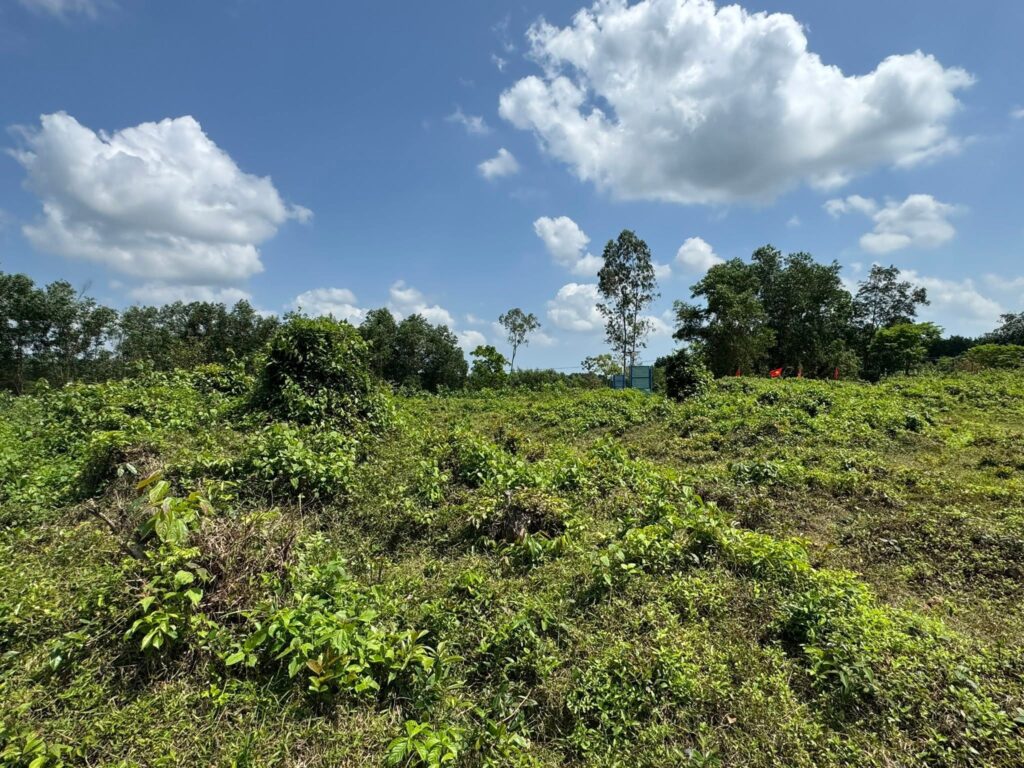
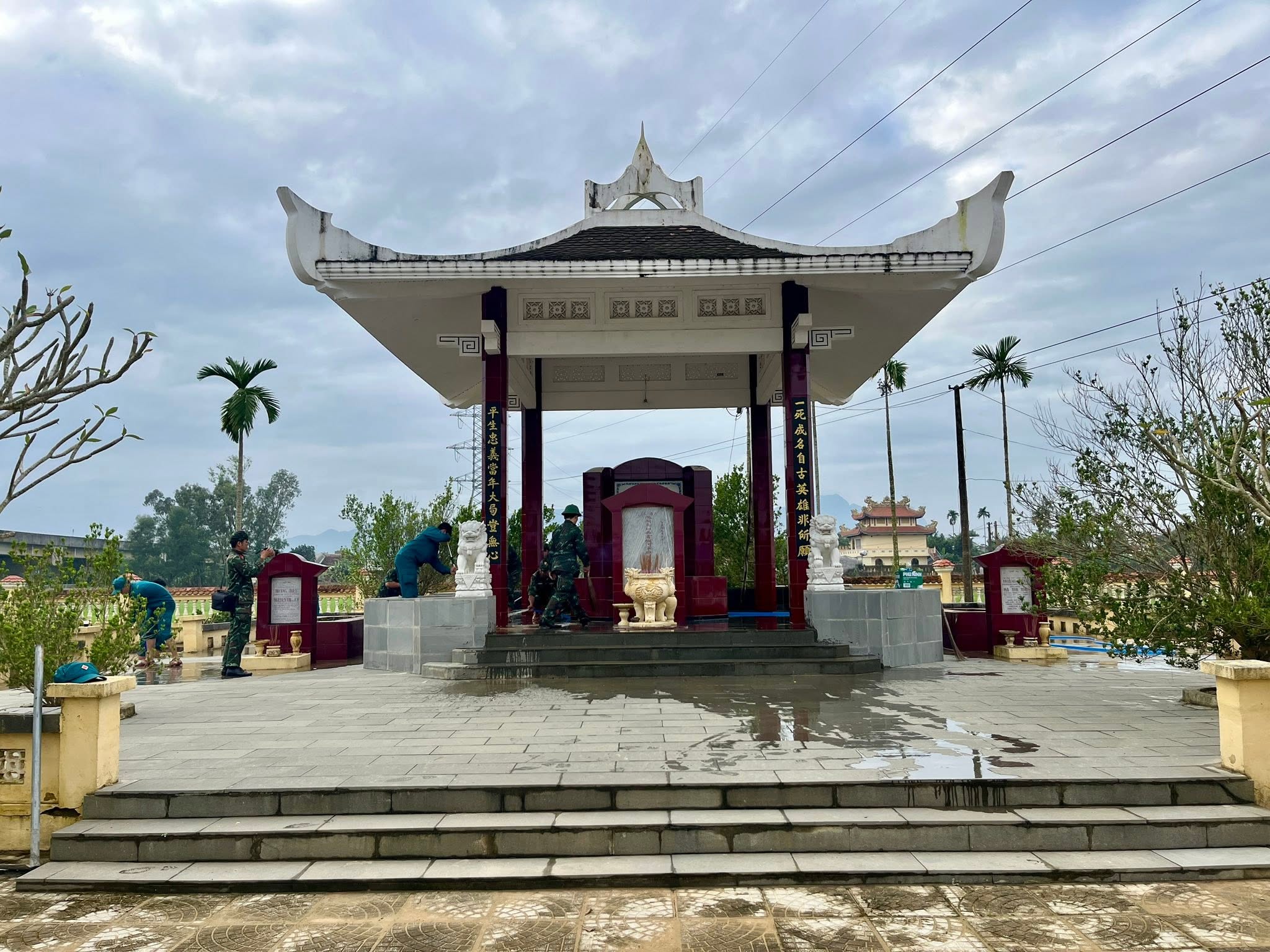
Hoàng Diệu’s tomb lies amid open fields within a compound of approximately 1,600 square meters. The grounds are spacious and tranquil, maintained by his descendants and visited by people who come to pay their respects.
The memorial complex underwent restoration in 1982 and 1998. Its main features include a three-entrance gate, a ceremonial incense burner, a bronze statue, a stele pavilion, an ancestral shrine and an exhibition building.
Beyond the entrance gate stands a large incense burner carved from Non Nước stone. Behind it is a bronze bust of Hoàng Diệu weighing approximately 300 kilograms. The statue was commissioned by the former Điện Bàn District authorities and cast at Phước Kiều, a well-known bronze-casting village. On either side are reinforced-concrete replicas of cannons modeled on weapons from the reign of Emperor Tự Đức, recalling the battle to defend Hanoi Citadel in 1882.
The next structure is the stele pavilion, which houses a stone stele weighing approximately two tonnes. Its inscription summarizes Hoàng Diệu’s life, public service and contributions to his homeland and country. Together, these features create a solemn memorial space where visitors can learn more about the official’s life and sacrifice.
The Ancestral Shrine and Preserved Stories
The principal building in the memorial complex is Hoàng Diệu’s ancestral shrine, constructed in the traditional architectural style of Quảng Nam. It has a roof covered with yin-yang tiles and a ridge decorated with the motif of two dragons contesting a pearl. An altar dedicated to Hoàng Diệu stands at the center.
Two paintings displayed on either side of the altar illustrate stories associated with his life. One, titled “The Silk and the Mulberry Switch,” portrays Hoàng Diệu both as an official and as a child with his mother. It is based on a family story about his mother’s reminder that, regardless of his official rank, he must remain honest and fulfill his responsibility to the people.
The second painting depicts Hoàng Diệu fighting to defend Hanoi Citadel against French forces. It emphasizes his sense of duty and his decision to sacrifice his life rather than surrender after the citadel fell.
Behind the shrine is a smaller traditional-style building used to exhibit photographs and historical documents about Hoàng Diệu’s life and career. The displays also introduce visitors to old Hanoi, the citadel before and during the French assault in 1882, and the poems, funeral eulogies and parallel couplets composed by Hanoi’s scholars and residents in his memory.
Through these objects and stories, the memorial connects Gò Nổi, his homeland, with a pivotal episode in Vietnam’s struggle to defend its sovereignty in the late nineteenth century.
Historical and Cultural Significance
Hoàng Diệu’s Tomb is not only the resting place of a distinguished figure from Quảng Nam but also a memorial to a historical figure associated with the fall of Hanoi Citadel in 1882. His life and sacrifice reflect a profound sense of duty, loyalty and refusal to accept the loss of national independence without resistance.
The site also helps preserve historical memory, family traditions and moral values passed down through generations. Its shrine, bronze statue, stele pavilion, paintings and exhibition displays offer visitors different ways to engage with the story of Hoàng Diệu.
On January 25, 1994, the Ministry of Culture and Information recognized the complex as a national historical and cultural monument. This designation established an important basis for protecting the memorial and preserving the heritage associated with Hoàng Diệu in his hometown of Gò Nổi.
Quick Information
| Item | Information |
|---|---|
| Name | Hoàng Diệu’s Tomb and Memorial Site |
| Historical figure | Hoàng Diệu, Governor-General of Hà Ninh |
| Birth and death | 1828–1882 |
| Hometown | Xuân Đài Village, Gò Nổi region |
| Current location | Gò Nổi Commune, Đà Nẵng City, Vietnam |
| Key historical event | Defense of Hanoi Citadel on April 25, 1882 |
| Memorial grounds | Approximately 1,600 m² |
| Main structures | Tomb, three-entrance gate, bronze statue, stele pavilion, ancestral shrine and exhibition building |
| Recorded restoration years | 1982 and 1998 |
| Significance | Commemorates a distinguished historical figure and preserves historical records and patriotic traditions |
| Heritage status | National historical and cultural monument |
| Year of recognition | 1994 |