The Nghinh Ong Festival in Tran De is one of the distinctive traditional folk festivals of the fishing communities in the former coastal region of Soc Trang, now located in Tran De Commune, Can Tho City. The festival is associated with the worship of Ca Ong (the Whale), a sacred figure believed by fishermen to protect and rescue those at sea from storms and danger. It also expresses wishes for peace, calm seas, favorable weather, successful fishing seasons, and prosperity for the local community.
| Heritage information | Details |
|---|---|
| Name of heritage | Nghinh Ong Festival |
| Decision No. | 446/QD-BVHTTDL dated January 29, 2019 |
| Type | Traditional festival |
| Location | Soc Trang Province, now Can Tho City |
Recognized for its outstanding historical, cultural, religious, and folk performance values, the Nghinh Ong Festival in Tran De was included in the National Intangible Cultural Heritage List by the Minister of Culture, Sports and Tourism under Decision No. 446/QD-BVHTTDL dated January 29, 2019.
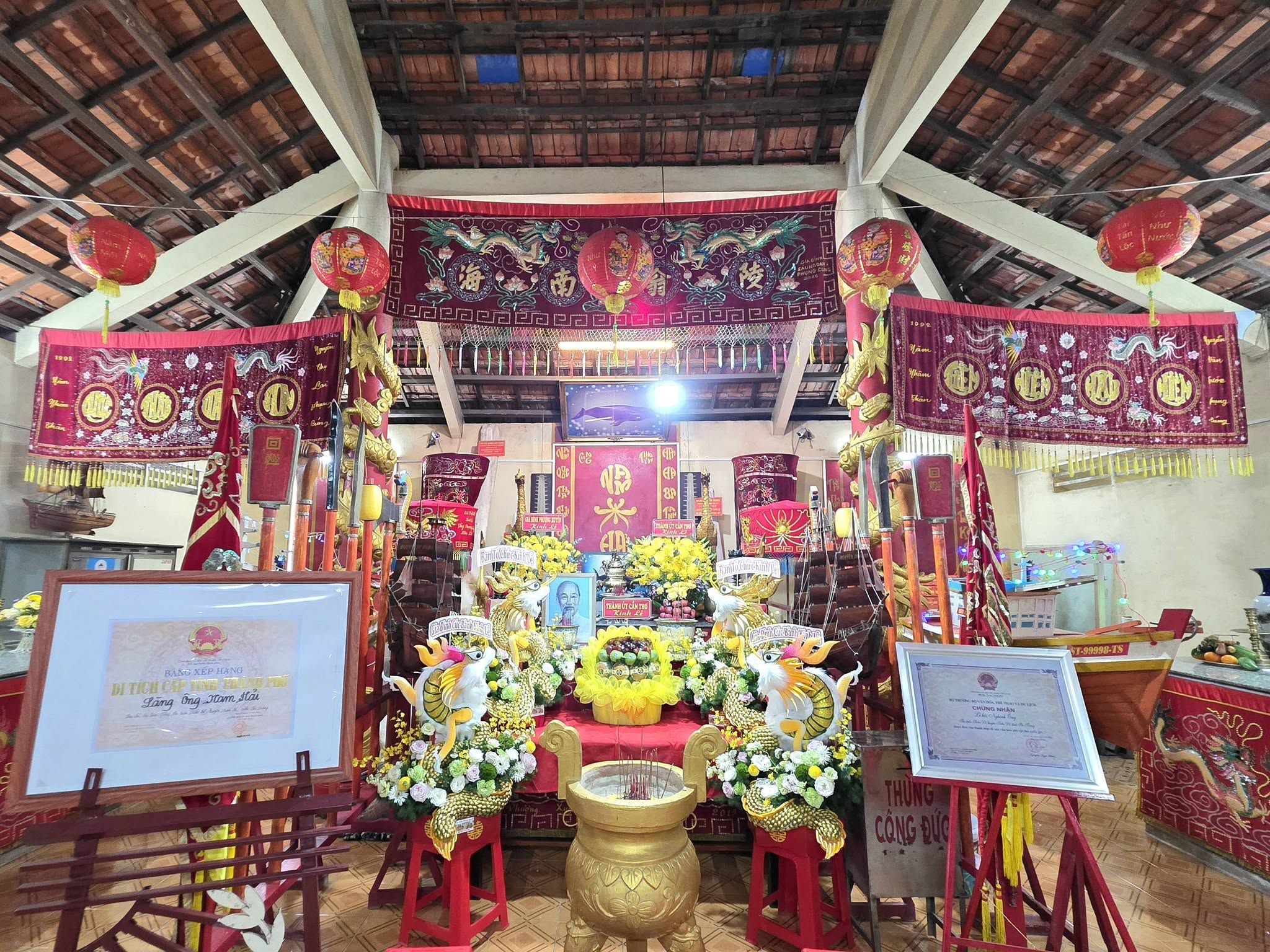
Origins and Nam Hai Ong Temple
According to oral traditions passed down among coastal communities, the festival dates back to around 1955, when fishermen discovered the body of a large whale washed ashore in the Bai Gia area, formerly part of Trung Binh Commune, Long Phu District. The local people conducted burial rites and built a modest shrine from bamboo and leaves to honor the whale, a sacred being closely associated with their maritime livelihood.
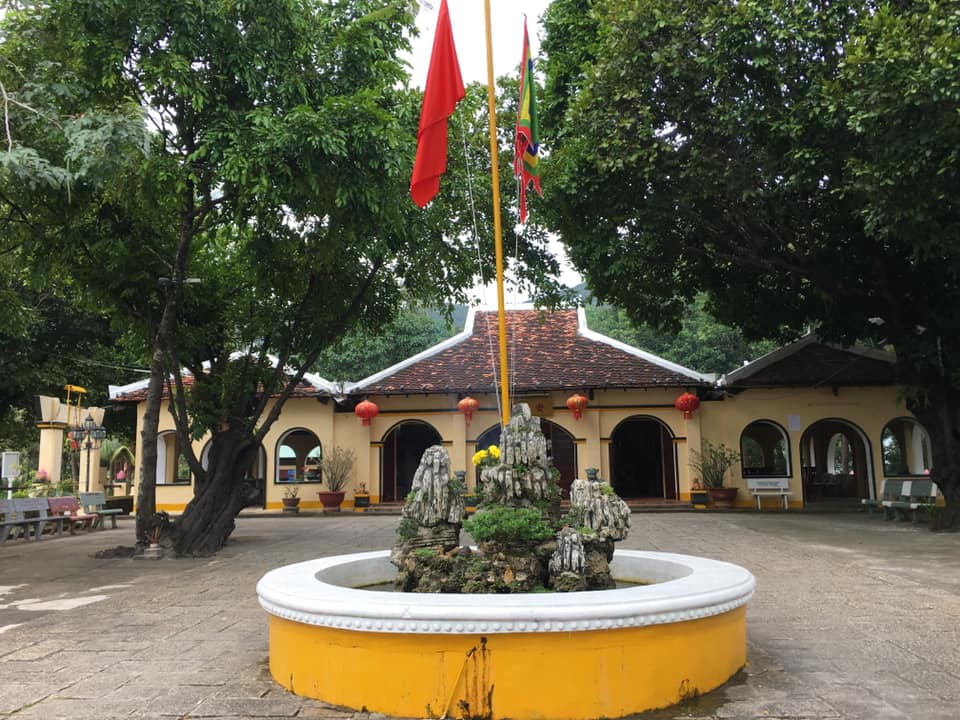
In 1983, as the fishermen’s economic conditions improved, the community relocated the whale’s remains and the temple to the Cang Hamlet area, formerly Tran De Town and now part of Tran De Commune, where it was named Nam Hai Ong Temple.
After several renovations and restorations, Nam Hai Ong Temple has become an important religious and cultural center for the local fishing community. The complex covers an area of more than 3,492 square meters and currently preserves the remains of more than 10 whales of various sizes. It is a place where local residents come to offer incense, pray for safety, and pay tribute to the guardian spirit of the sea.
Beyond its religious significance, Nam Hai Ong Temple also bears important revolutionary historical value. During the resistance wars, the site reportedly sheltered revolutionary cadres and supported local resistance activities. On October 15, 2024, Nam Hai Ong Temple was recognized as a provincial-level revolutionary historical relic, further enriching its historical and cultural significance.
Festival Period and Main Rituals
The Nghinh Ong Festival in Tran De is held annually from the 21st to the 23rd day of the third lunar month, attracting fishermen from the surrounding area, visitors from neighboring localities, and tourists.
Before the festival, the Management Board of Nam Hai Ong Temple holds meetings to assign responsibilities, prepare offerings, ceremonial boats, processions, and traditional rituals. Fishing vessels operating near and far also make efforts to return to the harbor to participate in this important celebration of the fishing community.
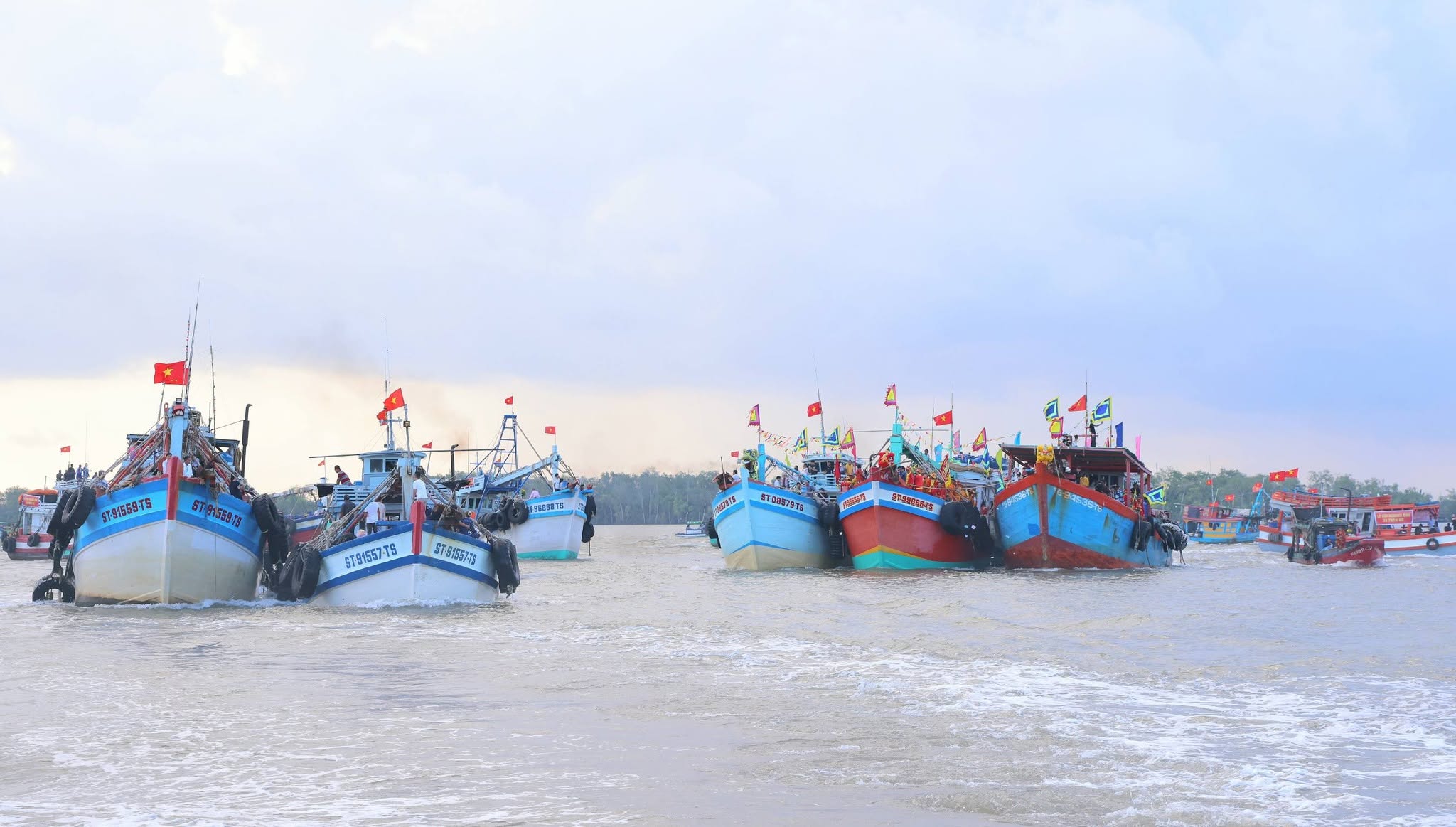
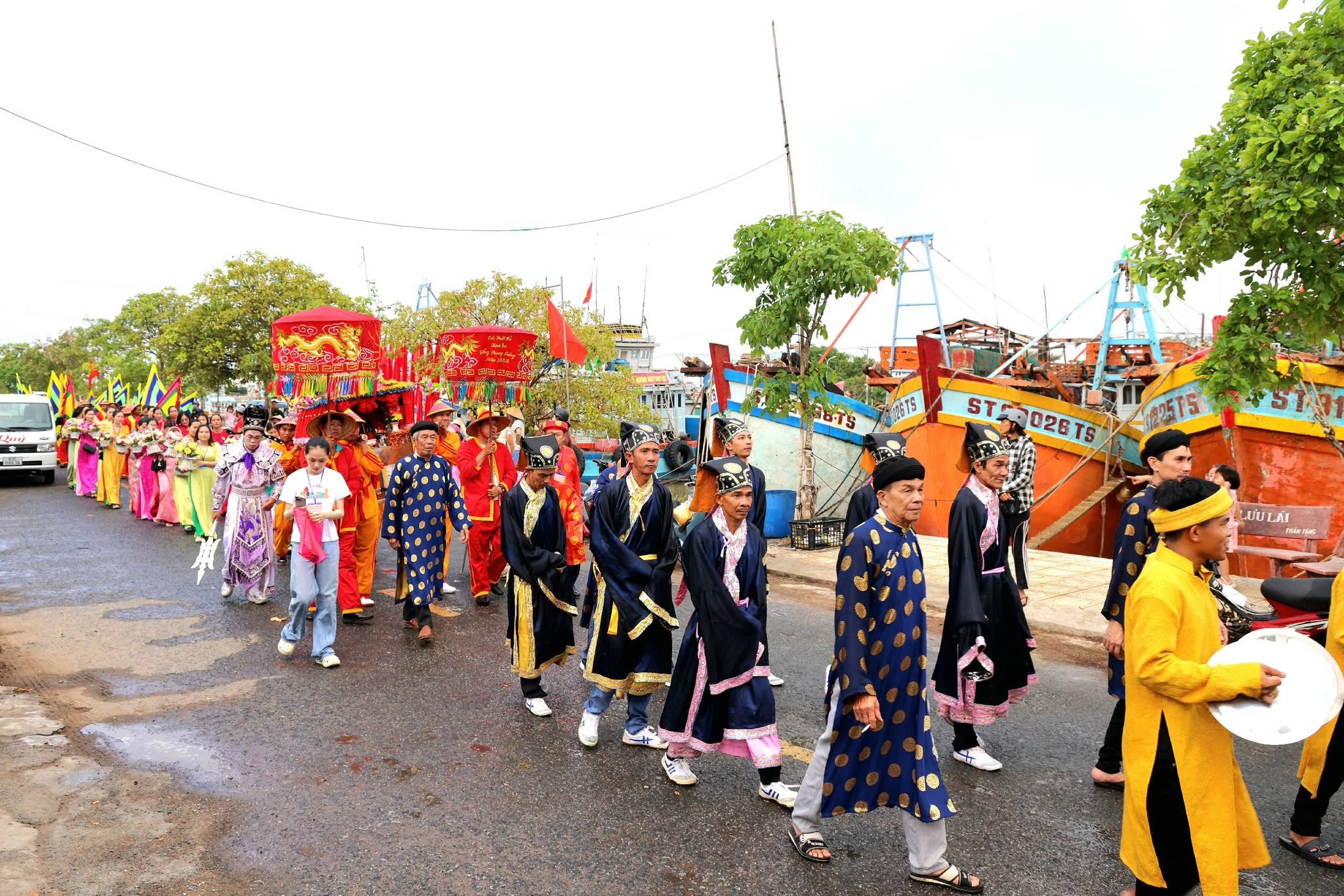
The most important ceremony takes place on the morning of the 21st day of the third lunar month, known as the Nghinh Ong sea procession. Led by the Chanh Van and Pho Van, together with ceremonial attendants, the procession carries the sacred palanquin and the whale’s remains. The main ceremonial boat is decorated with colorful flags and flowers and carries an altar dedicated to the deity, a whole roasted pig, sticky rice, fruit, incense, candles, and other offerings.
Following the main boat are vessels carrying lion, unicorn, and dragon dance troupes, along with fishermen and local residents. Hundreds of fishing boats form a grand procession toward the sea. When the fleet reaches an area approximately 2 kilometers from the fishing village, it stops so that the chief ritual leader can conduct ceremonies inviting Nam Hai Dai Tuong Quan, the Whale God, and pray for favorable weather, calm seas, safe voyages, and abundant catches.
After the divination ritual is completed, the fleet returns to shore. The procession continues from the harbor to Nam Hai Ong Temple amid ceremonial music, drums, lion dances, and a solemn yet lively atmosphere. Products and seafood harvested by fishermen are offered to the deity as an expression of gratitude for his protection and blessings.
Following the sea procession, the ceremonial committee also performs a ritual at the Ba Thien Hau Shrine to invite the Lady of the Sea to attend the whale worship ceremony. This reflects the cultural interaction and coexistence of different folk beliefs among coastal communities in southern Vietnam.
Other important rituals include the Worship of the Founding Masters, the Worship of Previous Generations, and the Principal Ceremony. These rites commemorate ancestors and early settlers who contributed to establishing villages and developing the region, while also inviting deities to witness the offerings and bless the community with peace, prosperity, and a fulfilling life.
The Principal Ceremony is generally held during the daytime, featuring a whole roasted pig and other traditional offerings. Some elements preserve traces of the tinh sinh or animal purification ritual, which is also found in certain communal houses and temples dedicated to deities believed to protect seafarers. These features demonstrate the blending of whale worship, village guardian beliefs, and maritime spiritual traditions in southern Vietnamese folk culture.
Performing Arts and Community Activities
On the 22nd and 23rd days of the third lunar month, the festival’s communal activities take place with cultural performances, sports competitions, folk games, and social gatherings. Fishing communities from Soc Trang and neighboring areas such as Can Tho and Tra Vinh bring offerings to the temple and participate in cultural exchanges and festivities.
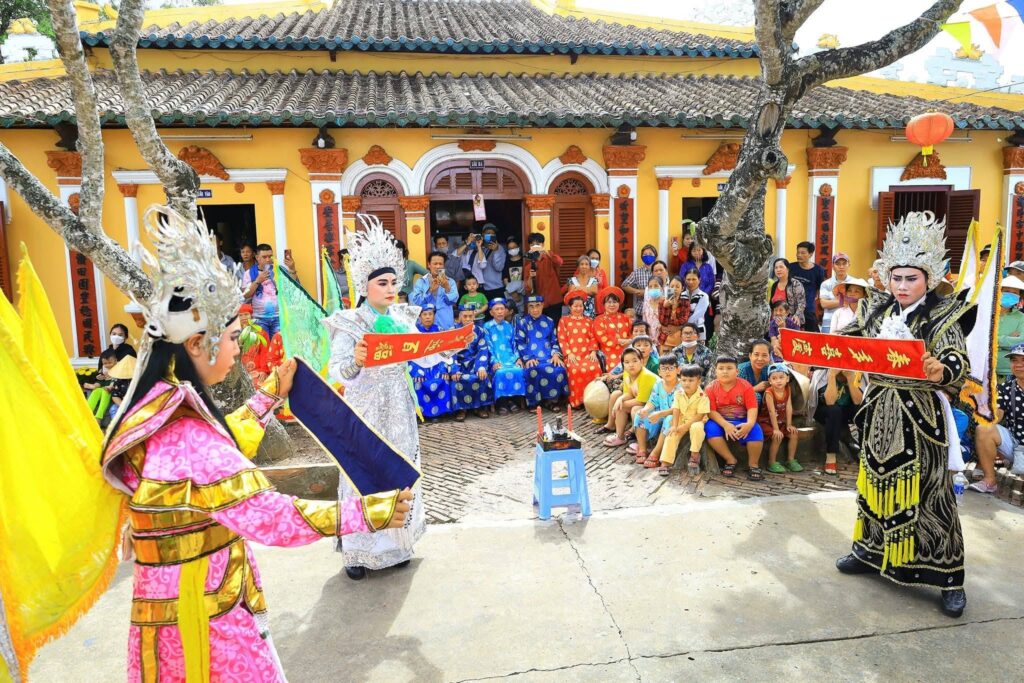
One of the festival’s most distinctive ceremonial art forms is Xay Chau, a ritual drum-opening ceremony usually held on the first evening. Before the ceremony begins, Dao Thai performers bow and worship before the altar of Nam Hai Ong, while the chief celebrant performs the drum ritual. The ceremony expresses the wish for harmony between Heaven, Earth, and humanity, symbolizing hopes for favorable weather and a peaceful, prosperous community.
Following Xay Chau are performances of Vietnamese classical opera, or Hat Boi, featuring traditional stories such as Tiet Dinh San Praying to Phan Le Hue, The Trial of Bang Quy Phi, Phung Nghi Dinh, and San Hau Thanh. The final night often features San Hau Thanh, including the enthronement scene in which the prince receives the imperial seal and sword. This is known as the Ton Vuong ritual, in which ceremonial traditions are transformed into theatrical performance.
Hat Boi, Xay Chau, Dai Boi, and Ton Vuong serve both artistic and ritual purposes. They provide entertainment for the community while preserving the sacred and formal character of the festival. Although certain procedures have been simplified over time, the fundamental rules and solemnity of the rituals continue to be respected.
In addition to the religious ceremonies, the festival features tug-of-war, boat or mong racing, sports competitions, lion dances, artistic performances, and traditional folk games. These activities provide opportunities for residents to meet, socialize, strengthen community bonds, and celebrate their shared maritime heritage.
Cultural Significance and Tourism Potential
The Nghinh Ong Festival in Tran De is a vivid expression of whale worship, an ancient belief system closely connected with fishing communities along Vietnam’s coastline. Through the festival, fishermen express their hopes for safety, favorable fishing conditions, prosperity, and a peaceful future.
The festival plays an important role in strengthening community solidarity, bringing together families, clans, fishing guilds, and local residents through shared worship, rituals, and cultural activities. It also serves as a living environment for preserving and transmitting traditional cultural values, including ceremonial practices, ritual music, Hat Boi, lion dances, folk games, and maritime customs.
Today, the Nghinh Ong Festival is not only a religious observance but also a cultural asset with considerable potential for spiritual-cultural tourism, community-based tourism, and coastal ecotourism. It helps promote Tran De, introduce the lives of local fishermen, and showcase the coastal landscape, fishing port, Mo O Ecotourism Area, and other distinctive cultural features of the region.
By combining the festival with trade fairs, exhibitions, sports activities, and tourism promotion, local authorities and communities can create opportunities to stimulate the local economy, encourage cultural exchange, attract visitors, and generate additional livelihoods for residents.
With its harmonious combination of folk beliefs, revolutionary history, traditional performing arts, and maritime life, the Nghinh Ong Festival in Tran De remains a vibrant cultural heritage that contributes to preserving the identity of southern Vietnam’s coastal communities and enriching the national system of intangible cultural heritage.