The Phan Châu Trinh Memorial House is a historical site dedicated to preserving the memory and legacy of Phan Châu Trinh, one of Vietnam’s prominent patriotic scholars and reformers in the early 20th century. Beyond commemorating his life, the site offers visitors an opportunity to learn about his progressive ideas, commitment to education, and vision for national renewal.
Phan Châu Trinh: A Patriot and Social Reformer
Phan Châu Trinh, whose courtesy name was Tử Cán, literary name was Tây Hồ, and alternative name was Hy Mã, was born on September 9, 1872, in Tây Lộc. He passed away in Saigon on March 24, 1926.
His father was Phan Văn Bình, and his mother was Lê Thị Trung. Phan Châu Trinh experienced a difficult childhood. His mother died when he was six years old, and his hometown was later burned during the suppression of the Cần Vương movement.
During his studies, he became associated with other prominent scholars, including Huỳnh Thúc Kháng and Trần Quý Cáp. These relationships helped shape his intellectual development and commitment to the country’s future.
Phan Châu Trinh participated in patriotic activities during a period when Vietnam was under French colonial rule. However, unlike approaches that emphasized armed resistance, he advocated social reform through education, the development of civic awareness, and improvements to people’s livelihoods.
His well-known guiding principle was “Khai dân trí, chấn dân khí, hậu dân sinh,” which can be translated as “Enlighten the people, strengthen their spirit, and improve their livelihoods.”
This philosophy reflected his belief that national progress depended on an educated population, a strong sense of civic responsibility, and better economic conditions.
Architecture of the Phan Châu Trinh Memorial House
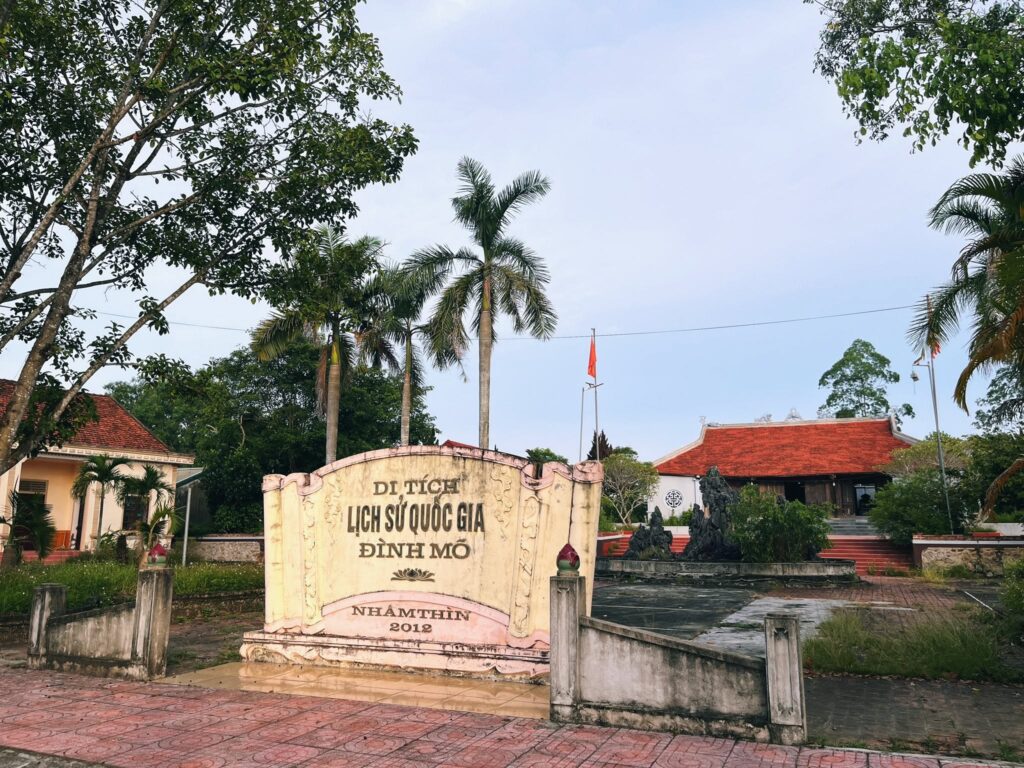
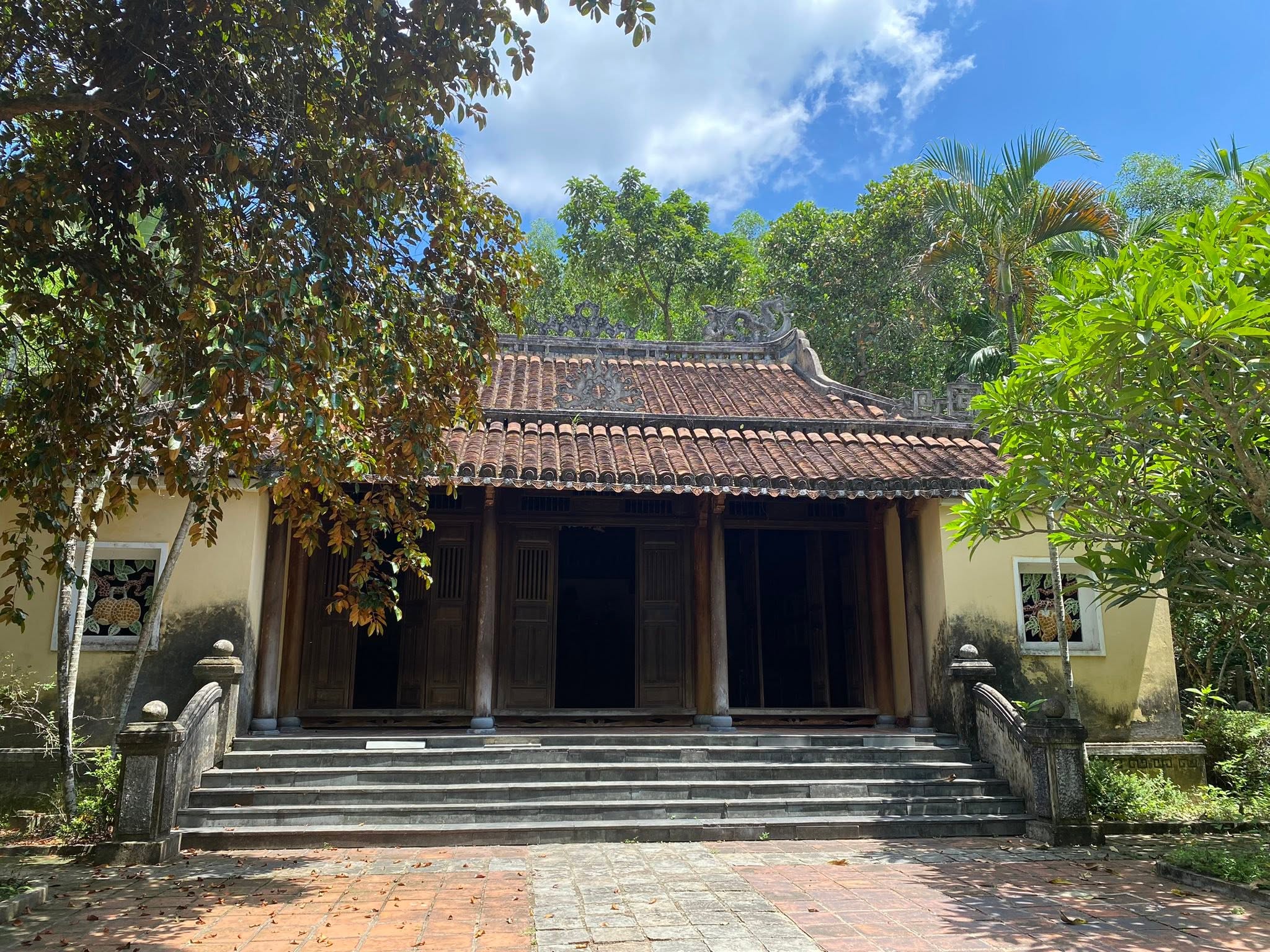
The memorial house preserves a traditional architectural style associated with Vietnamese houses of the past. The main building features three central bays and two side wings, with a roof covered in traditional yin-yang tiles.
The building covers approximately 130 square meters and stands within a garden of around 200 square meters. Its modest design creates a quiet, reflective atmosphere appropriate for a site dedicated to a historical figure.
Inside, the central area is arranged as a place of worship and remembrance. Photographs of Phan Châu Trinh, his family members, friends, and fellow reformists help preserve the memory of his personal life and intellectual circle.
The arrangement of the house allows visitors to learn about his family background while reflecting on the historical circumstances that shaped his ideas and activities.
The Ancient Persimmon Tree and the Story of the Caretaker
One notable feature of the memorial grounds is an ancient persimmon tree, which contributes to the site’s sense of continuity with the past.
The memorial house is also associated with the story of Phan Ngẫu, its caretaker. His connection to the site reflects the role of local people in maintaining the house and preserving memories associated with Phan Châu Trinh.
Details such as the old tree, the garden, and the stories passed down by those connected to the house add a human dimension to the historical site. They help visitors appreciate that heritage is preserved not only through buildings and artifacts, but also through the people who care for them and keep their stories alive.
Phan Châu Trinh’s Reformist Thought
Phan Châu Trinh believed that education was fundamental to the development of an independent and progressive society. He called for people to acquire knowledge, develop critical thinking, and become more conscious of their rights and responsibilities.
His ideas also emphasized economic development. He encouraged practical economic activity, commerce, business, and cooperation as ways to improve living standards and strengthen society.
Rather than viewing national renewal solely through political change, he considered education, civic spirit, and economic well-being essential foundations for long-term progress.
His reformist philosophy remains an important part of the history of Vietnamese political thought. It also provides a perspective on the different strategies that Vietnamese patriots pursued in their efforts to improve the country’s future during the colonial period.
Literary Works and Historical Legacy
Phan Châu Trinh left behind writings that expressed his political views, criticism of existing institutions, and aspirations for social reform. Notable works associated with him include:
- Tỉnh quốc hồn ca, a work calling for national awakening.
- Đầu Pháp chính phủ thư, a letter addressed to the French government.
- Thư thất điều, a work criticizing the ruling authority.
- Quân trị chủ nghĩa, discussing the principles of monarchical government.
- Dân trị chủ nghĩa, discussing the principles of popular government.
These writings provide insight into his thinking on governance, education, and the political future of Vietnam.
A letter he wrote in 1925 to a Vietnamese student in Bordeaux also reflects his concerns about the nation’s future and the importance of education among younger generations. His writings and correspondence form an important part of the intellectual legacy that the memorial house seeks to preserve.
Historical and Cultural Significance
The Phan Châu Trinh Memorial House is more than a place of remembrance. It is a site where visitors can explore the life of a prominent Vietnamese patriot and understand the reformist ideas that influenced debates about the country’s future in the early 20th century.
In 2005, the site was recognized as a national historical relic, affirming its value in preserving Vietnam’s historical and cultural heritage.
Today, the memorial house serves as a destination for visitors interested in Vietnamese history, patriotic scholars, and the development of modern political thought. It also offers an opportunity for younger generations to learn about the role of knowledge, civic responsibility, and social reform in the country’s history.
Visiting the Phan Châu Trinh Memorial House
A visit to the memorial house offers a quieter form of historical exploration. The traditional architecture, family photographs, memorial space, and surrounding garden provide an opportunity to reflect on Phan Châu Trinh’s life and the ideas he championed.
For travelers interested in historical and cultural destinations, the site can be included in a broader journey exploring the lives of Vietnamese scholars, reformers, and patriotic figures.
Visitors should respect the memorial space and follow any instructions provided by the site’s management.
Quick Information
| Item | Details |
|---|---|
| Site name | Phan Châu Trinh Memorial House |
| Historical figure commemorated | Phan Châu Trinh |
| Date of birth | September 9, 1872 |
| Date of death | March 24, 1926 |
| Main architectural features | Traditional house with three central bays, two side wings, and yin-yang roof tiles |
| Main building area | Approximately 130 m² |
| Garden area | Approximately 200 m² |
| National relic recognition | 2005 |
| Historical significance | Preserves the memory, writings, and reformist legacy of Phan Châu Trinh |