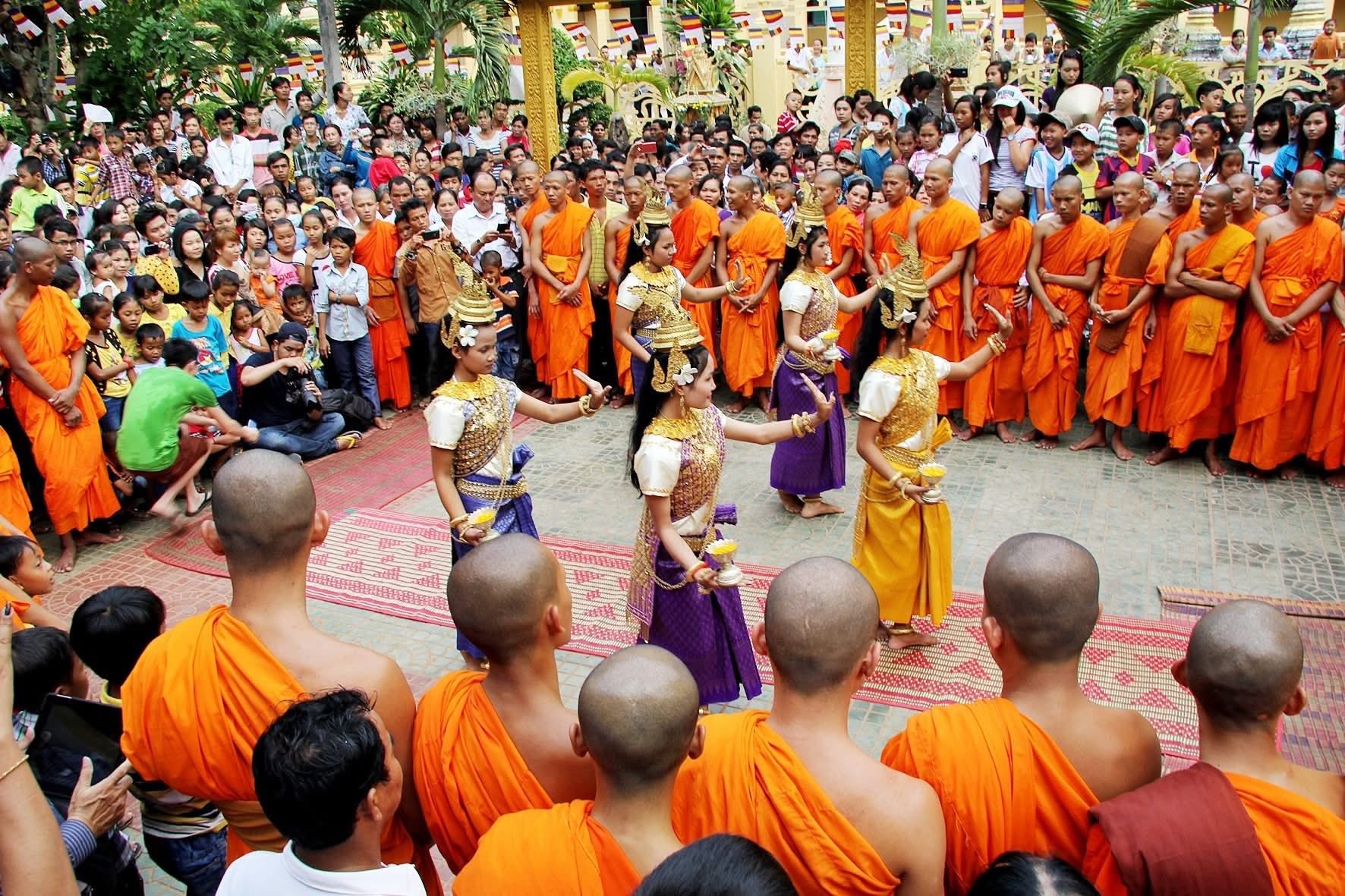
Rom Vong, also known as Lam Thon, is a traditional folk performance art practiced by the Khmer people in Southern Vietnam. Closely associated with community life, religious ceremonies, traditional festivals, and social gatherings, the dance reflects the Khmer people’s cultural identity, spiritual beliefs, sense of community, and appreciation for music and movement.
Rom Vong is not merely a form of entertainment. It is also a means of cultural communication, a way to strengthen community bonds, and an important element in preserving and transmitting Khmer cultural traditions from one generation to the next.
| Heritage Information | Details |
|---|---|
| Name of heritage | Rom Vong Dance of the Khmer People |
| Decision No. | 4601/QD-BVHTTDL dated December 20, 2019 |
| Type | Folk performing arts |
| Location | Soc Trang Province |
Rom Vong Dance of the Khmer People was included in the National Intangible Cultural Heritage List under Decision No. 4601/QD-BVHTTDL, issued by the Ministry of Culture, Sports and Tourism on December 20, 2019.
A Popular Dance in Khmer Community Life
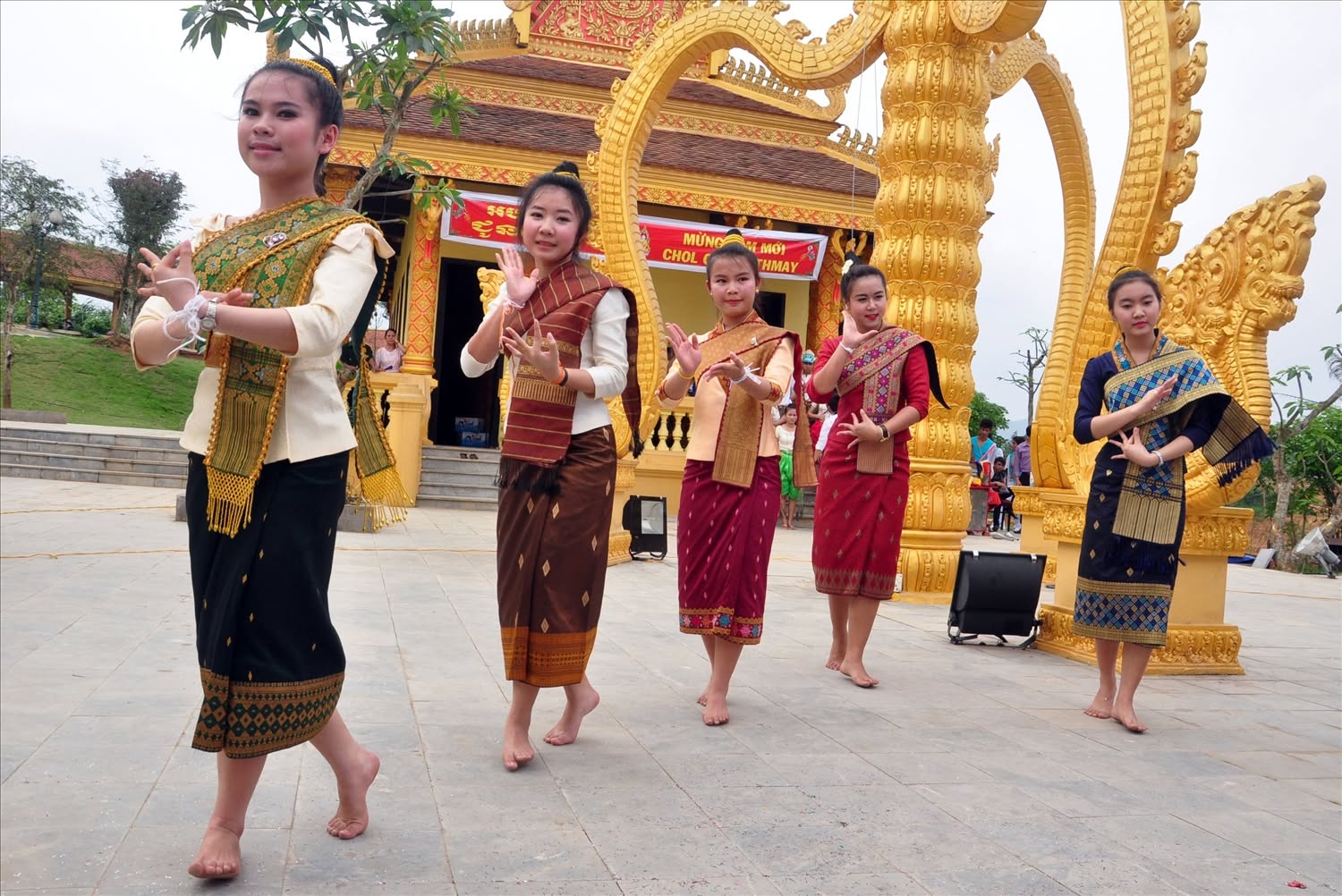
The term “Rom Vong” means dancing in a circle. The dance is widely practiced among Khmer communities in Soc Trang Province and often appears during major traditional festivals such as Chol Chnam Thmay, the Khmer New Year; Sen Dolta, the ancestors’ remembrance festival; and Ok Om Bok, the Moon Worship Festival.
It is also performed during peace-praying ceremonies, rituals honoring deities, Arak ceremonies, wedding celebrations, housewarming events, religious gatherings, and community cultural exchanges.
Rom Vong can take place in many settings, including the grounds of Khmer pagodas, village courtyards, private homes, festival spaces, and even open fields. The dance does not require a professional stage or a fixed number of performers. Anyone who understands the basic movements may join, regardless of age, gender, social status, or ethnic background.
During community celebrations, Khmer people, Kinh and Chinese residents, as well as visitors, may dance together. This openness makes Rom Vong a particularly effective form of cultural exchange and community connection.
Music and Dance Space
Rom Vong is usually accompanied by traditional Khmer musical instruments, especially the Sadam drum, gongs, and the Pin Peat ensemble, also known as the Khmer five-tone orchestra.
The rhythm is generally based on a steady 2/4 beat, creating a continuous and gentle flow that allows dancers to move around in a circle. The dance is not characterized by complicated or physically demanding movements. Instead, its beauty lies in the harmony between the rhythm, the dancers’ steps, hand gestures, body posture, and the collective movement of the entire circle.
The dancers usually move three steps forward and one step backward, or lightly tap one foot behind the other. Their hands and feet move in coordination, creating a smooth, graceful, and rhythmic appearance.
One of the distinctive characteristics of Rom Vong is the principle of balance between opposing elements. When one foot moves forward, the hand on the same side is held lower, while the opposite hand is raised higher. Similarly, when one palm faces upward, the other palm faces downward. These movements create a balanced relationship between the two sides of the body.
Differences Between Male and Female Movements
Although men and women perform the same dance, their gestures often express different aesthetic qualities.
Female dancers generally move in a gentle, graceful, and modest manner. Their hands are often positioned in front of the chest, with the wrists and fingers curved softly to create elegant, flowing movements.
Male dancers tend to perform with stronger and broader gestures. Their arm movements may suggest strength, protection, and confidence, reflecting traditional concepts of masculinity within Khmer culture.
Despite these differences, both male and female movements are coordinated within the same rhythm and circular formation, emphasizing harmony rather than individual performance.
Symbolic Dance Movements
Rom Vong includes a number of traditional gestures, each carrying a particular symbolic meaning connected to nature, daily life, human emotions, and spiritual beliefs.
Some commonly recognized movements include:
- Chip or Cheap: Resembling a young leaf or new shoot, symbolizing vitality, growth, hope, and the aspiration to move forward.
- Khuon: Imitating a flower bud, representing development, prosperity, abundance, and strength.
- Chon-ol: A pointing gesture.
- Ron: A covering or shielding movement.
- Tho Thuol: A gesture expressing receiving or welcoming.
- Flower movement: Inspired by the shape and opening of a flower.
- Vong: A circular movement reflecting the overall character of the dance.
- Sek: A humorous gesture imitating the posture or movement of a parrot.
- Lia: A gesture meaning to open or spread.
These movements are simple in appearance but contain layers of cultural meaning. They connect the human body with images from the natural world and express the Khmer community’s close relationship with nature and agricultural life.
Community Etiquette During the Dance
Rom Vong also follows certain social conventions that reflect respect and hierarchy within the community.
During a gathering, younger people or those of lower social status generally begin dancing first. They may then invite elders, respected guests, or people of higher standing to join the circle. This practice demonstrates politeness, respect, and hospitality.
When the music and drums stop, all dancers stop at the same time. They may place their hands together in a respectful greeting before returning to their positions or waiting for the next musical sequence.
Such conventions show that Rom Vong is not simply an artistic activity. It is also a form of social education that teaches younger generations how to behave respectfully, communicate with others, and maintain harmony within the community.
Cultural and Social Values
Rom Vong serves as an important source of spiritual and cultural enjoyment for the Khmer people. It brings people together during festivals, religious ceremonies, family celebrations, and community events.
The dance helps strengthen solidarity, encourage mutual understanding, and create opportunities for people to share happiness. Because it is easy to learn and does not require specialized equipment, Rom Vong can be practiced by people of different ages and backgrounds.
The dance is closely connected with many other aspects of Khmer cultural life, including:
- Traditional music and musical instruments
- Khmer pagoda architecture
- Religious rituals and beliefs
- Traditional costumes
- Decorative arts and painting
- Community festivals
- Wedding and family customs
- Agricultural and village life
Rom Vong therefore represents a combination of music, movement, ritual, social relationships, and collective memory. Its value lies not only in the performance itself but also in the relationships and cultural meanings created through participation.
Preservation and Promotion
In the context of modernization and changes in contemporary lifestyles, Rom Vong faces challenges. Some young people have limited opportunities to learn the traditional movements, while community-based performance spaces are gradually becoming less frequent in certain areas.
To preserve and promote this heritage, Soc Trang Province has organized training courses at cultural institutions and community centers. Khmer cultural and artistic organizations, including the Soc Trang Khmer Art Troupe, have played an important role in teaching, performing, and introducing traditional Khmer performing arts to the public.
The province has also implemented the project on preserving and promoting Khmer cultural heritage for the 2022–2027 period under Decision No. 2274/QD-UBND. Preservation measures include establishing community clubs, organizing cultural festivals and competitions, holding traditional art exchanges, supporting artisans, and encouraging the transmission of dance techniques to younger generations.
Connecting Rom Vong with cultural tourism is another practical solution. Visitors can experience the dance during Khmer festivals, at pagodas, or through community-based tourism programs. Such activities provide local communities with opportunities to introduce their cultural identity while creating additional motivation to maintain traditional practices.
A Living Expression of Khmer Cultural Identity
Rom Vong Dance of the Khmer People in Soc Trang Province is a vivid example of Vietnam’s diverse intangible cultural heritage. Through simple yet expressive movements, rhythmic music, symbolic gestures, and collective participation, the dance conveys the Khmer people’s worldview, aesthetic sensibility, spiritual life, and strong sense of community.
More than a traditional performance, Rom Vong is a living cultural practice that continues to connect generations, strengthen social relationships, and preserve the cultural identity of the Khmer people in the Mekong Delta.
Its recognition as a National Intangible Cultural Heritage affirms the artistic, historical, social, and cultural importance of Rom Vong, while emphasizing the need to protect, practice, and promote this unique traditional art form in contemporary life.