The Roóng Poọc Festival, also known as the Going-to-the-Fields Festival, is an important traditional cultural practice of the Giáy people in Tả Van Commune, Lào Cai Province. The festival marks the end of a month of New Year celebrations and the beginning of a new agricultural cycle and farming season. It is also an occasion for the community to worship the deity believed to govern the land, commonly known as the Earth God, praying for favorable weather, abundant crops, thriving livestock, peaceful villages, and good health for everyone.
According to accounts passed down by elderly Giáy people in Tả Van Giáy Village, their ancestors began holding the Roóng Poọc Festival on the Day of the Dragon in the first lunar month many generations ago. Over time, the festival has continued to be preserved and practiced as a ritual marking the start of a new production year. It expresses the close relationship between people, heaven, earth, deities, and nature.
Preparations and the Erection of the Sacred Pole
Preparations for the festival are carefully carried out by the community through various ritual procedures, the most important of which are making the còn balls and selecting, cutting, and transporting the sacred pole.
The còn balls are made by five unmarried young women selected from different villages. Meanwhile, strong young men are responsible for choosing, cutting, and bringing the sacred pole to the festival site. During the cutting and transportation process, the trunk must not touch the ground, as the Giáy believe that doing so would diminish its sacred power.
The village head is responsible for cutting and decorating the sun and moon rings, which are placed at the top of the pole. The rings feature two main colors: blue, symbolizing the moon, and red, symbolizing the sun. Their combination represents the harmony of yin and yang, the balance of all things, and the continuation of life and fertility.
Before the sacred pole is erected, the ritual master ties the sun and moon rings to its top and waits until the Hour of the Dragon to begin the ceremony. The Pí lè horn ensemble plays a particularly important role in welcoming and escorting the ritual master, village head, and ceremonial offerings as they invite the Jade Emperor, deities, heaven, and earth to witness the proceedings.
After the procession brings the offerings to the place where the pole will be erected, the ritual master turns toward the sunrise and signals the village head to light incense and perform the ritual announcement to the gods of heaven and earth, asking permission to erect the sacred pole for the festival.
The ritual master then casts a pair of yin-yang divination pieces made from peach wood. If one piece lands face up and the other face down, this is interpreted as a sign that the deities have agreed and granted their protection. The ritual master then burns votive paper offerings before signaling the young men to erect the pole and firmly secure its base.
When the pole is erected, the sun ring must face east, while the moon ring faces west. The còn pole, also called “tòng cón,” is usually made from a mai tree measuring approximately 10 to 20 arm spans in length. Its top is kept intact and then bent into an arch to support the sun and moon rings.
Once the pole has been erected, the ritual master again performs yin-yang divination to confirm whether the deities have arrived to witness the ceremony. The divination pieces are made from a small peach branch approximately six centimeters long, cut diagonally at both ends and split into two parts. If one piece lands face up and the other face down, the result is considered auspicious, indicating that the deities have arrived and accepted the ritual. If the desired result is not obtained, the divination is repeated until an auspicious sign appears.
The Còn-Throwing Ritual and Prayers for Abundant Crops
After the rituals seeking permission from the deities, the ritual master invites respected elderly members of the community, including the village head, elders, and hamlet leaders, to conduct the opening còn-throwing ceremony.
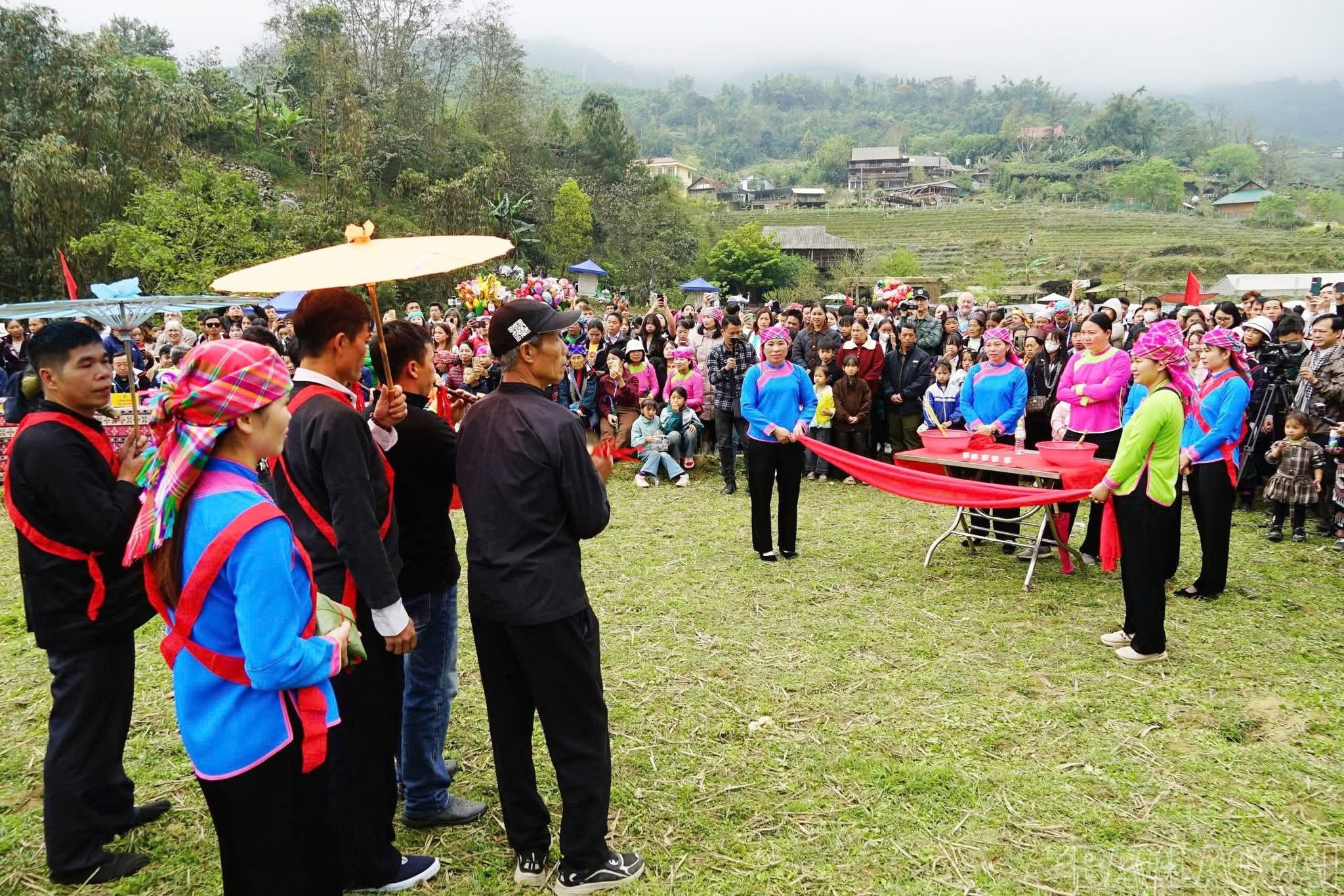
Men and women stand in two opposite rows, with four people on each side, holding còn balls that have already been presented to the deities. They throw the balls symbolically three times, using the sacred pole as the central point. One side throws the ball and the other catches it before throwing it back. The objective is to send the còn ball through the moon ring at the top of the pole.
Following the opening ritual, the ritual master distributes còn balls from a tray to young people. Men and women stand on opposite sides of the pole and throw the balls toward the sun and moon rings, hoping to pierce the rings. This act symbolizes the union of yin and yang and the interaction between men and women, while expressing the community’s wishes for fertility, good harvests, and prosperity.
According to folk beliefs, the còn ball represents masculine energy. Throwing the ball through the “phông còn,” or còn target, symbolizes breaking through boundaries and opening the way for yin and yang to unite, allowing all living things to reproduce and flourish.
When a còn ball successfully pierces the target, the village head immediately throws various types of seeds into the air. These are regarded as sacred seeds containing powerful regenerative energy. Villagers compete to collect the seeds, believing that the sacred power will be transferred to them and bring everyone a plentiful harvest.
The còn pole is also considered a symbol of the sacred rice plant and the cosmic tree. It connects earth and heaven, yin and yang, enabling all things to unite, grow, and prosper. For this reason, the top of the pole must point eastward, toward the rising sun, symbolizing beginnings, life, and fertility.
Recreational Activities During the Festival
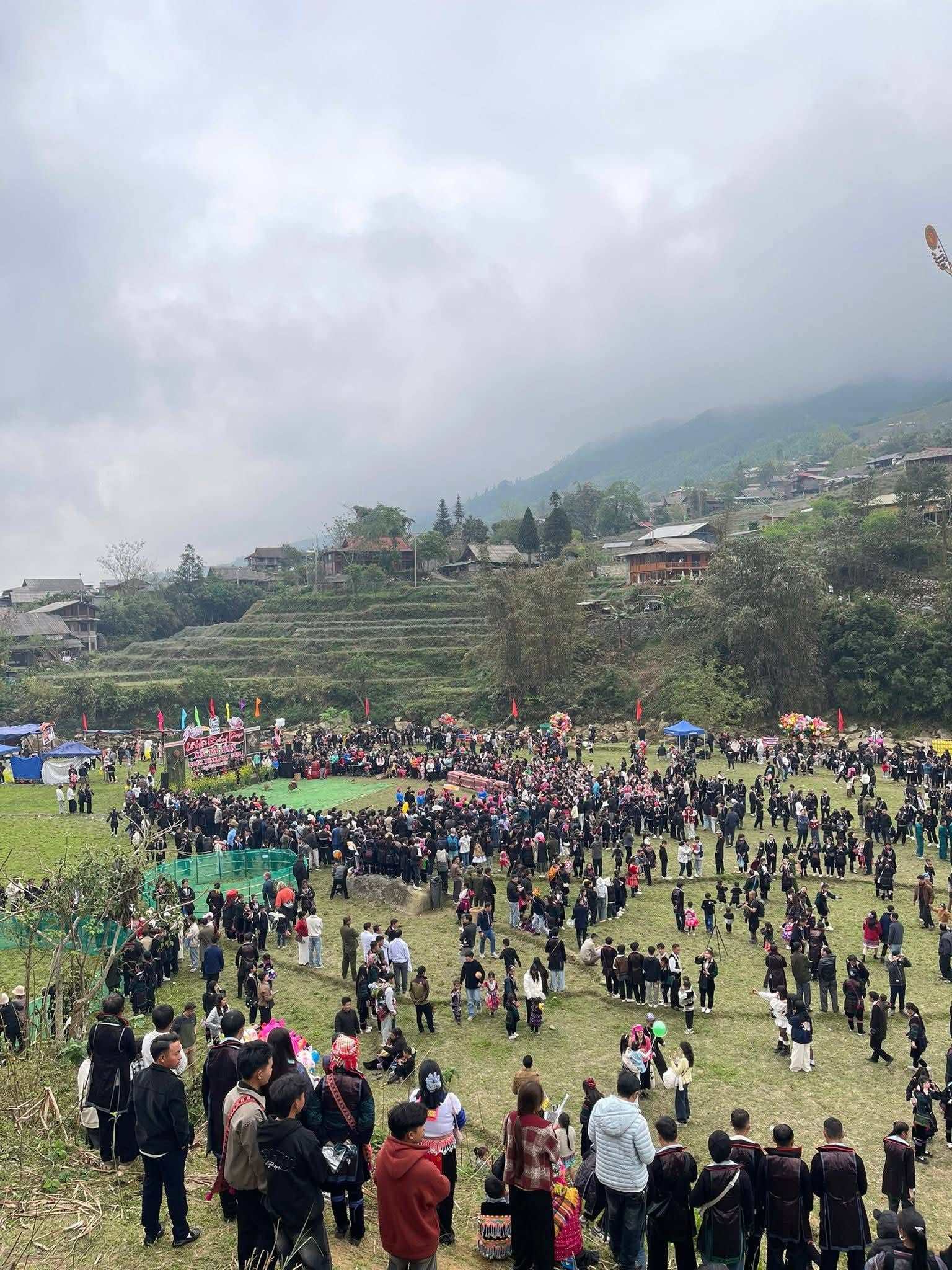
In addition to its spiritual rituals, the Roóng Poọc Festival features numerous artistic and recreational activities in a lively communal atmosphere. Folk songs, khèn dances, and traditional forms of performance contribute to the festival’s distinctive cultural setting.
In particular, tug-of-war, also known as “kéo mây,” is an indispensable game during the Going-to-the-Fields Festival. Participants use a rattan or forest-vine rope approximately 20 to 30 meters long. During the game, the root end of the rope faces east, while the tip end faces west. This arrangement reflects sacred concepts of direction, the movement of nature, and the relationship between heaven, earth, the sun, and agricultural production.
After the tug-of-war competition, villagers bring two strong buffaloes to a nearby field beside the sacred pole and have them plow three to five furrows. This ritual symbolizes the beginning of a new farming season and marks the start of agricultural work, while expressing hopes for a successful and productive year.
Cultural and Spiritual Values
The Roóng Poọc Festival of the Giáy people in Tả Van reflects the aspiration for a life of peaceful people and prosperous nature, in which villagers are healthy, communities remain harmonious, crops grow well, and livestock multiply. The entire sequence of rituals, games, and performances is closely associated with fertility beliefs and expresses the desire for all things to grow, reproduce, and thrive.
Traces of rain-invoking beliefs can also be clearly seen in the festival. For example, a yellow paper dragon is attached to the sun and moon rings, symbolizing prayers for favorable rainfall, good weather, and suitable conditions for agricultural production.
Roóng Poọc is a typical agricultural festival that reflects the Giáy people’s long history of wet-rice cultivation. It incorporates layers of belief, including sun worship, polytheism, and fertility worship. The festival emerged from the community’s own labor and agricultural life in Tả Van over hundreds of years and therefore embodies profound historical, cultural, scientific, and humanistic values.
It is a form of communal cultural activity with a strong spiritual character, combining various folk art forms such as verbal art, visual art, performing arts, music, folk games, and communal rituals. The festival is not only closely connected with the spiritual life of the Giáy people in Tả Van Commune, but also contributes to enriching the cultural identity of the Giáy community in Lào Cai Province.
Preservation and Promotion of the Heritage
Today, the Roóng Poọc Festival continues to be practiced and protected by the Giáy community through various appropriate measures. The organization of the festival receives broad support from local residents, while the community remains committed to preserving its rituals, games, traditional performances, and spiritual values.
Recognizing its outstanding historical, cultural, scientific, and humanistic significance, the Roóng Poọc Festival, or Going-to-the-Fields Festival, of the Giáy people in Tả Van Commune, Sa Pa District, Lào Cai Province, was included in the National Intangible Cultural Heritage List in 2013 by the Minister of Culture, Sports and Tourism.
Heritage Information
| Category | Information |
|---|---|
| Heritage name | Roóng Poọc Festival of the Giáy People |
| Decision No. | 3820/QĐ-BVHTTDL |
| Date of issuance | 31 October 2013 |
| Type | Traditional Festival |
| Location | Tả Van Commune, Lào Cai Province |
The Roóng Poọc Festival is a vivid testament to the enduring vitality of Giáy culture, where agricultural beliefs, communal rituals, folk arts, and aspirations for a prosperous life come together in a richly distinctive cultural space. Through the festival, the Giáy people express gratitude to heaven, earth, deities, and ancestors, while passing down traditional knowledge and a worldview based on living in harmony with nature to future generations.