Sa Chau Fish Sauce is a traditional culinary specialty from the coastal region of northern Vietnam, now produced in Giao Hung Commune, Ninh Binh Province. Known for its clear amber-brown color, delicate aroma, rich savory taste, and naturally sweet finish, this distinctive fish sauce reflects more than two centuries of craftsmanship and local food culture. Made from familiar marine ingredients such as fish, shrimp, tiny shrimp known locally as tép moi, and sea salt, Sa Chau fish sauce represents the enduring relationship between coastal communities, their natural resources, and generations of traditional food production.
For more than 200 years, the people of Sa Chau Village have preserved a distinctive method of producing fish sauce through natural fermentation, careful filtration, and prolonged exposure to sunlight. Every stage requires patience and experience, from selecting fresh seafood and preparing aged sea salt to monitoring fermentation tanks and allowing the extracted fish sauce to mature in small earthenware vessels. Particularly characteristic of Sa Chau is the traditional practice known as “ăn sương, nằm nắng”, literally meaning “absorbing the dew and resting in the sun,” a poetic expression describing the careful use of natural weather conditions during the final stages of production.
Today, despite changes in manufacturing methods and consumer demand, Sa Chau fish sauce continues to preserve the essential characteristics of its traditional craftsmanship. Fermentation tanks, earthenware jars, and the daily routines of monitoring each batch remain familiar elements of village life. For travelers interested in local cuisine and cultural heritage, discovering Sa Chau fish sauce offers an opportunity to understand the history, skills, and coastal traditions behind one of the region’s most distinctive food products.
The History of Sa Chau Fish Sauce and Its Coastal Village Heritage
Sa Chau Village is located in Giao Hung Commune, Ninh Binh Province, within the former Nam Dinh coastal region before Vietnam’s provincial administrative reorganization in 2025. The surrounding area has a long history of fishing, seafood processing, and maritime livelihoods. For generations, local communities have depended on the sea for food and income, developing practical methods of preserving fish and other marine products. Among these methods, salting and fermentation gradually evolved into the traditional fish sauce production techniques associated with Sa Chau.
According to local historical accounts and village traditions, Sa Chau fish sauce production dates back more than 200 years, with its reputation commonly traced to the reign of Emperor Minh Mang during the Nguyen Dynasty. In its early stages, fish sauce was primarily made for household consumption and local exchange. Freshly caught fish, shrimp, and other seafood were preserved with salt, allowing families to make use of their catches over extended periods. As production knowledge developed, villagers refined their techniques, creating a fish sauce distinguished by its flavor, clarity, and aroma.
What began as a household food-preservation practice gradually became an established village craft. Sa Chau fish sauce earned recognition among local consumers for its rich yet balanced taste, while generations of producers continued improving their methods of selecting ingredients, controlling fermentation, and extracting the finished sauce. Experienced craftspeople learned to assess the quality of each batch through its color, fragrance, clarity, and flavor, developing a body of practical knowledge that became part of the village’s cultural identity.
Traditional fish sauce production has always required considerable patience. Unlike food products that can be prepared within a few days, a batch of Sa Chau fish sauce may take more than a year to mature. Throughout this period, producers must understand the characteristics of different seafood ingredients, maintain suitable fermentation conditions, and observe changes in the mixture as it develops. Much of this knowledge has historically been passed directly from parents to children or between experienced family members, preserving techniques that are difficult to acquire through written instructions alone.
Over the centuries, the craft has survived economic and social changes while remaining closely connected to local livelihoods. According to information about the village, approximately 50 households continue to participate in traditional fish sauce production, although the number may change over time. Some producers have introduced additional equipment to improve processing, hygiene, packaging, and distribution. Nevertheless, extended fermentation and the traditional techniques used to develop the sauce’s characteristic flavor remain central to Sa Chau’s culinary identity.
Traditional Ingredients and the Distinctive Sa Chau Fish Sauce Production Process
The distinctive character of Sa Chau fish sauce begins with the careful selection of its ingredients. Fish, shrimp, tiny shrimp, and sea salt form the foundation of traditional production. Local producers generally prefer fresh seafood that has not been damaged or allowed to deteriorate before processing. According to traditional experience, catches obtained when the fish have suitable fat content are particularly valued, as the quality and composition of the raw ingredients can influence fermentation and the resulting flavor.
An equally important ingredient is sea salt from Bach Long, a coastal salt-producing area traditionally associated with Sa Chau fish sauce. Producers often select clean, relatively large salt crystals and store them for an extended period before use. According to local practice, salt may be aged for more than a year, a process traditionally believed to reduce some of the harsh or bitter characteristics associated with newly harvested salt. Proper salt selection and storage also contribute to consistent fermentation conditions, as salt plays an essential role in preserving the seafood and influencing the biochemical processes that produce fish sauce.
Once the seafood has been selected and prepared, it is mixed with salt and transferred into large fermentation tanks. Traditional descriptions of Sa Chau production indicate that approximately 14–18 kilograms of salt may be used for every 100 kilograms of fish, depending on the ingredients and the methods followed by individual producers. The resulting mixture, known in Vietnamese as chượp, undergoes a prolonged process in which proteins gradually break down and contribute to the formation of the characteristic flavor compounds found in fish sauce. In commercial production, salt ratios must be carefully controlled according to the ingredients, processing conditions, and food safety requirements rather than applied as a universal formula.
Traditional fermentation generally takes around 12–18 months, requiring close attention throughout the maturation period. Producers monitor the mixture and may stir or manage it according to techniques developed through generations of experience. Rather than relying on direct cooking to produce the sauce, this traditional method depends primarily on time, salt, and biochemical changes within the fermenting seafood. As the mixture matures, proteins are progressively broken down, contributing to the savory taste and distinctive aroma of the finished product.
When the fermented mixture reaches the appropriate stage, the liquid is extracted and filtered to obtain the concentrated fish sauce, commonly called nước mắm cốt. One traditional filtration technique involves using a bamboo basket lined with cloth to separate the liquid from larger particles and remaining solids. Although the equipment is simple, the process requires care to achieve the desired clarity and maintain hygienic conditions. Depending on the producer’s methods, the extracted sauce may undergo additional maturation or quality-control stages before bottling.
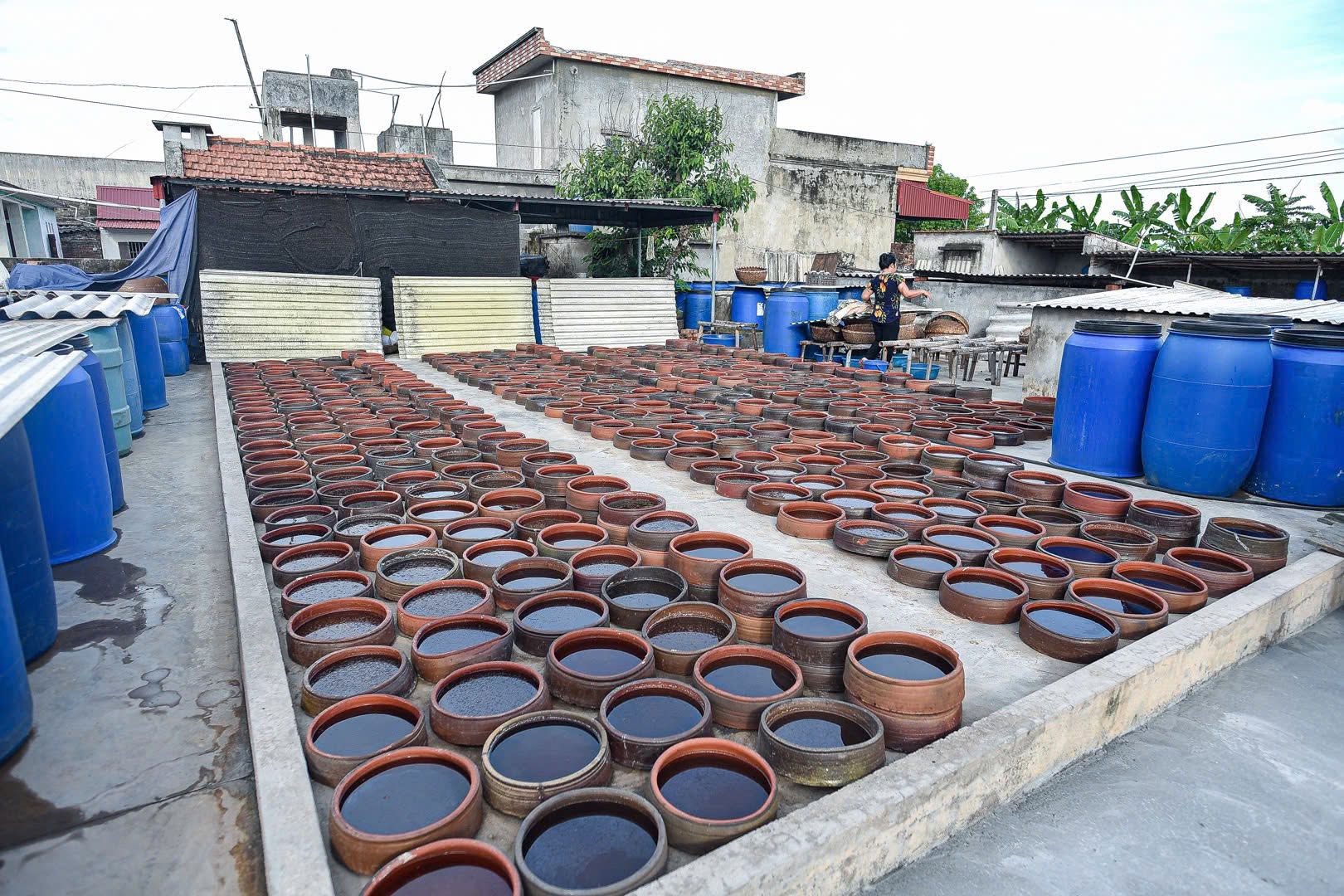
One of the most distinctive features of Sa Chau fish sauce is the practice of transferring the extracted liquid into small earthenware vessels for further exposure to natural sunlight and coastal weather conditions. Locally, this process is described by the expression “ăn sương, nằm nắng”, meaning “absorbing the dew and resting in the sun.” The phrase reflects the traditional relationship between fish sauce production and the surrounding environment. The vessels are placed in suitable sunny locations, allowing the sauce to undergo further concentration and flavor development. Producers must carefully monitor the weather and protect the vessels when rain approaches, preventing unwanted water or contaminants from entering the sauce.
The sight of earthenware vessels arranged beneath the sun, alongside fermentation tanks and traditional processing equipment, has become a characteristic image of Sa Chau’s culinary heritage. This stage demonstrates the accumulated knowledge of local craftspeople, who have learned to work with seasonal conditions and observe subtle changes in the sauce. Its color, aroma, consistency, and flavor provide important indications of maturation, helping producers determine when the fish sauce is ready for the next stage.
After months of fermentation, filtration, and sun exposure, properly matured Sa Chau fish sauce is traditionally described as having a clear amber-brown color, a delicate aroma, a pronounced savory taste, and a naturally sweet finish. Its exact appearance and flavor may vary according to the seafood used, fermentation period, and production conditions. For commercially distributed products, sensory qualities should be accompanied by appropriate food safety controls, quality testing, and accurate labeling in accordance with applicable regulations.
The Flavor of Sa Chau Fish Sauce in Local Vietnamese Cuisine
Fish sauce holds a special place in Vietnamese cuisine, serving both as a seasoning and as an essential component of countless traditional dishes. A well-balanced fish sauce can enhance the natural sweetness of steamed fish, boiled meat, fresh vegetables, and simple home-cooked meals. In the former Nam Dinh coastal region, Sa Chau fish sauce has long been associated with everyday family cooking, reflecting the way local communities transform marine resources into ingredients that enrich their culinary traditions.
The defining appeal of Sa Chau fish sauce lies in its rich saltiness, gentle aroma, and lingering natural sweetness. When tasted, its savory intensity is followed by a more rounded finish developed through the fermentation process. It may be served on its own as a dipping sauce or combined with lime, garlic, chili, and other seasonings according to the dish and personal preference. In traditional Vietnamese braised dishes, marinades, and savory preparations, fish sauce contributes depth of flavor while complementing the natural characteristics of meat, seafood, and vegetables.
The flavor of traditionally fermented fish sauce develops as proteins in the seafood gradually break down into smaller compounds, including amino acids that contribute to its characteristic umami taste. However, the precise protein-related nitrogen content and other quality characteristics can vary among products depending on the raw materials, salt concentration, fermentation period, and processing techniques. Consumers should therefore consider reliable product information and the manufacturer’s details rather than relying exclusively on color or generalized descriptions of flavor.
In everyday cooking, Sa Chau fish sauce can accompany a wide variety of familiar Vietnamese dishes. Boiled vegetables, steamed fish, boiled pork, and tofu can be served with a simple dipping sauce, while braised fish and pork dishes benefit from its savory intensity. A small quantity may also be used to season soups, stir-fries, or marinades. This versatility has helped fish sauce remain an indispensable ingredient in many Vietnamese kitchens, connecting regional food traditions through a shared appreciation of naturally fermented flavors.
For the people of Sa Chau, fish sauce also carries cultural meaning beyond its culinary function. Behind every bottle lies the work of fishing communities, salt producers, fermentation specialists, and families who have maintained the craft over generations. From selecting fresh seafood to watching over the fermentation tanks and protecting earthenware vessels during changing weather, the production process follows the rhythms of coastal life. These familiar activities have become part of the community’s collective memory, making the flavor of Sa Chau fish sauce especially meaningful to those who have moved away from their hometown.
Today, Sa Chau fish sauce is also valued as a regional food gift. Properly packaged bottles can introduce visitors and consumers from other parts of Vietnam to the culinary traditions of the northern coast. Travelers interested in purchasing the specialty should choose reputable producers and check the product’s ingredients, origin, production information, expiration date, and storage instructions. Appropriate storage helps preserve product quality and supports safe consumption.
Preserving Sa Chau Fish Sauce Craftsmanship and Developing Culinary Tourism
After more than two centuries, traditional fish sauce production remains an important element of life in Sa Chau Village, Giao Hung Commune, Ninh Binh Province. As food manufacturing becomes increasingly modernized, preserving the knowledge and techniques associated with traditional fermentation is essential to maintaining the identity of the craft. The skills involved in choosing ingredients, managing fermentation, filtering the sauce, and controlling sun exposure represent generations of accumulated experience and practical understanding.
Local accounts indicate that approximately 50 households remain involved in Sa Chau fish sauce production. Some establishments have introduced equipment to improve productivity, sanitation, storage, and packaging while continuing to use traditional fermentation techniques. Combining modern food safety practices with inherited production knowledge can help the craft remain economically viable without losing the qualities that distinguish Sa Chau fish sauce from other products. Maintaining this balance is particularly important in a market where consumers can choose from a wide range of fish sauces and manufactured dipping condiments.
Beyond its economic significance, Sa Chau has potential as a destination for local culinary and traditional craft tourism. Visitors interested in Vietnamese food heritage may find opportunities to learn about the village’s history, the selection of seafood and salt, the fermentation process, and the distinctive practice of maturing fish sauce in earthenware vessels under natural sunlight. These experiences can provide a closer understanding of the patience and craftsmanship involved in producing a familiar Vietnamese condiment. However, visits should be arranged with producers who welcome guests, and visitors must respect hygiene requirements and working conditions at food production facilities.
The long-term development of the craft also depends on maintaining product quality, strengthening traceability, and presenting accurate information about production methods. Improved packaging, transparent labeling, and responsible marketing can help consumers understand the differences between traditionally fermented fish sauce and other seasoning products. Equally important is the preservation of authentic stories about the village, its people, and the techniques that have shaped its culinary reputation.
Passing traditional knowledge to younger generations remains another important consideration. Many skills involved in fish sauce production, including recognizing suitable raw materials, assessing fermentation maturity, and judging the effects of weather conditions, are developed through extended observation and practice. Documenting these techniques and combining them with modern food science and safety standards can help preserve the craft while supporting sustainable development.
Within the broader culinary landscape of Ninh Binh, Sa Chau fish sauce represents the maritime heritage of the former Nam Dinh region. While Hoa Lu is widely associated with mountain goat, crispy rice, and dishes shaped by its limestone landscape, Sa Chau reflects the seafood-processing traditions of northern Vietnam’s coastal communities. Together, these specialties reveal the province’s diverse food culture and provide opportunities to connect traditional village industries with tourism, cultural education, and regional identity.
Sa Chau Fish Sauce embodies more than 200 years of coastal craftsmanship, combining marine ingredients, inherited knowledge, and the dedication of generations of local producers. Through prolonged fermentation and the distinctive practice of allowing the sauce to mature under natural sunlight, the people of Sa Chau have created a condiment recognized for its amber color, delicate aroma, rich savory flavor, and naturally sweet finish. More than an ingredient in Vietnamese cooking, Sa Chau fish sauce preserves the cultural memory, practical skills, and maritime traditions of a community deeply connected to the sea. Protecting this heritage, maintaining product quality, and developing responsible culinary tourism will help ensure that the flavors of Sa Chau remain part of Vietnam’s living food culture for generations to come.
Quick Information
| Item | Details |
|---|---|
| Specialty name | Sa Chau Fish Sauce |
| Vietnamese name | Nước mắm Sa Châu |
| Location | Giao Hung Commune, Ninh Binh Province, Vietnam |
| Former administrative region | Former Nam Dinh Province, before the 2025 reorganization |
| Geographic region | Coastal northern Vietnam |
| Category | Local culinary specialty and traditional craft product |
| Traditional craft | Fish sauce production |
| Craft history | More than 200 years, according to local accounts |
| Historical period associated with the craft | Reign of Emperor Minh Mang, Nguyen Dynasty |
| Main ingredients | Fish, shrimp, tiny shrimp, and sea salt |
| Traditional salt source | Bach Long sea salt |
| Salt characteristics | Clean, relatively large crystals, traditionally stored before use |
| Traditional salt aging period | May exceed one year |
| Described ingredient ratio | Approximately 14–18 kg of salt per 100 kg of fish |
| Production method | Traditional fermentation |
| Typical fermentation period | Approximately 12–18 months |
| Traditional filtration method | Cloth-lined bamboo basket |
| Distinctive maturation practice | Sun exposure in earthenware vessels, known as ăn sương, nằm nắng |
| Heat source during sun maturation | Natural sunlight |
| Finished color | Clear amber-brown |
| Flavor profile | Rich, savory, gently aromatic, with a naturally sweet finish |
| Appearance | Natural clarity and consistency, varying by batch |
| Households traditionally involved | Approximately 50, according to local accounts |
| Culinary uses | Dipping, marinating, braising, seasoning, and stir-frying |
| Common food pairings | Braised fish, braised pork, boiled vegetables, steamed fish, and traditional dishes |
| Cultural significance | Seafood fermentation knowledge, village craftsmanship, and coastal heritage |
| Tourism value | Traditional craft exploration and local culinary experiences |
| Visitor advice | Contact a participating producer before arranging a visit |
| Buying advice | Check producer details, ingredients, labeling, expiration date, and storage instructions |
| Conservation priorities | Preserve traditional techniques, improve quality, and strengthen regional branding |