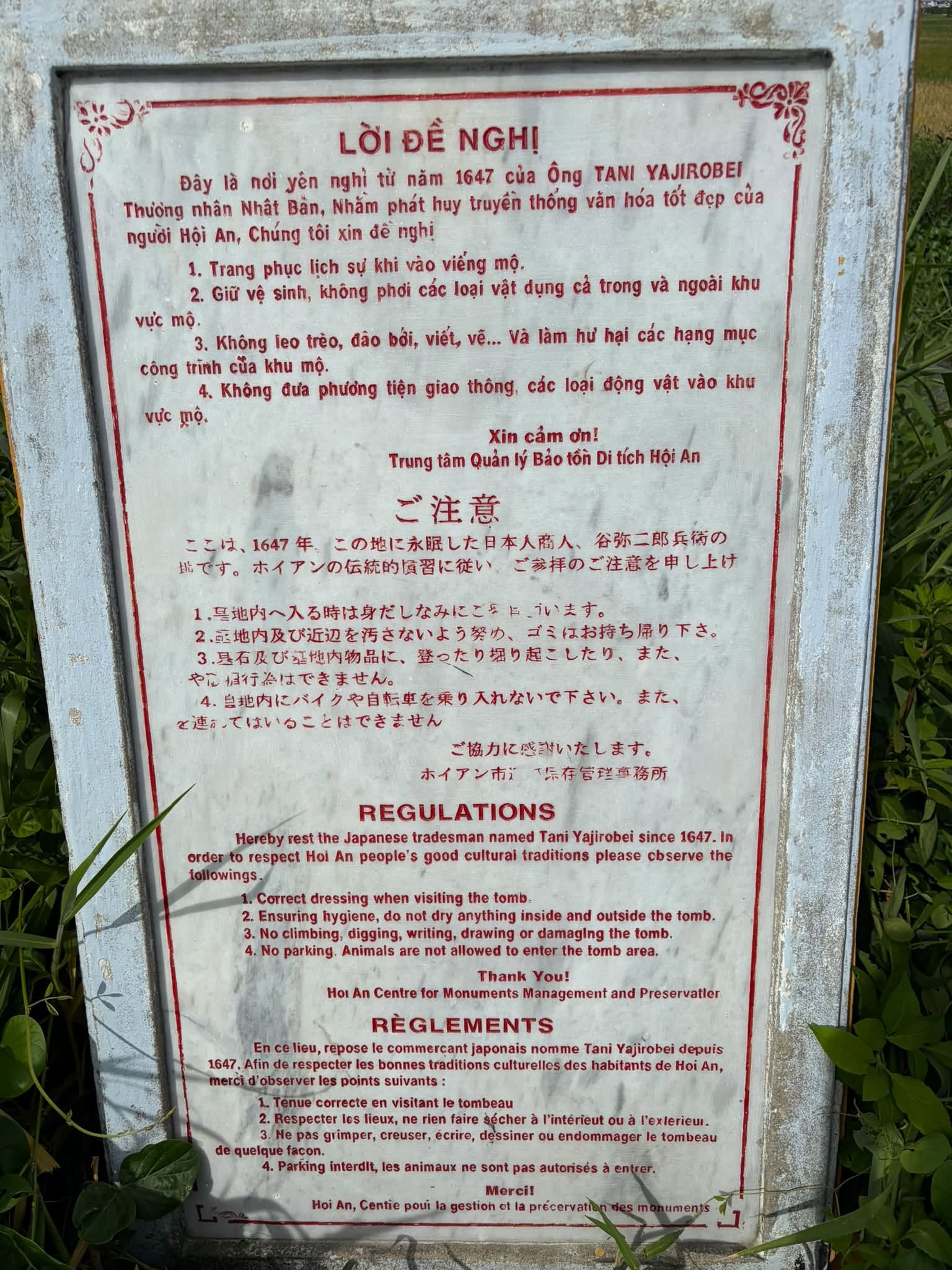
Tani Yajirobei’s Tomb is a historical site associated with the presence of Japanese merchants in Hội An during the period when the port town flourished as a major trading center from the late 16th to the early 17th century. Tani Yajirobei is recorded as a merchant from Hirado, near Nagasaki, Japan, who came to Hội An to trade, settled there, and died in the town.
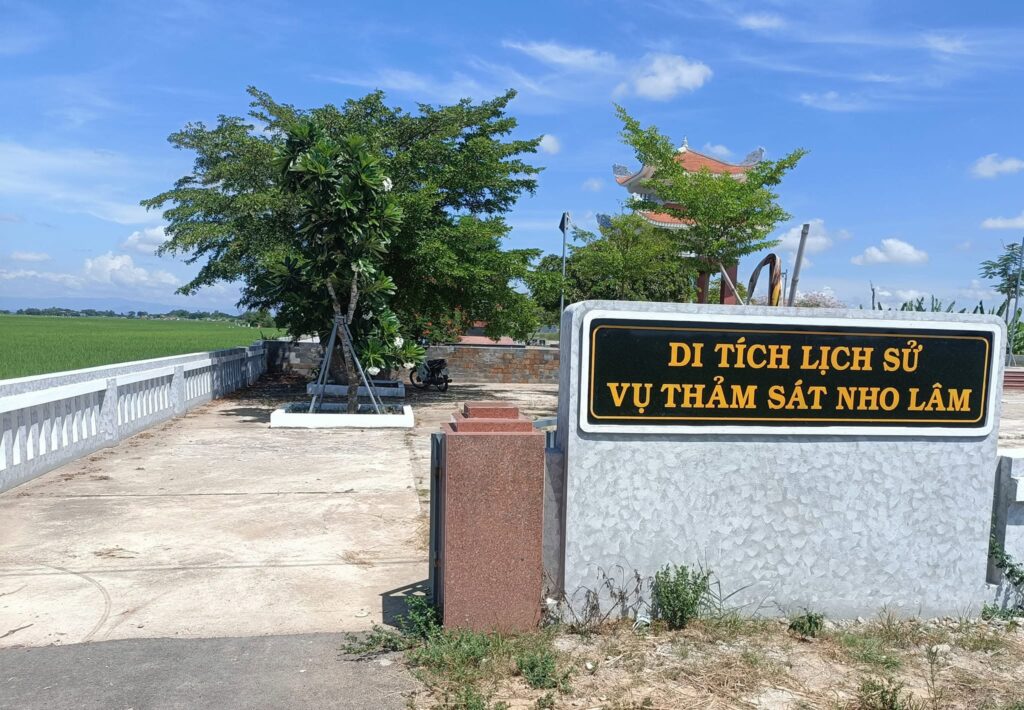
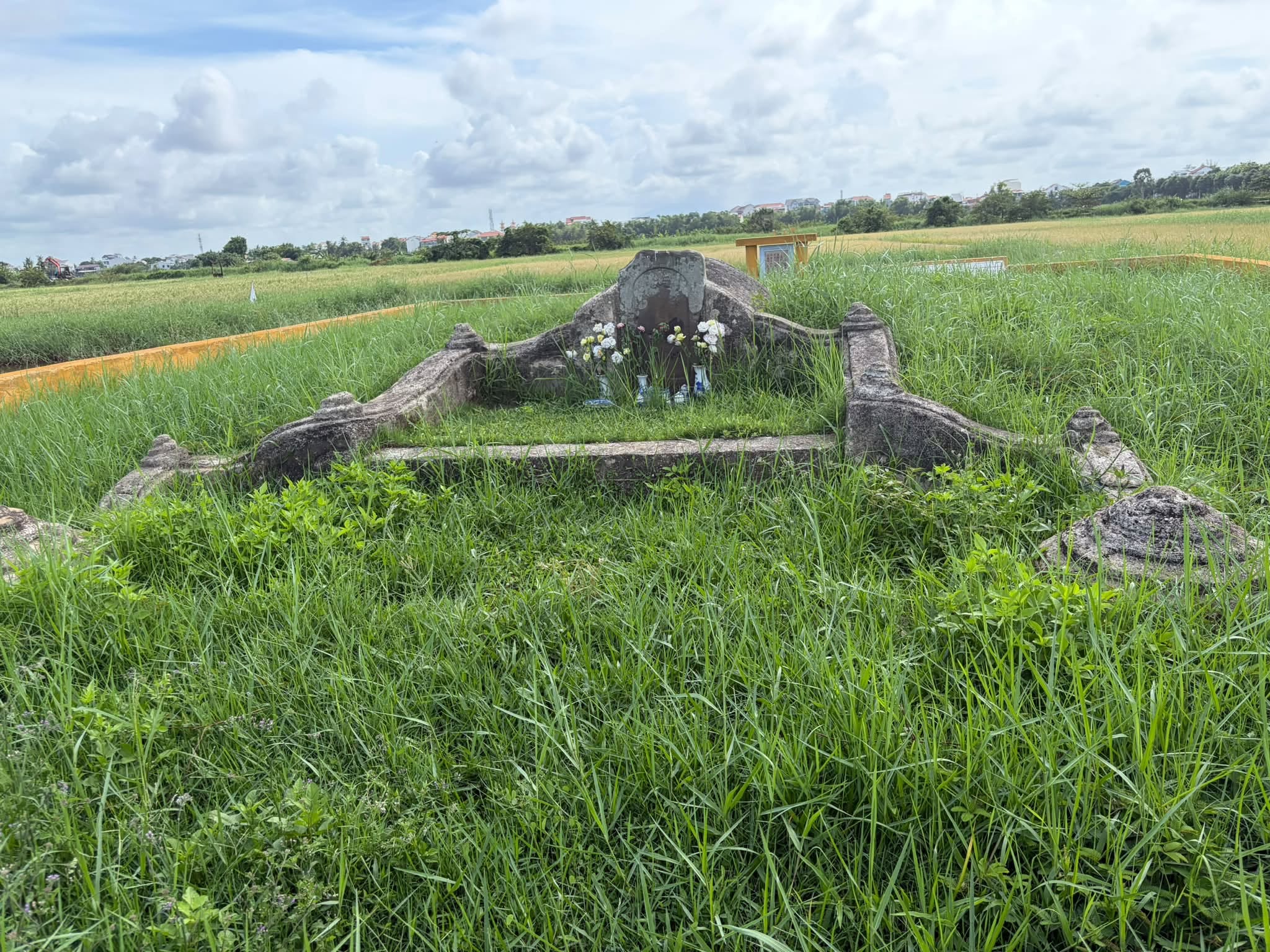
The tomb is located amid rice fields in Hội An Đông Ward, Đà Nẵng City, relatively separated from the surrounding residential area. Its tombstone bears the characters “Japan” and “Hirado”, together with a date identified as 1647. The site provides valuable evidence for understanding the Japanese merchant community and Vietnam-Japan trade relations in historic Hội An.
A Trace of the Japanese Merchant Community
From the late 16th to the early 17th century, Hội An developed into a major trading port of Đàng Trong and an international center for the movement of goods. Merchants from many countries came here to trade, with Chinese and Japanese merchants forming particularly significant communities.
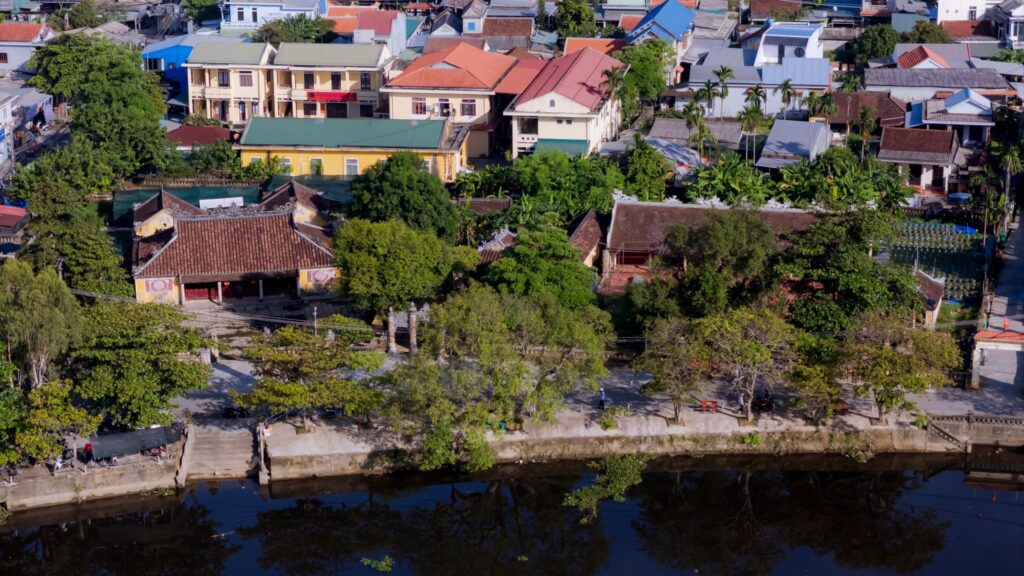
According to the historical records, the Nguyễn lords allowed foreign merchants to establish separate residential areas with their own forms of administration. The Japanese residential quarter was known as Nihon-bōjin-dinh (Nhật Bổn Dinh) and was popularly called the Japanese Quarter.
Some Japanese merchants did more than simply trade in Hội An. They married Vietnamese women, raised families, settled permanently, and established businesses in the area. However, in 1635, following Japan’s restrictions on overseas trade and travel, Japanese merchants in various countries gradually returned to Japan. The Japanese Quarter in Hội An consequently declined.
Nevertheless, some Japanese people remained in Hội An after 1635 and died there. Tani Yajirobei’s Tomb is one of the surviving traces of this continued Japanese presence.
According to historical research cited in the source material, Yajirobei belonged to a prominent Japanese family with many descendants. He came to Hội An for trade, settled there, and died in the town. His tombstone was erected in 1647.
Tomb Architecture and the Stone Inscription
Tani Yajirobei’s Tomb stands on a narrow elevated mound in an area that was once surrounded by wetlands. The tomb faces northeast, while the surrounding land is now used for rice cultivation.
The tomb is enclosed by a sandstone wall measuring approximately 14 m × 11 m × 0.8 m, with the height measured from the surrounding rice fields.
The tomb mound has a distinctive saddle-shaped form and is made from a traditional composite material consisting of lime, oyster shells, mussel shells, molasses, and other components. Erosion caused by water can still be seen where the upper mound meets the lower burial structure.
At the foot of the tomb stands a grey sandstone stele. The stele has no decorative motifs on its upper section or borders. At the center of the upper portion is a carved five-petal flower, with smaller flowers carved on both sides below it.
The main inscription reads:
“Hiển khảo di thứ lang binh vệ cốc công chi mộ. Đinh Hợi niên, mạnh thu lập”.
On either side of the central inscription are the characters “Nhật Bổn” and “Bình Hộ”. Based on the sources cited in the monument documentation, the Đinh Hợi year recorded on the stele is identified as 1647.
The surviving elements of the site include the sandstone stele, the tomb mound, the remaining burial structures, and the surrounding enclosure.
Historical and Cultural Significance
Tani Yajirobei’s Tomb is valuable historical evidence of the presence of Japanese people and the Japanese Quarter in Hội An during the early 17th century.
The tomb also reflects an important period in Japanese commercial expansion in Southeast Asia, particularly during the era of the Red Seal Ship trade, when Japanese merchants established commercial connections with various parts of the region, including Vietnam.
The site provides researchers with physical evidence for studying Japanese trade activities, settlement patterns, and the history of economic and cultural exchange between Vietnam and Japan.
Architecturally, the tomb also contributes to the diversity of Hội An’s ancient tombs and represents a distinctive heritage site for visitors interested in the history of Hội An, particularly those exploring the historical connections between Hội An and Japan.
Conservation and Restoration
According to the monument documentation, the tomb suffered damage in several areas over time. Parts of the surrounding wall collapsed, the screen wall deteriorated, and the tomb mound and burial structure were affected by erosion and water.
Since 1985, the Hội An Monument Management Board has placed Tani Yajirobei’s Tomb on its list of sites requiring preservation in their original condition. Surveys and monument documentation were also carried out.
The source records a major repair in 1928. Between 1989 and 1990, the Hội An Monument Management Board carried out several smaller restoration projects, including improving the access road and constructing a bridge leading to the tomb.
Subsequent conservation measures have focused on maintenance, restoration, visitor guidance, and research. The documentation also proposed seeking investment from Japan for further restoration of the tomb.
Visiting Tani Yajirobei’s Tomb
The site is located in Hội An Đông Ward, Đà Nẵng City, amid rice fields approximately 400 metres from the nearest residential area.
From Hội An Stadium, visitors can follow Nguyễn Công Trứ Street to Ông Cọp Temple, then turn left onto Trà Quế Road, continue through Trường Lệ Village and the agricultural fields of Đội I, and then turn right along the Hà Châu irrigation canal for approximately 300 metres to reach the monument.
The final approach includes an earthen path crossing several low-lying rice fields. According to the source material, the site can be reached by bicycle, motorbike, or car, depending on the actual condition of the access route.
The tomb’s isolated position among the rice fields offers a different perspective on Hội An. The history of the trading port is preserved not only in its old houses and commercial streets, but also in small and relatively secluded monuments scattered throughout the surrounding countryside.
Quick Information
| Item | Information |
|---|---|
| Name | Tani Yajirobei’s Tomb |
| Person | Tani Yajirobei, a Japanese merchant from Hirado, near Nagasaki |
| Current location | Hội An Đông Ward, Đà Nẵng City |
| Type | Tomb |
| Tombstone date | 1647 |
| Inscribed characters | “Nhật Bổn” and “Bình Hộ” |
| Orientation | Northeast |
| Tomb form | Saddle-shaped |
| Materials | Lime, oyster shells, mussel shells, molasses and traditional composite materials |
| Surrounding enclosure | Approximately 14 m × 11 m × 0.8 m |
| Nearest residential area | Approximately 400 m |
| Protected since | 1985 |
| Restoration | Major repair in 1928; smaller restoration works in 1989–1990 |
| Historical significance | Japanese merchants, Red Seal Ship trade, and Vietnam-Japan exchange |
| Heritage status | National relic in 1991, according to the source material |
Location: Tani Yajirobei’s Tomb, Hội An Đông Ward, Đà Nẵng City.