The Tomb of Trần Quý Cáp is a historical site commemorating the life and legacy of a patriotic scholar, educator and prominent figure in Vietnam’s Duy Tân Reform Movement in the early twentieth century. Born into a poor farming family in the Gò Nổi region of Quảng Nam, Trần Quý Cáp became known for his intelligence, dedication to learning and commitment to educational reform. Alongside Phan Châu Trinh, Huỳnh Thúc Kháng and other progressive scholars, he advocated for the modernization of education, economic development and greater public awareness of the nation’s future.
Trần Quý Cáp was sentenced to death by the French colonial authorities and the contemporary administration amid the anti-tax movement that spread across Central Vietnam in 1908. He was executed in Khánh Hòa on May 17, 1908, at the age of 38. His steadfast commitment to reform and public education left a lasting mark on Vietnamese history.
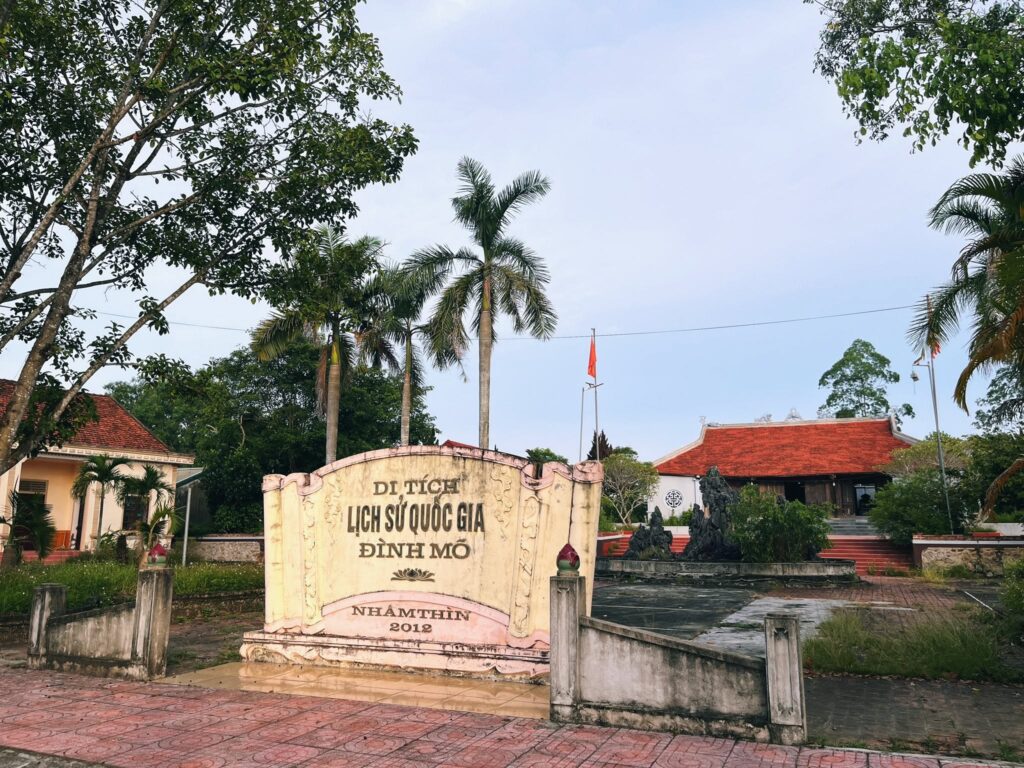
The tomb and memorial house dedicated to Trần Quý Cáp are located in Nhị Dinh Hamlet, Điện Bàn Tây Commune, Đà Nẵng City. The site preserves memories of his life, career and sacrifice, serving as a place to honor a patriotic scholar and educate younger generations about Vietnam’s history.
From a Poor Student to a Patriotic Scholar
Trần Quý Cáp, whose name is recorded in some sources as Trần Nghị, also used the courtesy names Dã Hàng and Thích Phu and the literary name Thai Xuyên. He was born in 1870 in Thái La Hamlet, Bất Nhị Village, in the Gò Nổi region of Quảng Nam, now part of Đà Nẵng City. He grew up in a poor farming family that nevertheless placed great importance on education.
From an early age, Trần Quý Cáp displayed exceptional intelligence and a strong desire to learn. The provincial education official Trần Đình Phong recognized his abilities and arranged for him to study at Thanh Chiêm Provincial School. There, he met and formed friendships with several individuals who would later become prominent figures in the Duy Tân Movement, including Phan Châu Trinh, Huỳnh Thúc Kháng, Phạm Liệu, Nguyễn Đình Hiến and Phan Quang.
Although academically gifted, Trần Quý Cáp did not have an easy path through the traditional imperial examinations. He sat for examinations several times without achieving the results he had hoped for, while some of his classmates attained high academic distinctions. In 1904, he was granted special permission to take the metropolitan and palace examinations and earned the doctoral degree known as Tiến sĩ in the Giáp Thìn examination year.
For Trần Quý Cáp, academic distinction was not an end in itself. He recognized the limitations of traditional education, which emphasized classical texts and examination success, while society urgently needed new knowledge to overcome backwardness and find a path toward national development.
The Duy Tân Movement and the Promotion of Public Education
Trần Quý Cáp was influenced by contemporary reformist ideas, including those of Chinese thinkers such as Liang Qichao and Kang Youwei, as well as the modernization efforts advocated by progressive Vietnamese scholars. He believed that national salvation required improving public education, strengthening national consciousness and enhancing people’s livelihoods.
In 1905, Trần Quý Cáp traveled south with Phan Châu Trinh and Huỳnh Thúc Kháng, meeting patriotic scholars in Bình Định and Bình Thuận. These encounters helped advance the Duy Tân Movement in central Vietnam, linking educational reform with economic development and broader social change.
The movement promoted the principle of “khai dân trí, chấn dân khí, hậu dân sinh,” meaning to enlighten the people, strengthen their spirit and improve their livelihoods. Under this approach, education was not simply a means of preparing candidates for imperial examinations or government service. It was also intended to help people acquire new knowledge, understand society, learn practical skills and improve their lives.
In 1906, Trần Quý Cáp was appointed Giáo thụ of Thăng Bình Prefecture in Quảng Nam Province. During his tenure, he sought to modernize teaching methods, encourage the use of the Vietnamese Latin-based script, Quốc ngữ, and introduce new subjects into the curriculum. He also encouraged people proficient in Quốc ngữ and French to participate in teaching, helping students gain broader access to knowledge.
These activities made him an influential figure in the Duy Tân Movement. In late 1907, he was transferred to Khánh Hòa, where he became Giáo thụ of Ninh Hòa Prefecture. Even in his new position, he continued teaching, interacting with scholars and maintaining his commitment to educational reform.
The Tragedy of 1908 and Trần Quý Cáp’s Sacrifice
In 1908, an anti-tax movement spread across Quảng Nam, Quảng Ngãi and other parts of central Vietnam. Numerous scholars and people associated with the movement were arrested. Although Trần Quý Cáp was serving in Khánh Hòa and had not directly organized the local anti-tax demonstrations there, he was arrested on charges of rebellion.
The French colonial authorities and the contemporary administration regarded reformist ideas, educational activities and his social influence as a threat. Following his arrest and trial, Trần Quý Cáp was sentenced to death.
On May 17, 1908, he was taken to Cạn Riverbank in Khánh Hòa and executed by beheading. He was only 38 years old. According to an account recorded by Phan Bội Châu in a eulogy, Trần Quý Cáp remained composed before his execution, requesting an incense altar, arranging his ceremonial clothing and performing a final act of reverence before facing his sentence.
His death deeply moved scholars and ordinary people alike. However, his sacrifice did not erase the ideas he had pursued. Instead, his name and commitment to public enlightenment continued to inspire educational reform and patriotic activity.
The Tomb and Memorial House of Trần Quý Cáp
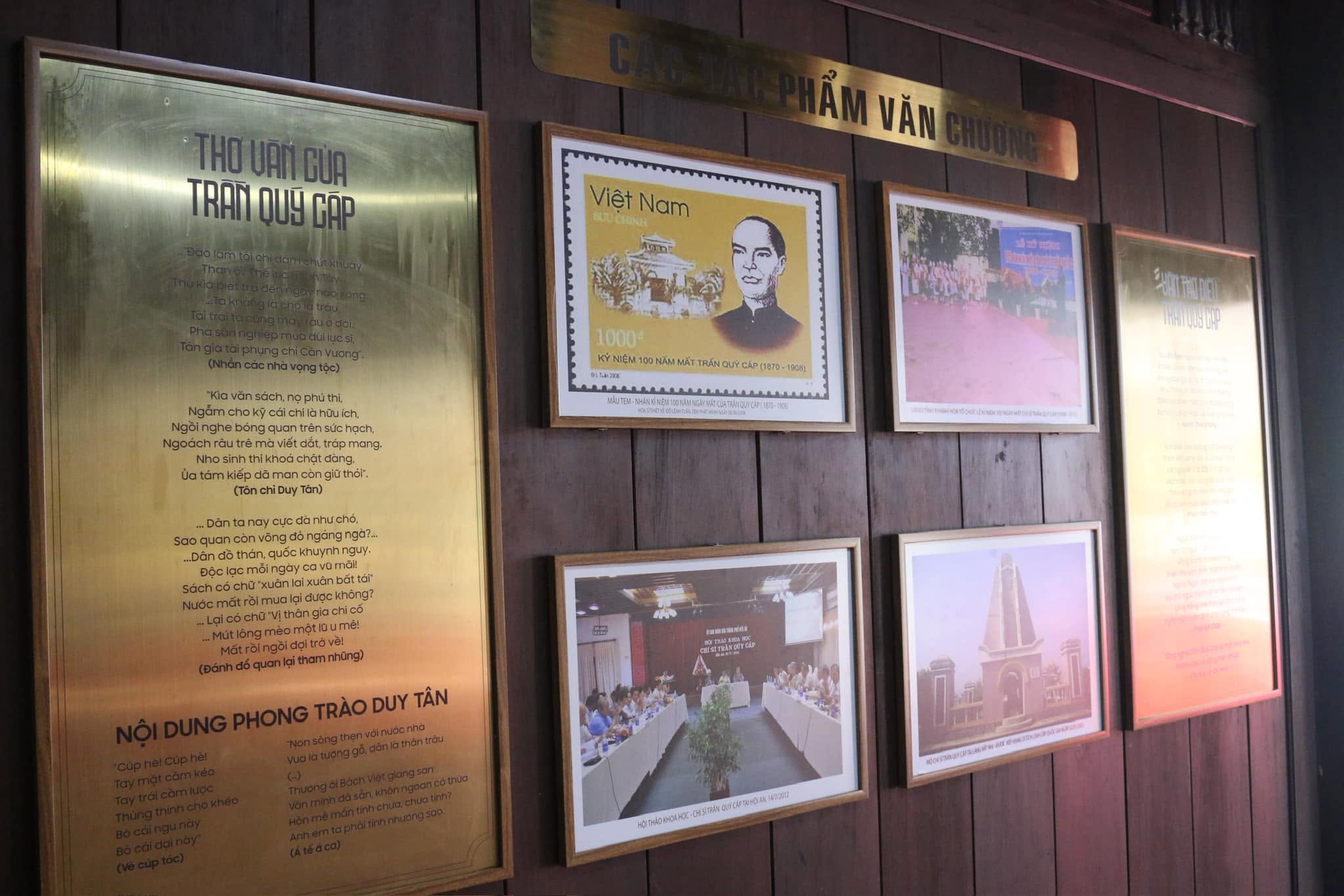
In his ancestral homeland of Gò Nổi, Trần Quý Cáp’s tomb commemorates one of Quảng Nam’s most distinguished sons. Together with the tomb, the Memorial House of the Patriot Trần Quý Cáp preserves photographs and historical materials documenting his background, career, reformist ideas and contributions to the Duy Tân Movement.
The memorial helps visitors understand a scholar who moved beyond the traditional pursuit of academic distinction to embrace broader social reform. Exhibits concerning Thanh Chiêm School, his fellow reformists, educational initiatives and the events of 1908 help recreate the historical context of the early twentieth century.
Today, Trần Quý Cáp’s name is found on streets and schools in many localities. The memorial in his hometown connects local history with the Duy Tân Movement and the emergence of new approaches to education in Vietnam.
According to the supplied historical information, Trần Quý Cáp’s tomb was recognized as a national historical and cultural monument in 2000. The memorial house welcomes visitors every day of the week, including Saturdays, Sundays and public holidays. School groups, organizations and other visiting parties are encouraged to register in advance so that local staff can arrange reception and guided interpretation.
Historical and Cultural Significance
The Tomb of Trần Quý Cáp commemorates a prominent figure in the Duy Tân Movement who devoted his life to education, public enlightenment and social reform. The site recalls the responsibility intellectuals felt toward the nation’s future and reflects the aspirations for change held by Vietnamese scholars in the early twentieth century.
By preserving the tomb, memorial house and historical records, the site helps safeguard the memory of Trần Quý Cáp and enables younger generations to learn about the Duy Tân Movement and efforts to modernize Vietnamese education.
Quick Information
| Item | Information |
|---|---|
| Name | Tomb of Trần Quý Cáp |
| Historical figure | Trần Quý Cáp, literary name Thai Xuyên |
| Birth and death | 1870–1908 |
| Hometown | Bất Nhị Village, Gò Nổi region, Quảng Nam |
| Current location | Nhị Dinh Hamlet, Điện Bàn Tây Commune, Đà Nẵng City, Vietnam |
| Main contributions | Scholar, educator, patriotic intellectual and prominent member of the Duy Tân Movement |
| Historical event | Executed in Khánh Hòa on May 17, 1908 |
| Significance | Commemorates a patriotic scholar and preserves the history of the Duy Tân Movement and its educational ideals |
| Heritage status | National historical and cultural monument |
| Recognition year recorded in the source | 2000 |
| Visitor information | The memorial house is open daily; groups are encouraged to register in advance |