The Traditional Dugout Canoe Racing Festival on the Po Ko River is a cultural and sporting event closely connected with the river environment and community life in the western part of Gia Lai Province. First held in 2019, the festival is associated with Hero A Sanh, who once rowed boats along the Po Ko River to transport soldiers and supplies during the war. His story also inspired the song The Boatman on the Po Ko River by composer Cam Phong.
Held annually from November 1 to 3 at the alluvial ground along the Po Ko River in Dang Village, Ia O Commune, the festival brings traditional dugout canoes onto the river in a lively community celebration. The sight of the boats racing across the water, accompanied by the cheers of local residents and visitors, creates a distinctive cultural atmosphere in this western part of Gia Lai.
The Po Ko River and the Cultural Space of the Festival
The Po Ko River is more than 300 kilometers long. It originates in the northern part of Kon Tum Province and flows westward through the Truong Son mountain range before reaching Gia Lai. For generations, the river has been closely connected with the lives of communities living along its banks, including the use of traditional rivercraft made from locally available natural materials.
Within this cultural landscape, the dugout canoe was not simply a means of transportation. It was also associated with traditional knowledge and skills developed by local communities in adapting to the river environment.
A dugout canoe is made from a large tree trunk, requiring experience in selecting suitable timber, hollowing out the trunk, shaping the hull, and adapting the boat to local river conditions.
The festival brings this traditional rivercraft from everyday life into a public cultural setting. The canoe race is both a sporting competition and an opportunity to showcase cultural practices associated with the river and the skills of the local community.
From the Memory of Hero A Sanh to Today’s Festival
The Traditional Dugout Canoe Racing Festival on the Po Ko River was established to commemorate Hero A Sanh, whose life became closely associated with the river during the war.
According to local accounts, he used dugout canoes to transport soldiers, food, and supplies along the Po Ko River in support of the resistance. The image of the boatman navigating the Po Ko River later became the inspiration for the song The Boatman on the Po Ko River by composer Cam Phong.
The festival therefore serves a purpose beyond sporting competition. It provides a communal space in which local people can remember a historical figure and recall stories associated with the river and the wartime history of the region.
Racing on the Po Ko River
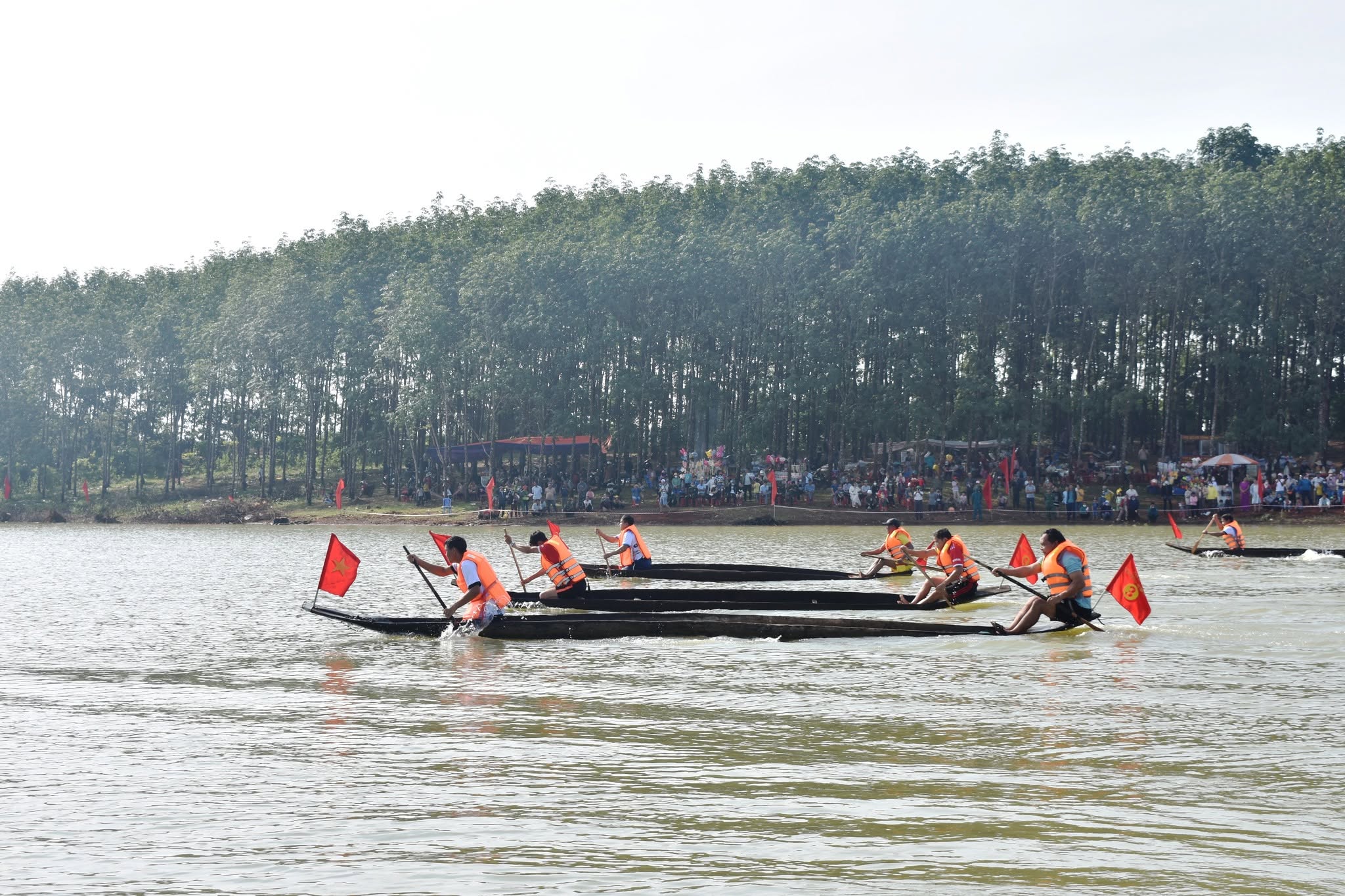
During each festival, teams compete in dugout canoes along a course of approximately 1,000 to 2,000 meters, depending on the year. Each team consists of two experienced paddlers who must coordinate their movements to control the canoe and maintain speed on the river.
Teams come from several localities in the region, including Ia Grai and Duc Co in Gia Lai, and Ia H’Drai in Kon Tum. The competition typically attracts around 40 to 43 teams, making it a major community sporting event in the area.
The competition is organized through several rounds. The strongest teams advance to the Class A final, while other teams continue competing in Class B.
The highest award includes the A Sanh Cup, a gold medal, and a cash prize, according to the regulations of each festival.
The appeal of the race lies not only in speed. Because the dugout canoe is a traditional rivercraft, the two paddlers must coordinate closely to maintain balance, direction, and momentum. Each stroke therefore represents both athletic coordination and practical knowledge of controlling a traditional canoe on the river.
A Community Cultural Space
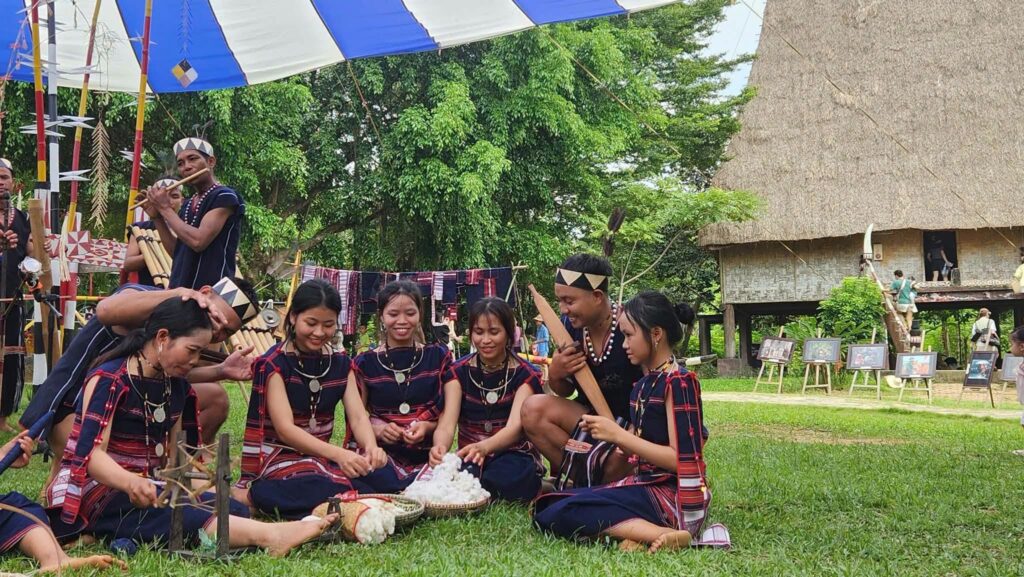
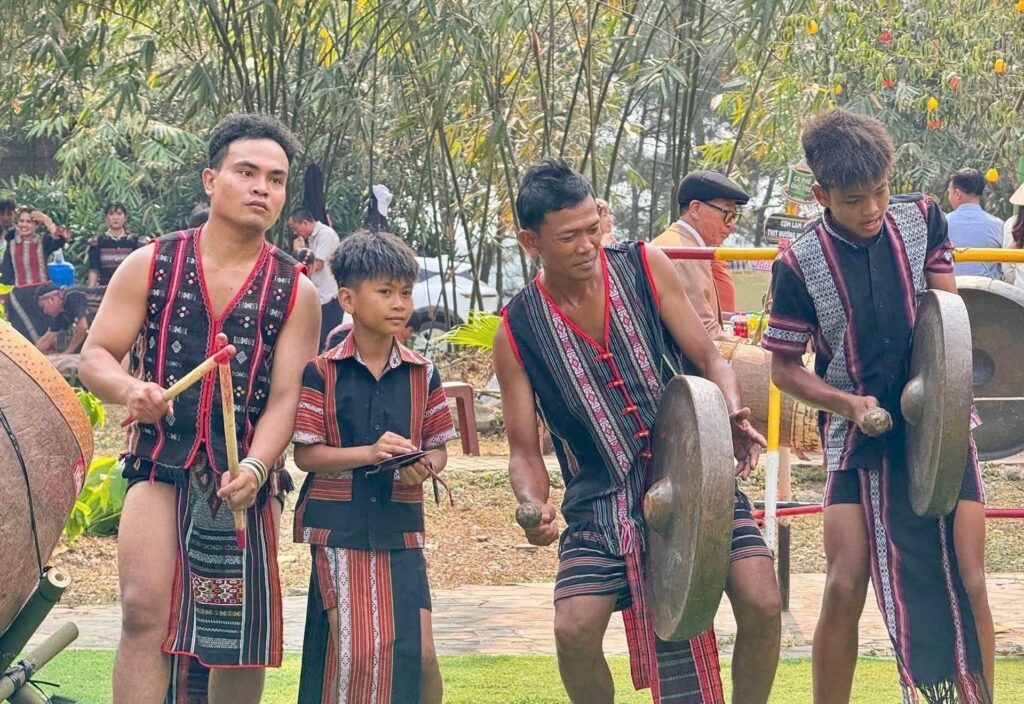
Alongside the canoe races, the festival features cultural and artistic performances as well as food stalls showcasing local cuisine. Residents from villages and communes in the surrounding area gather along the riverbank to watch the races, meet one another, and participate in community activities.
The festival space is therefore shaped by many elements at once: the river, dugout canoes, the sound of paddles striking the water, cheering crowds, music, local food, and the presence of the wider community.
For visitors, the festival offers an opportunity to encounter the cultural life of communities living around the Po Ko River. Rather than simply watching a sporting competition, visitors can learn about the story of Hero A Sanh, discover the traditional dugout canoe, and understand the relationship between local communities and their river environment.
Preserving the Craft of Dugout Canoe Making
One of the notable cultural values of the festival is its focus on the traditional dugout canoe. Producing a functional canoe requires knowledge of selecting an appropriate tree trunk, shaping the hull, hollowing out the interior, and finishing the boat.
These skills reflect traditional knowledge developed through generations of interaction with the natural environment. When dugout canoes are used in the festival, the associated knowledge of making, handling, and navigating these traditional boats also has an opportunity to remain in practice.
This is an important aspect of cultural preservation. Heritage is not maintained only through stories and ceremonies, but also through practical skills performed by hand and transmitted from one generation to the next.
The Festival in Contemporary Community Life
Since its first edition in 2019, the Traditional Dugout Canoe Racing Festival on the Po Ko River has gradually become a cultural and sporting activity that attracts the attention of local communities and visitors.
The festival provides a space for residents to participate collectively while introducing the Po Ko River and the cultural traditions of communities in western Gia Lai. Bringing sporting competitions together with cultural performances and local cuisine allows the festival to function as a meeting place between traditional practices and contemporary community life.
Most importantly, traditional dugout canoes continue to appear on the Po Ko River. Once associated primarily with everyday transportation and wartime history, the canoe has become a symbol of a community festival where memories of people, the river, and local culture are expressed through the rhythm of paddles.
The Cultural Value of the Po Ko River Dugout Canoe Racing Festival
The Traditional Dugout Canoe Racing Festival on the Po Ko River brings together historical memory, river culture, traditional canoe-making skills, and community life.
The story of Hero A Sanh gives the festival a historical dimension. The dugout canoe reflects traditional knowledge and skills developed in response to the natural environment. The race creates a space for community participation, while cultural performances and local cuisine expand opportunities for interaction between residents and visitors.
From a river that once carried stories from a turbulent period in history, traditional dugout canoes now continue to carry those memories into contemporary life in a new form. The Traditional Dugout Canoe Racing Festival on the Po Ko River is therefore more than a race on the water. It is a cultural activity that connects history, community, traditional skills, and the river landscape of western Gia Lai.
Festival Information
- Festival name: Traditional Dugout Canoe Racing Festival on the Po Ko River
- First held: 2019
- Time: November 1 to 3 annually
- Location: Alluvial ground along the Po Ko River, Dang Village, Ia O Commune, Gia Lai Province
- Cultural setting: The Po Ko River and communities living along its banks
- Main activities: Dugout canoe racing, cultural performances, community activities, and local food showcases
- Racing boats: Traditional dugout canoes
- Race distance: Approximately 1,000 to 2,000 meters, depending on the year
- Participating localities: Ia Grai, Duc Co, and Ia H’Drai
- Historical figure associated with the festival: Hero A Sanh
- Key values: Historical memory, river culture, community sport, and the preservation of traditional dugout canoe-making and navigation skills